




























Views
Downloads

Present Perfect Tense Worksheet | Essential Grade 4 ELA

Paste this activity's link or code into your existing LMS (Google Classroom, Canvas, Teams, Schoology, Moodle, etc.).
Students can open and work on the activity right away, with no student login required.
You'll still be able to track student progress and results from your teacher account.
This Grade 4 ELA worksheet helps students master the present perfect tense by transforming simple present sentences into completed action forms. By practicing the "has/have + past participle" structure, learners improve their writing precision and grammatical accuracy. This resource provides a clear path from guided examples to independent sentence generation.
At a Glance
- Grade: 4 · Subject: ELA
- Standard:
CCSS.ELA-LITERACY.L.4.1— Use standard English grammar and conventions when writing or speaking.- Skill Focus: Present Perfect Tense
- Format: 2 pages · 10 problems · Answer key included · PDF
- Best For: Grammar centers or independent practice
- Time: 15–20 minutes
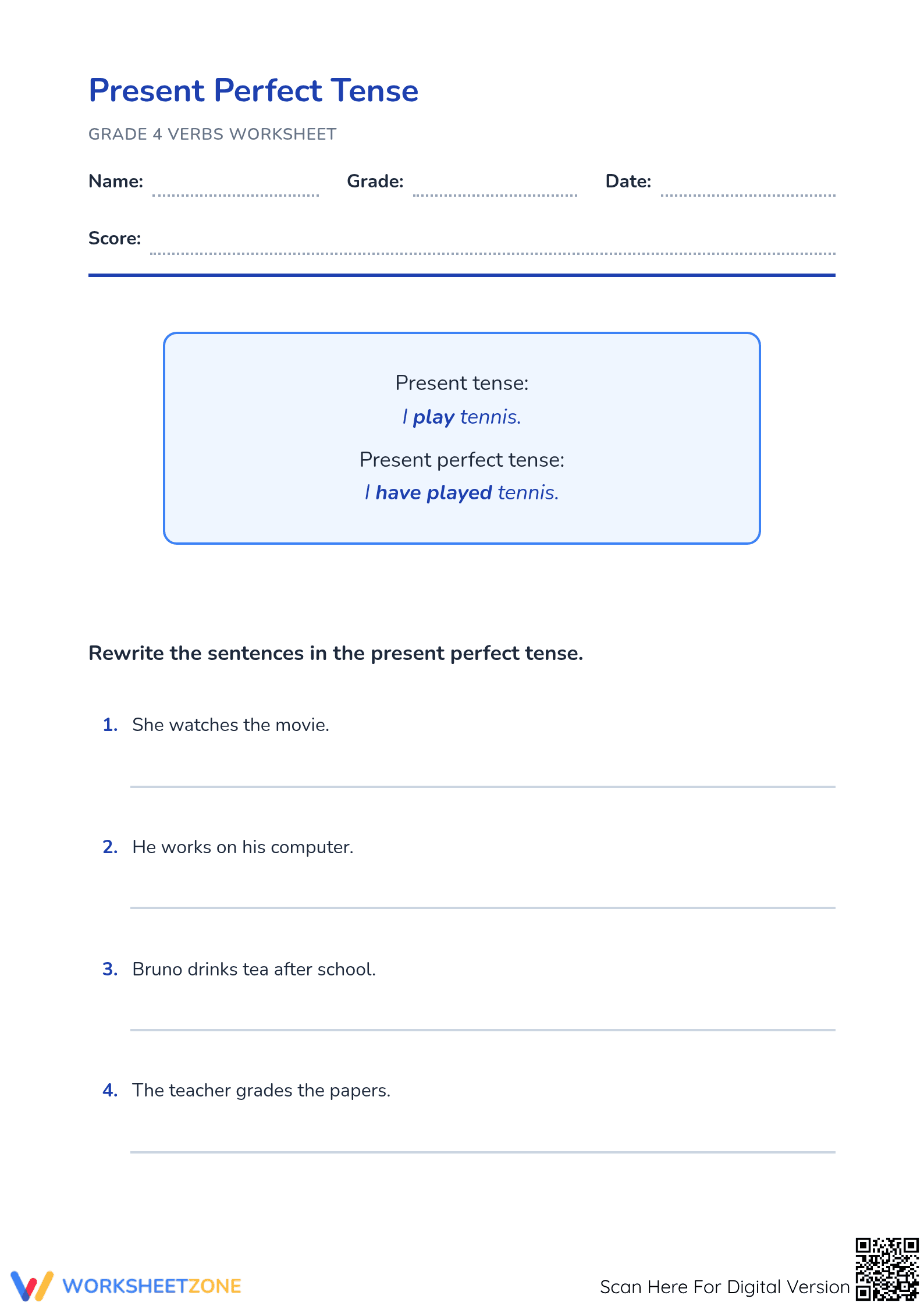
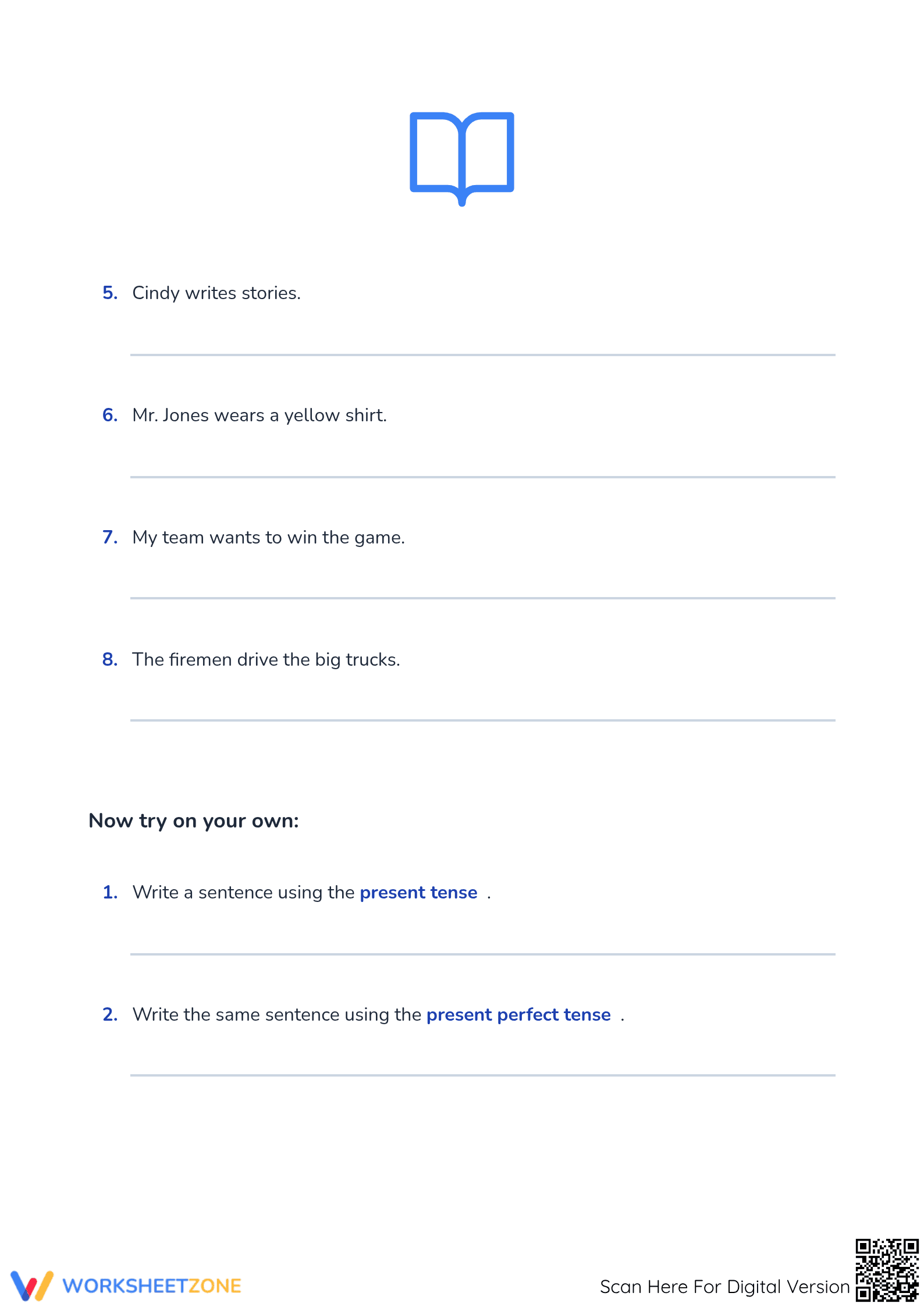
This two-page PDF includes a comprehensive example box, eight sentence transformation tasks, and two creative writing prompts. The layout provides ample writing space for students to practice their handwriting while focusing on grammar. A full answer key is included to facilitate quick grading or student self-correction, making it ideal for both classroom and home use.
- Guided Practice: Students begin by reviewing a clear visual example that contrasts the simple present tense with the present perfect tense, establishing the structural formula for the lesson.
- Supported Practice: Eight targeted rewrite problems require students to transform active sentences into the perfect form, reinforcing the correct use of auxiliary verbs and past participles.
- Independent Practice: The final section challenges students to generate their own original sentences in both tenses, ensuring they can apply the concept without external prompts.
This sequence follows the I Do, We Do, You Do instructional framework to ensure student confidence and long-term retention of verb structures.
Standards Alignment
This resource is primarily aligned with CCSS.ELA-LITERACY.L.4.1, which requires students to demonstrate command of the conventions of standard English grammar and usage. While Grade 4 often focuses on progressive tenses, introducing the present perfect tense provides a necessary bridge to Grade 5 expectations for perfect verb forms. Both standard codes can be copied directly into lesson plans, IEP goals, or district curriculum mapping tools.
How to Use It
Use this worksheet during the independent practice phase of a grammar lesson after introducing the concept of completed actions. It works effectively as a formative assessment to check for understanding of past participle forms. Expect students to complete the 10 tasks within 15 to 20 minutes depending on their familiarity with irregular verbs. It is also suitable for morning work or as a quick review before a writing workshop.
Who It's For
This worksheet is designed for fourth-grade students, but it is also highly effective for English Language Learners (ELL) who need explicit practice with auxiliary verb placement. Pair this resource with a verb tense anchor chart or a short narrative passage to help students identify these tenses in authentic reading contexts. It provides the necessary scaffolding for students who struggle with verb consistency in their creative writing.
According to the RAND AIRS 2024 report, targeted grammar practice moving from structured identification to independent generation improves syntactic complexity in student writing. This worksheet aligns with CCSS.ELA-LITERACY.L.4.1 by requiring students to demonstrate command of standard English conventions through applying the present perfect tense. By transitioning from simple rewrites to original sentence construction, learners internalize the "has/have + past participle" formula. This approach mirrors the gradual release of responsibility model, ensuring students apply rules in context rather than merely memorizing them. Educational research suggests focused worksheets provide the necessary repetition for mastery before students encounter these structures in complex texts. This resource serves as a foundational tool for building linguistic precision required for upper elementary writing success.


