These character traits printable pdf worksheets for 4th grade target a precise reading comprehension move: connecting a trait word to specific evidence from the text rather than guessing from gut reaction. At fourth grade, the expectation shifts — students aren't just identifying characters as "nice" or "mean," they're expected to describe characters in depth and cite the actions, dialogue, or choices that back up their thinking. This set gives teachers the tools to make that shift visible and repeatable across a fiction unit.
What's Inside the Set
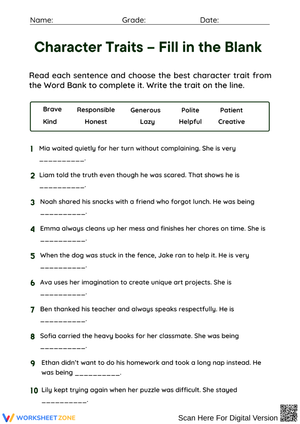
Each worksheet isolates a different part of character analysis so students practice the skill at multiple levels of complexity. The set includes five distinct formats, each doing a different instructional job:
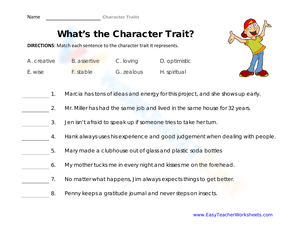
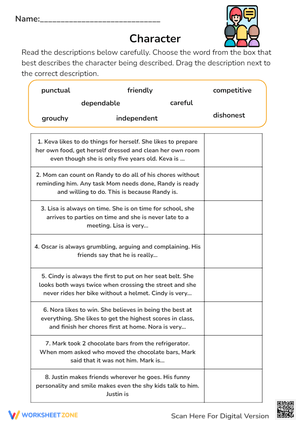
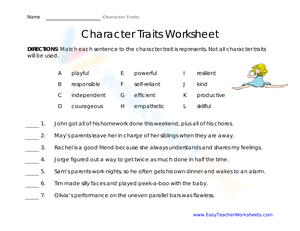
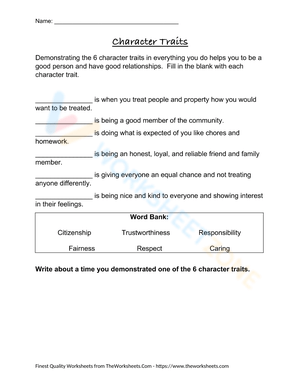
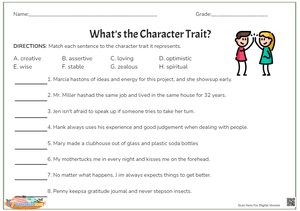
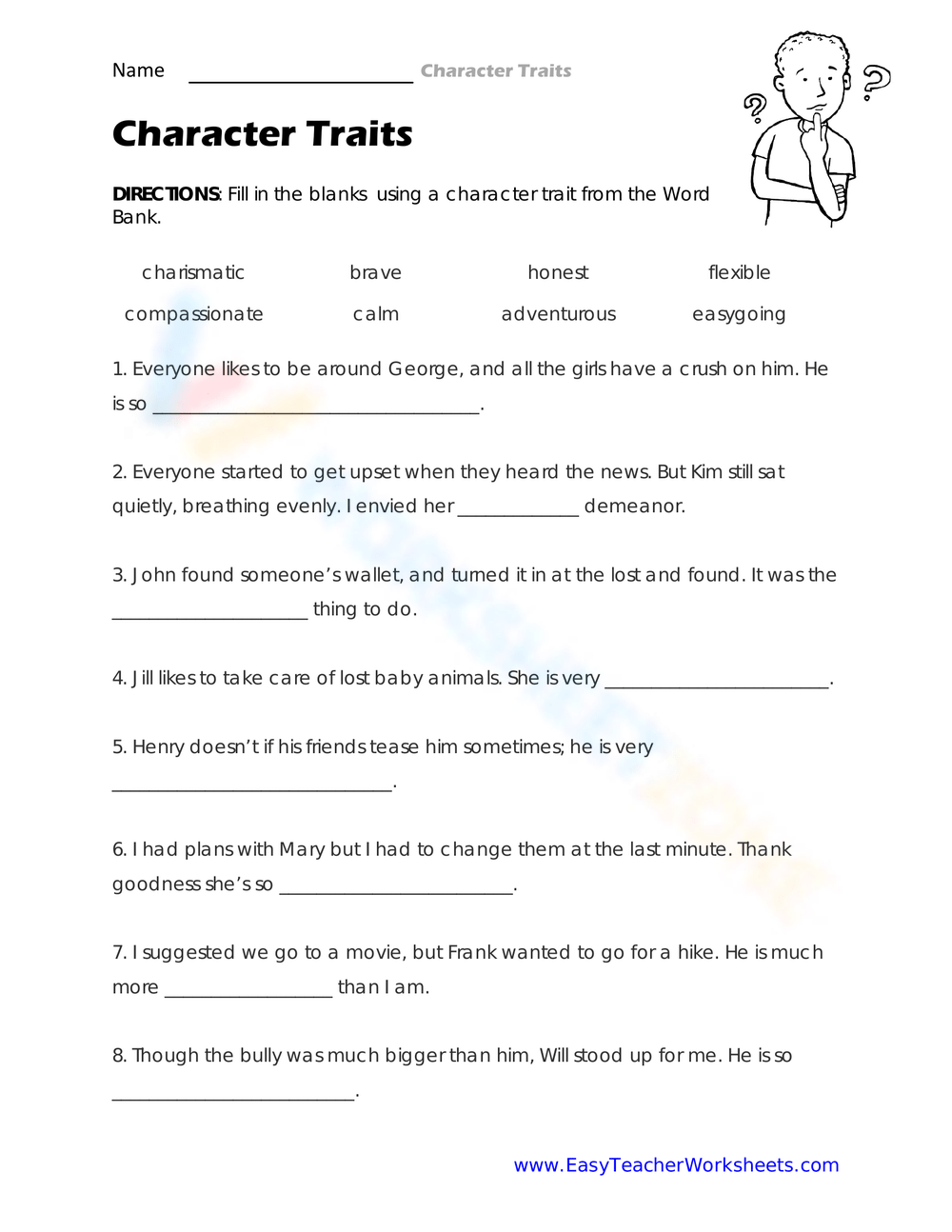
- Trait sorting worksheets: Students categorize words into lasting traits, temporary feelings, and physical descriptions. The sorting act forces the distinction in a way that reading a definition alone does not.
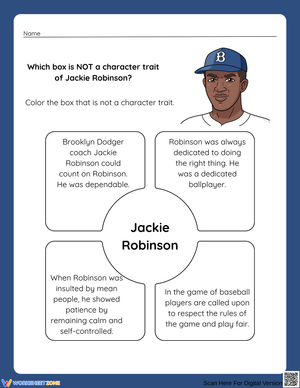
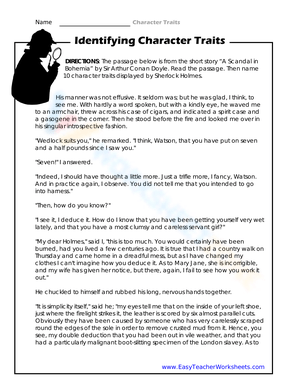
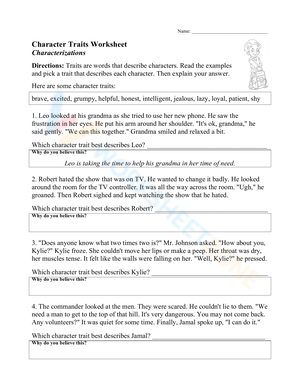
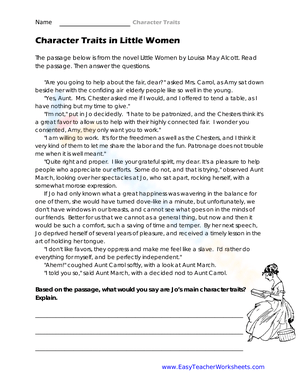
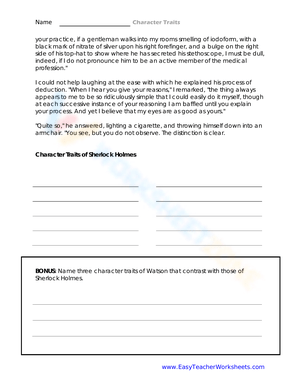
- Short passage analysis: Students read a brief fiction excerpt and identify one or more traits based on the character's actions, dialogue, or decisions, then locate the specific text moment that reveals each trait.
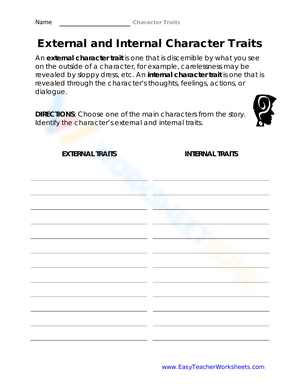
- Evidence organizers: A three-column format asks for the trait, the text detail, and the student's explanation of why the detail proves the trait. That third column — the explanation — is where most fourth graders need the most work.
- Character change worksheets: Students compare what a character is like at the story's opening and at its end, then explain what caused the shift.
- Constructed response worksheets: Students write a short paragraph using sentence starters for support, or open-ended prompts when they're ready to write without that frame.
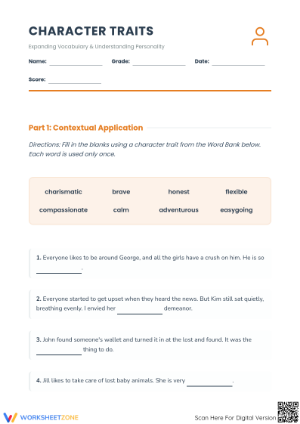
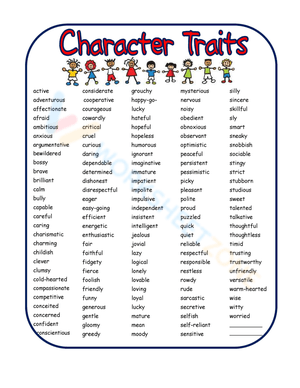
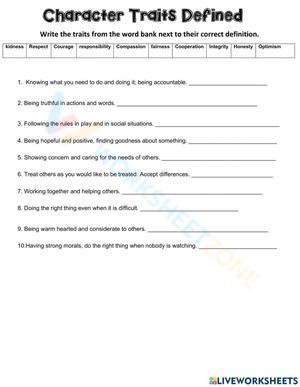
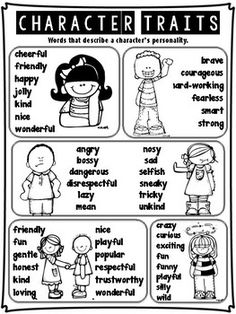
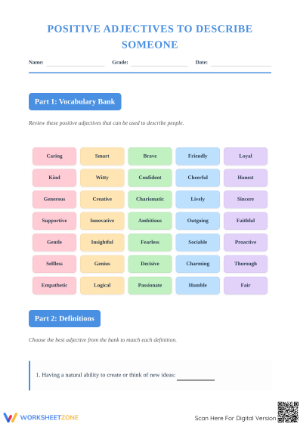
Across the set, the word banks are intentionally short and precise — eight to ten well-chosen trait words with accessible meanings. A focused list like that produces stronger written responses than a sprawling glossary, because students spend time finding evidence rather than decoding unfamiliar vocabulary.
Frequent Student Errors Worth Watching For
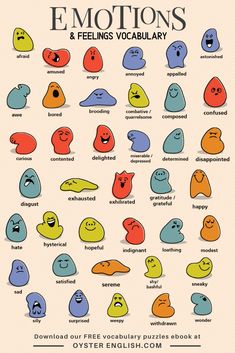
The most persistent confusion at fourth grade is between traits and feelings. Students routinely write that a character is hungry, nervous, or tall when the task asks for a lasting trait. Sorting worksheets make the distinction concrete — placing anxious in the "feeling" column while placing cautious in the "trait" column is more instructionally effective than any definition, because students have to apply the difference repeatedly rather than just read about it once.
Evidence selection is the other consistent breakdown. A student might accurately label a character as responsible, then support it with a weak detail — citing that she walked to school on time, when the far stronger moment is earlier in the chapter where she skipped a neighborhood game to help her younger brother pack his bag before a move. The evidence organizer format slows this process down by requiring students to write out the detail and then articulate why it proves the trait. That explanation step is what separates a complete answer from a surface observation.
Vocabulary habits also need direct attention. Many fourth graders rotate through the same small group of easy words — nice, mean, kind, brave — and resist more precise language even when they understand it. Keeping a class anchor chart of eight to ten high-use words with student-friendly meanings posted nearby during worksheet practice shifts this pattern within a few weeks. Students reach for determined or cautious when those words are visible and already defined.
How to Build These Worksheets Into Your Lesson Plans
The three-part routine of trait, evidence, explanation works well as a repeating structure throughout a fiction unit. Introduce it during a whole-group lesson using a familiar read-aloud — the first time, the teacher models all three steps aloud while thinking through the character's actions. The next day, students complete one example together as a class before finishing the worksheet independently. Spaced practice across the week, using a different short passage each time, builds the habit more reliably than covering the same format twice in one sitting.
Character traits printable pdf worksheets for 4th grade fit naturally into the transition moments that are easy to underuse — the ten minutes before specials, the independent reading block, the Friday review before a unit assessment. A sorting worksheet makes a low-stakes center task students can complete without direct support. A short evidence organizer works as a warm-up before literature circle discussion. A constructed response worksheet near the end of a unit gives teachers a clear pre-assessment picture of who can explain character analysis in writing before a more formal evaluation.
Standard Alignment
These worksheets directly address CCSS.ELA-LITERACY.RL.4.3, which asks students to describe a character, setting, or event in depth by drawing on specific details from the text. In classroom terms, this standard sits in the middle of a clear progression: third graders identify traits with significant support, while fifth graders are expected to compare characters across texts and examine how characters interact and change. Fourth grade is the level where the full evidence-and-explanation move becomes an independent expectation rather than a guided one. The three-column evidence format in these worksheets directly mirrors what RL.4.3 requires in both written response and discussion contexts.
Adjusting the Worksheets for a Range of Learners
For students who need more support, limit the sorting worksheet to eight words instead of the full set, and pre-highlight the relevant paragraphs in the short passage before students read. Sentence starters — The character is ___ because ___ and One detail that shows this is ___ — give students a reliable entry point for the explanation column without removing the analytical work. Pairing these students with the visible anchor chart of trait vocabulary reduces the cognitive load of word retrieval so they can focus on finding evidence rather than getting stuck on vocabulary.
Students who are ready for more complexity get the most from character traits printable pdf worksheets for 4th grade when the task is adjusted rather than swapped out entirely. Ask them to choose between two close trait options — determined versus stubborn, for example — and write a justification for why one word fits better than the other. That narrow comparison requires more precise reasoning than selecting from a broad list. Removing the word bank entirely for advanced students and asking them to supply their own trait vocabulary produces the most rigorous written work.
Frequently Asked Questions
What is the difference between a character trait and a feeling for Grade 4 students?
Traits are lasting patterns in how a character thinks, acts, or makes decisions across the story — words like patient, ambitious, or dishonest. Feelings are temporary states that come and go within individual scenes, like nervous, relieved, or excited. At fourth grade, sorting exercises that require students to categorize both types are more effective than a written definition alone, because students have to make the distinction actively and repeatedly.
Can these worksheets be used with any fiction text, or only specific stories?
Each worksheet is text-flexible. The short passage worksheets include their own fiction excerpts, but the evidence organizers and constructed response worksheets work with any story students are already reading — class read-alouds, literature circle books, or independent reading selections. Teachers pair the worksheet format with whatever fiction is already on the table rather than setting aside separate time for a standalone activity.
How do these worksheets help students write stronger reading responses?
The evidence organizer structure — trait, text detail, explanation — directly mirrors the format of a strong written reading response. When students practice the three-part routine on a worksheet, they internalize the structure for paragraphs and discussion. Teachers who regularly use character traits printable pdf worksheets for 4th grade across a unit report that student writing becomes noticeably more specific within a few weeks, particularly in how students move from summarizing what happened to explaining what a moment reveals about a character.