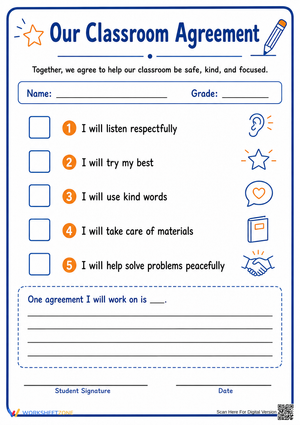
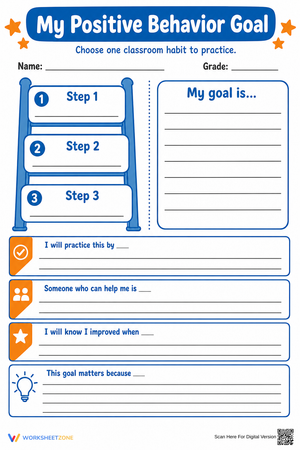
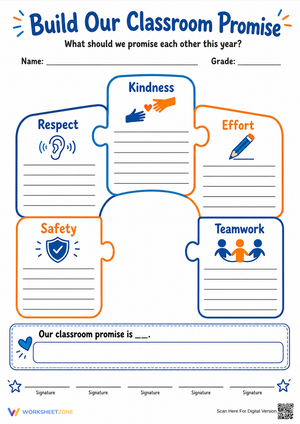
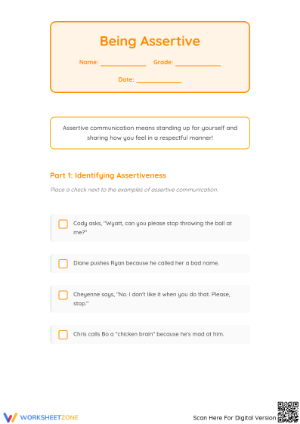
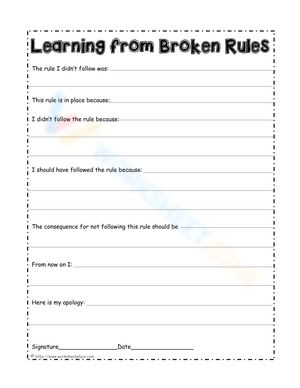
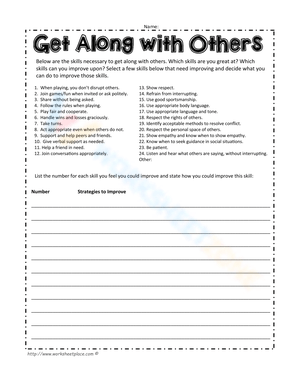
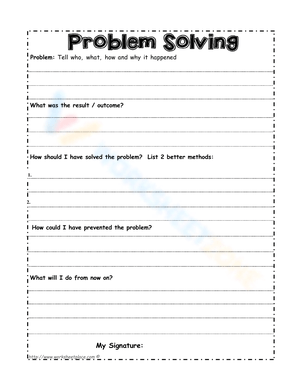
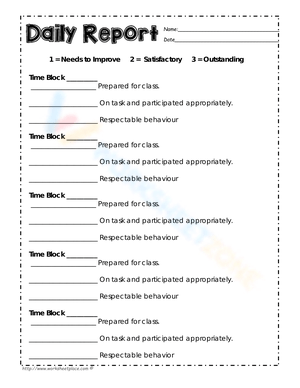
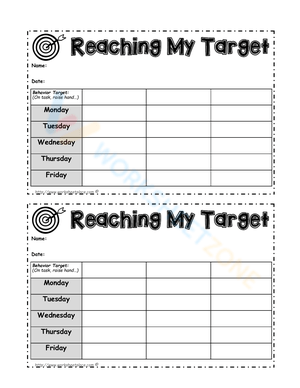
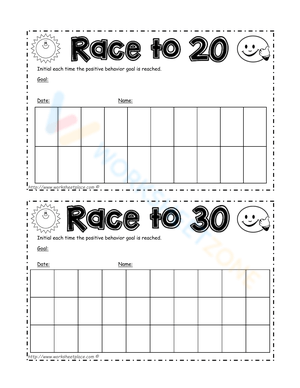
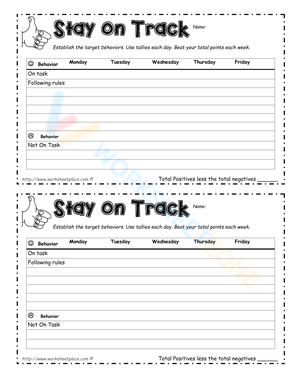
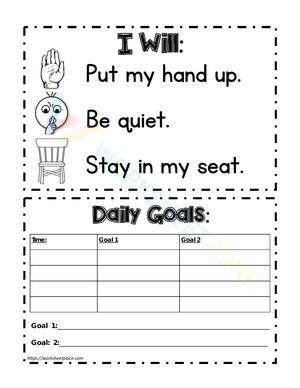
These behavior contracts worksheets for 4th grade give teachers a concrete, structured tool for the self-regulation challenges that surface when students are nine and ten — the age when peer dynamics sharpen, academic expectations climb, and staying on task becomes a genuinely harder ask. Each worksheet in the set translates vague ideas like "be responsible" into specific, observable actions both teacher and student agree to before the school day unfolds.
What's Inside the Set
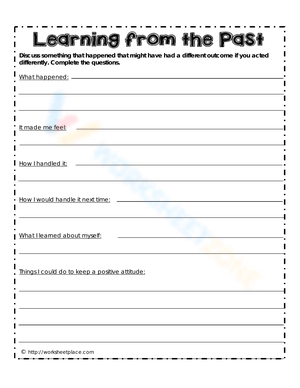
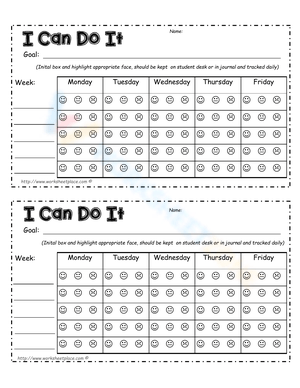
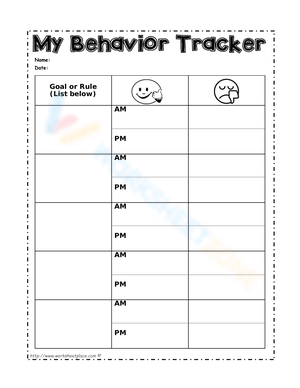
Each worksheet pairs a goal-tracking grid with a reward menu, a daily reflection prompt, and a signature block for both teacher and student. The tracking portion uses a point-or-checkmark format students mark themselves, which matters at this age — 9- and 10-year-olds respond better when they have a hand in recording their own progress rather than waiting to be evaluated at the end of the day.
The goal fields are intentionally limited to one to three behaviors. Overloading a fourth grader with five simultaneous expectations tends to produce the same outcome as giving them none: the list becomes noise. Each worksheet also includes a mid-day reset prompt — a designated moment at lunch where a rough morning can be formally closed and the afternoon treated as a fresh start. That single structural feature prevents more abandoned days than most teachers expect.
Framing Goals Students Will Actually Follow
The most durable contracts are built with students, not handed to them. A ten-minute sit-down where the teacher asks the student to name one area where they feel successful and one where they want support sets a very different tone than presenting a pre-filled sheet. At the fourth-grade level, this collaborative entry matters: students this age have a sharp sense of fairness, and a contract that feels imposed reads as punishment rather than partnership.
Goal language should describe what the student will do, not what they'll stop doing. "Raise my hand before speaking during whole-group instruction" lands differently than "stop calling out." The positive frame gives the student something to visualize, and when they mark that goal met at the end of a period, the win feels genuine. Keeping language plain and action-specific — not "demonstrate respect," but "wait until a classmate finishes speaking before responding" — removes the interpretation that can become a source of argument later.
Common Missteps That Undermine These Contracts
The most frequent error teachers make is inconsistent follow-through on check-ins. When a student earns a reward and the teacher doesn't deliver it until the next day, the motivational link breaks. Fourth graders are still developing delayed gratification, and even a 24-hour gap between earning and receiving a privilege can flatten motivation. Setting a specific transition — the last two minutes of lunch, for instance — as the dedicated check-in moment prevents this from drifting.
Students make a predictable error too: they interpret a single missed goal as a failed day. A student who talks during instruction at 9:30 a.m. will sometimes abandon all effort for the remaining five hours because they feel the day is "ruined." The mid-day reset addresses this directly, but teachers still need to narrate it explicitly the first several times — "the morning is closed, we're counting from here" — before the student internalizes it as a real option rather than just words on the worksheet. A second misstep worth watching: reward menus built on teacher assumptions rather than student input. A fourth grader who isn't motivated by being line leader won't work toward it. The five minutes spent asking the student what classroom privileges they actually enjoy, before the contract starts, pays for itself immediately.
Building These Worksheets Into Your Daily Routine
These resources fit cleanly into the transition points that already exist in a fourth-grade day. Morning meeting is a natural moment to quietly hand a student their worksheet — no announcement, no production. The check-in at lunch takes under two minutes and can happen while other students are packing up or transitioning out. The end-of-day review is another natural anchor: behavior contracts worksheets for 4th grade work best when tied to a predictable daily structure rather than pulled out reactively whenever a problem surfaces.
Introduce the concept to the class broadly as a goal-setting tool before using one with an individual student. Many teachers keep a classroom goal chart visible to everyone and present individual contracts as a more personalized version of that shared practice. That framing removes the stigma of singling someone out, which matters especially at this age when peer perception carries real social weight. The signature block on each worksheet carries its own function — at nine and ten, signing something feels formal and serious, and that weight is useful for buy-in.
Adjusting the Resources Across Support Levels
For students who need intensive behavioral support, start with a single goal on the first worksheet and a short tracking window — one class period rather than a full school day. A student who has been struggling for months won't experience success on a full-day contract right away, and a first week of missed marks does more damage than good. Breaking the interval down creates early wins that build the momentum needed to extend the timeframe later.
Students at the other end of the spectrum — motivated and self-aware, but benefiting from structure — can use behavior contracts worksheets for 4th grade as a leadership-style goal tool. Framing these as "personal challenge sheets" and letting students write their own goals from scratch keeps the resource meaningful without making it feel remedial. For this group, the reward menu can shift toward academic privileges: first pick of library books, an independent project topic of their choice, or a few extra minutes on a class computer during free choice time. The set serves students across a wide range without requiring a separate resource for each tier.
Frequently Asked Questions
How do I use these without making a student feel targeted?
Frame the worksheet as a personal success plan rather than a correction tool. If your class already uses any kind of goal-setting or reflection routine, introduce individual contracts as a natural extension of that practice. Many teachers run brief goal-setting check-ins with the whole class at Monday morning meeting, so the student on a behavior contract sees their worksheet as a more detailed version of what peers are also doing — not as evidence that something is wrong with them.
What if the student refuses to sign?
Resistance almost always signals that the contract feels imposed or the goals feel unachievable. Stop and ask the student what they would change. Giving them the power to adjust one goal or swap a reward resolves the standoff far more reliably than pressing forward. The signature matters, but earning it through negotiation is more valuable than demanding it — genuine commitment outlasts reluctant compliance by the second day.
How long should a student stay on a contract?
Four to eight weeks is typically enough time to establish new habits at this grade level. Rather than ending abruptly, taper the check-in frequency — from every period to twice a day to once a day — before phasing it out entirely. When worksheet data shows a student meeting goals 80 percent or more of the time across two consecutive weeks, that's a reliable signal to begin stepping back.
Can these track academic behaviors alongside social ones?
Behavior contracts worksheets for 4th grade are well-suited for academic behaviors — organization, task initiation, turning in materials on time — even if they aren't meant to evaluate the quality of work itself. A goal like "have all materials on the desk within two minutes of the transition bell" is exactly the kind of observable, trackable action these worksheets handle well, and for many fourth graders, that behavioral bridge is what academic performance actually depends on.
What rewards work best at this age?
Time and choice are the currencies that matter most at nine and ten. Classroom privileges consistently outperform tangible prizes. Some that land well:
- Sitting in the teacher's chair for a full work period
- Choosing the closing activity for the day
- Listening to music with headphones during independent work
- Earning a "Teacher Assistant" role for an afternoon
- A no-homework pass for one assignment
Build the menu with the student before the contract starts. A reward the teacher assumes is motivating and a reward the student actually wants are often different things — and that gap is the fastest way to lose a contract before it has a chance to work.












 Interactive Worksheet Maker
 Quiz Maker
 Word Search Maker
 Crossword Puzzle Maker
 Word Scramble Generator
 Sentence Scramble Generator
 Handwriting Worksheet Generator
 Name Tracing Generator
 Fill In The Blank Generator