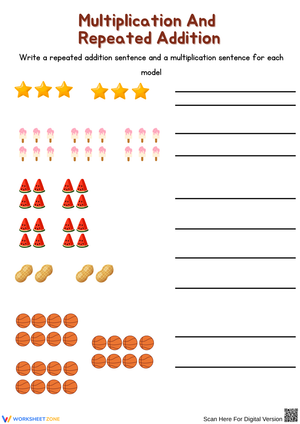
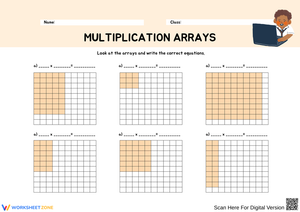
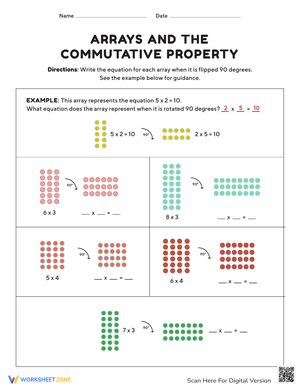
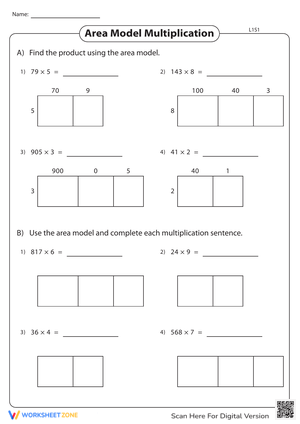
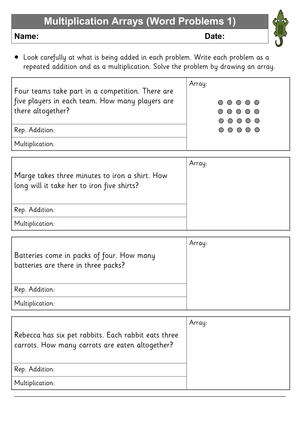
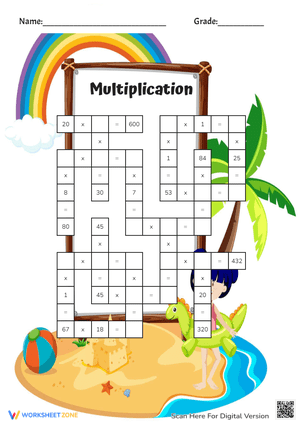
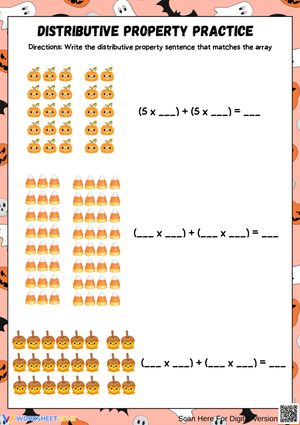
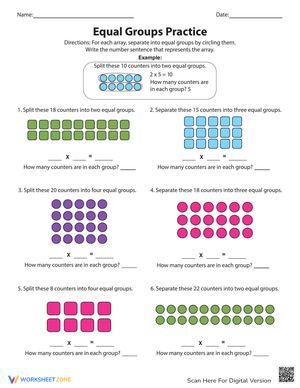
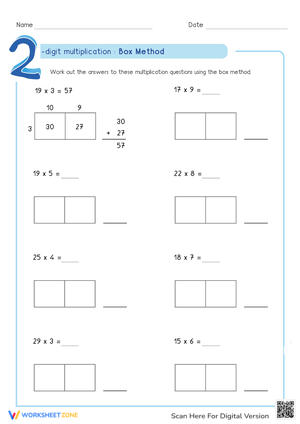
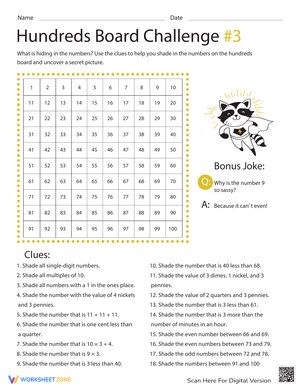
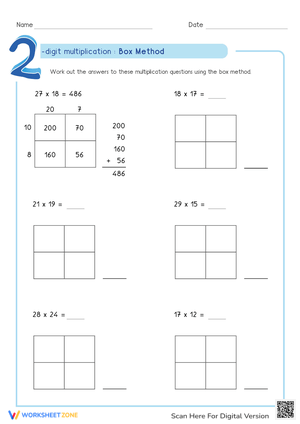
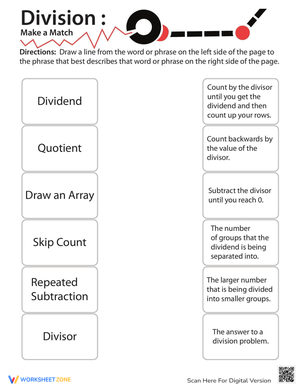
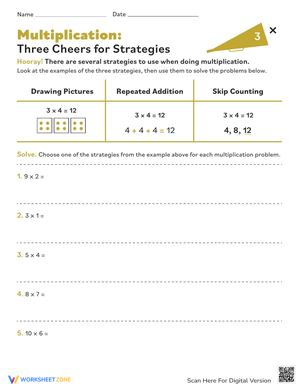
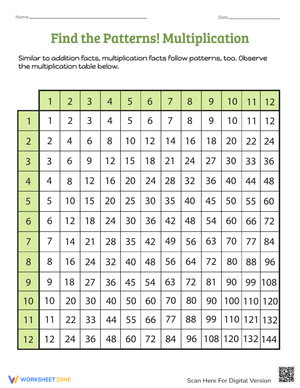
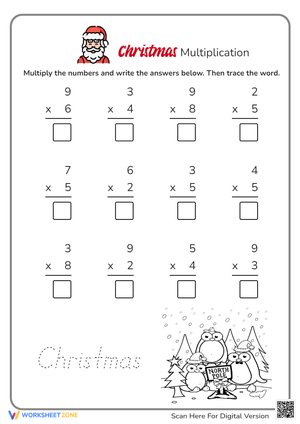
These 3rd grade multiplication strategies printable worksheets keep the meaning of multiplication visible at every stage — through pictures, models, and equations working together rather than memorized sequences in isolation. Third grade is the first year students are formally expected to understand multiplication, not simply produce answers, and that distinction between meaning-building and recall drives how these resources are best used. The set covers equal groups, arrays, repeated addition, skip counting, number line models, and missing-factor work.
The Specific Skills Each Worksheet Targets
Each worksheet in the set focuses on one primary representation, which lets teachers assign a specific resource without asking students to context-switch across multiple formats at once. That narrowed focus also makes it easier to pinpoint exactly where understanding breaks down.
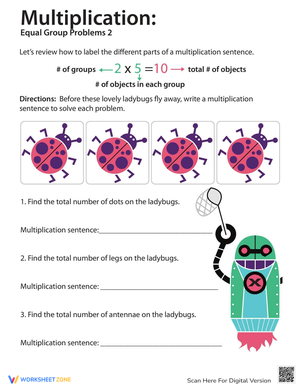
- Equal groups: Students identify how many groups there are, how many are in each, and write the matching multiplication sentence.
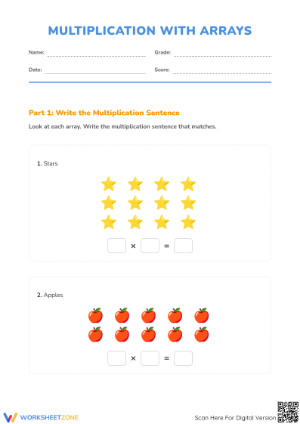
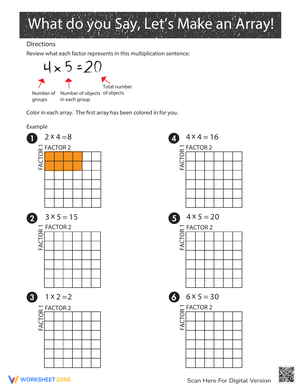
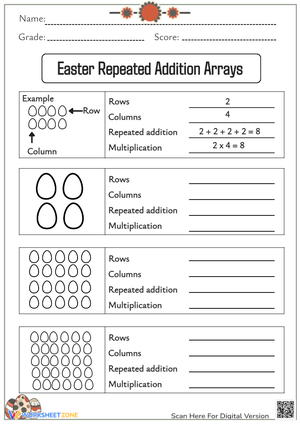
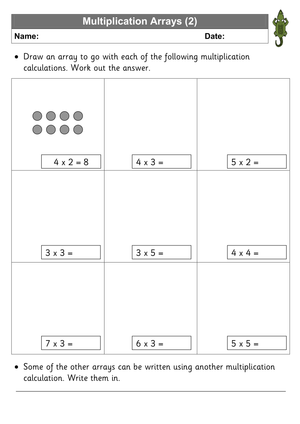
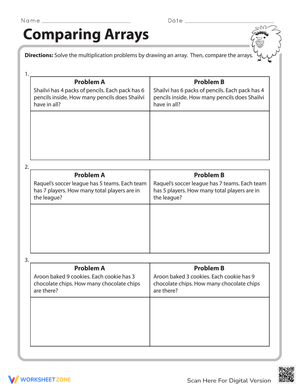
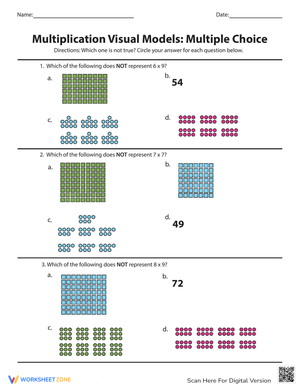
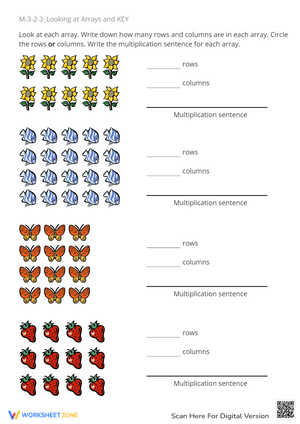
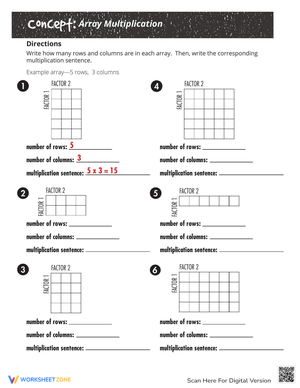
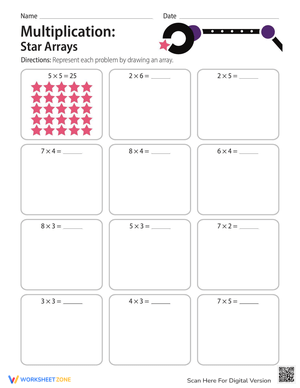
- Arrays: Students label rows and columns, connect those dimensions to factors, and produce the corresponding equation.
- Repeated addition: Students write the addition sentence that matches a given multiplication model, making the relationship between the two operations explicit.
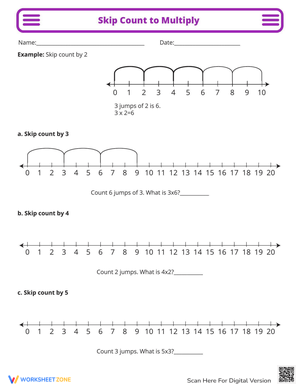
- Skip counting: Students mark equal hops on a number line or complete a counting sequence, building toward efficient products.
- Missing-factor problems: Students find an unknown group size or unknown number of groups — thinking that previews division reasoning.
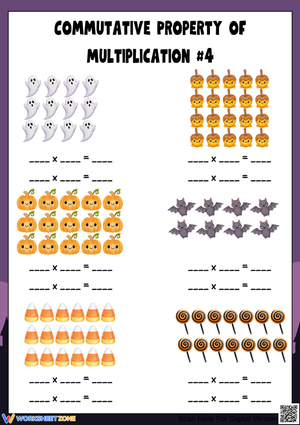
- Commutative reasoning: Students identify whether 3 × 4 and 4 × 3 describe different physical arrangements and explain their answer in writing.
Frequent Student Errors Worth Watching For
The most common error in third grade multiplication practice isn't a computation slip — it's a meaning mismatch. A student who draws 4 groups of 3 correctly will often treat "4 × 3" and "3 × 4" as interchangeable, without recognizing that each factor carries distinct meaning depending on context. When a task asks them to build an array with 3 rows of 4, a student who has memorized the commutative property but hasn't internalized it will construct 4 rows of 3 and report the same answer. The product is correct. The representation is wrong. That distinction matters more as students move toward division, where factor order becomes operationally significant.
A second pattern surfaces on number line worksheets: students make the right number of hops but start from 1 instead of 0, landing one unit off from the correct product. This isn't careless counting — it reflects a mental model borrowed from ordinal number lines, where counting starts at one. Labeling the zero before students begin the task reduces the error, though it reappears consistently in the first few exposures.
Students who solve every problem through repeated addition — writing 6+6+6+6+6+6+6 to find 6×7 — are reasoning correctly but signaling that the multiplication shortcut hasn't connected yet. The written work tells you what to address next: not more practice problems, but a direct conversation about why repeated addition and skip counting describe the same situation, one far more slowly than the other.
How to Build These Worksheets Into Your Lesson Plans
The most productive placement for a focused worksheet is right after the mini-lesson, not in the homework folder for the next evening. In the 8 to 10 minutes between direct instruction and the transition to centers, four to six problems give students their first independent attempt while the strategy is still present in working memory. That immediate transfer is different from retrieving the lesson the following morning — the thinking is warmer, errors are more revealing, and the teacher is still in the room to adjust.
For center rotations, pairing worksheets with concrete tools shifts the quality of practice. Students working on array worksheets alongside square tiles or grid paper naturally move from tracing pictures to building their own models, then checking whether the equation matches. When two students disagree — one insisting a 3-by-4 array and a 4-by-3 array look different, one saying they're the same — that argument surfaces a misconception that silent independent work rarely would.
At the close of a strategy sequence, pull two or three problems from different worksheets — one array, one equal groups, one missing-factor — and use them as a brief exit check. Not a formal assessment, but a quick look at whether students can apply each representation without a label telling them which strategy to use. That transfer task is the real measure of whether earlier practice held.
Standard Alignment
CCSS.MATH.CONTENT.3.OA.A.1 requires students to interpret products of whole numbers as the total number of objects in a given number of equal-sized groups. CCSS.MATH.CONTENT.3.OA.A.3 extends that to multiplication and division word problems involving equal groups, arrays, and measurement quantities. Both standards sit in the first half of the third grade math year — they establish the conceptual base before 3.OA.C.7 introduces the fluency expectation for products within 100.
When teachers sequence 3rd grade multiplication strategies printable worksheets from visual representations toward more abstract equation-writing, the progression maps directly to how those standards are meant to build. Instructors who move to fact-drill practice before students have worked through multiple representations often see students who can recite products for familiar facts but cannot explain what those facts mean — a gap that compounds when division arrives and students need to understand the relationship between operations, not just their outputs.
Adjusting the Set for a Range of Learners
The format of 3rd grade multiplication strategies printable worksheets adapts across readiness levels, but the adjustments need to be deliberate. A student still working to attach meaning to multiplication benefits from equal-groups and array worksheets that use large, clearly separated images and leave space to annotate directly on the model. Keeping the numbers in the 2s, 5s, and 10s range for these students isn't about simplifying the content — it's about directing attention toward the multiplication structure rather than the counting task, since second grade already built fluency with those skip-counting intervals.
On-grade students handle mixed worksheets well — those that ask them to complete an array, write the matching repeated addition sentence, and identify the multiplication equation without being told which format to use. These students should encounter problems where the model is given without a label, requiring them to construct the interpretation and the equation independently. The task difficulty lives in the representation-switching, not in the product size.
Extension looks different from more problems. A student who works through array tasks efficiently benefits more from being asked to draw two different arrays for 24 and explain what changes and what stays the same, or to decide which strategy they would use for 6 × 8 and why repeated addition would be inefficient there. That metacognitive layer — thinking about strategy choice — is what separates a student moving toward fluency from one who has memorized a limited set of facts.
Frequently Asked Questions
What multiplication strategies should Grade 3 students work through first?
Most third grade teachers begin with equal groups and arrays because those representations carry the physical meaning of multiplication most directly — students can see the groups, count the objects, and connect the picture to the equation. Skip counting and repeated addition come next as connecting strategies. Missing-factor work and word problems typically arrive later, once students understand what they are counting and can focus on structural relationships rather than basic meaning. Moving to fact-speed practice before those representations are solid produces students who are fast on familiar facts and stalled on facts they haven't encountered.
Can students with developing reading fluency access these worksheets independently?
The visual-first worksheets — equal groups, arrays, and number lines — work well for students whose reading fluency is still developing because the task is carried by a picture and a partially completed equation, not a text prompt. Word problem worksheets are harder to access independently for these students. One practical approach: read the word problem aloud during a small-group session and ask the student to draw the model and write the equation. The reading and math demands are separable; the goal is to practice multiplication thinking, not to stack both challenges in the same independent task.
How many worksheets per week fits reasonably into a multiplication unit?
Two to three worksheets per week — each focused on a distinct representation — gives enough practice without moving through the strategy sequence faster than students can internalize it. The risk of assigning more is that students begin rushing through problems and skipping drawn models, which defeats the purpose of the strategy work. Fewer problems with a visible thinking expectation, like writing out a matching equation or labeling what each factor represents, produce more usable formative data than a longer set completed quickly and silently.
Do these worksheets hold value beyond the initial multiplication unit?
Yes — particularly for spaced retrieval across the school year. Using 3rd grade multiplication strategies printable worksheets as brief warm-ups during later units keeps the foundational representations active when students transition into division or work with fractions. A four-problem equal-groups warm-up before a lesson on division primes exactly the thinking students need to understand how multiplication and division relate. The connection is direct, the warm-up takes fewer than five minutes, and it reinforces multiplication meaning at a point when students might otherwise treat it as a separate, completed topic.













 Interactive Worksheet Maker
 Quiz Maker
 Word Search Maker
 Crossword Puzzle Maker
 Word Scramble Generator
 Sentence Scramble Generator
 Handwriting Worksheet Generator
 Name Tracing Generator
 Fill In The Blank Generator