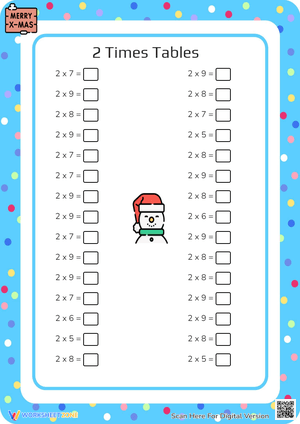
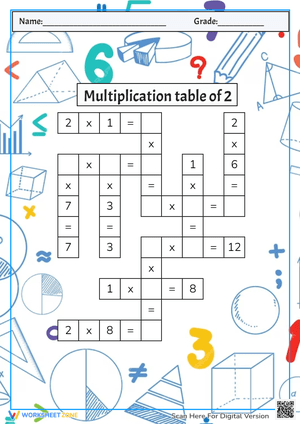
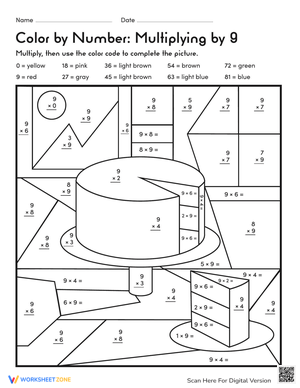
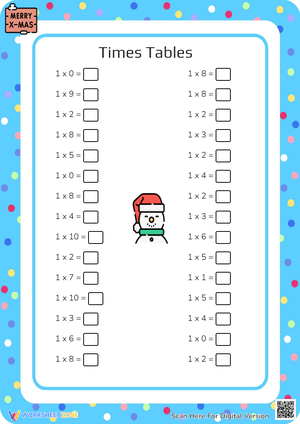
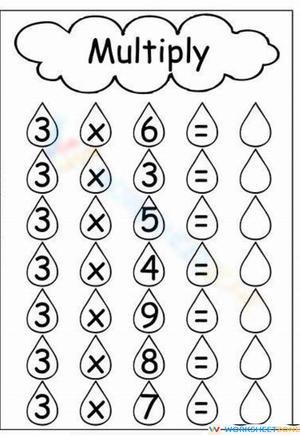
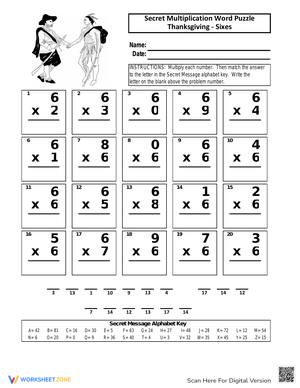
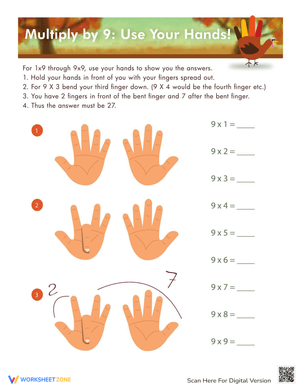
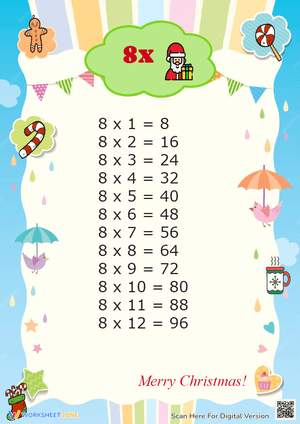
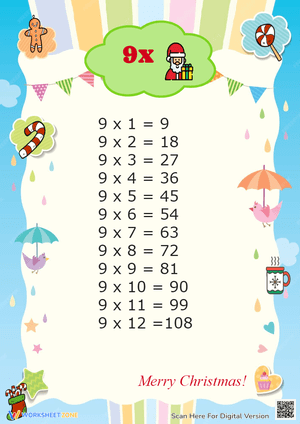
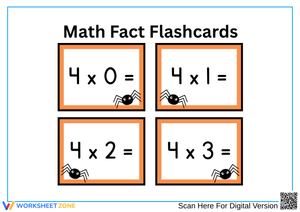
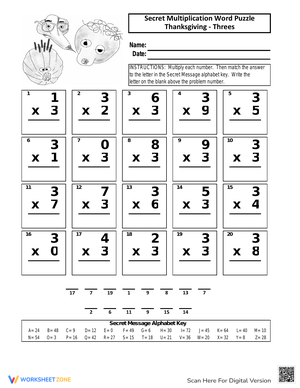
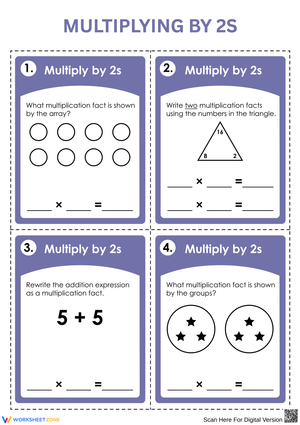
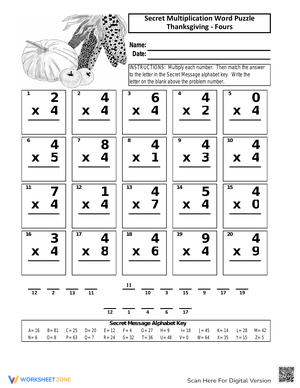
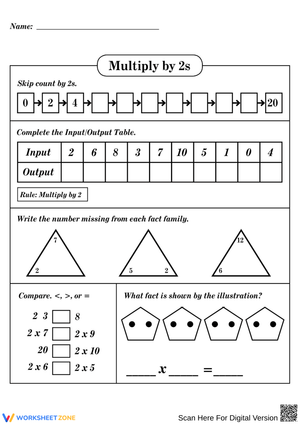
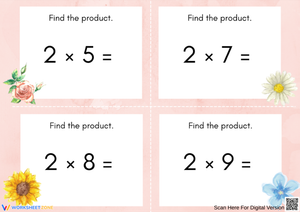
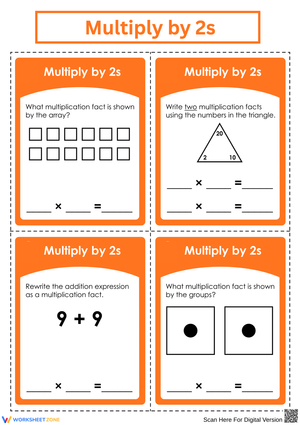
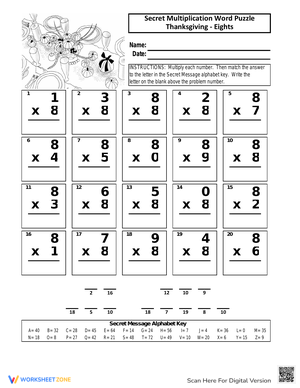
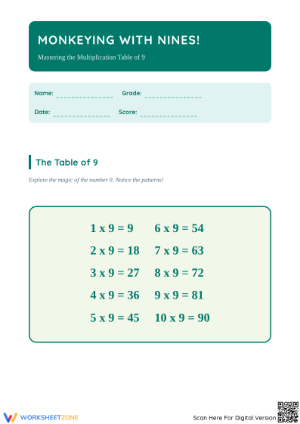
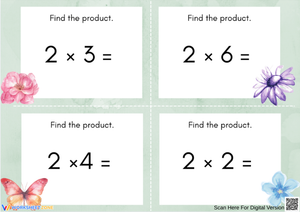
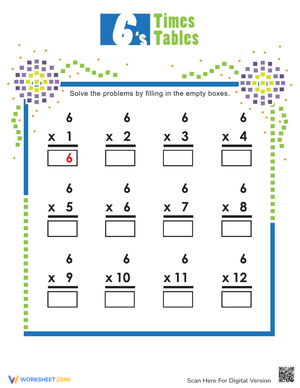
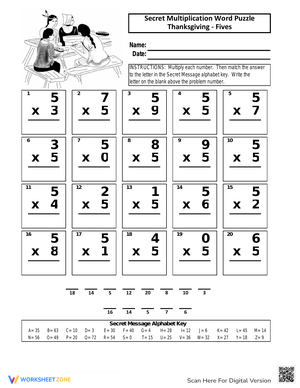
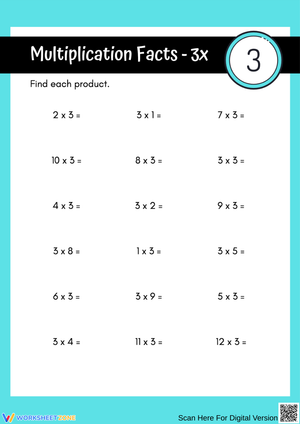
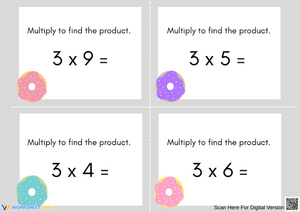
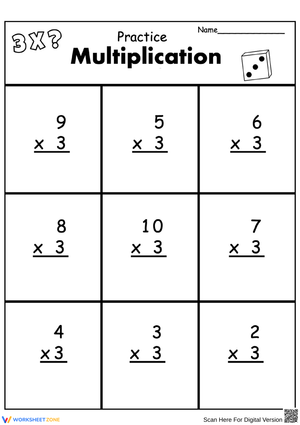
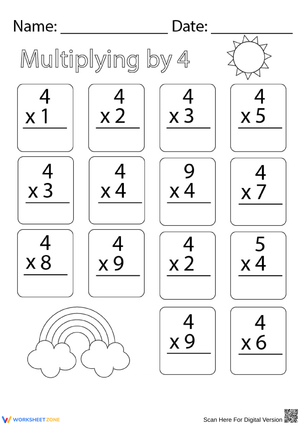
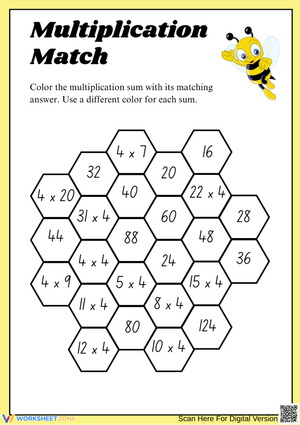
These individual number pdf worksheets for 3rd grade give teachers a targeted way to build multiplication fluency one factor at a time — rather than asking students to sort through a mixed-facts review before they've had a chance to notice what's actually happening in the products. Each worksheet zeroes in on a single factor, from the 2s through the 12s, and that narrower focus makes a real difference in how students approach the practice.
The Specific Skills Each Worksheet Targets
The set covers the full range of third-grade multiplication factors. Each worksheet anchors to one target number and presents it through several formats so students encounter the same fact from more than one direction. Across the set, students:
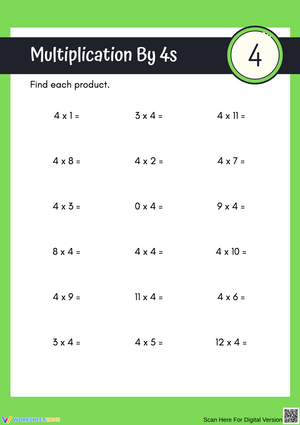
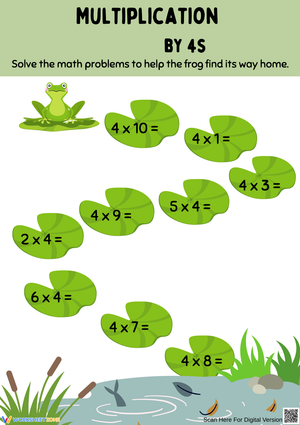
- Write and complete basic multiplication sentences for one target factor
- Identify missing factors in equations such as 6 × __ = 48
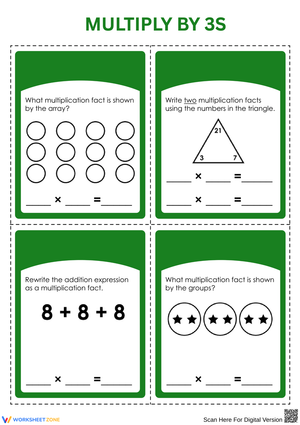
- Connect repeated addition to multiplication notation
- Interpret and sketch equal-group and array models
- Solve short word problems that keep the target factor constant
- Work through review worksheets that pair a recently learned number with an earlier one
That last format — the review pairing — carries more instructional weight than it might seem. Students who have the 3s solid but keep reverting to 3s answers when working a 3s-and-6s review are showing a retrieval interference problem, not a concept gap. Pairing factors in a review worksheet surfaces that quickly and points directly at what needs attention.
Frequent Student Errors Worth Watching For and Correcting
The most common problem with single-factor practice is skip-counting errors that compound across a worksheet. A student working on the 8s who miscounts one step — landing on 32 instead of 40 at the fourth fact — carries that error through every product that follows. The work looks effortful and systematic, but the whole lower half is wrong. When you spot a completed worksheet where the first two products are correct and the rest drift in a consistent pattern, that's almost always the cause rather than a knowledge gap.
A second pattern appears with array orientation. Students who correctly solve a 4 × 8 array drawn horizontally often stall when the same fact is shown as 8 × 4 in a vertical layout. They're reading the picture as a procedure rather than applying the commutative property. Asking those students to rotate the worksheet 90 degrees and describe what changed usually resolves it without direct reteaching.
Missing-factor items catch a third error. Students who know 6 × 8 = 48 will sometimes freeze entirely on 6 × __ = 48, treating it as a different type of problem. A brief pre-task prompt — "what fact family does this belong to?" — dissolves that freeze for most students in about thirty seconds. It's worth building that question into the routine whenever missing-factor worksheets go out.
Building These Worksheets Into Your Lesson Plans
The most efficient placement is the first eight minutes of independent work, before teacher-led instruction begins. Dropping a 6s worksheet on desks at the start of a lesson that will later cover the 6s creates a useful arc: students surface what they don't yet know, and they enter the lesson with a specific question in mind rather than passive attention. That sequence uses the worksheet as a formative entry point, not just repetition.
Individual number pdf worksheets for 3rd grade also earn their place in small-group intervention. If three students are still inconsistent with the 7s while everyone else has moved into mixed-facts work, those students get the targeted factor worksheet during center time — no new materials, just a different worksheet pulled from the same set. The rest of the class is occupied, and the intervention is genuinely specific to what those students need.
For sub plans, these worksheets hold up reliably. The factor is obvious from the first problem, the directions are embedded in the task structure, and the work is self-contained. A substitute doesn't need to understand where the class is in the multiplication unit to distribute these and collect them. That makes them worth keeping in a physical sub folder alongside a printed answer key.
Adjusting the Set for a Range of Learners
Individual number pdf worksheets for 3rd grade make differentiation straightforward because format and factor can be adjusted independently. One student works an array-based version of the 4s for visual support. Another completes missing-factor equations for the same number. A third writes a word problem for three different 4s facts and explains why the products change. All three are working on multiplication during the same period with no separate lesson plan required.
A few adjustments that hold up in real classrooms:
- Remove time pressure entirely for students still connecting skip counting to written equations — timed formats shut down strategy and produce anxiety rather than fluency data.
- Reduce the item count for students who need manageable chunks; 10 focused problems often yield more useful information than 30 rushed ones.
- Hold back the review-pairing worksheets until each individual factor is reasonably secure — presenting a 3s-and-6s review before the 6s are stable produces more 3s answers on both halves.
- For students who are well ahead, ask them to predict the full product set for a number before writing any answers, then check their predictions against the completed worksheet.
Standard Alignment
These worksheets address CCSS 3.OA.A.1, which asks students to interpret products of whole numbers as the total number of objects in equal groups, and 3.OA.C.7, which targets fluency with multiplication and division within 100 using strategies and known properties. The single-factor format maps directly to the instructional progression both standards imply: students first build meaning through equal-group and array representations (3.OA.A.1), then develop fluency through repeated, varied practice with individual facts (3.OA.C.7). Both standards expect students to move beyond counting-on strategies by the end of third grade, and working through one factor at a time is the most efficient way to track that progress without giving students more to manage than they're ready for.
Frequently Asked Questions
Which factors should teachers introduce first?
Most third-grade sequences start with the 2s, 5s, and 10s because they connect directly to skip-counting patterns students already know. The 3s, 4s, and 6s typically follow. The 7s and 8s tend to come last, and they benefit most from individual number pdf worksheets for 3rd grade because they lack the obvious skip-counting hook that makes earlier factors easier to anchor in memory.
Can these worksheets replace manipulatives and hands-on exploration?
No. The array and equal-groups worksheets in the set bridge concrete work and written notation, but students who are still in the concrete phase need physical objects before they work with pictures, and pictures before bare equations. These worksheets are most effective after students have had at least some hands-on time exploring what multiplication means in terms of equal groups — otherwise the pictures on the worksheet carry the full instructional load, which is more than they can bear alone.
How do I know when a student is ready to move from single-factor to mixed practice?
A reliable classroom benchmark: if a student completes a full single-factor worksheet with fewer than two errors and doesn't rely on audible skip-counting or finger-tracking, they're ready to encounter that factor inside a mixed review. Moving students into mixed practice before individual factors are solid is one of the more common fluency missteps in third grade — students end up repeating confusion instead of building on a stable base.
Are these worksheets appropriate for homework?
Yes, with one condition: the factor being sent home should already be familiar from class. Assigning the 8s worksheet to a student who hasn't been introduced to the 8s yet turns homework into first instruction, which creates confusion and makes the following morning harder. When the factor is already known from class practice, a short single-factor worksheet works well for homework because it's focused, low-stakes, and easy for a parent or caregiver to check with a simple answer key.













 Interactive Worksheet Maker
 Quiz Maker
 Word Search Maker
 Crossword Puzzle Maker
 Word Scramble Generator
 Sentence Scramble Generator
 Handwriting Worksheet Generator
 Name Tracing Generator
 Fill In The Blank Generator