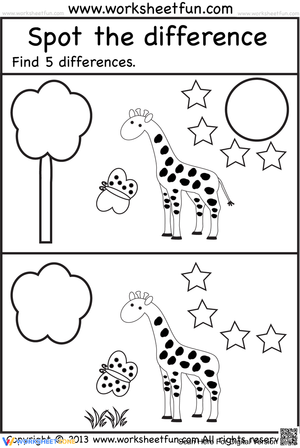
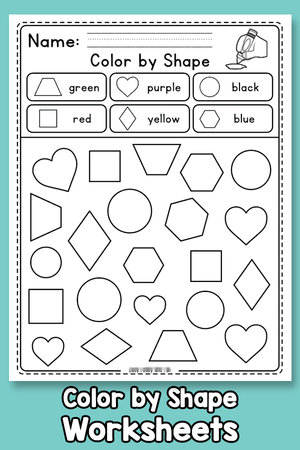
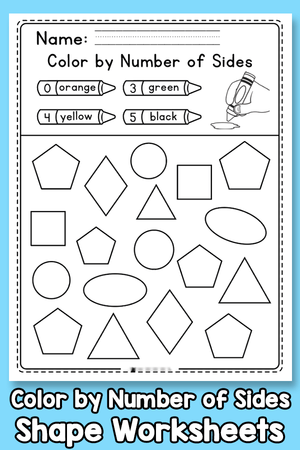
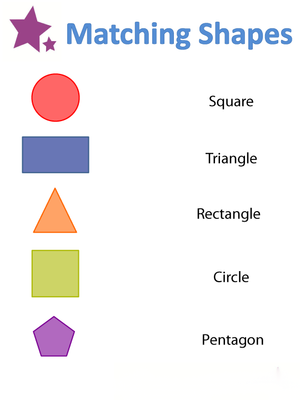
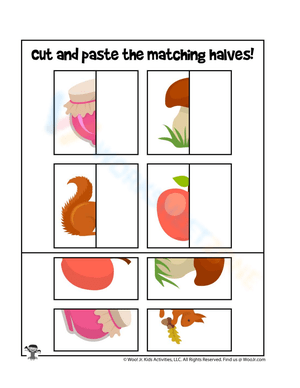
These geometry others pdf worksheets for 3rd grade cover the mixed skill territory that makes end-of-unit review genuinely productive — shape attributes, symmetry, 2D and 3D figure classification, equal partitions, and introductory perimeter all appear across the set, so teachers can identify exactly where student thinking breaks down without running five separate assessments. The resources are printable, black-and-white, and organized so each worksheet targets a clear skill cluster rather than scattering tasks at random. Teachers can slot them into morning work, centers, intervention groups, or Friday review without rebuilding their plans around them.
The Specific Skills Targeted
Grade 3 geometry covers more ground than it first appears. Students are expected to move beyond simple shape recognition into classification by attributes, comparison of related figures, and fractional partitioning — all while building precise vocabulary. This set addresses that full range.
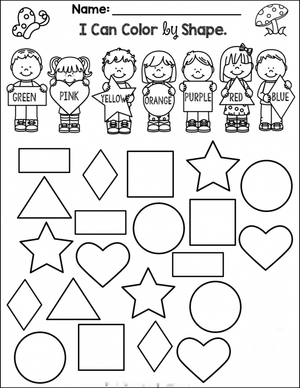
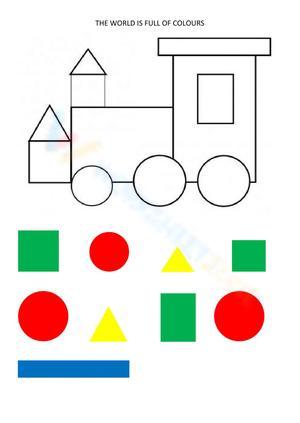
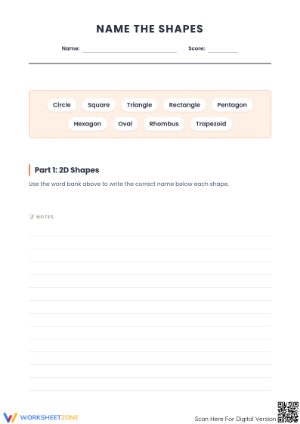
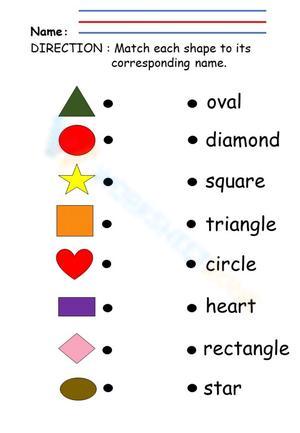
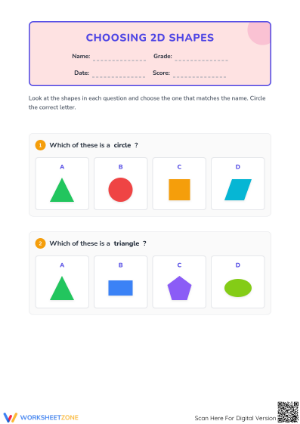
- 2D shape identification and naming: triangles, quadrilaterals, pentagons, hexagons, and circles recognized by their defining features
- Shape attributes: counting sides and vertices, identifying equal sides, and distinguishing defining from non-defining features
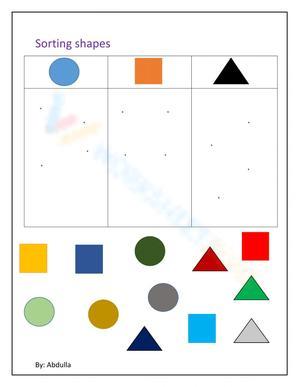
- Quadrilateral sorting: comparing squares, rectangles, rhombuses, and trapezoids at an introductory classification level
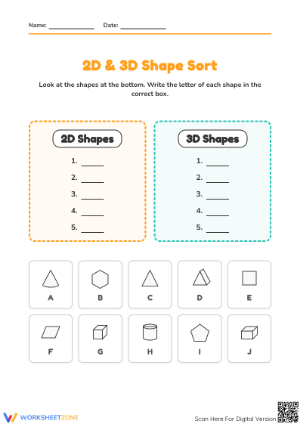
- 3D solid recognition: naming and describing cubes, rectangular prisms, cones, cylinders, and spheres
- Lines of symmetry: identifying and drawing lines of symmetry in two-dimensional figures
- Equal partitioning: dividing shapes into halves, thirds, and fourths and writing the matching unit fraction
- Perimeter basics: counting unit lengths around simple polygons when included in mixed review
- Geometry vocabulary: matching terms to diagrams and using words like vertex, quadrilateral, and equal parts in short written responses
The vocabulary tasks matter more than they look at first. Students who can circle the correct shape often cannot complete a sentence that asks them to explain why a figure belongs to a category. Worksheets that ask for both tasks together — mark it, then name the reason — build more durable understanding than recognition alone.
Student Errors These Worksheets Help You Catch
The most predictable error in Grade 3 geometry involves the relationship between squares and rectangles. Even after students correctly name both shapes, a surprising number will insist a square is "not a rectangle" — and when asked to explain, they'll say something like "because all the sides are the same." They've memorized the square's attribute without connecting it to the defining properties of rectangles. A worksheet that asks students to sort figures into a "rectangle" category, with a square included among the choices, surfaces this confusion quickly and gives teachers a clear opening for direct discussion.
Equal partitioning produces its own consistent mistake. Students will draw three sections inside a circle, estimate them as roughly equal by eye, and write "1/3" above each part — even when the sections are visibly uneven. The problem isn't fractional understanding; it's that students treat equal parts as a visual approximation rather than a mathematical requirement. Tasks that ask them to verify equality, or that show two differently divided shapes and ask which one actually shows thirds, push past that surface-level response.
With 3D solids, watch for students who name a cylinder a "circle." They're describing the circular face they see rather than the whole solid — a classic part-for-whole error that shows up reliably whenever worksheets display figures from a single angle.
How to Build These Worksheets Into Your Lesson Plans
A 10-to-15 minute block is enough for geometry others pdf worksheets for 3rd grade used as standalone practice. The geometry review that actually sticks comes through repetition across weeks, not through one dense session. One practical sequence: assign a mixed worksheet on Monday to surface what students remember from the previous week, then use two or three specific items from it to drive that day's mini-lesson. A second worksheet on the same skill cluster on Friday gives you a quick, low-stakes measure of what actually landed.
Math centers are another reliable slot for these resources. Pair a worksheet with pattern blocks or a geoboard, and students can check their written answers by building the figure they described. That physical confirmation is especially useful for equal partition and symmetry tasks, where students frequently second-guess their own drawings even when they're correct.
For substitute days, a worksheet with short printed directions and no required manipulatives runs without any explanation from the sub. Geometry tasks that require nothing beyond what's printed on the worksheet are a genuine practical advantage — the sub doesn't need to teach anything new, and the work stays meaningful.
Standard Alignment
These worksheets address skills from the Common Core State Standards geometry domain for Grade 3. The primary standard is 3.G.A.1, which requires students to understand that shapes in different categories can share attributes, and that shared attributes define larger categories — for example, that rectangles and rhombuses both qualify as quadrilaterals. The second standard, 3.G.A.2, covers partitioning shapes into equal parts and expressing each part as a unit fraction of the whole. In classroom terms, 3.G.A.2 is where geometry and fractions overlap directly, which is why teachers often assign mixed geometry review during or just after a fractions unit — the two skill areas reinforce each other when practiced together.
Adjusting the Set for a Range of Learners
The geometry others pdf worksheets for 3rd grade in this set cover multiple skill areas, which makes them naturally suited to tiered use. For students who need additional support, narrow the task by marking only the items tied to a single skill — shape identification or 3D solid names — and let them work through those before moving to classification or partitioning. Reducing the number of active items on a worksheet is faster than building a second resource from scratch, and it keeps the student in the same classroom activity as everyone else.
Students who move through recognition tasks quickly benefit most from the explanation prompts. Short-response items like "How do you know?" and "Explain why these parts are equal" require precise vocabulary rather than pointing at an answer, which is genuine challenge without changing the topic or pulling out separate materials. For early finishers, a second worksheet from the set focused on symmetry drawing or fraction partition provides a natural extension that stays squarely within the geometry domain.
In small-group intervention, choose two or three items that target a shared gap — quadrilateral sorting, for instance — and work through them together rather than assigning the full worksheet independently. The visual layout makes it straightforward to discuss each figure aloud, and the short-response fields give students a place to record their reasoning in their own words.
Frequently Asked Questions
What geometry topics do these worksheets actually cover?
The set covers 2D shape identification and attributes, 3D solid recognition, quadrilateral classification, symmetry, equal partitioning with unit fractions, introductory perimeter, and geometry vocabulary. Most worksheets in the set mix two or three of these areas within each worksheet rather than isolating one skill entirely.
Can these worksheets replace a geometry unit, or are they best used as review?
They work best as practice and review rather than as initial instruction. Students need direct teaching and hands-on exploration before a worksheet makes full use of their understanding. That said, geometry others pdf worksheets for 3rd grade serve throughout a unit — early on as informal checks, mid-unit as practice, and near the end as mixed review before an assessment.
Do the worksheets include answer keys?
That depends on the specific resource. When evaluating a set, check whether answer keys are included before downloading — they matter for fast checking during center rotations or homework review. Sets without keys slow down the high-frequency routines where these worksheets work best.
How should I use these with students who are behind in geometry?
Focus on one skill cluster at a time rather than assigning a full mixed worksheet at once. For a student who hasn't yet solidified 2D shape attributes, mark only those items and treat the rest as optional. As confidence builds, gradually open access to classification and partitioning tasks. Pairing the worksheet with physical shapes also helps — students who struggle with flat diagrams often work more accurately when they can hold and rotate a shape before writing their answer.













 Interactive Worksheet Maker
 Quiz Maker
 Word Search Maker
 Crossword Puzzle Maker
 Word Scramble Generator
 Sentence Scramble Generator
 Handwriting Worksheet Generator
 Name Tracing Generator
 Fill In The Blank Generator