


























Views
Downloads
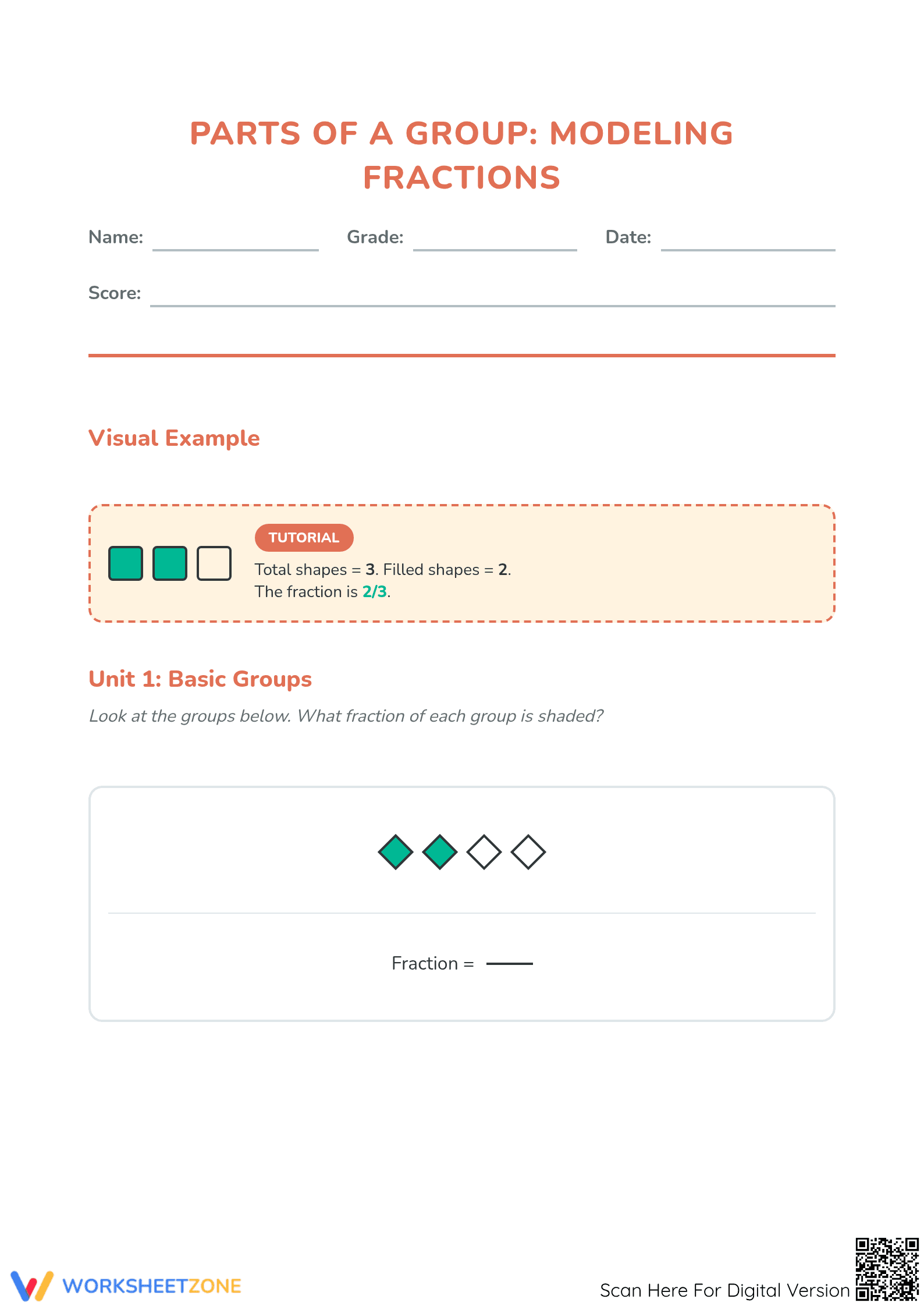

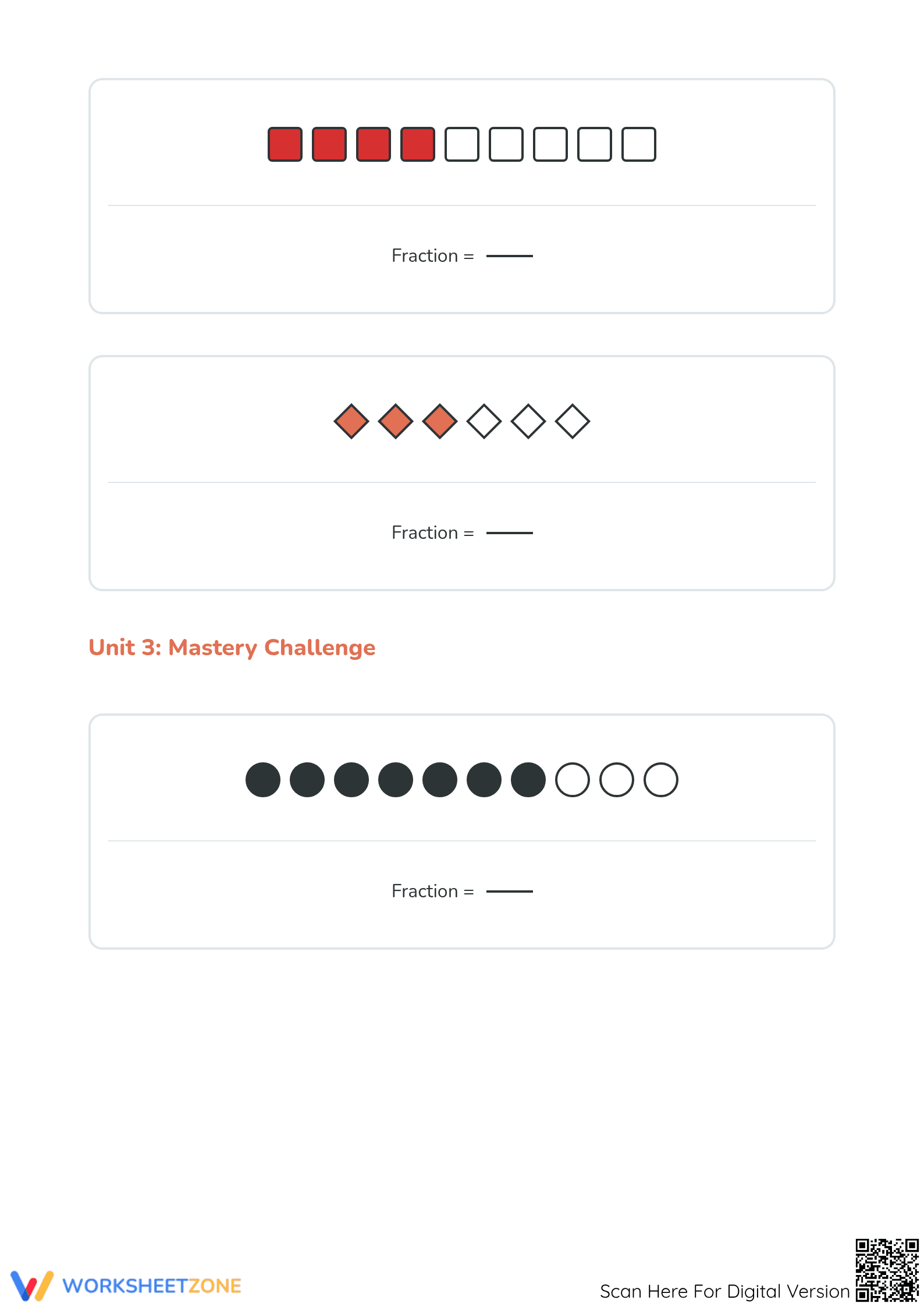

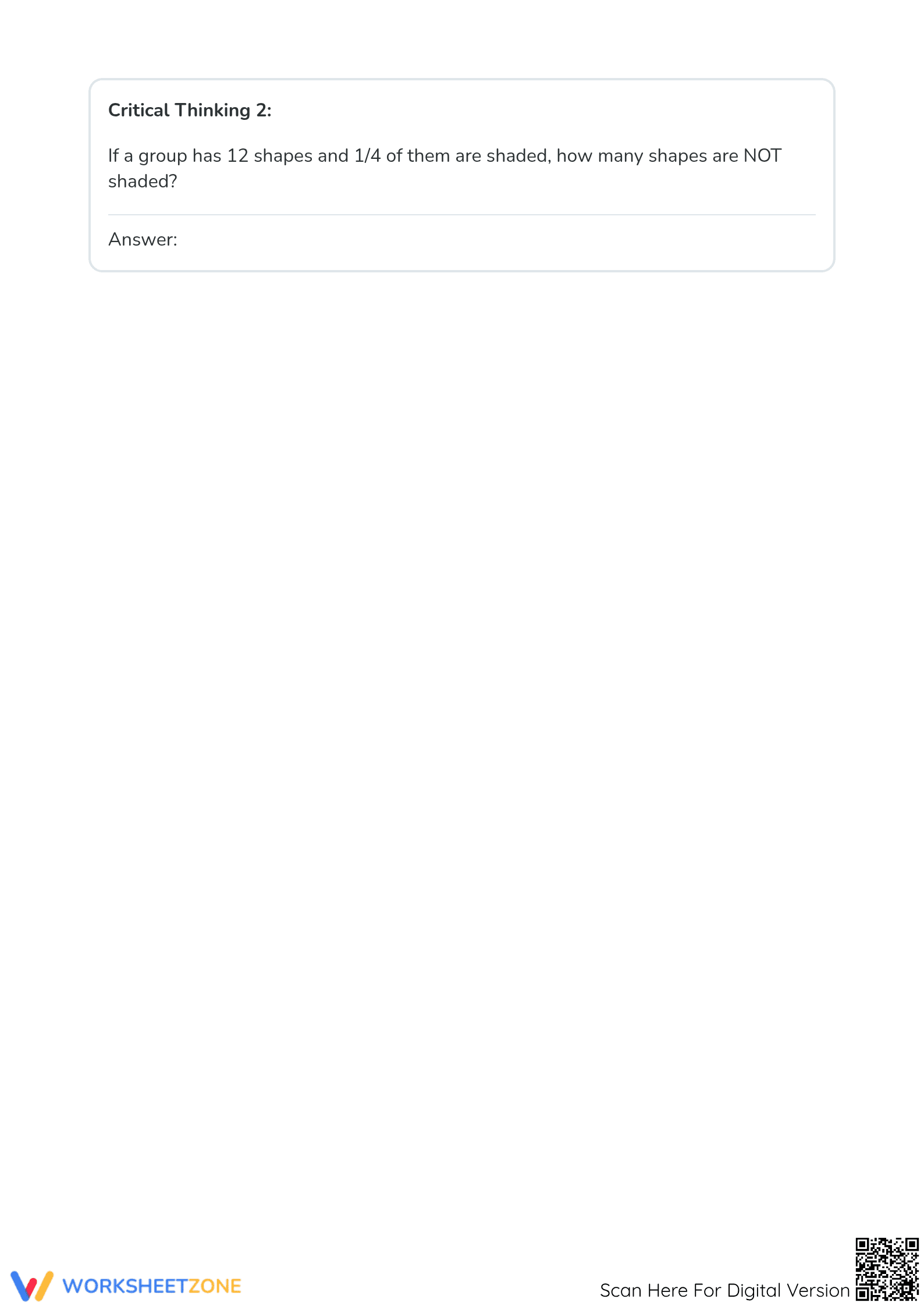

Modeling Fractions Worksheet | Printable Grade 3 Math
Paste this activity's link or code into your existing LMS (Google Classroom, Canvas, Teams, Schoology, Moodle, etc.).
Students can open and work on the activity right away, with no student login required.
You'll still be able to track student progress and results from your teacher account.
This comprehensive modeling fractions worksheet helps Grade 3 students master the foundational concept of parts of a group. By using visual shape sets, learners transition from concrete counting to abstract notation. Students will develop a deep understanding of how numerators represent shaded parts and denominators represent the total group size.
At a Glance
- Grade: 3 · Subject: Math
- Standard:
CCSS.MATH.CONTENT.3.NF.A.1— Identify and model fractions as parts of a group or set of objects- Skill Focus: Modeling fractions as parts of a group
- Format: 5 pages · 12 problems · Answer key included · PDF
- Best For: Small group instruction and independent practice
- Time: 25–35 minutes
What's Inside
This 5-page PDF contains twelve carefully scaffolded tasks distributed across three progressive units. It features a dedicated tutorial section with a visual example to ground student understanding. The worksheet includes "Basic Groups," "Larger Sets," and a "Mastery Challenge," alongside critical thinking prompts that require students to draw their own models and solve complex word problems. A full answer key is provided for quick grading.
Skill Progression
This worksheet follows a gradual release of responsibility. It begins with Guided Practice in Unit 1, where students observe simple shape sets using the tutorial as a reference. The Supported Practice in Unit 2 introduces larger sets and varied shapes, requiring precise counting and identification. Finally, Independent Practice occurs in the Mastery Challenge, where students apply their knowledge to draw custom models and solve application-based word problems.
Standards Alignment
The primary standard addressed is CCSS.MATH.CONTENT.3.NF.A.1, which focuses on understanding fractions as quantities formed by parts of a whole or group. By identifying shaded shapes within a set, students satisfy the core requirement of partitioning and fractional representation. This standard code can be copied directly into lesson plans, IEP goals, or district curriculum mapping tools to ensure instructional coherence across the mathematics curriculum.
How to Use It
Incorporate this resource during the "We Do" phase of direct instruction to transition students from whole-number counting to fractional concepts. Alternatively, use the critical thinking pages as a formative assessment at the end of a lesson to gauge individual student mastery. A useful observation tip is to watch if students consistently count the total number of shapes before identifying the shaded portion, which confirms their understanding of the denominator.
Who It's For
This resource is designed for Grade 3 students beginning their fractions unit, but it serves as an excellent intervention tool for Grade 4 or 5 learners needing to reinforce basic concepts. It naturally pairs with physical manipulatives like colored counters or pattern blocks to provide a tactile component to the visual exercises. The clear layout also supports English Language Learners by minimizing heavy text and focusing on visual mathematical logic.
Effective fraction instruction requires a shift from part-whole area models to part-set models to build robust mathematical fluency. According to research from EdReports 2024, high-quality instructional materials must prioritize visual representations to help students bridge the gap between concrete objects and abstract symbols. This worksheet aligns with those findings by using groups of shapes to illustrate the CCSS.MATH.CONTENT.3.NF.A.1 standard, ensuring students understand that fractions represent specific quantities within a larger collection. By engaging with 12 targeted problems across multiple units, learners move beyond rote memorization toward a conceptual grasp of fractional relationship. This approach is consistent with best practices identified in NAEP assessments, which highlight the importance of visual modeling in early elementary mathematics to prevent common misconceptions about fractional values as students progress toward more complex operations.


