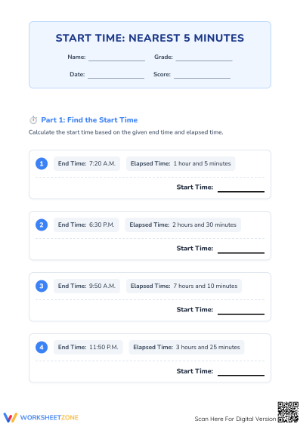
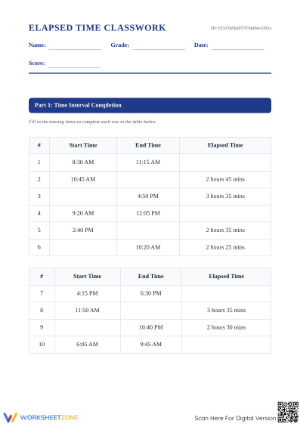
3rd grade elapsed time pdf worksheets give teachers a focused set of resources covering everything students need to move from reading a clock to actually calculating with time: analog and digital clock pairs, duration word problems, and the harder task of working backward to find a missing start time. The challenge with elapsed time — more than almost any other third-grade math skill — is that students must apply arithmetic inside a system that doesn't behave like their other math. That tension is what makes deliberate, varied practice essential rather than optional.
The Specific Skills Targeted
Each worksheet in the set isolates a particular aspect of time calculation rather than blending everything into one undifferentiated exercise. The formats span five distinct problem types:
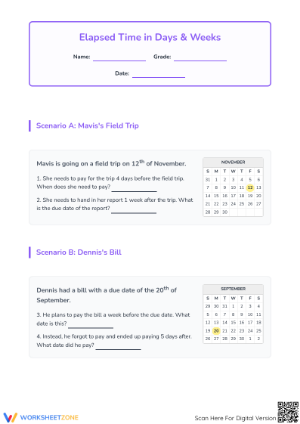
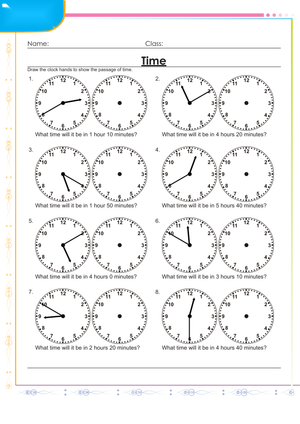
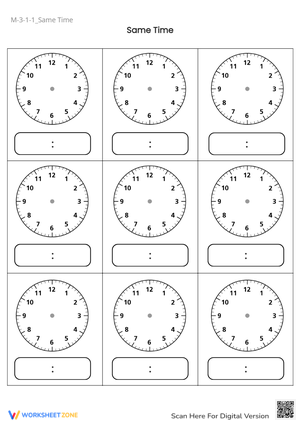
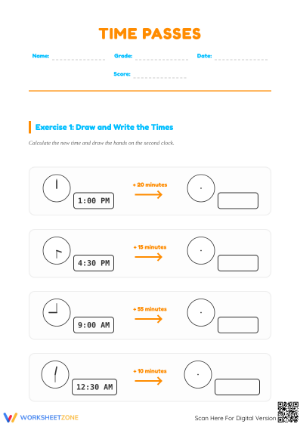
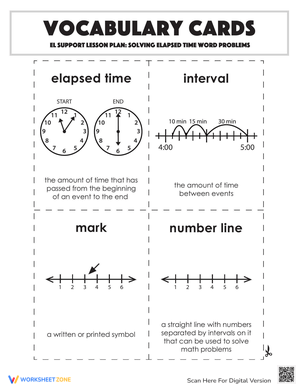
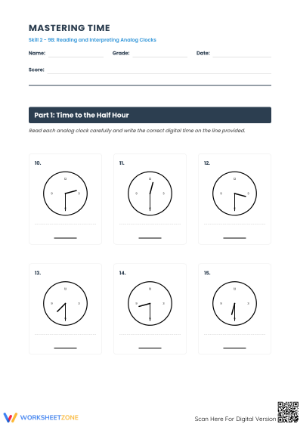
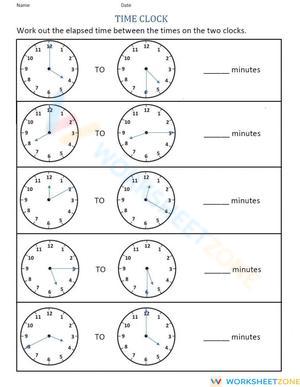
- Analog clock pairs showing a start and end time, with students calculating the elapsed duration
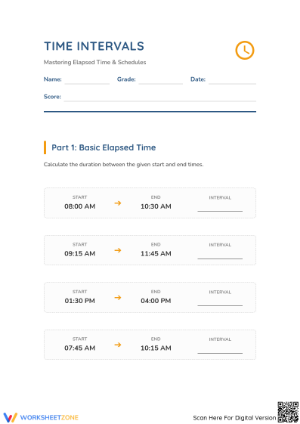
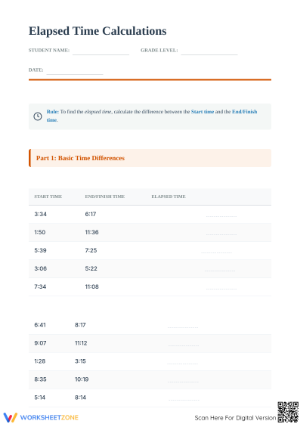
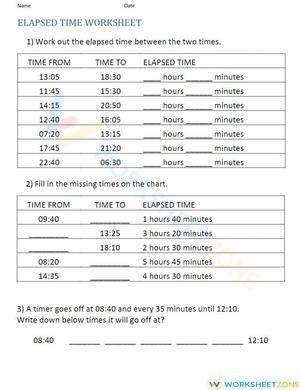
- Digital format problems where students compute the interval between two times without the visual support of clock hands
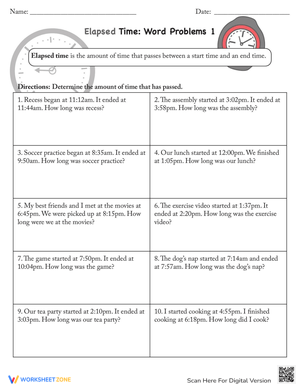
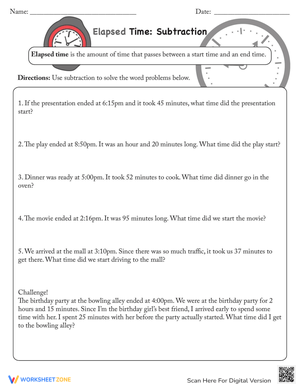
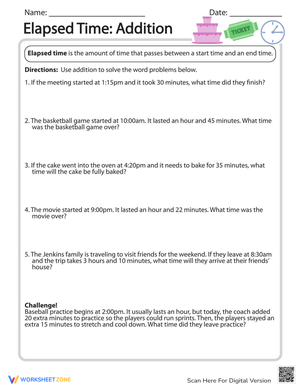
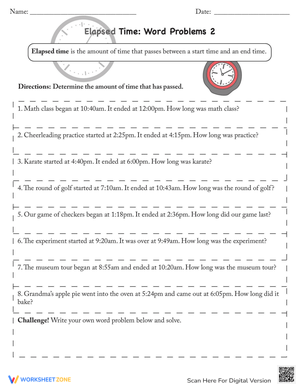
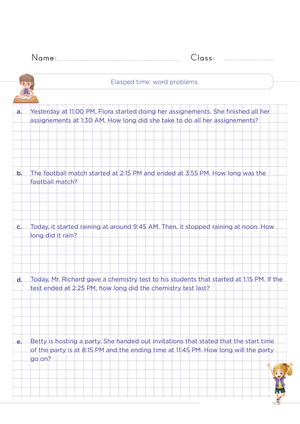
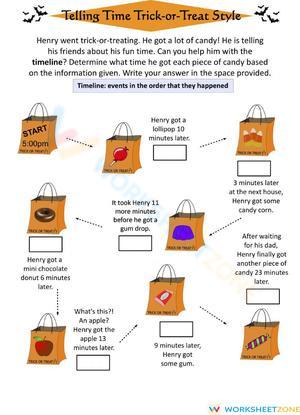
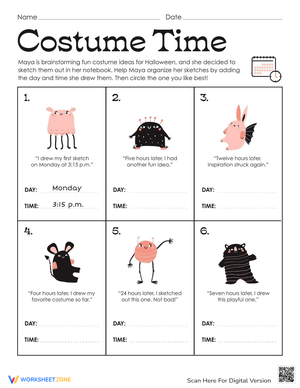
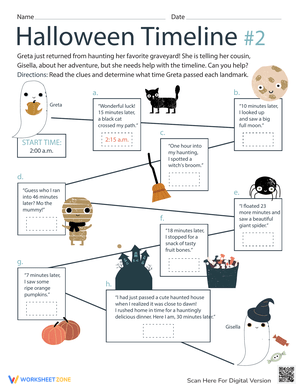
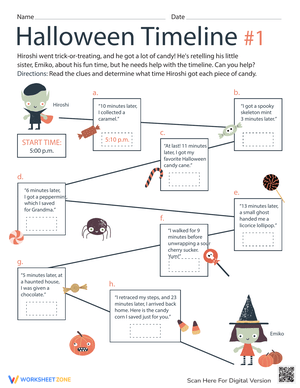
- Word problems set in everyday contexts — sports practices, school schedules, library visits — where students must extract the relevant time information before calculating
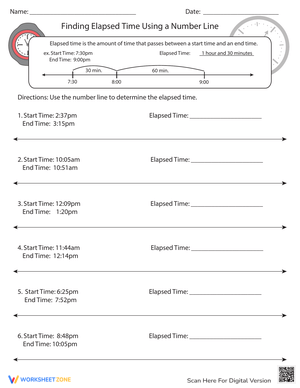
- Open number line worksheets where students draw and label their own jumps through time
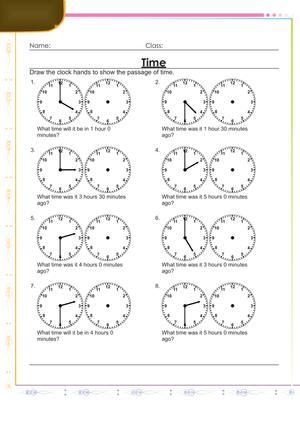
- Backward-counting problems that give an end time and a duration, asking students to determine when an event started
That last format consistently trips up students who have otherwise mastered forward elapsed time. A student who can reliably find that an event starting at 2:15 and running 45 minutes ends at 3:00 will still struggle to work that same problem in reverse — and having a worksheet dedicated specifically to backward counting makes the gap visible before a unit assessment rather than during one.
Standard Alignment
These worksheets address CCSS.Math.Content.3.MD.A.1, which requires students to tell and write time to the nearest minute and to solve word problems involving addition and subtraction of time intervals expressed in minutes. In most third-grade pacing guides, elapsed time arrives in the second half of a measurement unit — after students have revisited minute-hand reading from second grade but before the class moves into liquid volume and mass. That placement matters: teachers introducing these resources can expect students to recognize clock positions reasonably well but have little experience using those positions as the input and output of a calculation. The standard's word-problem component is where most students show their first real gaps, because reading a clock and calculating with a clock call on meaningfully different thinking.
Frequent Student Errors Worth Watching For
The most persistent error is base-60 regrouping. Students who handle three-digit addition without difficulty will write 2:70 when they add 20 minutes to 2:50, because their entire arithmetic experience up to this point has involved regrouping at ten. The sixty-minute boundary feels arbitrary, and reminding students about it verbally fixes the error less reliably than visual practice does. A related mistake appears when students calculate correctly within a single hour but fail to increment the hour when the interval crosses the top of the clock — they'll get the minutes right and leave the hour unchanged.
A third error pattern shows up specifically on backward-counting problems: students who can find an end time fluently will subtract the duration directly from the end time's minute value without adjusting the hour. A student asked to find the start time of an event that ended at 4:05 and ran 35 minutes will write 4:30 without noticing that the hour needs to change. These aren't careless mistakes — they're logical errors made by students who haven't yet internalized the circular structure of a clock. The 3rd grade elapsed time pdf worksheets in this set generate enough of those problem types to surface the pattern before it becomes a unit assessment surprise.
Smart Ways to Work These Worksheets Into Your Week
These resources work well as Monday warm-ups immediately after a weekend. Elapsed time fades faster than most third-grade math skills without repeated contact, and five minutes with one worksheet at the start of the week keeps the concept active across a longer unit. During small-group instruction, the analog clock pair worksheets work particularly well because students can verbalize their thinking out loud while the teacher listens for exactly when they hit the sixty-minute boundary — whether they navigate it or collapse back into base-10 logic tells you more than a completed worksheet score does.
For math centers, laminating the number line worksheets or sliding them into plastic sleeves lets students use dry-erase markers to draw jumps, erase, and revise without consuming paper. This matters specifically for the open number line format, where students frequently need to redraw a jump after realizing their first interval was too large. The word problem worksheets serve well as formative checkpoints at the end of a lesson block — a teacher can scan a class set in a few minutes and identify which students need backward-counting work before the unit moves on.
Adjusting the Worksheets for a Range of Learners
For students who are still shaky on the base-60 concept, pairing the worksheets with a paper time strip — a long strip marked from 0 to 60, bent into a loop so students can see where 60 meets 0 — gives them a physical reference that reduces the cognitive demand of holding that circular structure in working memory. On the worksheets themselves, starting those students with problems that stay within a single hour removes the hour-change variable so they can focus entirely on the minute calculation.
Students who move through the basic problems quickly can be directed to the backward-counting and multi-hour worksheets. A problem asking for the start time of an event that ran 1 hour and 45 minutes and ended at 6:20 PM requires managing two separate subtractions, sequencing them correctly, and monitoring the AM/PM boundary — enough moving parts to challenge a student who found the forward problems routine. Mixed-ability pairs also work well with this set: the partner explaining a number line jump to a classmate who is stuck tends to consolidate their own understanding in the process.
Frequently Asked Questions
Can these worksheets be used for homework as well as in-class practice?
Yes, though the analog clock worksheets travel better to homework than the open number line format does. Students who haven't yet internalized the number line strategy tend to abandon it at home and default to guess-and-check, which produces correct answers on easy problems and breaks down on harder ones. Sending home the word problem worksheets — where the calculation method isn't prescribed — gives families more flexibility and still generates useful data when the work returns.
What's the best way to introduce the number line strategy before students work independently?
Model it on a class-size number line using two or three problems before students attempt the 3rd grade elapsed time pdf worksheets on their own. The critical moment to make visible is what happens at the top of the hour: show explicitly that a jump landing at 11:60 doesn't exist — students must reset to 12:00 and continue from there. Students who see this drawn out on the board handle the reset more reliably than students who receive only a verbal explanation of it.
How do I know when students are ready to move from same-hour problems to problems that cross the hour?
Watch for students who complete same-hour problems without drawing any intermediate jumps — they're grouping minutes mentally rather than working one at a time, which signals readiness for more complexity. Students who still need to mark every individual minute on a number line are not ready for cross-hour problems; adding the hour-change layer while they're still working out the minute structure creates overload that causes some students to disengage entirely rather than try. The 3rd grade elapsed time pdf worksheets in this set are organized so teachers can assign same-hour and cross-hour worksheets to different groups simultaneously without either group appearing to work on something categorically different.













 Interactive Worksheet Maker
 Quiz Maker
 Word Search Maker
 Crossword Puzzle Maker
 Word Scramble Generator
 Sentence Scramble Generator
 Handwriting Worksheet Generator
 Name Tracing Generator
 Fill In The Blank Generator