




























Views
Downloads
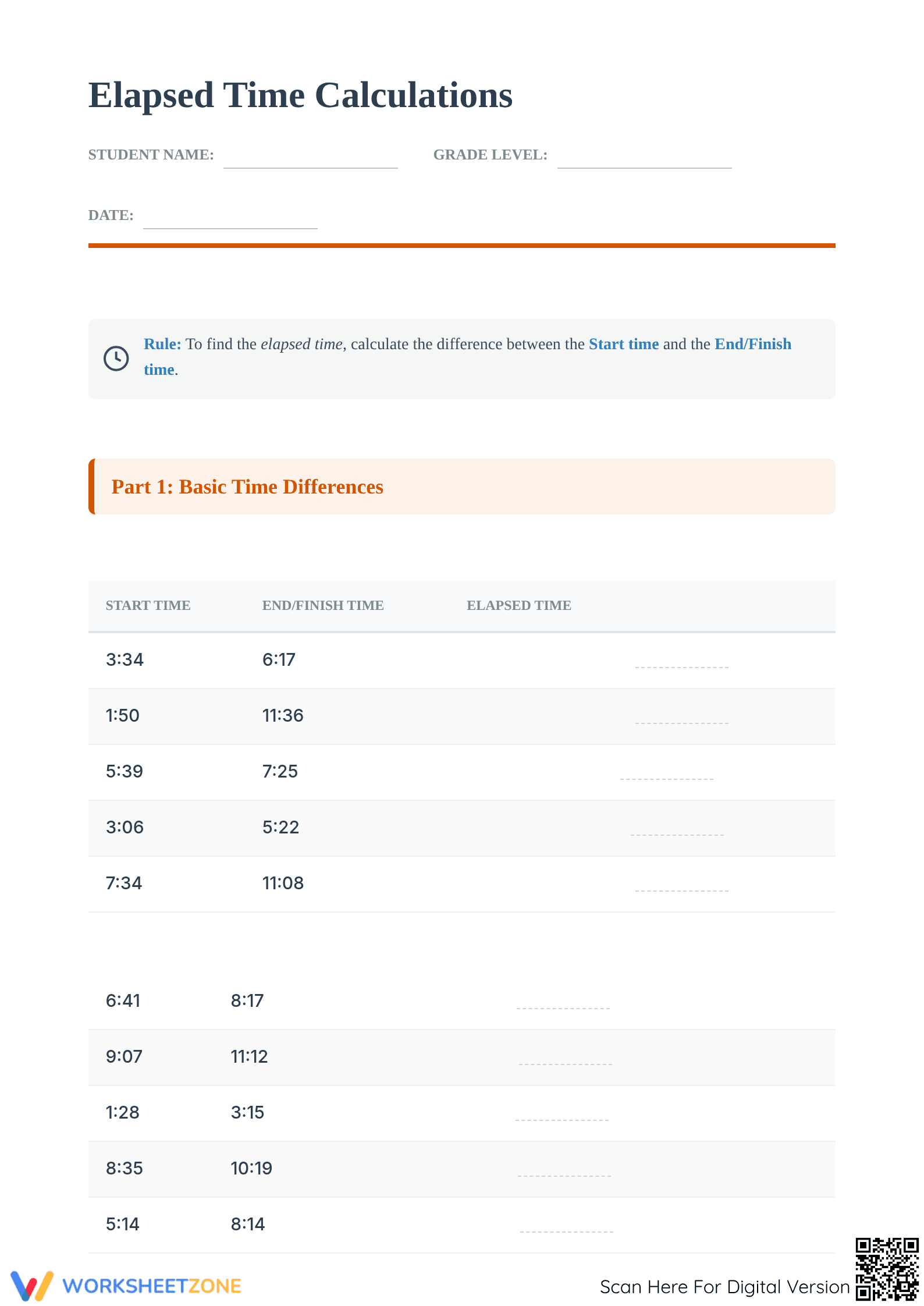
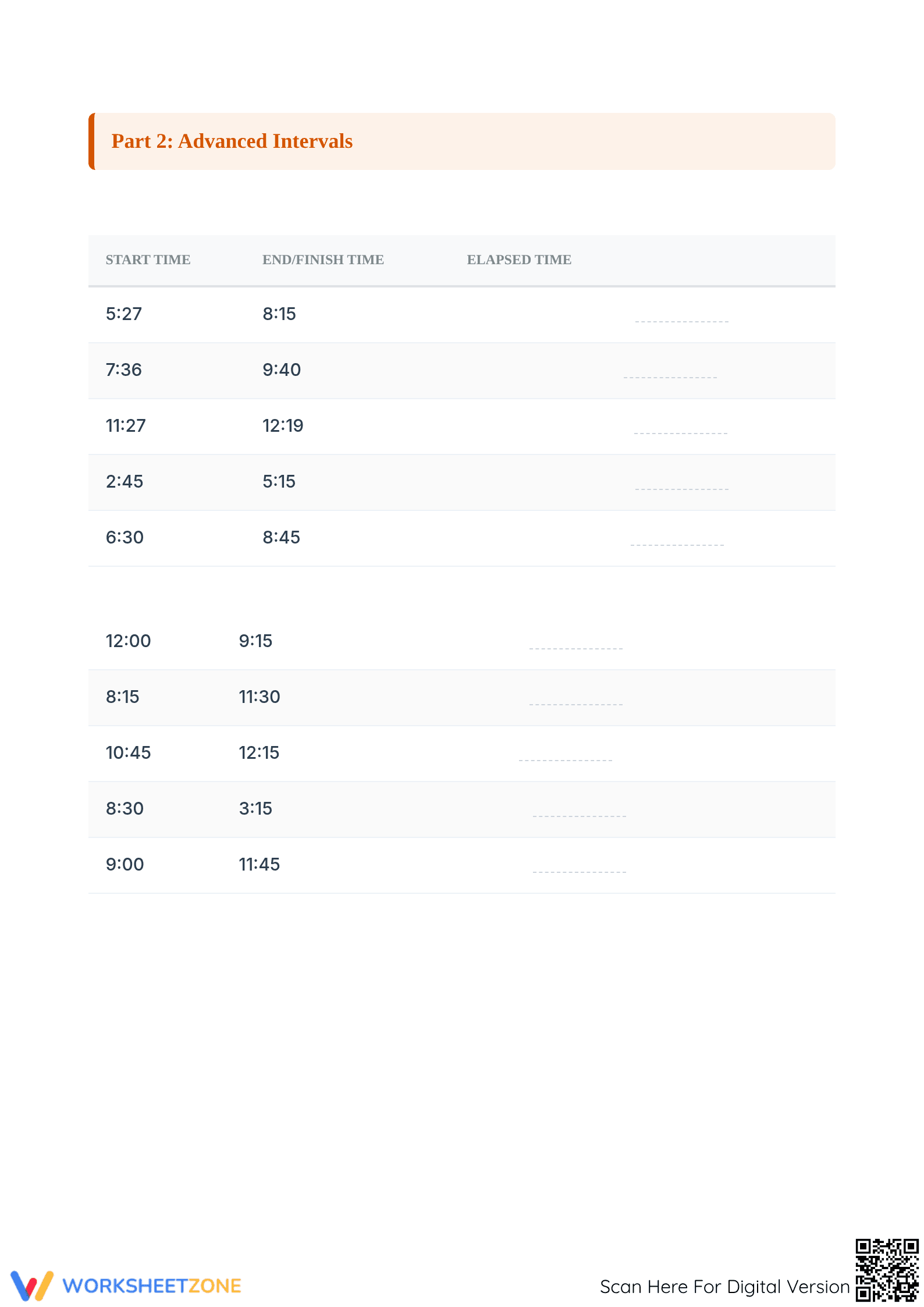
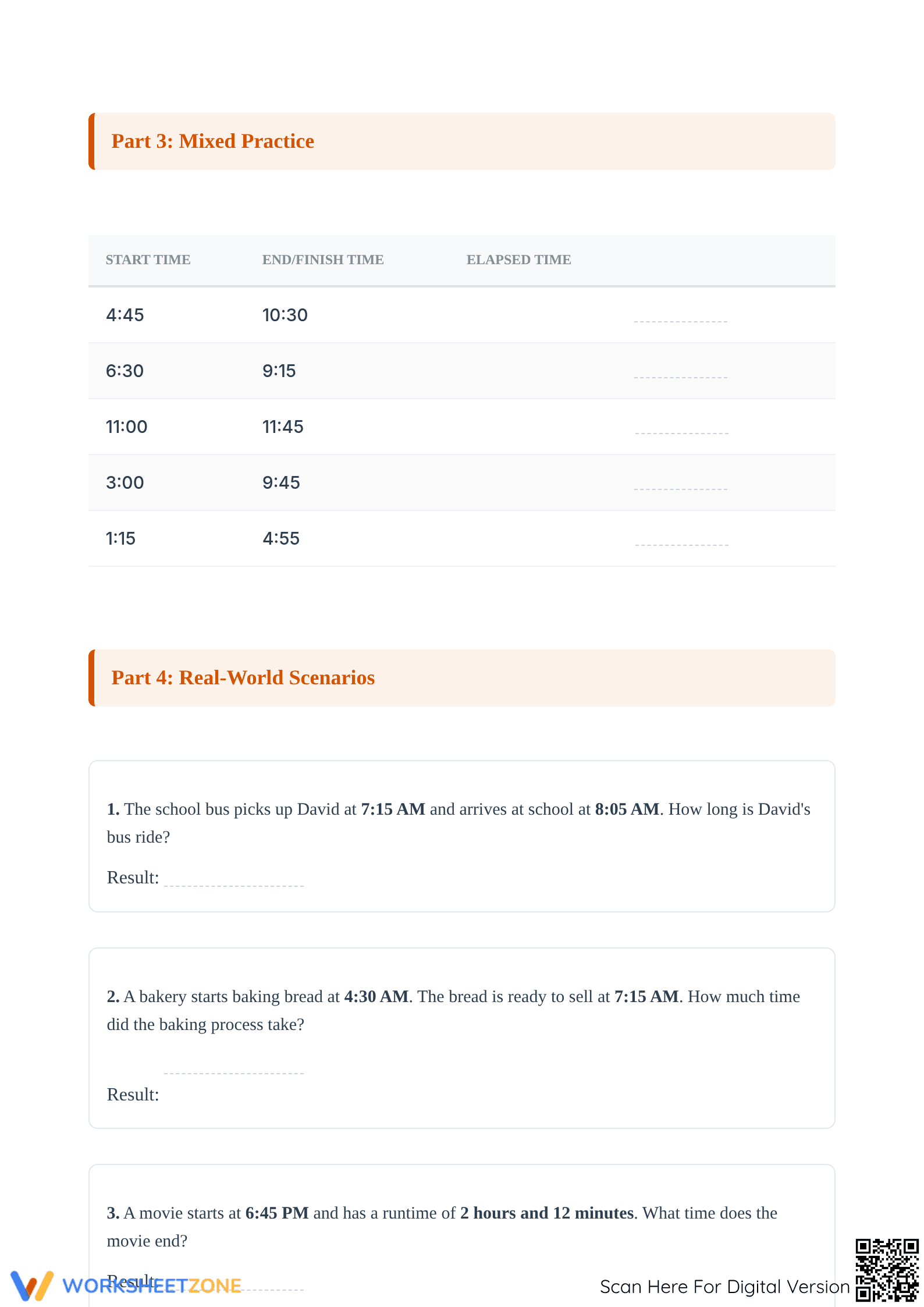
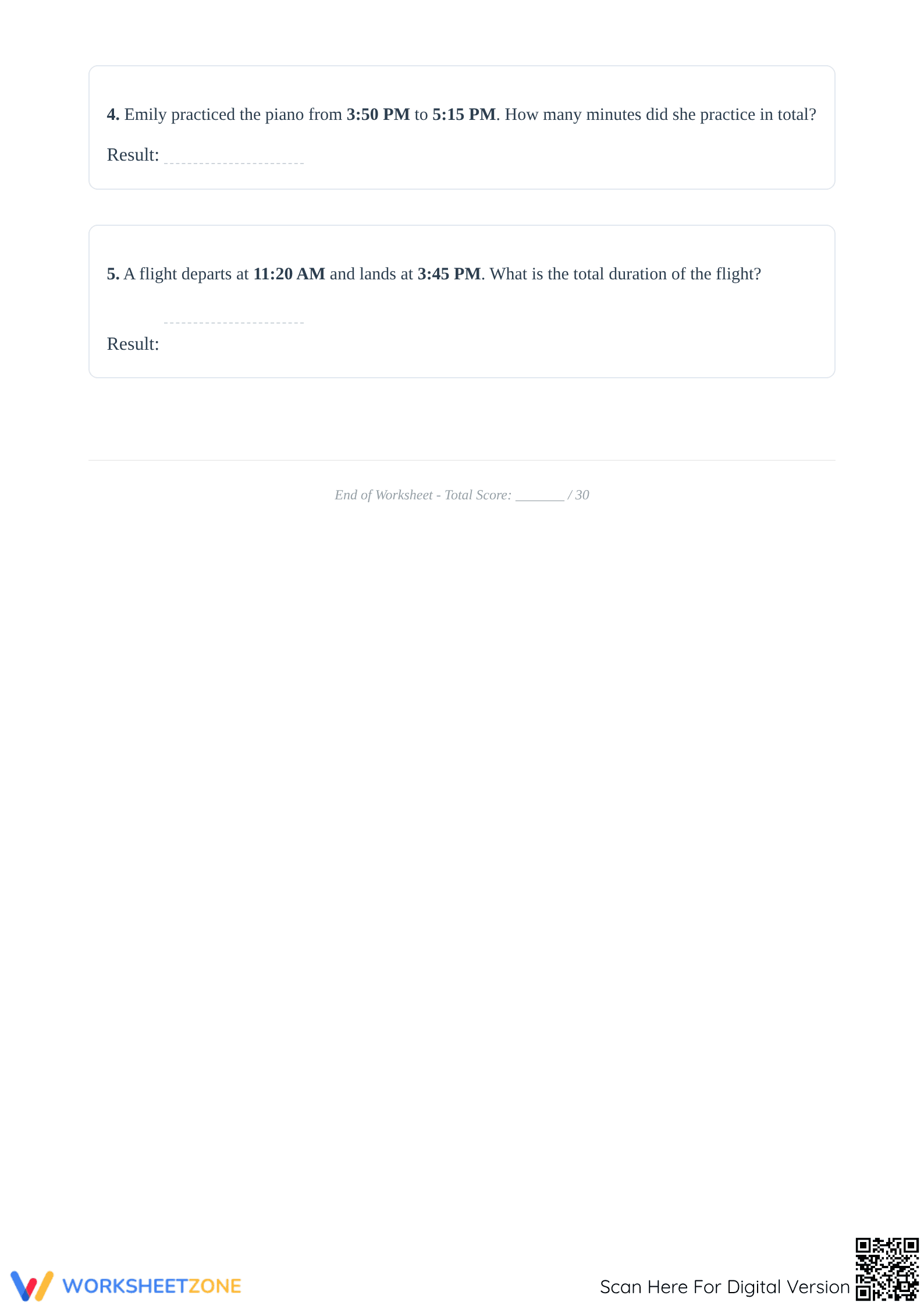

Grade 4 Elapsed Time — Printable No-Prep Worksheet

Paste this activity's link or code into your existing LMS (Google Classroom, Canvas, Teams, Schoology, Moodle, etc.).
Students can open and work on the activity right away, with no student login required.
You'll still be able to track student progress and results from your teacher account.
Master Elapsed Time with This No-Prep Worksheet
This Grade 4 math worksheet provides essential practice in calculating elapsed time to the nearest minute. Students will solve word problems and interpret analog and digital clocks to find start times, end times, and duration. It’s a focused resource designed to build confidence and fluency with a critical real-world measurement skill.
At a Glance
- Grade: 4 · Subject: Math
- Standard:
CCSS.MATH.CONTENT.4.MD.A.2— Solve word problems involving intervals of time using the four operations.- Skill Focus: Elapsed Time to the Minute
- Format: 4 pages · 18 problems · Answer key included · PDF
- Best For: Independent practice, homework, or formative assessment.
- Time: 20–30 minutes
What's Inside
This resource includes a four-page PDF file. The first three pages contain 18 unique problems focused on calculating elapsed time. The problems require students to work with analog clocks, digital time, and word-based scenarios. A complete answer key is provided on the final page for quick grading or student self-checking.
A Zero-Prep Workflow for Teachers
Designed for busy educators, this worksheet follows a simple zero-prep workflow. First, Print the PDF. Second, Distribute it to students for immediate use. Third, Review student work using the provided answer key. The entire process requires minimal teacher preparation, making it an ideal resource for substitute plans, supplemental practice, or a last-minute class activity.
Standards Alignment for Your Lesson Plans
This worksheet is directly aligned with Common Core standard CCSS.MATH.CONTENT.4.MD.A.2, which requires students to solve word problems involving intervals of time. The tasks provide targeted practice on this measurement skill. It also supports the Grade 3 standard CCSS.MATH.CONTENT.3.MD.A.1. Both codes can be copied directly into lesson plans or curriculum maps.
How to Use It in Your Classroom
Use this worksheet as independent practice after a lesson on elapsed time or as a homework assignment to reinforce the skill. For a formative assessment, observe which strategy students use (e.g., a number line or t-chart) to solve the problems; this can reveal common misconceptions. Most students will complete the worksheet in approximately 20 to 30 minutes, providing a clear data point on their understanding.
Who It's For
This resource is designed for Grade 4 students learning to master elapsed time. Its clear format also makes it suitable for Grade 3 students needing a challenge or Grade 5 students requiring targeted review. To support struggling learners, pair this worksheet with a physical clock or a visual anchor chart of time-telling strategies.
This worksheet provides focused practice on calculating elapsed time, a key component of standard CCSS.MATH.CONTENT.4.MD.A.2. Mastering this skill allows students to solve multi-step word problems involving real-world scenarios. Research consistently shows that targeted practice with clear problem structures is effective for building procedural fluency in mathematics. According to the RAND AIRS 2024 report on instructional materials, resources that isolate specific skills within a larger standard are crucial for closing learning gaps. The 18 problems included here give students the structured repetition needed to move from guided understanding to independent application of solving problems involving time intervals. This approach is fundamental for developing the mathematical reasoning required for more complex measurement and data analysis.


