


























Views
Downloads



Grade 3 Math Review — Printable No-Prep Worksheet
Paste this activity's link or code into your existing LMS (Google Classroom, Canvas, Teams, Schoology, Moodle, etc.).
Students can open and work on the activity right away, with no student login required.
You'll still be able to track student progress and results from your teacher account.
This Grade 3 math review worksheet provides students with a comprehensive assessment of key concepts, including fractions, elapsed time, measurement, and graphing. By working through these mixed problems, students demonstrate their end-of-year mastery and readiness for the next grade level.
At a Glance
- Grade: 3 · Subject: Math
- Standard:
CCSS.MATH.CONTENT.3.MD.A.1— Solve word problems involving addition and subtraction of time intervals- Skill Focus: Mixed Math Review
- Format: 6 pages · 14 problems · Answer key included · PDF
- Best For: End of year assessment
- Time: 30–45 minutes
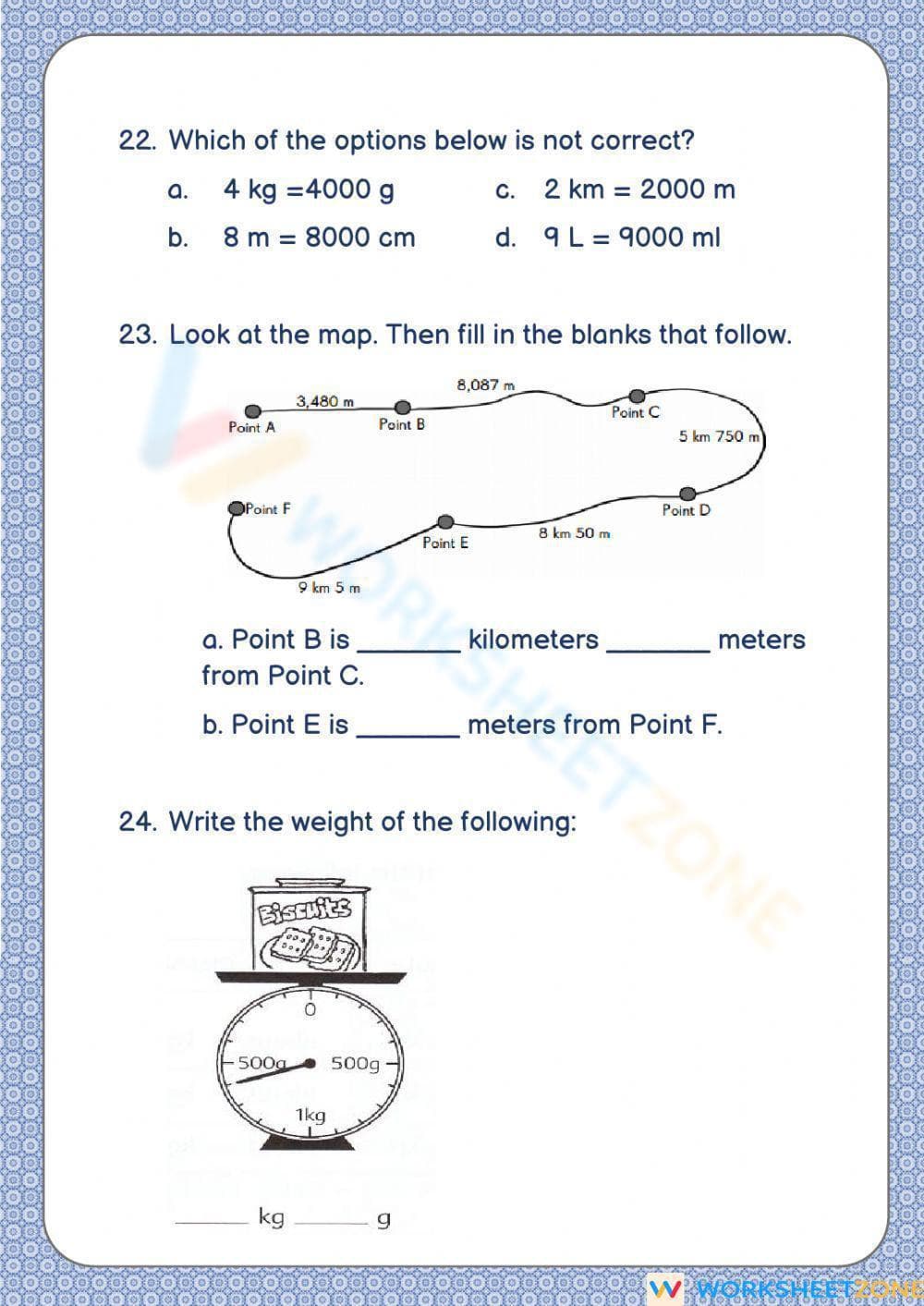
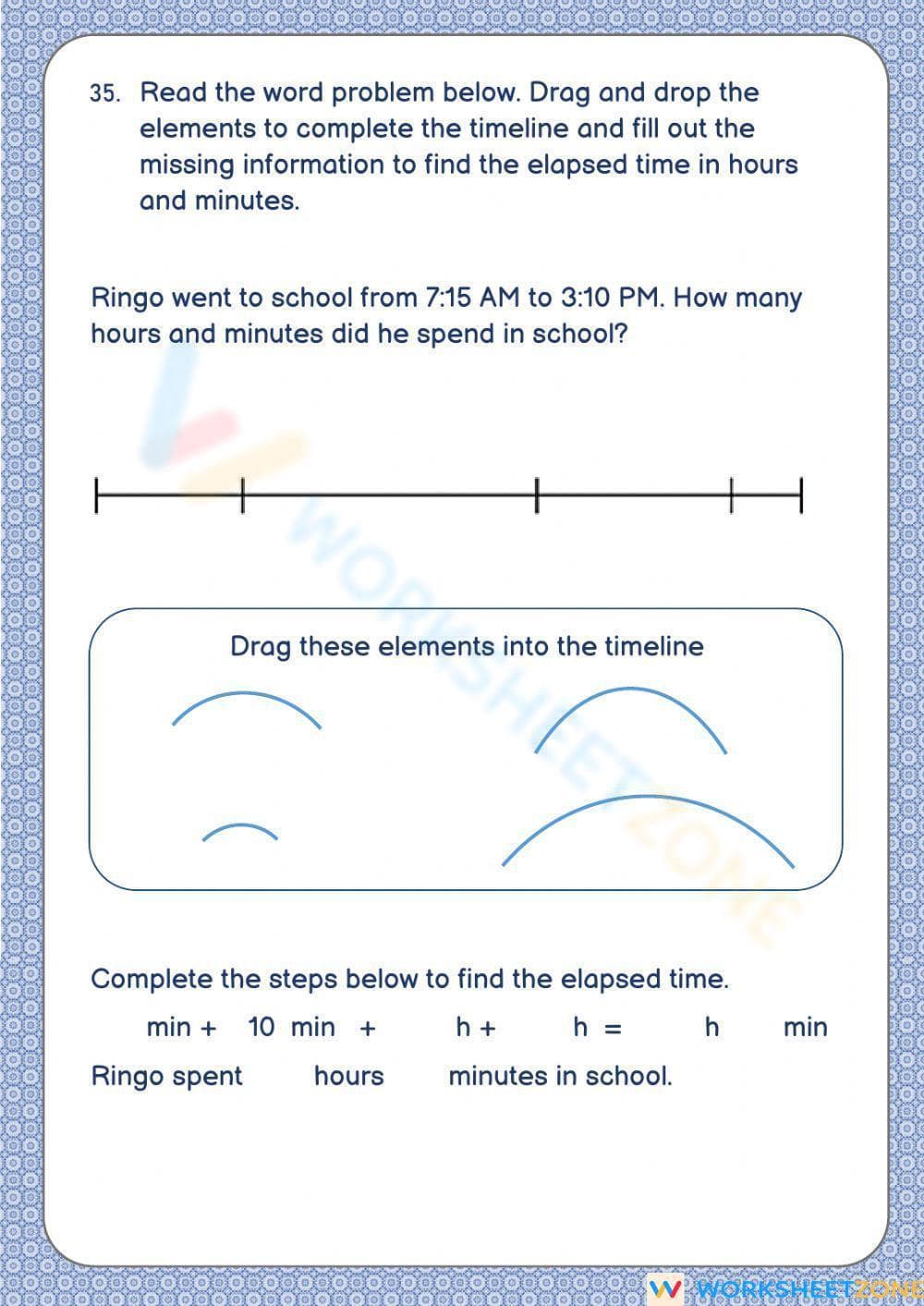
This comprehensive six-page packet includes 14 multi-part tasks covering a variety of essential math domains. Students will encounter tally charts, bar graphs, equivalent fraction equations, metric conversion tables, and elapsed time word problems featuring interactive timelines. The varied question formats, including visual models and standard fill-in-the-blanks, ensure a thorough evaluation of student skills.
- Print (1 min): Download the PDF and print the six-page packet for each student.
- Distribute (1 min): Hand out the test during a dedicated assessment block or review session.
- Review (5 mins): Use the included answer key to quickly grade the 14 problems and identify areas needing reteaching.
With under two minutes of teacher prep time, this resource is perfect for busy educators needing a reliable end-of-term evaluation or a comprehensive sub plan.
Aligned to primary standard CCSS.MATH.CONTENT.3.MD.A.1: Tell and write time to the nearest minute and measure time intervals in minutes. Solve word problems involving addition and subtraction of time intervals in minutes. It also supports fraction equivalence and data representation standards. Both standard codes can be copied directly into lesson plans, IEP goals, or district curriculum mapping tools.
Summative Assessment: Administer this packet at the end of a semester or school year to evaluate retention of core third-grade math concepts.
Spiral Review Station: Break the six pages apart and place them in different math centers for a week-long review activity. Observation tip: Watch how students interact with the elapsed time number line on page six to gauge their conceptual understanding of time intervals. Expect completion to take 30 to 45 minutes.
This resource is designed for third-grade students, though it serves as an excellent beginning-of-year diagnostic for fourth graders or an extension for advanced second graders. Pair this assessment with targeted mini-lessons on any domains where students show gaps, such as metric conversions or fraction equivalence.
Integrating comprehensive reviews aligned to CCSS.MATH.CONTENT.3.MD.A.1 helps students solve word problems involving addition and subtraction of time intervals. According to EdReports 2024, providing mixed-domain practice prevents skill decay and gives educators a clearer picture of overall mathematical proficiency across multiple domains. When students are regularly exposed to cumulative assessments that blend fractions, measurement, and data analysis, they develop stronger cognitive flexibility and problem-solving endurance. This specific standard requires learners to not only read a clock but to manipulate time as a continuous measurement model, which is a critical leap in elementary mathematics. By evaluating these diverse skills in a single testing format, teachers can accurately pinpoint instructional gaps and tailor their future interventions. Ensuring these foundational concepts are firmly established is essential before students transition to the more rigorous, multi-step word problems they will encounter in fourth grade and beyond.


