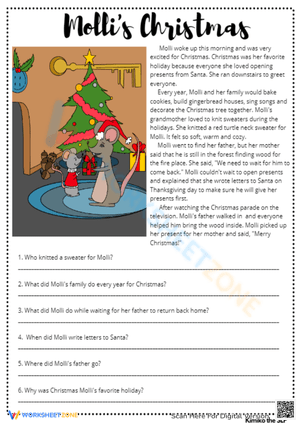
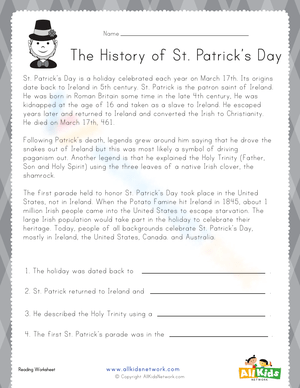
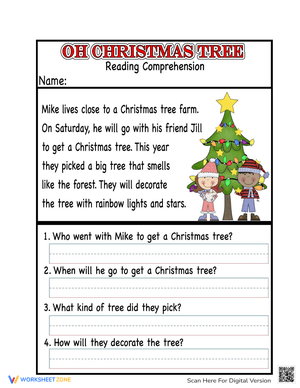
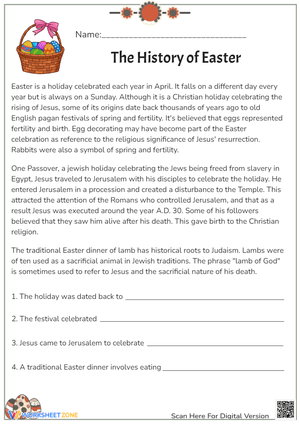
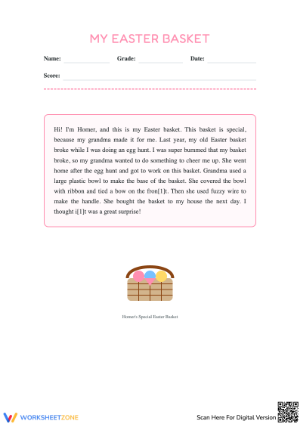
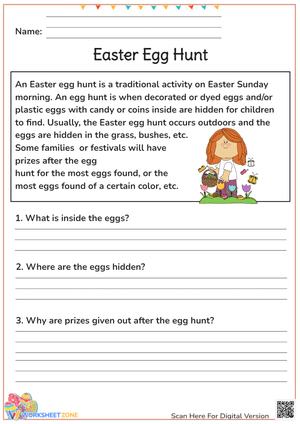
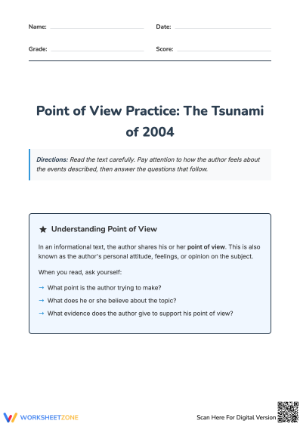
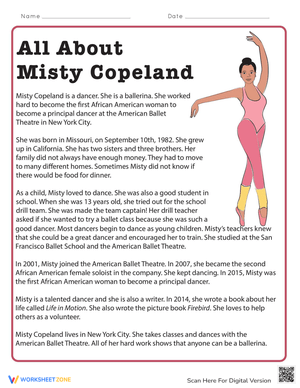
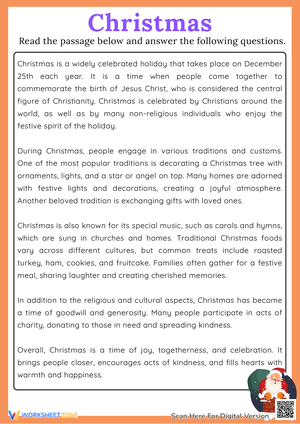
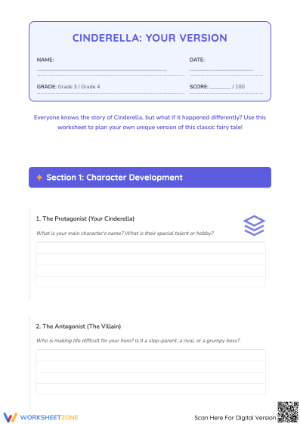
These 3rd grade reading comprehension questions pdf worksheets target the cognitive shift that defines Grade 3 ELA — the year when fluency is largely in place and the real work becomes holding onto meaning across a full passage. The set covers both literary and informational genres, with questions that move students from locating stated facts through drawing inferences and citing text evidence. Answer keys are included with every worksheet.
What Each Worksheet Asks Students to Do
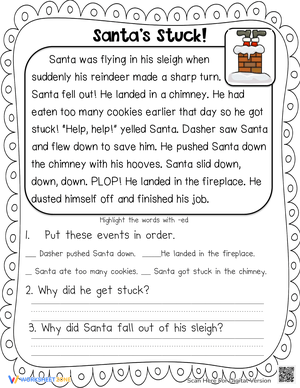
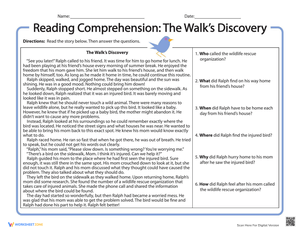
The question types are sequenced deliberately within each worksheet. Literal recall questions come first — not because they are easier, but because anchoring students to the text before asking them to interpret it reduces the tendency to answer from background knowledge alone. From there, each worksheet moves into inference questions, vocabulary-in-context tasks, and at least one written response that requires students to explain their reasoning by pointing back to the passage.
Across the set, students work with these specific skills:
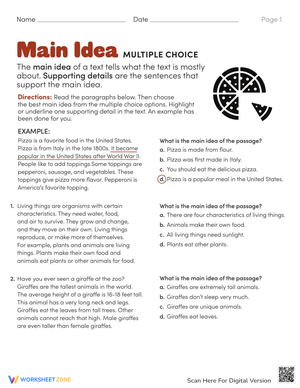
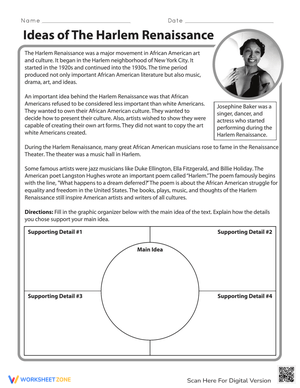
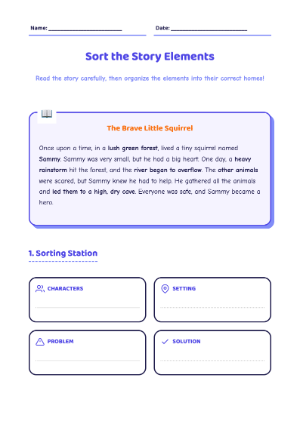
- Identifying the main idea and distinguishing it from supporting details
- Describing how a character's actions drive story events forward
- Determining the meaning of unfamiliar words and phrases using context clues
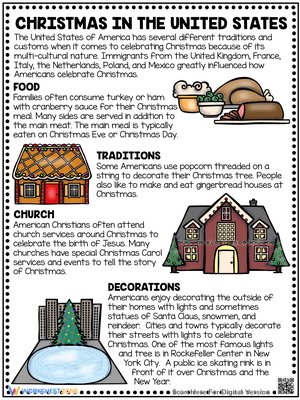
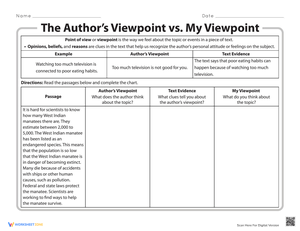
- Explaining how text features — headings, captions, diagrams — add meaning in informational texts
- Comparing information presented in two related passages
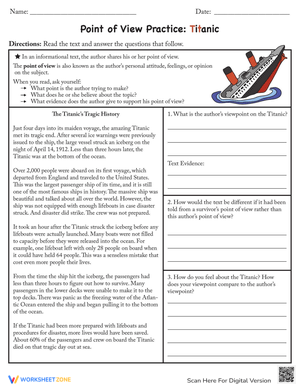
- Identifying the author's purpose in an expository piece
Informational passages draw from topics typical of the Grade 3 curriculum: ecosystems, weather patterns, community helpers, and early American history. Literary passages include realistic fiction, fables, and narrative nonfiction. That genre variety matters because students read differently across text types — a student who handles fiction questions confidently may not know how to locate the main idea in an expository piece, and the set surfaces that gap directly.
Student Error Patterns Worth Watching Before You Distribute
The most persistent error at this level is not a wrong answer — it is an answer that looks right but bypasses the thinking entirely. When an inference question asks why a character felt nervous before a speech, students who do not yet understand inference will find a sentence in the passage that mentions the speech and copy it verbatim, then wait. The sentence they copied is accurate. It does not answer the question. They have located text evidence without doing the reasoning the question actually demands, and that distinction is exactly what Grade 3 instruction needs to build.
Two other patterns show up reliably enough to plan for:
- Main idea confusion: Students frequently identify the first sentence of a passage as the main idea, regardless of what the passage argues. If that first sentence is a vivid detail — "Bats can eat up to 1,000 insects in a single night" — a significant share of the class will name it as the central point and spend every subsequent answer trying to support it.
- Vocabulary context errors: Students default to a definition they already know rather than reading the surrounding sentences. A student who knows "bank" means a place to store money will ignore clear river-context clues in the passage. These worksheets flag that pattern quickly because the vocabulary questions target high-frequency words with multiple meanings — words where prior knowledge actively misleads.
Building These Worksheets Into Your Reading Block
The most reliable classroom slot is the independent work period during guided reading rotations. Assign one worksheet to students working on their own, circulate for the first three minutes to confirm that everyone has started reading the passage, then pull your small group. When you reconvene, the completed worksheets give you clean formative data: who distinguished inference from literal recall, who organized a written response with evidence, and who needs a reteach before you move forward.
For whole-class use, a two-highlighter approach is worth building into your routine. Before students begin, hand out two different colors. One color marks places where the answer is stated directly in the text; the other marks the clues students used for inference questions. That visual record changes the review conversation — students can point to exactly what they did, and you can see at a glance who is treating every question as a word-search rather than a thinking task.
These 3rd grade reading comprehension questions pdf worksheets also work well as pre-assessments at the start of a strategy unit. Run one worksheet on Monday before beginning instruction on main idea, then run a parallel worksheet on Friday. The before-and-after comparison gives students visible evidence of their own growth — and it is more specific at parent conferences than a general progress comment.
Standard Alignment
The worksheets address the following Common Core ELA standards for Grade 3:
- RL.3.1 / RI.3.1 — Ask and answer questions to demonstrate understanding of a text, referring explicitly to the text as the basis for answers. Every written response prompt in this set requires students to cite the passage rather than summarize from memory.
- RL.3.3 — Describe characters in a story and explain how their actions contribute to the sequence of events. Literary worksheets include at least one character-analysis question at this standard.
- RI.3.2 — Determine the main idea and explain how key details support it. Main idea tasks appear on every informational worksheet in the set.
- RL.3.4 / RI.3.4 — Determine the meaning of words and phrases as they are used in a text. Vocabulary questions target multi-meaning words and domain-specific terms.
RI.3.1 deserves a specific note about classroom placement. The standard's requirement that students refer explicitly to the text marks a real developmental threshold — many students arrive in Grade 3 having been rewarded for strong retelling, which is a different skill. The written response prompts here are worded to make the text-citation expectation concrete rather than implied: students are asked to name the sentence or detail that supports their answer, not just state a conclusion.
Adjusting the Set for a Range of Readers
These 3rd grade reading comprehension questions pdf worksheets work across a mixed-ability class when teachers make a few targeted adjustments rather than treating the set as one-size instruction. For students reading below grade level, pre-teaching two or three key vocabulary words before distributing a worksheet removes a barrier that blocks comprehension work entirely. A 90-second word introduction at the start of a small-group session is not a shortcut — it clears a decoding obstacle so the actual thinking can begin. Without it, a student who gets stuck on a single word in the second paragraph may never make it to the questions.
For students reading above grade level, the question set extends well when you ask them to write one inference question of their own after completing the worksheet, then answer it. This requires them to evaluate the passage for gaps, decide what a thoughtful reader might wonder, and construct a response — a higher-order task than answering a provided question. Student-generated inference questions also make strong discussion anchors when the class reconvenes, because they tend to be more specific than standardized prompts.
For English language learners, sentence starters on the written response questions reduce the blank-page anxiety without simplifying the thinking. A prompt like The text shows this because ___ keeps the evidence requirement intact while giving students a way into the sentence. That is meaningfully different from rewriting the question itself — the cognitive demand stays, and the language barrier is reduced.
Frequently Asked Questions
What passage length works best for a Grade 3 comprehension worksheet?
Most passages in this set fall between 300 and 450 words — long enough to develop a complete idea or story arc, short enough to leave time for the questions within a standard 45-minute reading block. Shorter passages appear in worksheets targeting foundational skills like sequencing; longer passages are used when the skill requires sustained reading, such as comparing the main idea across two paragraphs of an informational text.
Are these better suited for classroom use or homework?
Classroom use gives you more diagnostic value. When a student completes a worksheet at home, you receive the answer; you do not know whether the student re-read the passage twice, guessed, or had help. Watching students work in class tells you as much as the completed worksheet does — where they get stuck, how long they spend searching before writing. That said, these resources work well for homework once a strategy has been explicitly taught and practiced in class, because the format is consistent enough that students can move through them independently.
How do I help students who shut down on open-ended response questions?
Have the student find and underline the answer in the passage before writing anything. For a literal question, that step is usually sufficient — they underline the sentence and then rewrite it in their own words. For an inference question, they underline two or three clues and use those as a checklist while writing. Breaking the searching step away from the writing step removes most of the overwhelm. The 3rd grade reading comprehension questions pdf worksheets in this set include enough text-reference questions that this two-step routine becomes familiar within the first few weeks.
Do the worksheets cover both fiction and nonfiction?
Yes. The set deliberately balances literary and informational passages because Grade 3 standards require proficiency in both. More practically, students who read well in one genre often have specific gaps in the other — a strong story reader may not know how to navigate a passage that uses subheadings and a labeled diagram as part of its meaning. Using both text types across the year surfaces those differences early, which is far more useful than discovering them during spring assessments.












 Interactive Worksheet Maker
 Quiz Maker
 Word Search Maker
 Crossword Puzzle Maker
 Word Scramble Generator
 Sentence Scramble Generator
 Handwriting Worksheet Generator
 Name Tracing Generator
 Fill In The Blank Generator