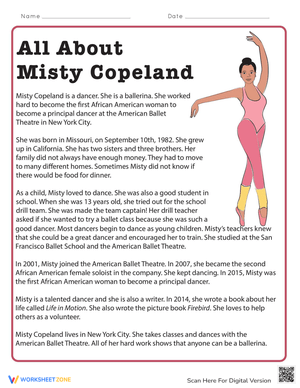
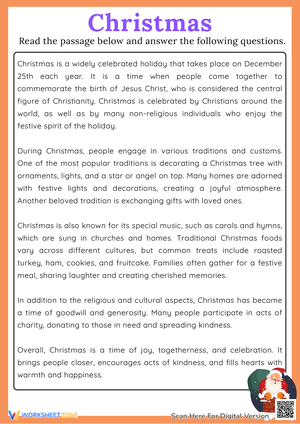
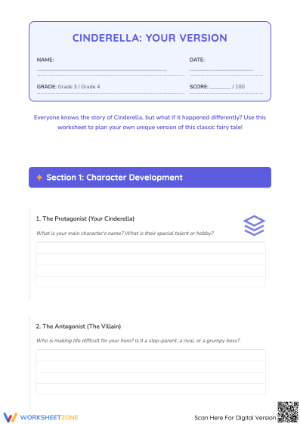
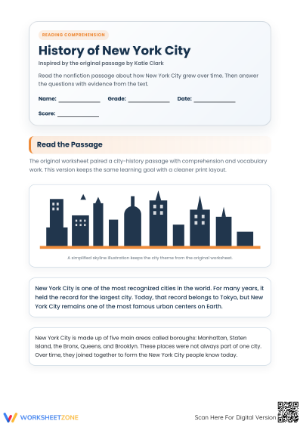
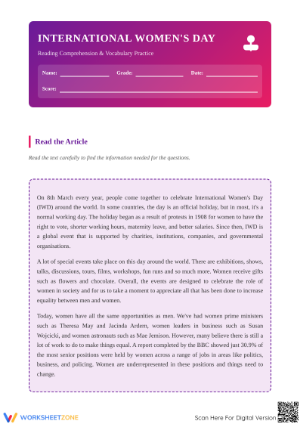
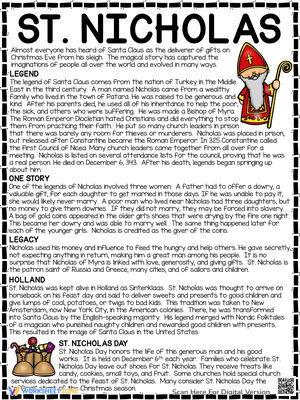
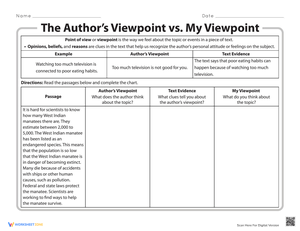
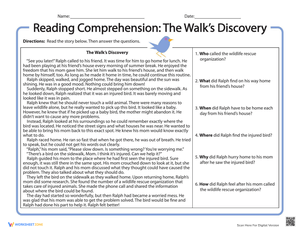
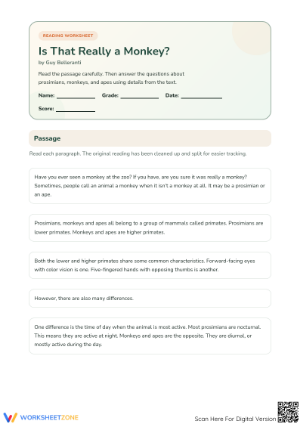
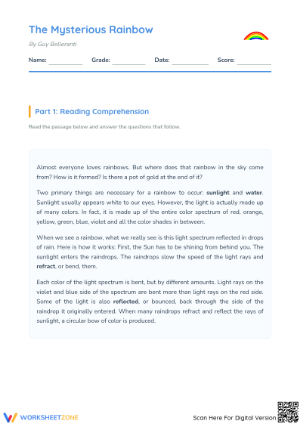
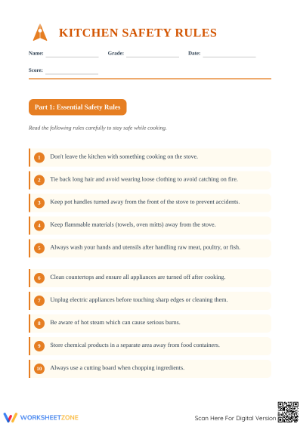
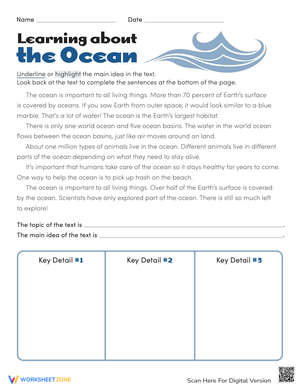
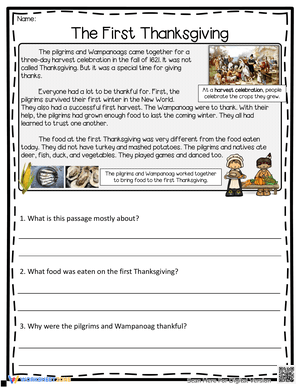
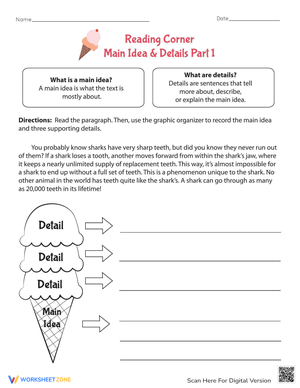
These 3rd grade nonfiction comprehension questions pdf worksheets give teachers a ready-to-use tool for one of the most consequential transitions in elementary reading — the shift from decoding practice to reading informational text for actual meaning. Each worksheet pairs a leveled nonfiction passage with targeted questions that move students through recall, analysis, and evidence-based reasoning. The set covers science articles, social studies topics, biographies, and procedural texts, so the practice stays connected to what students are reading across the entire school day.
The Specific Skills Each Worksheet Targets
Third grade is the year the Common Core's Reading: Informational Text strand really digs in. Students are expected to do more than retell — they cite evidence, identify structure, and explain author's purpose, often formally for the first time. Each worksheet addresses several of the following skills, rotating emphasis across the set so students get distributed practice rather than one skill repeated in isolation.
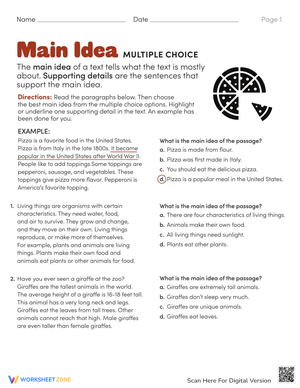
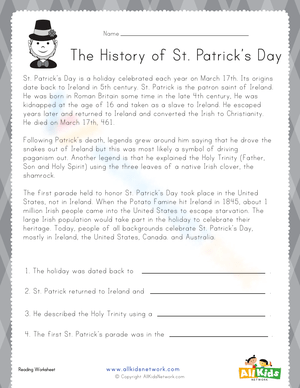
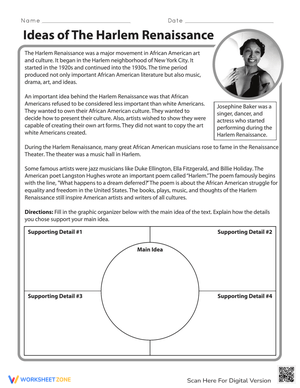
- Main idea and key details (RI.3.2): Students identify the central idea of a passage and explain which specific details support it — not just name details, but connect them back to the main idea explicitly.
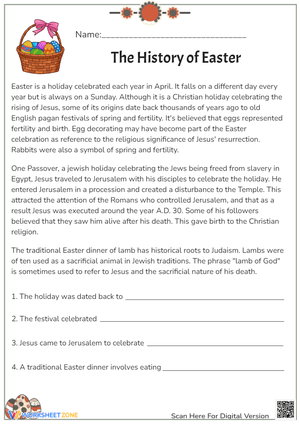
- Text evidence (RI.3.1): Prompts use language like "according to the text" or "use evidence from the article to support your answer," requiring students to quote or closely paraphrase rather than restate from memory.
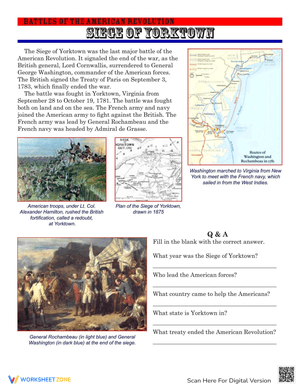
- Text features: Headings, captions, bold vocabulary, diagrams, and sidebars are all in play. Questions ask students to explain what a specific feature contributes to their understanding — not merely identify that it exists.
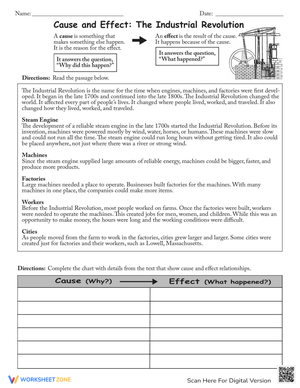
- Text structure: Cause and effect, sequence, and compare and contrast are the structures students encounter most at Grade 3. Questions ask them to name the structure and show where it appears in the passage.
- Author's purpose: Students explain whether the author is informing, explaining, or persuading, and point to specific passage language that supports that reading.
- Vocabulary in context (RI.3.4): Questions ask students to infer the meaning of academic or domain-specific words using surrounding sentences — a habit that builds content vocabulary alongside close-reading skill.
- Inference: The highest-level questions ask students to combine what the text states with what they can reasonably conclude, going one step beyond anything the author wrote explicitly.
Errors Students Make That These Worksheets Help You Catch
The main idea question is where most Grade 3 students stumble first. They have a strong pull toward detail-level answers. Ask "What is this article mostly about?" and a student who read carefully will still write "The article is about how polar bears eat seals" — naming one detail from the middle of the passage instead of the central idea the whole text supports. The distinction between a supporting detail and a main idea takes repeated exposure to click, and it rarely clicks from a single lesson.
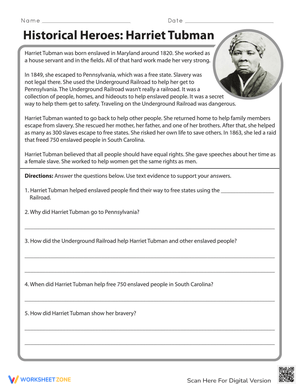
Text evidence questions reveal a different problem: students often "answer" by restating what they already said in slightly different words, with nothing quoted or cited from the passage. They have the right idea but not yet the habit of going back into the text. Watching for that pattern — a confident-sounding answer with no passage reference — tells you the student understands the content but has not yet internalized what "use evidence" means in writing. The questions here are phrased specifically to push students to include a direct passage reference, which builds that habit over time.
Vocabulary in context questions trip students up in a predictable way too. Students trained heavily on phonics will sometimes try to decode an unfamiliar word rather than read the surrounding sentences for meaning. They pass right over the context clues. A question that says "What does predator mean as used in paragraph 2? Use clues from the text in your answer" forces them to apply a different reading strategy — one many third graders are still building.
How to Work These Worksheets Into Your Week
The most reliable use is the Monday warm-up slot. After morning meeting, a short nonfiction passage with three or four questions takes about twelve minutes — long enough to be meaningful, short enough not to derail the morning. Students come in knowing the routine, and it sets a reading-for-information mindset before content instruction begins.
For guided reading groups, these worksheets work best when the reading happens together — teacher reads aloud or students read in pairs — and students then answer questions independently. That separation matters. The reading is social; the written response is individual. It prevents the situation where one strong reader does the thinking for the rest of the group while everyone else coasts.
Exit tickets are another strong fit. Three questions at the end of a content lesson — one recall, one evidence, one inference — take under ten minutes and tell you immediately who is ready to move forward and who needs the concept revisited. These 3rd grade nonfiction comprehension questions pdf worksheets make this easy because the questions are already tiered, so you drop them into the exit-ticket slot without writing anything from scratch.
Standard Alignment
These worksheets address the Reading: Informational Text standards for Grade 3, with heaviest coverage of RI.3.1 (asking and answering questions using explicit text evidence), RI.3.2 (determining main idea and summarizing with key details), RI.3.4 (vocabulary in context), RI.3.5 (text structure and features), RI.3.6 (author's point of view and purpose), and RI.3.8 (describing connections between reasons and evidence). In classroom terms, RI.3.1 is the foundation everything else rests on — if students cannot return to the text and locate evidence, the higher-level standards are out of reach. The worksheets treat evidence retrieval as a cross-cutting skill, embedding passage-citation prompts across every question type rather than reserving them for a dedicated "text evidence" section.
Adjusting the Set for a Range of Learners
For students who are behind grade-level expectations, start with the recall questions — who, what, when, where — and allow them to annotate or underline the passage before writing any answers. Marking the sentence that answers each question before writing reduces the cognitive load of holding both the reading and the writing task in working memory simultaneously. That said, do not skip the inference questions entirely. Ask struggling readers to attempt them verbally, with you or a partner, before committing anything to paper. The goal is access to the full range of thinking, not a reduced task.
Students working above grade level get the most value from author's purpose and inference questions, particularly when asked to write a multi-sentence response citing two separate pieces of text evidence. Pushing them to find a second piece — not just one — requires a more careful re-reading and produces noticeably stronger written responses than a single-citation prompt does. If the 3rd grade nonfiction comprehension questions pdf worksheets feel too accessible for a particular student, extend the task: ask them to write one paragraph connecting the passage to another nonfiction text on the same topic, which moves into RI.3.9 territory without requiring different materials.
Frequently Asked Questions
What question types are included, and can all third graders access them?
Each worksheet includes both recall-level and analytical questions. Recall questions (who, what, where, when) give every student an entry point and check basic understanding. Analytical questions (why, how, what evidence supports) push toward deeper thinking. Having both types on the same worksheet means students are not tracked into "easy" and "hard" versions — everyone reads the same passage and works through the full range of questions, which keeps expectations consistent across the room.
How do these nonfiction worksheets differ from fiction comprehension worksheets at the same grade?
Fiction worksheets at Grade 3 focus on story elements: character motivation, plot sequence, theme, and point of view within a narrative frame. These worksheets shift entirely to informational text skills — main idea, text features, text structure, author's purpose, and factual text evidence. The question stems look different, the vocabulary is different, and the reading strategies students need are different. Third graders who are strong fiction readers are sometimes caught off guard by how differently nonfiction reading operates, and consistent practice with these worksheets closes that gap before it becomes a problem in content-area classes.
How often should students practice with nonfiction passages at this level?
Two to three nonfiction reading sessions per week is a reasonable target, and not every session needs to be a full worksheet. On lighter days, a single passage with three focused questions — one main idea, one evidence, one inference — is enough to maintain the habit without consuming the reading block. Consistent brief practice builds reading stamina more reliably than occasional longer sessions do. The 3rd grade nonfiction comprehension questions pdf worksheets are built with that frequency in mind: each worksheet is sized for a single work session, not an extended project.
Can these worksheets serve an assessment purpose as well as a practice one?
Yes, and they work well in that role precisely because the questions span multiple skill areas within a single reading. A student's performance on the evidence-citing questions versus the inference questions tells you more than a single comprehension score does. When using these as informal assessment, treat main idea and text evidence responses as the core indicators — those two skills anchor everything else in the Grade 3 informational text standards, and a clear read on each student's control over them shapes instructional decisions for the weeks ahead.












 Interactive Worksheet Maker
 Quiz Maker
 Word Search Maker
 Crossword Puzzle Maker
 Word Scramble Generator
 Sentence Scramble Generator
 Handwriting Worksheet Generator
 Name Tracing Generator
 Fill In The Blank Generator