


























Views
Downloads
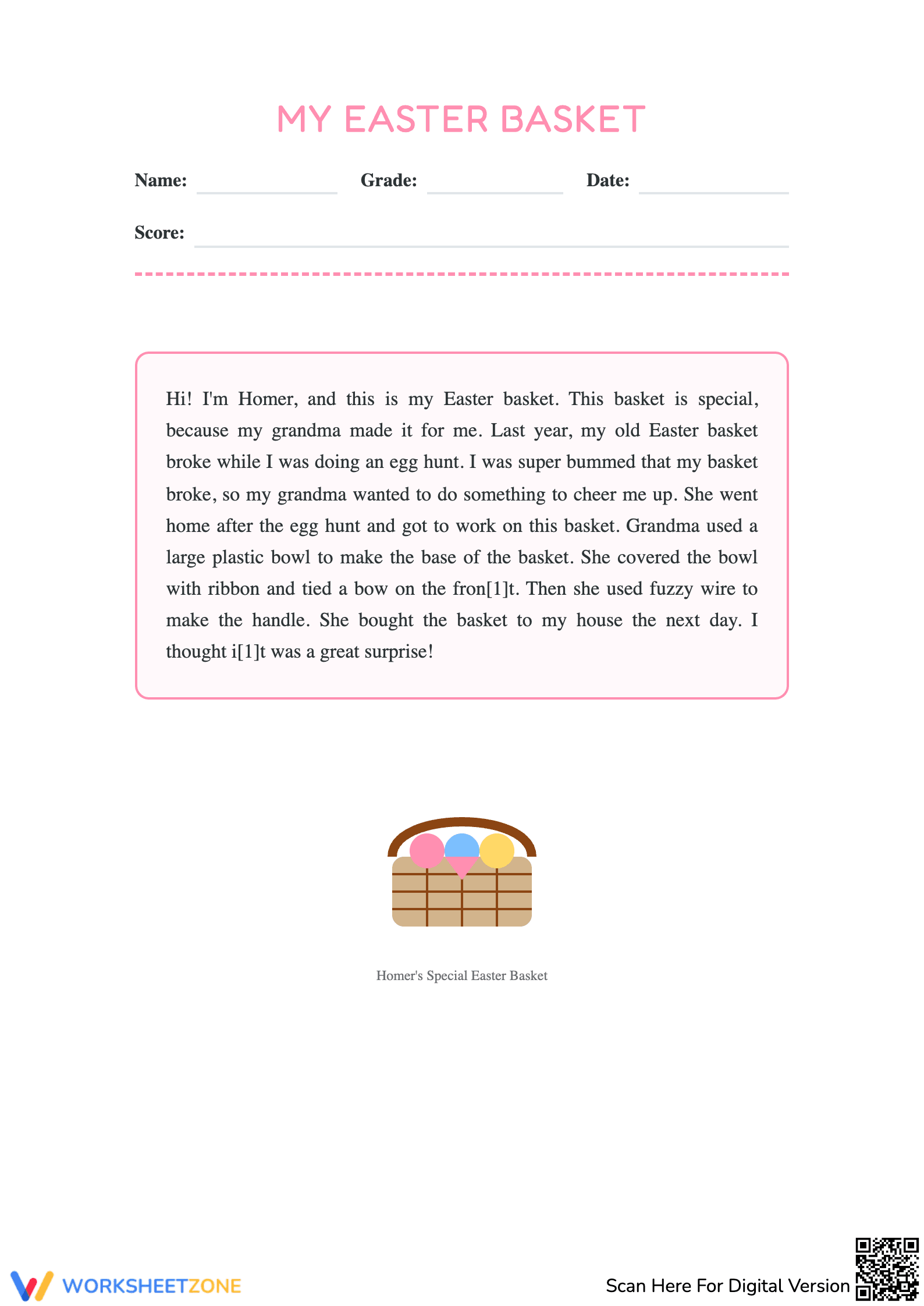



Essential Grade 3 Easter Reading Comprehension Worksheet
Paste this activity's link or code into your existing LMS (Google Classroom, Canvas, Teams, Schoology, Moodle, etc.).
Students can open and work on the activity right away, with no student login required.
You'll still be able to track student progress and results from your teacher account.
This Grade 3 reading comprehension packet helps students master narrative text analysis through a seasonal Easter story. Students engage with the text to identify key details, sequence events, and expand their vocabulary. By connecting reading to a creative writing prompt, the worksheet ensures students synthesize information while developing critical literacy skills in an accessible format.
At a Glance
- Grade: 3 · Subject: ELA
- Standard:
CCSS.ELA-LITERACY.RL.3.1— Ask and answer questions to demonstrate understanding of a text using explicit evidence- Skill Focus: Narrative Comprehension & Sequencing
- Format: 4 pages · 15 problems · Answer key included · PDF
- Best For: Independent practice or holiday-themed sub plans
- Time: 30–45 minutes
The packet contains a four-page instructional sequence starting with a focused narrative passage about Homer’s special basket. It includes three multiple-choice Quick Check questions, three open-ended detail inquiries, and a four-word vocabulary matching table. A dedicated sequencing task requires students to order four plot points, while the final page offers a creative design and writing prompt to encourage personal expression.
Zero-Prep Workflow
- Print: Select the 4-page PDF and print enough copies for your class in under 30 seconds.
- Distribute: Hand out the packets as a morning work assignment or literacy center activity with zero teacher setup.
- Review: Use the included answer key to grade or lead a whole-class review of the sequencing and vocabulary sections in 5 minutes.
Standards Alignment
This resource is primarily aligned with `CCSS.ELA-LITERACY.RL.3.1`, focusing on the student's ability to refer explicitly to the text when answering questions. It also supports RL.3.3 by requiring students to describe the relationship between characters and events. Both standard codes can be copied directly into lesson plans, IEP goals, or district curriculum mapping tools.
How to Use It
Use this worksheet as a formative assessment during the week leading up to spring break. Teachers can observe if students are flipping back to the first page to locate specific details about the basket's construction, which indicates active reading strategies. Alternatively, assign it as a high-interest homework packet to encourage reading stamina outside of the classroom. The expected completion time is approximately 35 minutes.
Who It's For
This resource is designed for Grade 3 students but provides excellent scaffolding for Grade 2 learners or review for Grade 4. It pairs naturally with a lesson on "Wh-" questions or a seasonal anchor chart about story elements. The clear layout supports English Language Learners by providing visual cues and structured matching tasks that reduce cognitive load.
According to the RAND AIRS 2024 report, high-interest seasonal content significantly increases student engagement with complex informational and narrative texts. This worksheet leverages that engagement by aligning with CCSS.ELA-LITERACY.RL.3.1, which requires students to demonstrate mastery by answering questions using explicit evidence from the text. By integrating vocabulary acquisition and chronological sequencing, the material follows the Fisher & Frey (2014) model of scaffolded literacy instruction. Research indicates that providing students with a variety of task types—ranging from multiple-choice to creative synthesis—helps solidify reading comprehension across diverse learner profiles. This 4-page packet ensures that students are not just reading for surface-level meaning but are interacting with the text structure and specific word choices. The inclusion of a creative writing component further supports the NAEP framework for integrated literacy, making it a robust tool for classroom teachers seeking evidence-based instructional materials.


