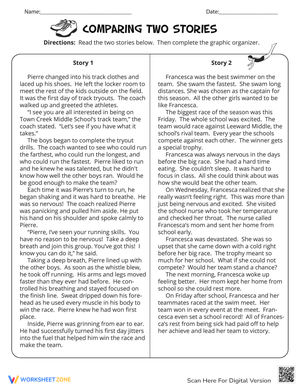
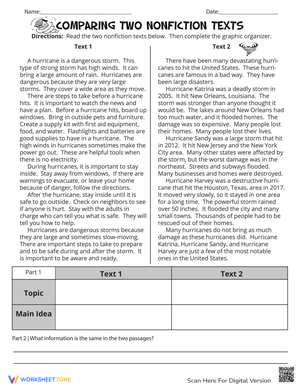
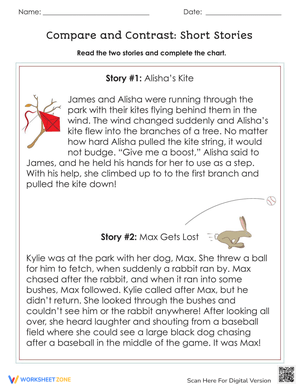
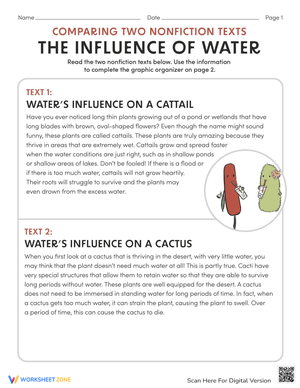
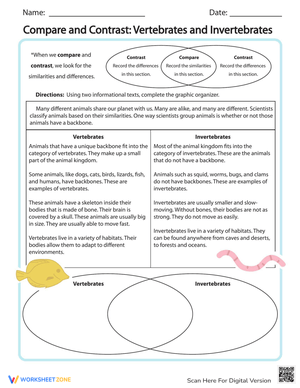
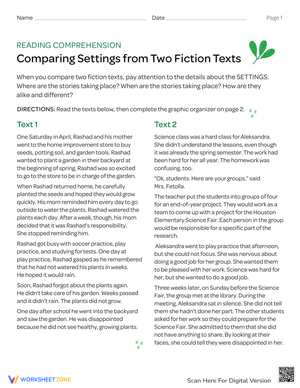
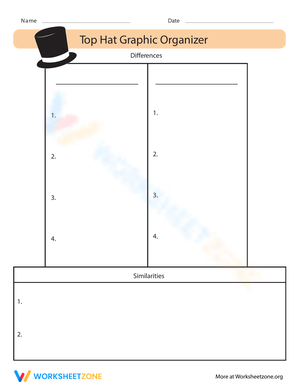
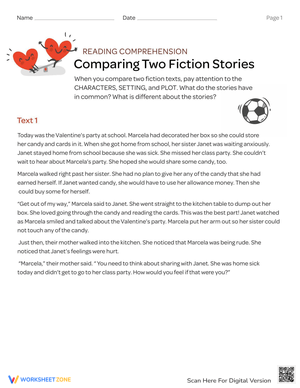
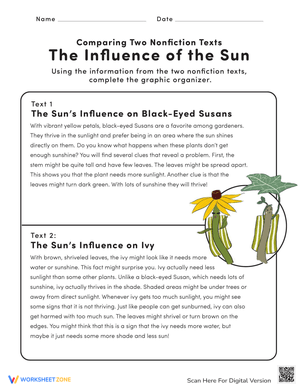
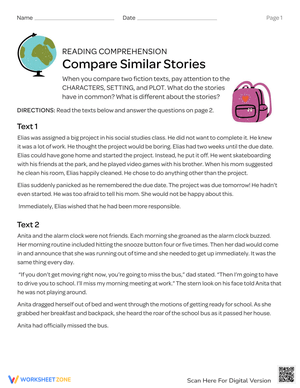
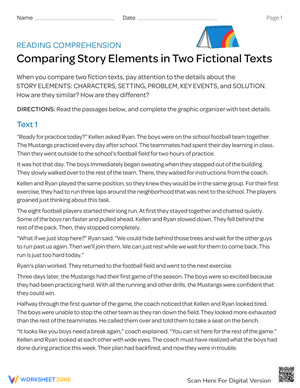
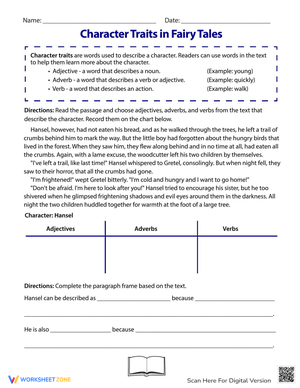
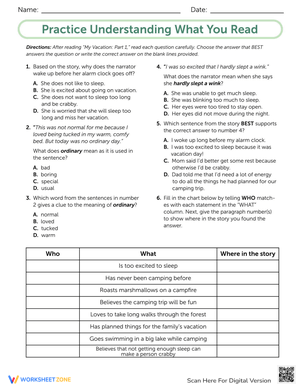
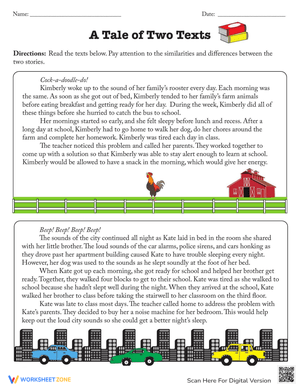
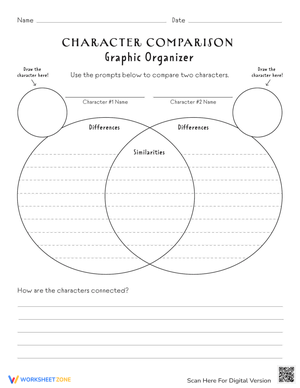
These 3rd grade compare and contrast in fiction printable worksheets give teachers a ready set of targeted resources for one of the more demanding analytical shifts in the primary reading progression — moving students away from retelling what happened toward examining how two stories, characters, or settings relate to each other. Each worksheet zeroes in on a single literary element so students build the skill in pieces rather than wrestling with everything at once. Graphic organizers, response prompts, and contrast vocabulary sentence frames are built directly into each worksheet.
What the Worksheets Target
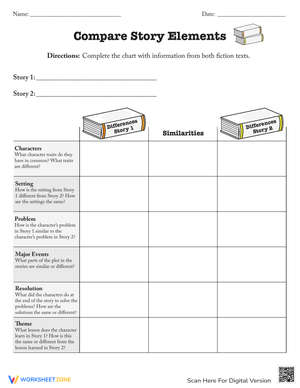
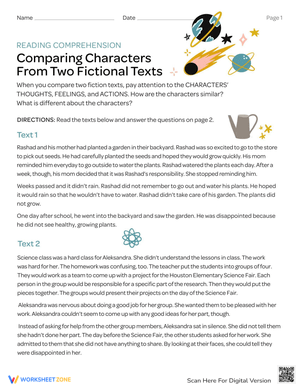
Character comparison is usually where teachers start because the evidence is concrete. Students can list physical traits, personality characteristics, and responses to problems — but the most useful analytical work at this grade happens when students move past "Frog is cheerful and Toad is grumpy" and start explaining what moment in the text supports that reading. The character worksheets push toward that evidence layer by requiring students to cite a specific story event, not just a trait label.
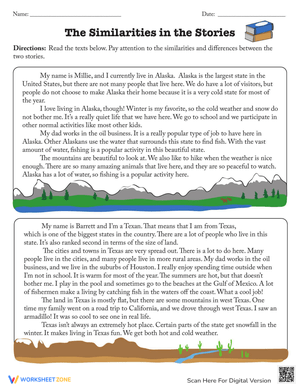
Setting comparison is underused at this grade. When students examine two settings side by side, they are not just noting "one story takes place in a forest, the other in a city" — they are examining how place shapes what is possible for the characters. A worksheet that asks students to explain how the setting creates the central problem is harder than most third graders are used to, but the thinking it produces carries directly into the literary analysis work they will encounter in 4th grade.
Plot comparison works best when students focus on problem-and-resolution pairs across two texts — identifying structural parallels like two characters who face the same obstacle type but resolve it in entirely different ways — rather than simply listing events in sequence.
Theme is the most abstract element for 8- and 9-year-olds. The worksheets approach it with a specific prompt framing: "What does the author want you to learn from this story?" That question reliably produces more accurate theme statements than the common alternative — "What is the story about?" — which consistently yields plot summaries instead of inferred lessons.
Standard Alignment
CCSS RL.3.9 requires third-grade students to compare and contrast the themes, settings, and plots of stories written by the same author about the same or similar characters. In classroom terms, that standard points directly to book series — Frog and Toad, Mercy Watson, Ivy and Bean — where students already know the characters and can direct their full attention toward how the stories differ rather than building basic comprehension from scratch. These 3rd grade compare and contrast in fiction printable worksheets align directly to RL.3.9, with each worksheet naming the target literary element and using a format that keeps student responses anchored in specific text evidence rather than general impressions.
Student Errors Worth Catching Before They Become Habits
The most persistent error at this grade level is what might fairly be called the inventory problem: students list surface features instead of making a genuine comparison. A student comparing Cinderella with The Paper Bag Princess might write "Cinderella wears a gown and Princess Elizabeth wears a paper bag." Both observations are accurate, and neither constitutes an actual comparison. The worksheet prompts address this directly by asking students to connect each difference back to the character's choices or the story's central problem.
Theme statements produce a separate and predictable error. When asked to compare themes, most third graders write plot summaries — "one story is about a girl who learns to be brave" rather than "both stories show that being yourself matters more than fitting in." That gap between the two responses does not close without repeated, explicit feedback tied to a consistent format. These worksheets give teachers a stable structure to annotate and return so the correction feels systematic rather than case-by-case.
A third pattern worth watching: students who articulate strong comparisons out loud often revert to flat, repetitive writing when they put pen to paper. They understand the comparison — they just default to "story one... story two... story one... story two" in their sentences. Requiring students to use contrast words — however, similarly, on the other hand — directly on the worksheet builds the repetition that eventually makes those transitions feel natural.
How to Fit These Worksheets Into the Reading Block
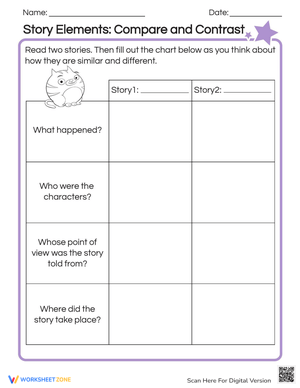
The strongest entry point for this skill is removing the decoding demand first. Before asking students to read two unfamiliar texts and analyze them simultaneously, use a pair of books they already know — or even two wordless picture books. Have students compare the visual narratives using the same graphic organizer format from the worksheets: character expressions, setting details, how the problem gets resolved. Once students have practiced the analytical thinking without decoding load, they transfer that process to written text more reliably and with less resistance.
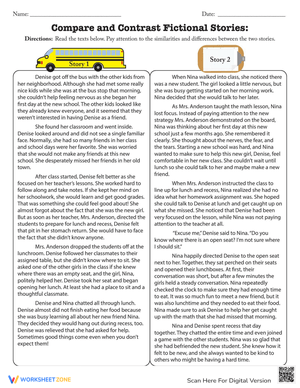
For whole-class instruction, paired fairy tales and fractured fairy tales are particularly useful because the structural resemblance is obvious enough to orient students quickly, which makes the differences sharper. The True Story of the 3 Little Pigs alongside the original, or Cinder Icky paired with Cinderella, gives every student a shared reference point. Project the worksheet format as an anchor chart and model filling it in with a think-aloud, then have students complete a fresh worksheet on the same text pair independently. That gradual-release sequence — observe, try together, try alone — keeps the analytical work from falling apart the first time students attempt it without a model in front of them.
In small-group centers, the worksheet structure carries most of the instructional weight, freeing the teacher to listen for faulty comparisons and redirect with a precise question: "That's true. How does that affect what the character decides to do?" The 3rd grade compare and contrast in fiction printable worksheets also function well as Monday morning warm-ups — students spend five minutes reviewing the previous week's independent reading using a partially completed worksheet, then pair-share before the class comes together for the day's lesson.
Differentiating These Worksheets Across Ability Levels
For students who are still solidifying fluency, the character and setting worksheets are the right starting point. The prompts ask for concrete, observable information — traits, locations, problems the character faces — and responses are easier to anchor back to the text. Pair those students with books they have read at least once so comparison work does not collapse under unfamiliar vocabulary.
On-level students can move through all four element worksheets in a single unit, spending roughly two class periods on each. By the time they reach the theme worksheets, they have enough practice with the concrete elements that the abstraction of theme is manageable rather than paralyzing.
For students reading well above grade level, the extension move is asking them to write a short paragraph response beneath the completed graphic organizer — synthesizing their comparisons into a cohesive argument about how the two stories relate. That synthesis step is where the skill starts to resemble the literary analysis work they will encounter in 4th and 5th grade. These 3rd grade compare and contrast in fiction printable worksheets are built so the prompts can be narrowed for students who need fewer variables to manage, or extended with an additional "explain your thinking" row for students who need more challenge.
Frequently Asked Questions
What kinds of fiction pair best with these worksheets?
Book series where students already know the characters are the strongest starting point — Frog and Toad, Mercy Watson, Ivy and Bean, and the Magic Tree House series all work well. Students can focus on comparing elements across stories rather than building basic comprehension from zero. Paired fairy tales and fractured fairy tales are a close second because the structural resemblance is obvious enough to get students oriented quickly, which makes the differences more visible.
Can these worksheets be used during read-aloud rather than independent reading?
Yes. Many teachers run this skill during read-aloud units where the class hears both texts together before students complete the worksheets individually. This works well when the paired texts are above students' independent reading level but within their listening comprehension range. Students still do their own analytical work on each worksheet — they are not copying from a shared anchor chart.
When in the school year should teachers introduce RL.3.9?
Most teachers introduce this standard in the second quarter, after students have built solid familiarity with story elements in isolation — character, setting, and plot. Trying to teach comparison before students can describe a single character's motivation independently tends to produce shallow, surface-level responses. Once those story-element skills are stable, the comparison layer becomes accessible rather than overwhelming.












 Interactive Worksheet Maker
 Quiz Maker
 Word Search Maker
 Crossword Puzzle Maker
 Word Scramble Generator
 Sentence Scramble Generator
 Handwriting Worksheet Generator
 Name Tracing Generator
 Fill In The Blank Generator