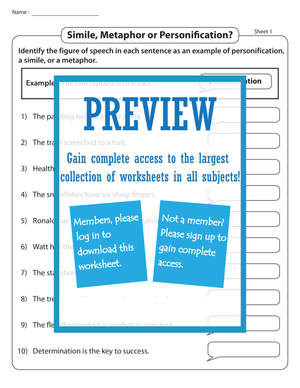
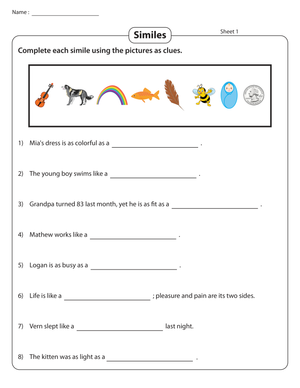
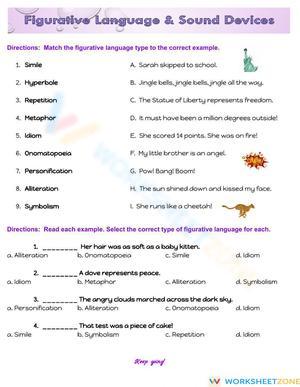
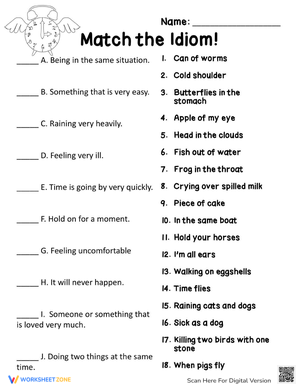
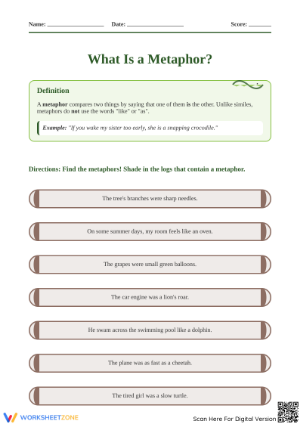
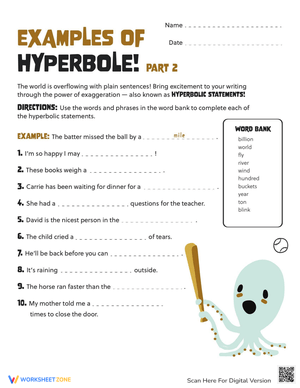
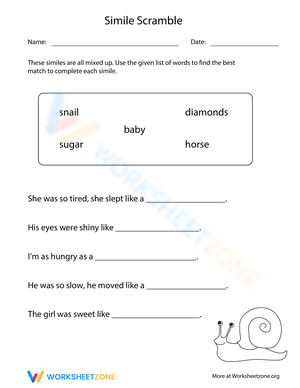
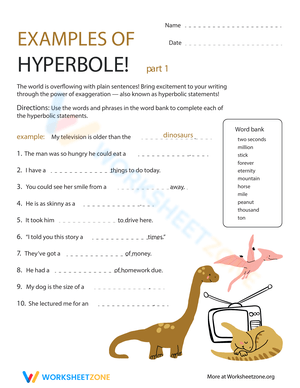
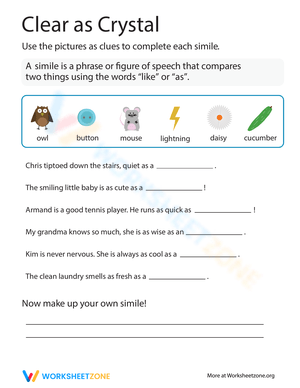
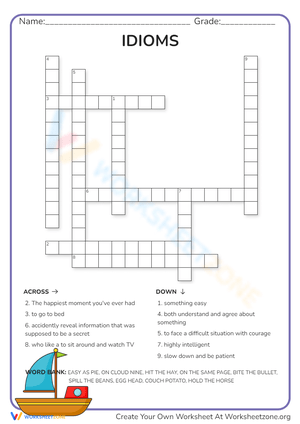
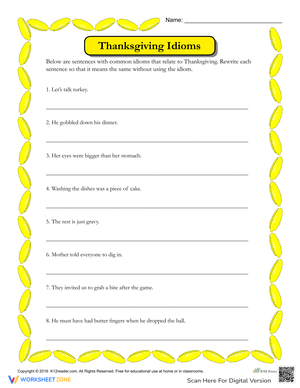
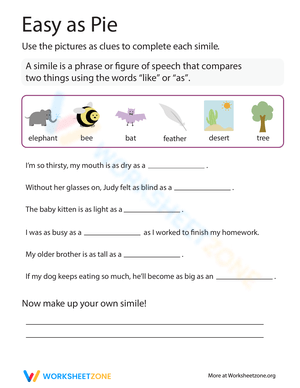
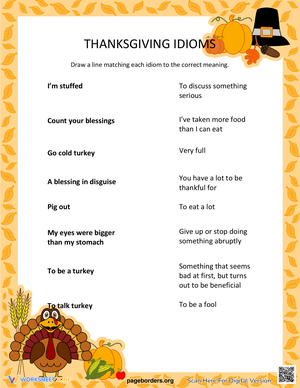
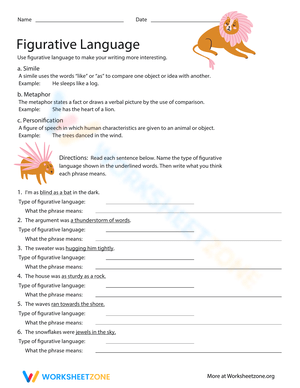
These 3rd grade figurative language worksheets resources give teachers a structured set of print-ready practice covering similes, metaphors, and idioms — the three figurative language types students encounter most in the chapter books they begin reading independently around this age. Each worksheet targets one device before the set shifts to mixed identification, so students build accuracy with individual types before sorting across them.
The Specific Skills Targeted
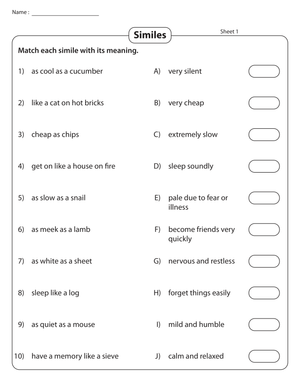
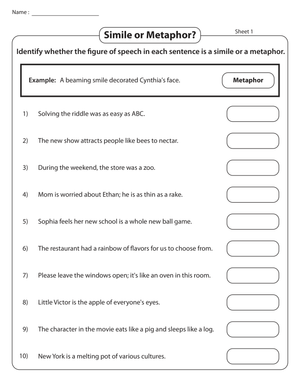
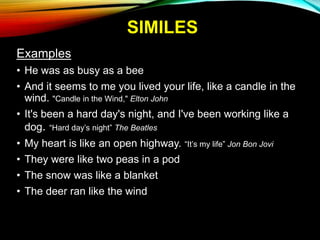
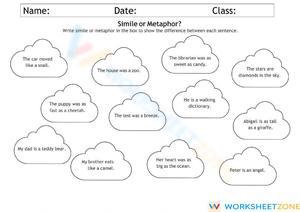
Similes get their own dedicated worksheets because, while the signal words "like" and "as" make them easier to spot than other devices, students still need practice with what to do after they find one. Simply circling a simile is not the goal — students underline the two things being compared and write in plain language what quality they share. A worksheet asking students to explain what "the cafeteria was as loud as a thunderstorm" communicates requires more thinking than a multiple-choice format would.
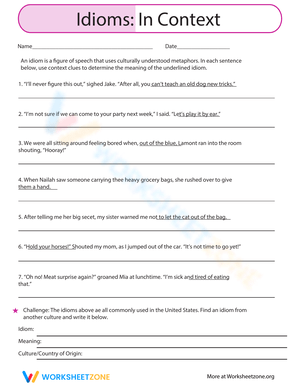
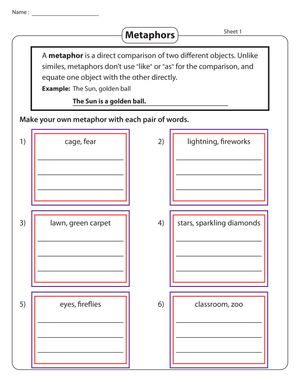
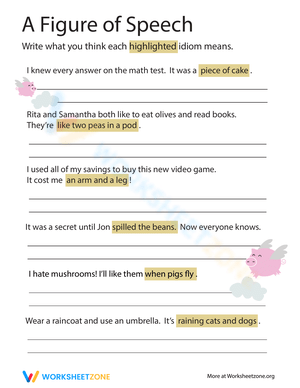
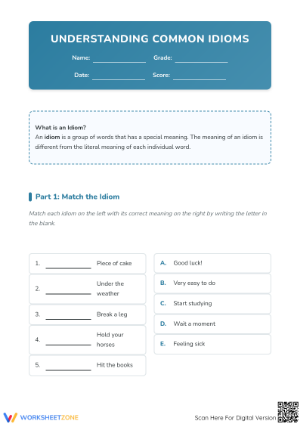
Metaphor worksheets push students a step further by removing the signal words entirely. Students identify the two things being equated and explain the shared attribute — for "the hallway was a river of noise," they articulate what a hallway and a river have in common, not just flag that a comparison is being made. Idiom worksheets make up the largest portion of the set because idioms generate the most errors and appear frequently in the chapter books third graders are reading. Students work through short passages with idioms embedded in context and infer meaning from the surrounding sentences rather than guessing from individual words.
Errors Worth Anticipating Before You Hand These Out
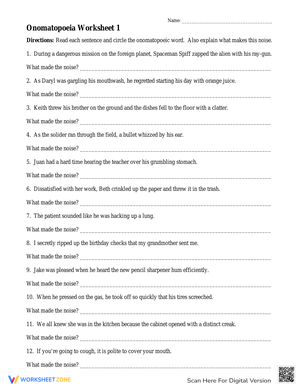
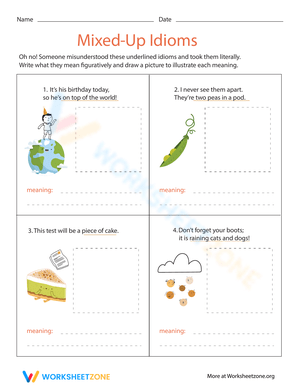
The most consistent error with idioms is literal interpretation offered as a genuinely confident answer. A student who reads "he let the cat out of the bag" and writes "he opened a sack and a cat escaped" is not guessing — that student believes the answer is right. The worksheets address this by embedding idioms inside passages where the literal interpretation is contextually impossible: surrounding sentences make clear that no actual cat was involved. That constraint pushes students to revise their first instinct rather than confirm it.
With metaphors, the typical gap is not identification but explanation. Students who correctly mark "the assignment was a mountain" as a metaphor will then write "the assignment was hard" as the explanation, which collapses the comparison into a vague feeling. What the task requires is naming the shared quality — size, the sense of something looming, the difficulty of what lies ahead — not substituting a simpler adjective. Each metaphor worksheet includes a follow-up line asking students to name the shared attribute, which surfaces this shortcut before it compounds into a writing habit.
Fitting These Worksheets Into Your ELA Week
The ten-minute language warm-up before a read-aloud or at the start of an ELA block is where these worksheets fit most naturally. Projecting the first two or three items of a worksheet and thinking aloud through the identification process takes about five minutes; students finish the rest independently. That setup also functions as a quick formative check — scan who finishes confidently, who stalls on idioms, who writes explanations that slip into vague emotional language. That information takes less than a minute to gather during the independent work window and shapes the next instructional decision.
For literacy center rotations, placing a selection of worksheets from the set in a language station gives students twenty minutes of meaningful solo work without requiring teacher presence. The 3rd grade figurative language worksheets format lets you print exactly the device type that matches what students are reading that week — an idiom worksheet when the class novel is heavy with them, a simile worksheet when students are drafting descriptive paragraphs in writing workshop. One extension worth building into the center: after completing an idiom worksheet, students sketch a split-panel illustration — the literal image on one side, the figurative meaning on the other. The visual contrast stays with them in a way that written definitions do not.
Standard Alignment
CCSS.ELA-LITERACY.L.3.5.A requires third graders to distinguish literal from nonliteral meanings of words and phrases in context. That standard sits inside the Vocabulary Acquisition and Use strand and surfaces in reading comprehension assessments where figurative language appears embedded inside passages — not presented in isolation or on a vocabulary list. Because each worksheet in this set presents figurative phrases inside sentences or short paragraphs rather than as standalone items, students practice the reading work the standard actually demands rather than a simplified version of it.
Differentiating Across the Class
For students who stall on idiom meaning even with context clues, offering a short list of three possible interpretations — not full definitions, just brief phrases — shifts the cognitive task from retrieval to evaluation. That is still meaningful language work, and it keeps students from shutting down before they have a chance to reason through the task. English language learners face a specific challenge with idioms because the phrases carry no cross-linguistic equivalent: a student who speaks Vietnamese or Spanish at home has no anchor for "under the weather" or "break a leg." Adding a small illustration of the figurative meaning alongside those items gives those students access that context clues alone do not reliably provide.
For students working above grade level, each worksheet is most useful as a starting point rather than an endpoint. After completing a simile worksheet, those students write three original similes using subjects from the current class read-aloud — a character's mood, a setting detail, a key moment in the plot. That extension moves from recognition to production, which is where compositional skill actually develops.
Frequently Asked Questions
Are these worksheets appropriate for both whole-class instruction and independent practice?
Yes. Each worksheet works well in both settings. For whole-class instruction, projecting the worksheet and modeling two or three items before releasing students to finish independently gives the lesson a clear gradual-release structure. For independent practice, the context-embedded format gives students enough information to work through most tasks without additional teacher explanation. The 3rd grade figurative language worksheets format also makes reprinting simple — a clean copy can go home for additional practice or be reused with a different small group the following week.
How are idioms handled differently from similes and metaphors in this set?
Idioms get more contextual support because they cannot be decoded from individual word meanings. A student who knows what "spill" means and what "beans" means gains nothing from those definitions when trying to interpret "spill the beans." Each idiom worksheet embeds phrases inside a short paragraph where surrounding sentences carry meaning signals. Students are not asked to memorize a definition list; they read through the passage and use what the text tells them. That mirrors what students actually need to do when an unfamiliar idiom appears mid-chapter in independent reading.
What if my students already encountered some of these devices in second grade?
Second-grade figurative language instruction is typically introductory — recognizing a simile in a single sentence, usually with heavy visual support. These 3rd grade figurative language worksheets sets move students toward explanation and context-based inference, which is a meaningfully different cognitive task. A student who confidently identified similes in second grade will often struggle to articulate what two things have in common or to infer an idiom's meaning from a paragraph. The worksheets target that increased demand rather than repeating the introductory work.












 Interactive Worksheet Maker
 Quiz Maker
 Word Search Maker
 Crossword Puzzle Maker
 Word Scramble Generator
 Sentence Scramble Generator
 Handwriting Worksheet Generator
 Name Tracing Generator
 Fill In The Blank Generator