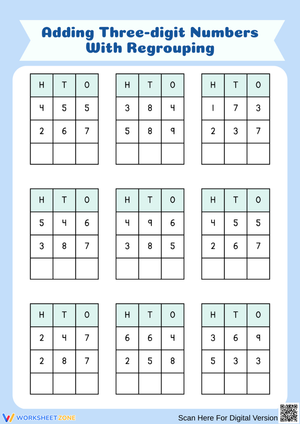
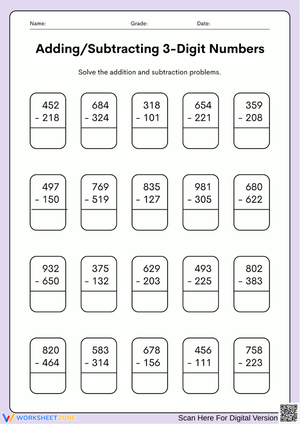
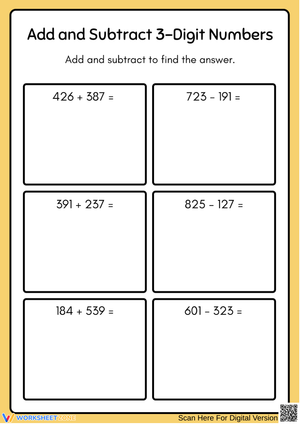
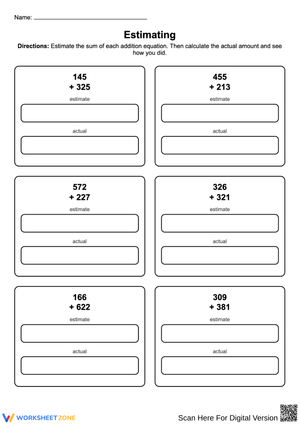
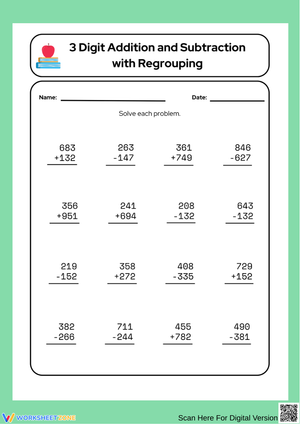
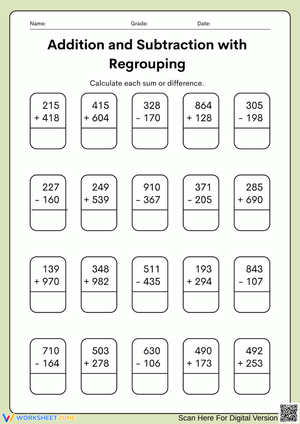
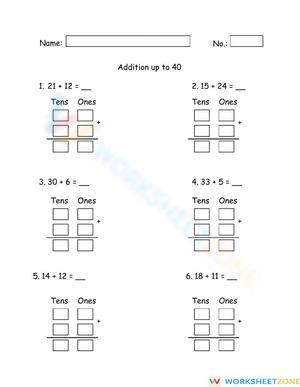
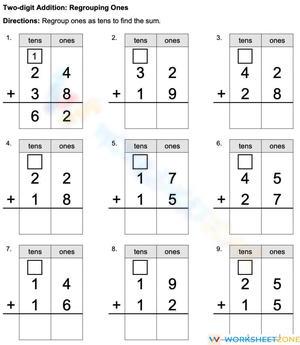
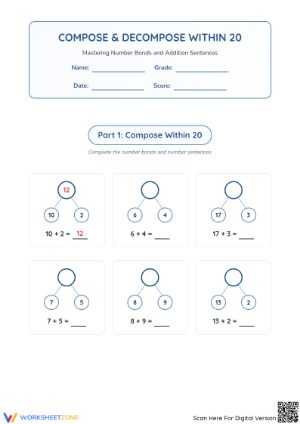
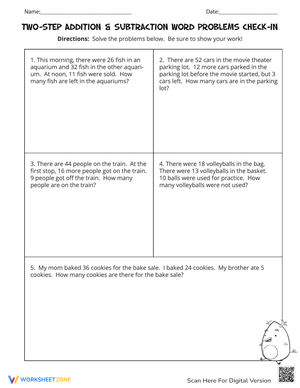
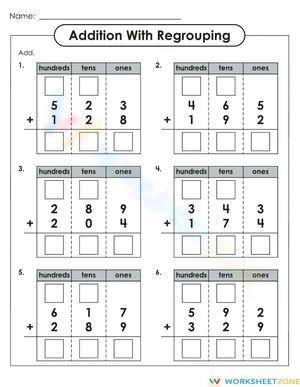
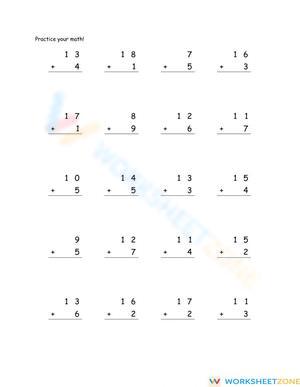
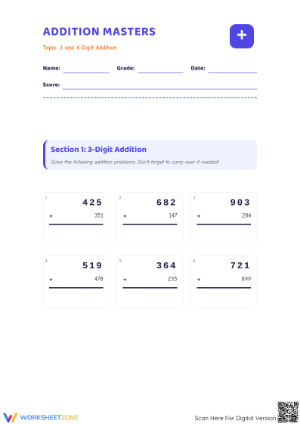
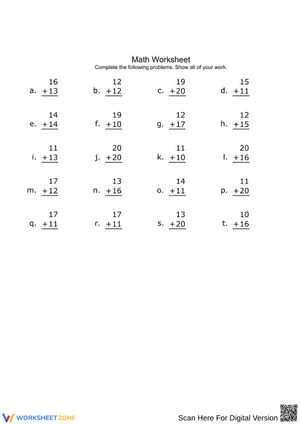
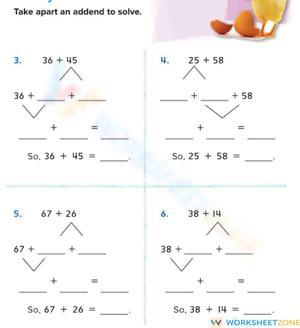
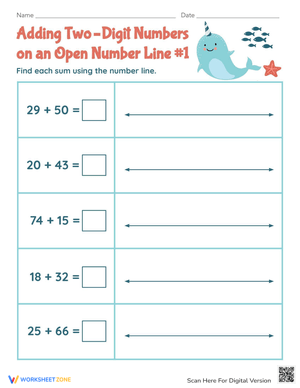
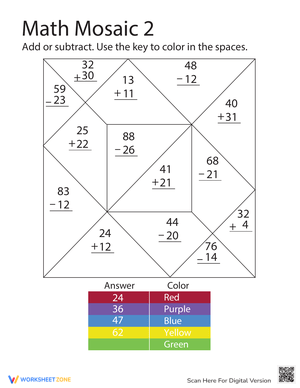
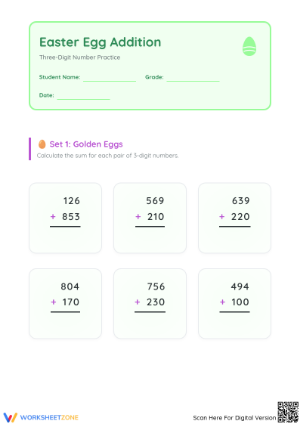
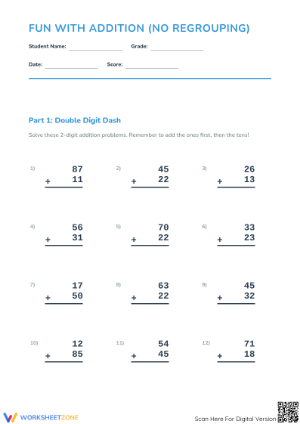
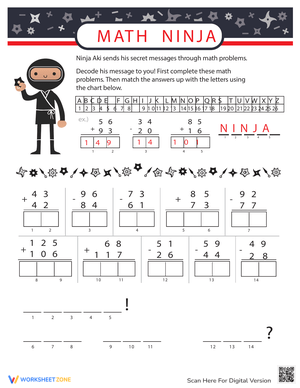
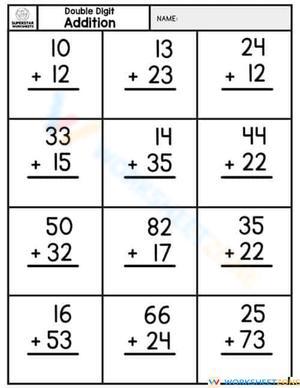
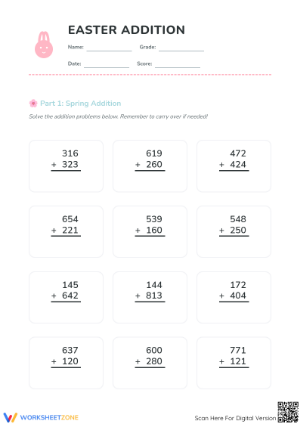
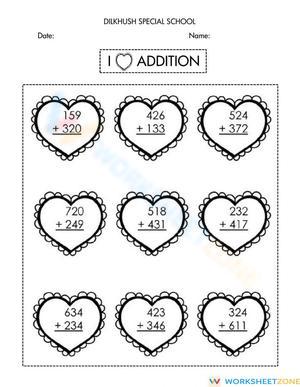
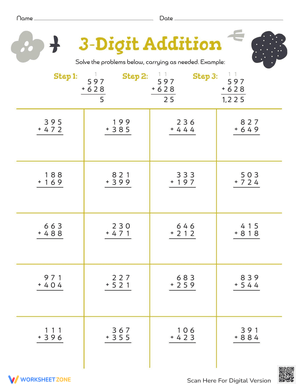
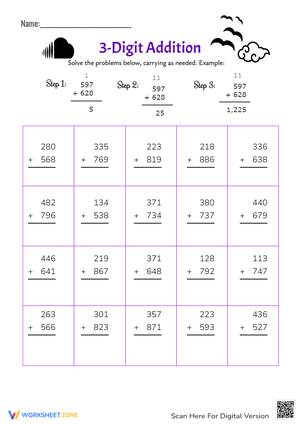
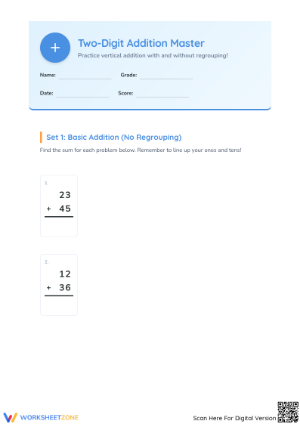
These 2nd grade multi digit addition printable worksheets target the skill cluster that separates second graders who understand place value from those who are just mimicking a procedure — adding two- and three-digit numbers with and without regrouping. The set moves through increasing complexity, beginning with problems that don't require carrying and building toward two-digit plus two-digit sums where both the ones and tens columns need regrouping.
The Specific Skills Each Worksheet Builds
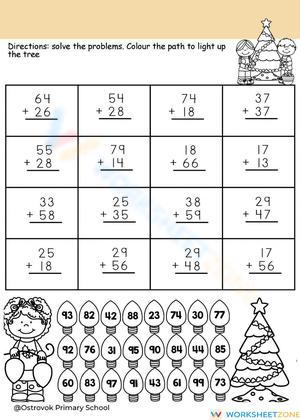
Students work through a deliberate progression. Early worksheets have students add two-digit numbers with no regrouping, reinforcing column alignment and place value awareness before carrying enters the picture. Then regrouping appears in the ones column only, then in both columns simultaneously. Several worksheets focus on adding three numbers in a column — a skill 2.NBT.B.6 specifically addresses — which requires students to hold a partial sum in working memory while adding a third addend. A handful of worksheets include place value charts alongside blank equation spaces so students record expanded form before writing the standard sum. That extra step slows the rush to a wrong answer and builds the habit of reading a number rather than just operating on its digits.
Among the 2nd grade multi digit addition printable worksheets in this set, the word problem worksheets deserve particular attention in lesson planning. Each situation uses numbers that make the context believable for a seven-year-old: sticker collections, library books, crayons in a box. Students underline the question, circle the numbers, and write the vertical equation before solving — a sequence that takes roughly ninety seconds per problem and pays off when the same students encounter multi-step word problems in third grade.
Mistakes Students Make That These Worksheets Help You Catch
The most consistent error in the regrouping unit is not forgetting to carry — it's carrying but then ignoring the carried digit when summing the tens column. A student adds 47 + 35, correctly writes the 2 in the ones place and the small 1 above the tens column, then adds 4 + 3 and writes 7, producing 72 instead of 82. The carried 1 sits right there on the paper. They wrote it. They just don't count it. This happens because students in this age group often treat the carrying step and the tens-column addition step as two separate actions rather than one continuous calculation.
A second pattern worth watching: when the sum of the tens column reaches 10 or greater, many students don't recognize that the same regrouping rule applies a second time. They've internalized "carry when the ones are too big," but in a problem like 79 + 45 — where the tens column gives 7 + 4 + 1 = 12 — they write only the 2 in the tens place and never put the 1 anywhere, getting 24 instead of 124. The rule doesn't feel recursive to most second graders until someone makes that connection explicit.
Building These Worksheets Into Your Lesson Plans
The most efficient use of this set is as a formative check at the end of direct instruction — not as a standalone homework assignment. After a fifteen-minute lesson on ones-column regrouping, two or three problems from the matching worksheet show immediately whether students understood the carry step or only appeared to follow along. That real-time read is more useful than scoring a full worksheet the next morning.
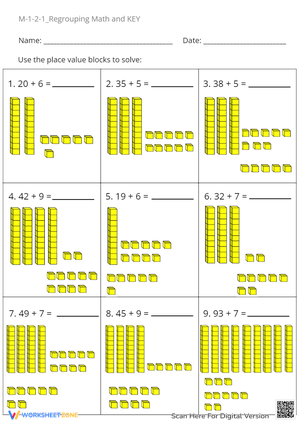
For morning warm-up, the no-regrouping worksheets work well on Mondays when students need a low-stakes on-ramp back into math. The regrouping worksheets work better mid-week, after the concept has had two or three days to settle. Math center rotations are another natural fit — particularly if one station pairs a worksheet with base-ten blocks so students who are still in the concrete stage can build the problem before recording it on paper.
These 2nd grade multi digit addition printable worksheets also hold up well as exit tickets if you isolate four or five problems. That narrow format keeps the task manageable during the last ten minutes of math block and gives you a quick stack to sort by understanding level before tomorrow's lesson.
Standard Alignment
CCSS 2.NBT.B.5 requires fluent addition and subtraction within 100 using strategies grounded in place value and properties of operations. The no-regrouping and single-regrouping worksheets target this standard directly, building toward the fluency benchmark expected by end of year. CCSS 2.NBT.B.6 addresses adding up to four two-digit numbers in a column — several worksheets present exactly that format with three addends stacked vertically. CCSS 2.NBT.B.7 extends the work into sums within 1,000, which the three-digit addition worksheets address. Instructionally, 2.NBT.B.5 typically arrives mid-year after students have built solid place value understanding through 2.NBT.A.1 and 2.NBT.A.3; the regrouping work in 2.NBT.B.7 follows as a natural extension in the second half of the year.
Adjusting the Set for a Range of Learners
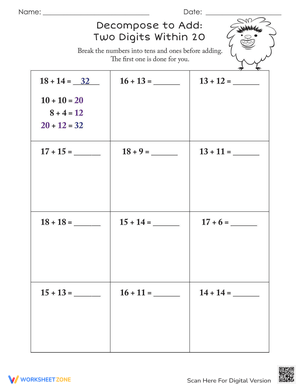
Students who arrive at the regrouping lessons without solid ones-and-tens place value recall benefit most from starting with the place value chart worksheets, where they decompose each addend before writing the standard form. That two-step format reduces the number of things a student has to track at once — once decomposition is automatic, they can move to the standard algorithm without the chart.
For students who master regrouping quickly, the three-digit addition worksheets extend the challenge without changing the underlying concept. Adding a hundreds-column forces students to check whether the tens sum also requires carrying — a meaningful step up in complexity. A useful extension: ask these students to write a word problem that matches one of the bare equations on the worksheet. Writing the context reveals whether they actually understand what multi-digit addition represents, or whether they've learned to operate on symbols without grounding them in quantity.
The 2nd grade multi digit addition printable worksheets work across ability levels without requiring separate materials. The place value chart format gives students who need more guidance a structured path through each problem, while the bare-equation worksheets let students who are ready move without that support. Assigning different worksheets from the same set to different groups keeps the room working on the same concept without making the gap visible to students.
Frequently Asked Questions
When in the school year should regrouping be introduced?
Most second-grade pacing guides place the regrouping unit between January and March, after students have spent the fall building place value fluency and number sense within 100. Introducing regrouping before students can reliably identify the tens and ones digits in a two-digit number almost always produces procedural errors that take weeks to undo.
Do students need base-ten blocks before they use these worksheets?
For the initial regrouping lessons, yes — concrete materials before the worksheet. Once students have physically traded ten ones for a ten-rod several times, the small carried "1" on the worksheet corresponds to something they've actually done with their hands. Jumping straight to the written algorithm without that concrete phase is the main reason regrouping becomes a memorized trick rather than an understood process.
Can these worksheets work with first graders who are working ahead?
The no-regrouping worksheets work for advanced first graders who have a solid understanding of tens and ones. The regrouping worksheets are better saved for second grade — not because first graders can't follow the steps, but because the place value foundation that makes regrouping meaningful usually isn't stable until the second half of Grade 2. A first grader who carries mechanically without understanding why rarely retains the skill through summer.
How do I know when a student is ready to move from the structured-format worksheets to bare equations?
When a student completes five or six regrouping problems on the place value chart worksheet with no errors and without referencing earlier problems, that format has done its job. Move them to a bare-equation worksheet and watch the first two or three problems. Students who are genuinely ready shift smoothly. Students who relied on the chart without building the underlying understanding will show misalignment errors or forget the carry step almost immediately — which tells you they need more time with the guided format before moving on.













 Interactive Worksheet Maker
 Quiz Maker
 Word Search Maker
 Crossword Puzzle Maker
 Word Scramble Generator
 Sentence Scramble Generator
 Handwriting Worksheet Generator
 Name Tracing Generator
 Fill In The Blank Generator