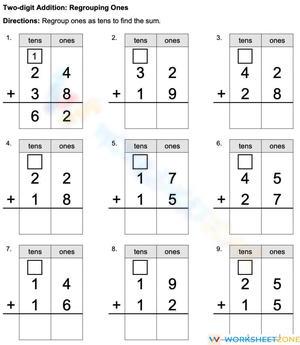
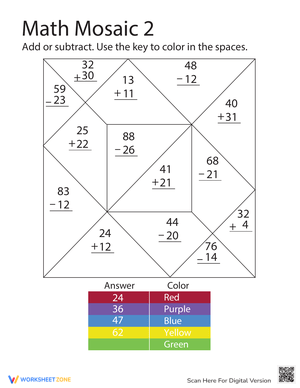
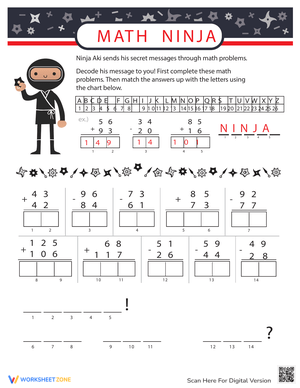
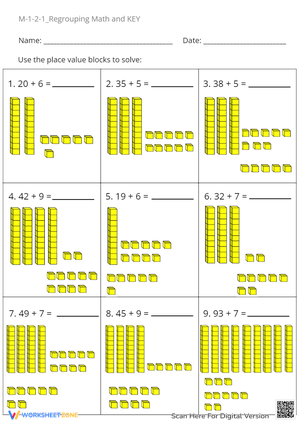
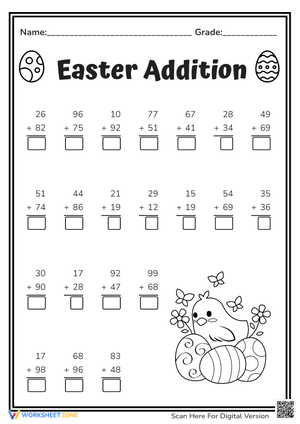
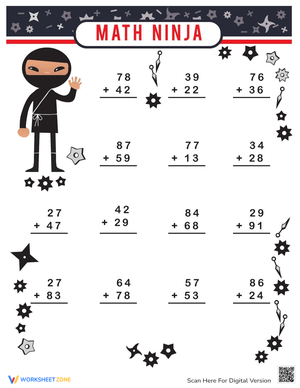
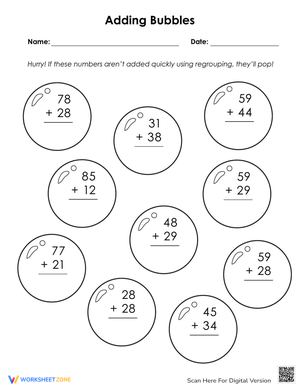
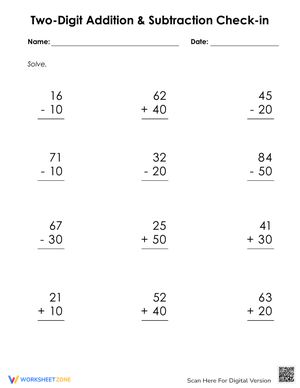
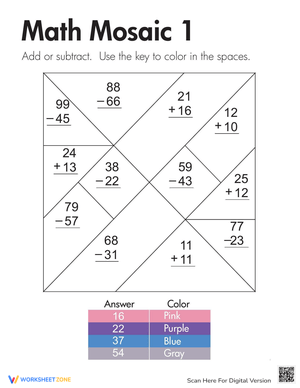
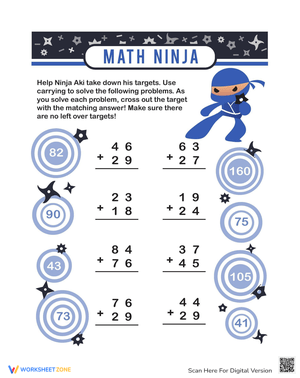
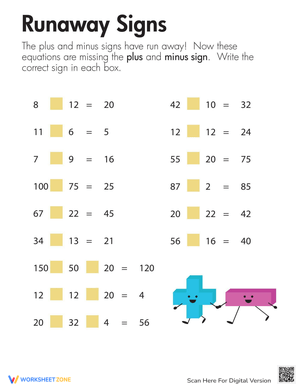
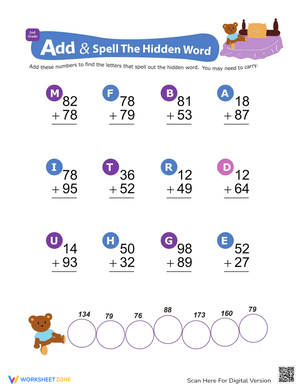
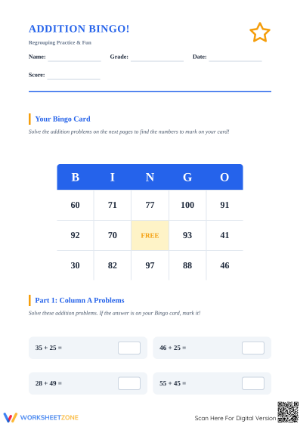
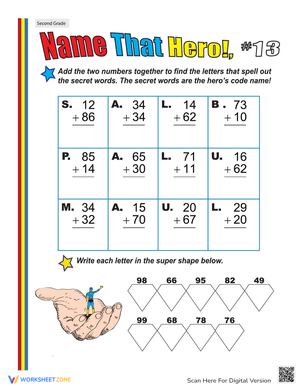
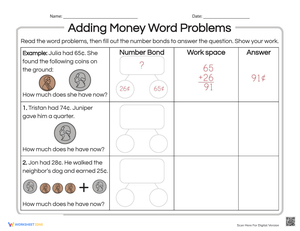
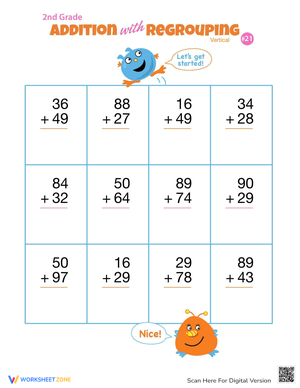
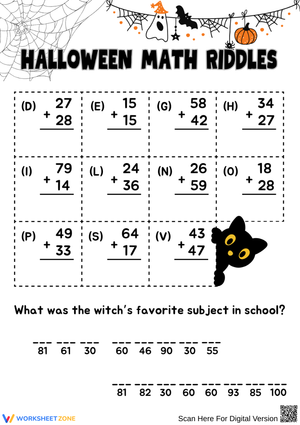
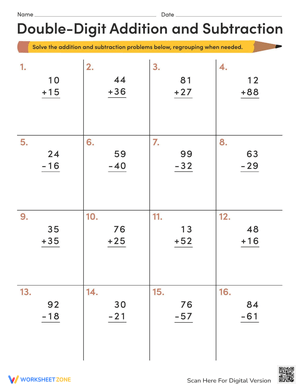
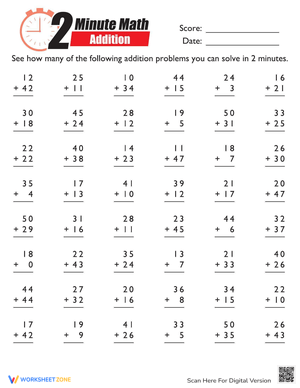
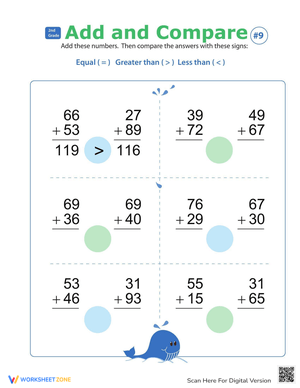
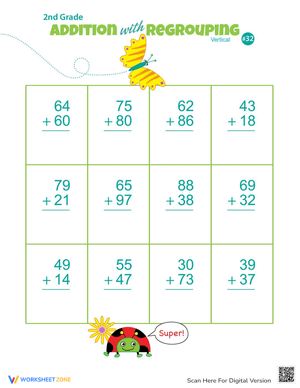
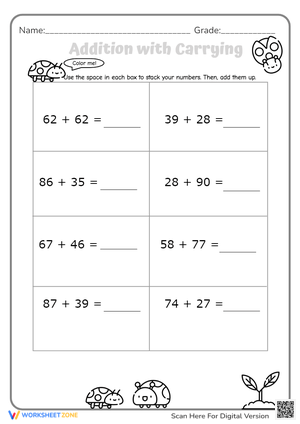
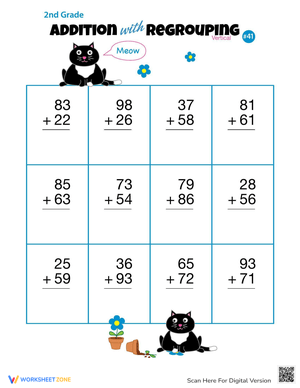
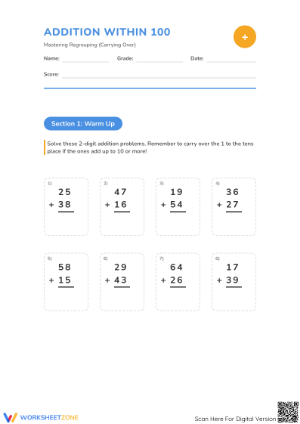
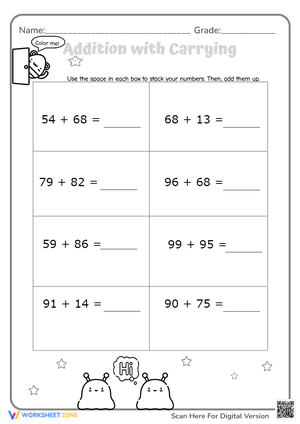
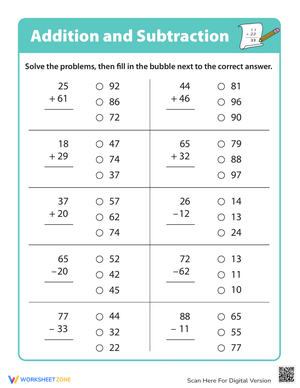
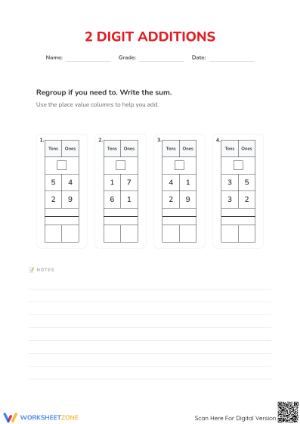
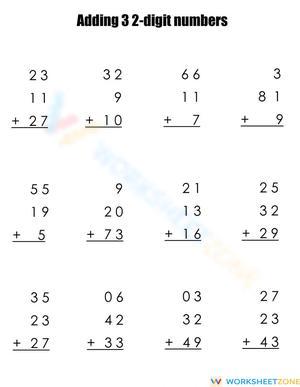
These 2nd grade two digit addition and regrouping printable worksheets address the specific point in the year when place value understanding has to do real work — inside a live calculation, not as an isolated concept. The set covers the full range of situations second graders encounter: ones-column sums that hit exactly ten, sums well above ten, and mixed sets where students have to first judge whether regrouping is even needed. That last category is where fluency actually develops.
The Specific Skills Each Worksheet Targets
Across the set, students practice several distinct competencies that teachers typically have to address in sequence before the algorithm holds. Each worksheet has a clear skill focus rather than a mix of unrelated problem types.
- Ones-first sequencing — students build the habit of starting in the ones column every time; those who skip this step consistently misregroup when the ones-column sum exceeds nine
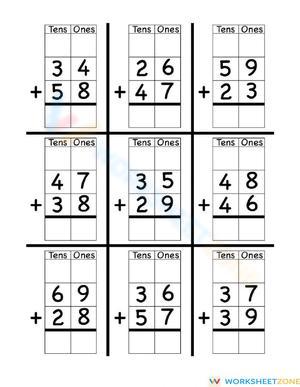
- Regrouping box use — problems include a small designated box above the tens column for recording the regrouped ten, which reduces the "I forgot to add it" error in a structural way
- Identification practice — mixed-problem worksheets ask students to mark each problem as "regroup" or "no regroup" before solving, building the diagnostic habit before it runs automatically
- Error analysis — select worksheets present already-solved problems with deliberate mistakes; students locate and correct the error, then write a sentence explaining what went wrong
- Missing addend problems — for students who are ready: 47 + __ = 83 requires understanding regrouping in both columns and bridges naturally into subtraction reasoning
The 2nd grade two digit addition and regrouping printable worksheets in this set work exclusively within the two-digit range — both addends between 10 and 99 — so the place value structure stays manageable while the arithmetic still demands real thinking.
Errors Students Make That These Worksheets Help You Catch
The most persistent mistake in second grade is the full-sum error: a student working 27 + 35 writes 12 in the ones place and 5 in the tens place, arriving at 512. This is not an addition error — the student correctly computed 7 + 5 = 12. It is a place value breakdown. They have not yet internalized that the ones column holds only a single digit. Catching this early matters because it follows students directly into three-digit problems without ever being named or corrected.
The forgotten ten is equally common. A student correctly identifies that 6 + 8 = 14, writes the 4 in the ones column, records the regrouped 1 above the tens — and then adds only the original tens digits. In actual student work, this produces 26 + 38 = 54 instead of 64. The regrouping box helps, but some students write the 1 so small it becomes invisible before they reach the tens column. Having students write the regrouped ten in a different color for the first few weeks makes it much harder to overlook.
There is also the over-application error, which looks like a mistake but is actually a conceptual milestone in disguise. A student who has just learned regrouping starts regrouping on every problem — including 31 + 45, where the ones-column sum is only 6. This shows the student is treating regrouping as a fixed procedure rather than a conditional step. The identification worksheets in this set target that gap directly by requiring the "do I need to?" decision before any calculation begins.
Where These Fit in Your Math Block
Most teachers find these worksheets work well in three specific slots: the guided-practice phase of a new lesson when you are still solving problems alongside students, the final ten minutes of independent work after a mini-lesson, and Monday warm-ups in the weeks following initial instruction. That Monday slot carries more instructional weight than it might seem. Spaced retrieval across days strengthens the procedural memory that regrouping requires, and five problems on Monday morning are often more effective than a full worksheet on the Friday before.
The error-analysis worksheets hold up especially well in pairs during math centers. One partner reads the problem and the "student work," the other decides whether the answer is correct and explains why. The conversation that follows — "no, you forgot the regrouped ten" — consolidates the algorithm in a way that quiet individual practice does not. For whole-class instruction, projecting a single worksheet and cold-calling individual steps keeps every student accountable without the overhead of distributing a new document mid-lesson.
The 2nd grade two digit addition and regrouping printable worksheets in this set also work well as take-home practice. Because the regrouping box and ones-first layout are built into each worksheet, parents can support their child's work at home without needing a separate instruction sheet explaining how to approach the problems.
Standard Alignment
These worksheets align to CCSS.MATH.CONTENT.2.NBT.B.7, which asks students to add and subtract within 1000 using concrete models, drawings, and strategies based on place value and the relationship between operations. In classroom terms, two-digit regrouping typically arrives mid-year, after students have built understanding through 2.NBT.A.1 — the idea that three-digit numbers represent quantities of hundreds, tens, and ones — and have developed fluency within 20 through 2.OA.B.2. Regrouping is not a standalone trick; it is the procedural extension of place value logic students have been building since first grade. Second graders who misunderstand the operation at this stage carry that misunderstanding straight into three-digit addition in third grade, which is why the conceptual grounding matters here.
Adjusting the Set for a Range of Learners
For students who are still developing basic addition facts, regrouping practice collapses under cognitive load. Managing 8 + 7 while also tracking column order, place value, and the regrouping step is too much at once. A practical first adjustment is to fill in the ones-column sum before distributing the worksheet, so those students focus entirely on the regrouping decision and the recording procedure. Once fact fluency is stable, they move to full problems without further modification.
Students who master the standard algorithm quickly need to be moved toward reasoning rather than execution. Missing-addend problems — 53 + __ = 91 — require analytical thinking through both columns rather than a memorized sequence of steps. Asking these students to write a sentence explaining whether they regrouped and why shifts the task from procedural to conceptual, and quickly reveals whether they understand the logic or have simply pattern-matched their way to correct answers.
Column alignment causes real trouble for many second graders, particularly those with fine motor challenges or students who write large. Pairing these worksheets with graph paper — or using the grid-format version of each worksheet — lets students keep their tens and ones in the correct lanes without that alignment task competing directly with the arithmetic.
Frequently Asked Questions
Why do some second graders keep forgetting to add the regrouped ten even after weeks of practice?
This is almost always a working memory issue, not a conceptual one. The student understands what the regrouped 1 means — they just lose track of it between writing it above the tens column and returning to add it in. Two fixes hold up in classroom use: require the student to physically touch the regrouped digit with their pencil before adding the tens column, and have them write the regrouped number in colored pen until the habit solidifies. If neither works, return to base-ten blocks and have the student physically set aside the new ten-rod, add the existing rods, then count all of them together. That physical loop often resets the sequence when purely numerical practice has stalled.
When should students stop using the regrouping box?
There is no fixed timeline, and pushing students away from the box too early is a common instructional misstep. Let students set it aside when they can produce consistently correct answers without it — five or six problems in a row, not just one or two. Some students will need the box through the end of second grade, and that is a reasonable outcome. The goal is accuracy and understanding, not an early exit from a tool that is still doing its job.
What is the difference between the identification worksheets and the standard problem sets?
The standard problem sets ask students to solve. The identification worksheets ask students to look at each problem first and mark it as "regroup" or "no regroup" before writing any numbers. That two-step sequence is intentional — it builds the habit of reading the ones column before acting, which is exactly the habit that breaks down when students misregroup. Teachers typically use these worksheets midway through the unit, after students can execute regrouping correctly but before they have fully internalized when to apply it. They are among the most instructionally targeted resources in the 2nd grade two digit addition and regrouping printable worksheets set for addressing students who regroup out of habit rather than mathematical judgment.
Are these worksheets appropriate for first graders who are working above grade level?
First-grade students with solid place value foundations who are already adding two-digit numbers without regrouping can move into these worksheets when they are ready. Each worksheet establishes the ones-first habit and introduces the regrouping box from the beginning, so an above-grade-level first grader will find a clear entry point without needing any separate preparation.













 Interactive Worksheet Maker
 Quiz Maker
 Word Search Maker
 Crossword Puzzle Maker
 Word Scramble Generator
 Sentence Scramble Generator
 Handwriting Worksheet Generator
 Name Tracing Generator
 Fill In The Blank Generator