


























Views
Downloads

Essential Grade 3 Addition Worksheet without Regrouping
Paste this activity's link or code into your existing LMS (Google Classroom, Canvas, Teams, Schoology, Moodle, etc.).
Students can open and work on the activity right away, with no student login required.
You'll still be able to track student progress and results from your teacher account.
This worksheet offers focused practice on the foundational skill of multi-digit addition without regrouping. Designed for third-grade learners, it methodically builds from two-digit to three-digit problems, including word problems, to ensure students develop both computational accuracy and the ability to apply their skills in context. It's a complete resource for reinforcing place value concepts.
At a Glance
- Grade: 3 (scaffolds from Grade 2) · Subject: Math
- Standard:
CCSS.MATH.CONTENT.3.NBT.A.2— Fluently add within 1000 using place value strategies.- Skill Focus: Multi-digit addition without regrouping
- Format: 4 pages · 34 problems · Answer key included · PDF
- Best For: Independent practice, homework, formative assessment
- Time: 20–30 minutes
What's Inside
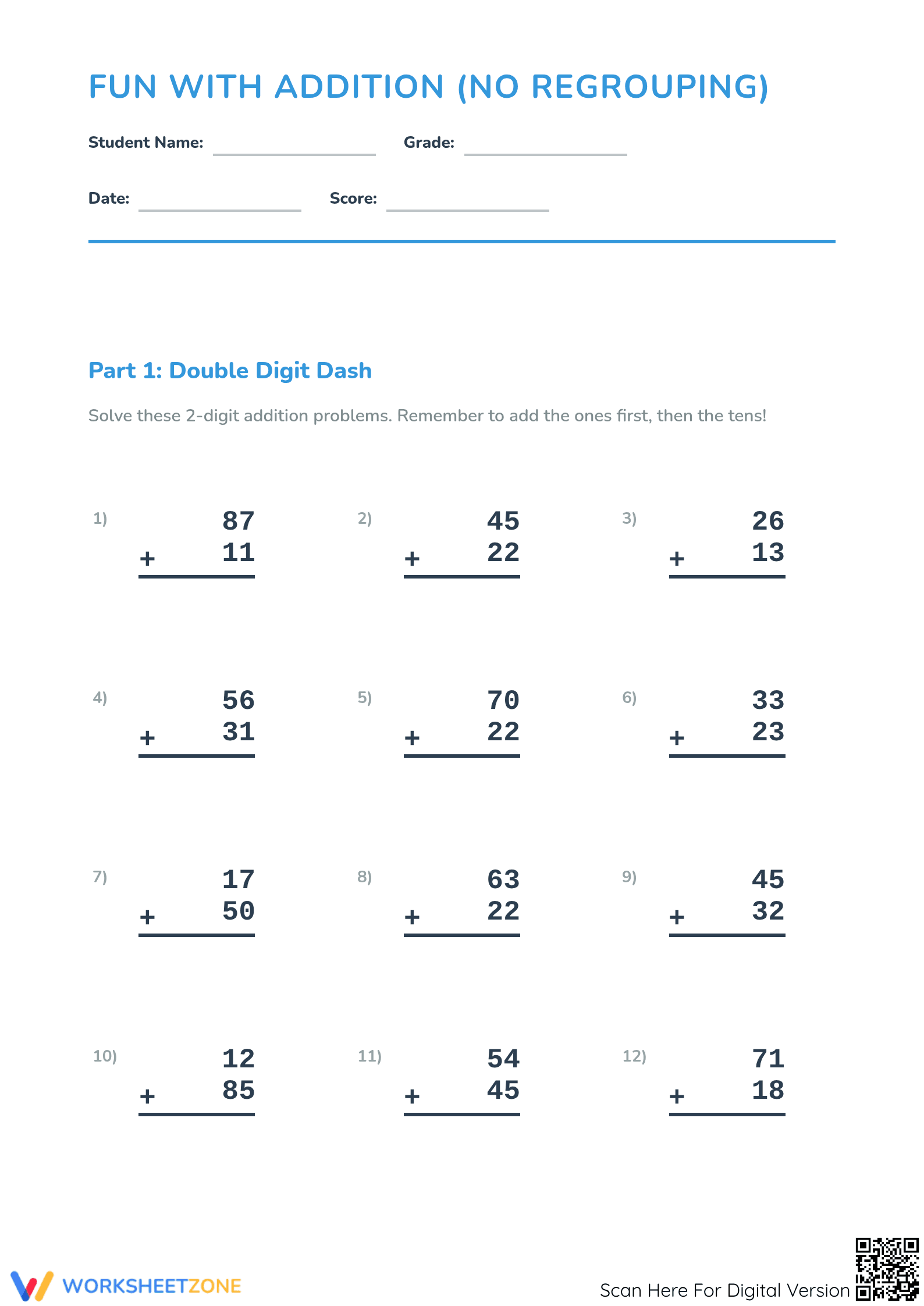
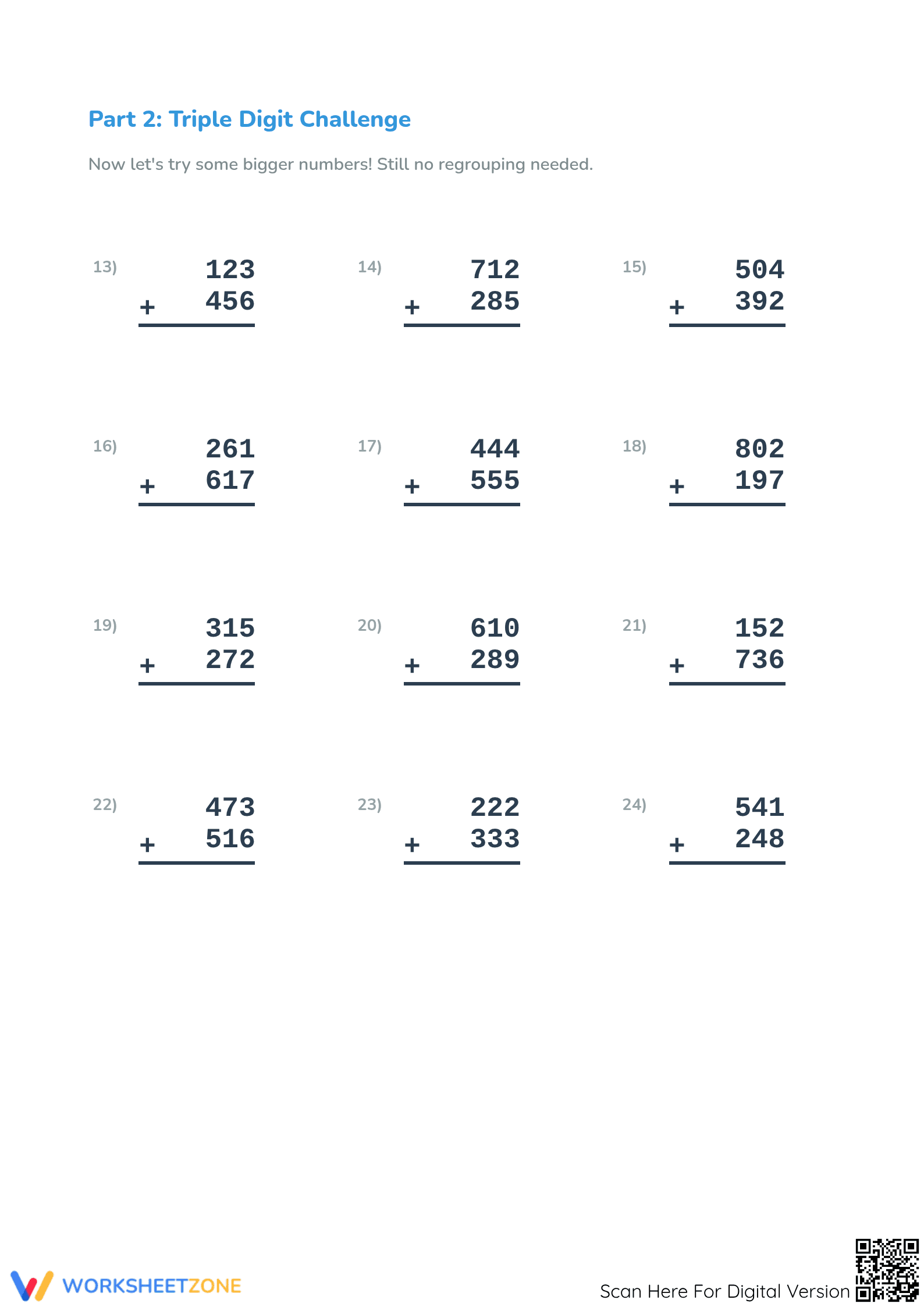
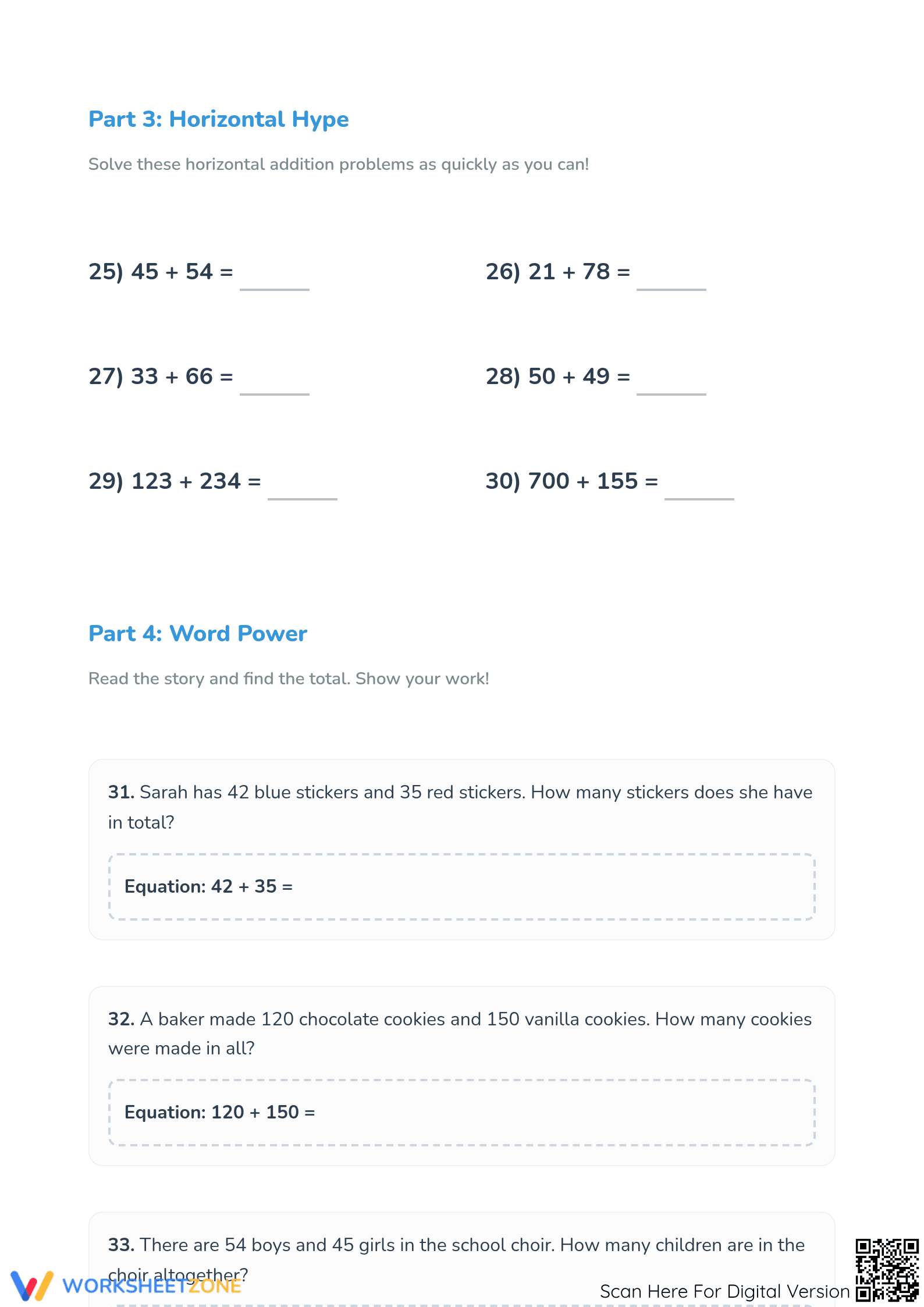
This four-page PDF contains 34 addition problems that progress in complexity across four parts: "Double Digit Dash," "Triple Digit Challenge," "Horizontal Hype," and "Word Power." The structure moves students from vertical to horizontal formats and finally to contextual word problems. A complete answer key is provided for easy review.
A Gradual Skill Progression
The worksheet follows a gradual release model to build student independence.
- Guided practice: The first page features 12 two-digit addition problems in a vertical format, reinforcing place value alignment.
- Supported practice: The next pages increase the challenge with 12 three-digit problems and 6 horizontal problems, requiring students to apply their skills.
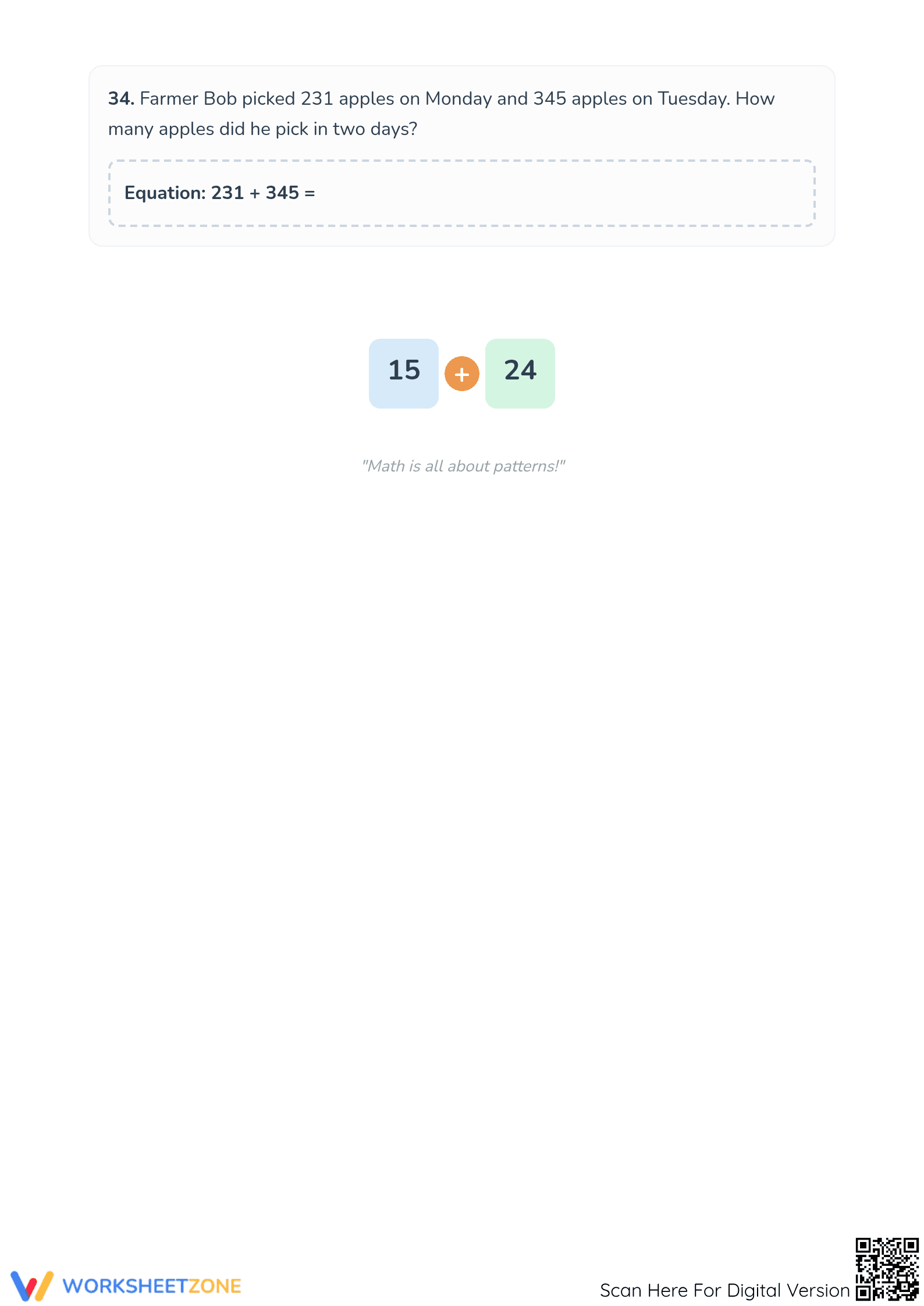
- Independent practice: The final section has 4 word problems, where students must interpret and solve real-world scenarios.
This progression ensures students have support before tackling complex applications.
Standards Alignment
This worksheet aligns with Common Core standard CCSS.MATH.CONTENT.3.NBT.A.2, requiring students to fluently add within 1000 using place value strategies. It also supports the foundational Grade 2 standard CCSS.MATH.CONTENT.2.NBT.B.5. Both standard codes can be copied directly into lesson plans or curriculum maps.
How to Use It
Use this resource for independent practice, homework, or math centers. It’s ideal for a 20-30 minute session after a lesson on place value. For formative assessment, observe how students handle the transition from vertical to horizontal problems to check their conceptual understanding. Students can also self-check with the provided key.
Who It's For
Designed for third-grade students, this worksheet also serves as review for fourth graders or an extension for advanced second graders. The clear progression is accessible for most learners. Pair it with a place value anchor chart to provide visual support for students who need it.
Mastering multi-digit computation is a critical gateway to higher-level mathematics, and practice is key. This worksheet provides targeted drill on multi-digit addition without regrouping, a skill aligned with CCSS.MATH.CONTENT.3.NBT.A.2. Research consistently underscores the importance of procedural fluency built upon conceptual understanding. According to the RAND AIRS (2024) meta-analysis, structured practice materials that isolate specific skills are effective for building student automaticity. By moving from simple two-digit problems to three-digit and contextual word problems, this resource helps students develop the flexible and fluent calculation abilities necessary for future success in topics like algebra. The 34 problems offer a robust dataset for teachers to gauge student mastery of adding within 1000, a key indicator of readiness for more complex operations.


