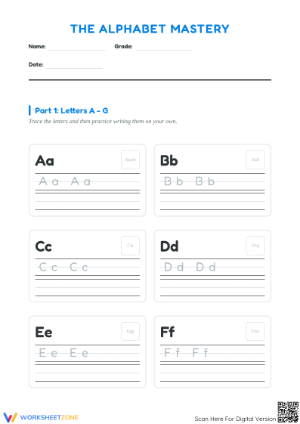
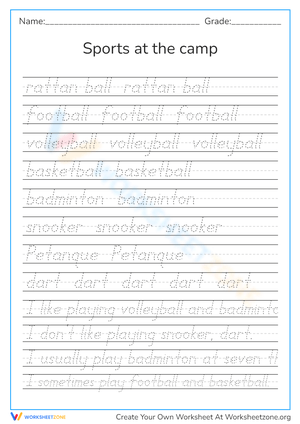
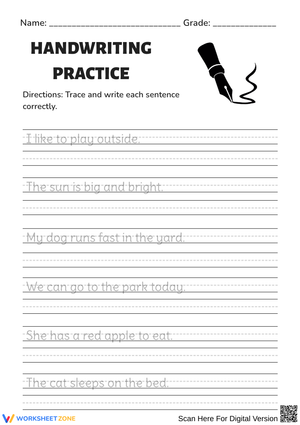
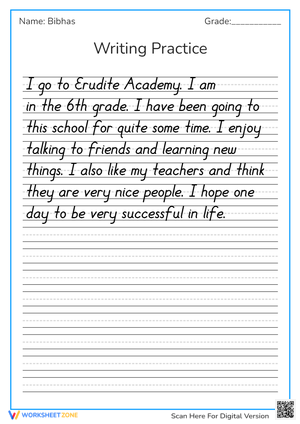
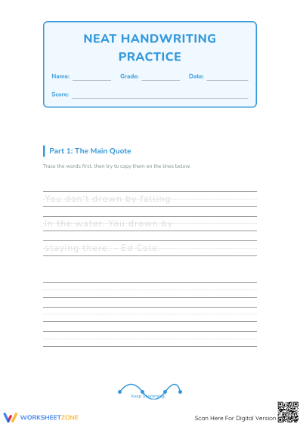
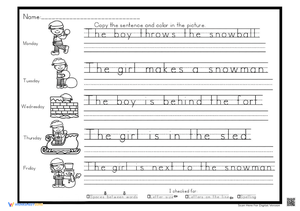
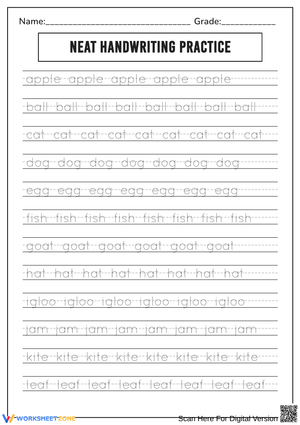
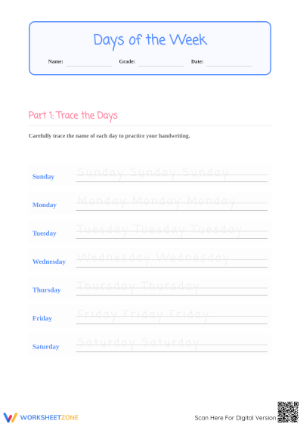
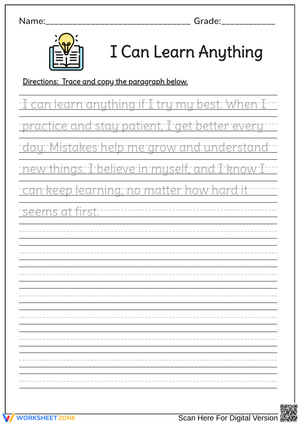
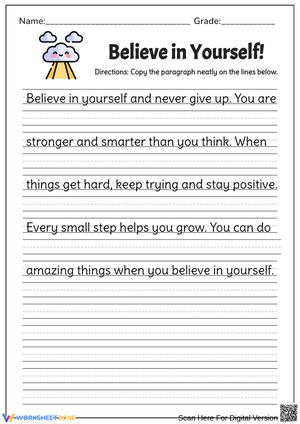
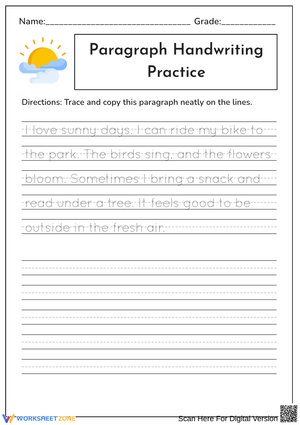
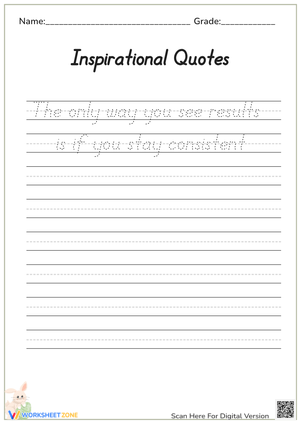
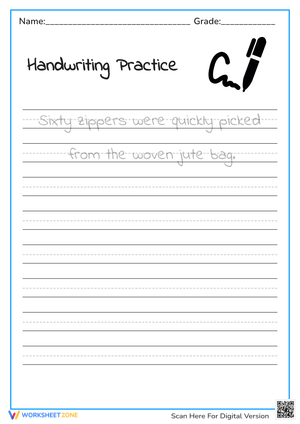
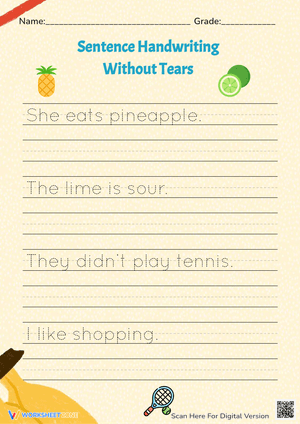
These 2nd grade daily handwriting printable worksheets give teachers a focused practice routine targeting the specific formation problems that surface in second-grade student work — not drill for drill's sake, but daily, targeted work on letter height, stroke sequence, baseline alignment, and the spacing errors that reliably appear when students shift from wide-ruled first-grade paper to the narrower ruling of second grade.
What Students Practice in Each Worksheet
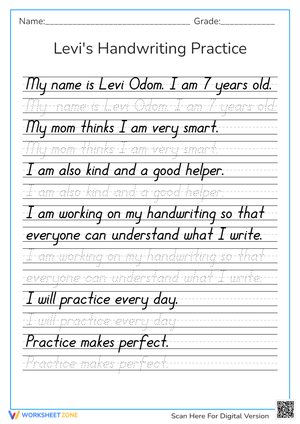
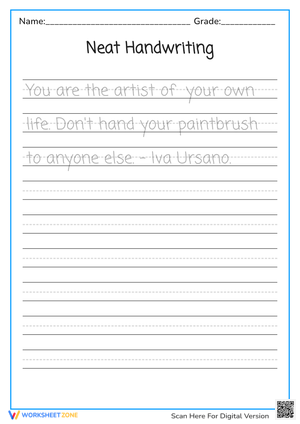
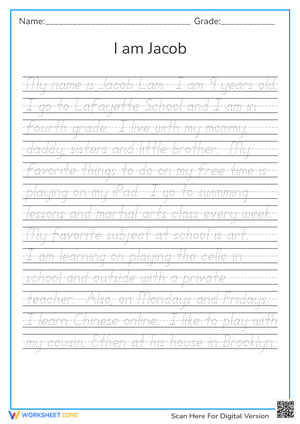
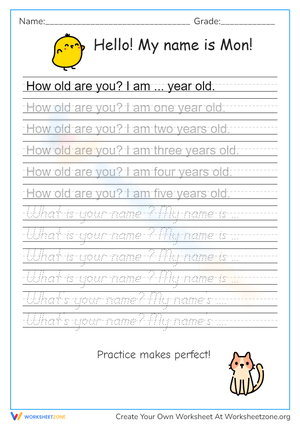
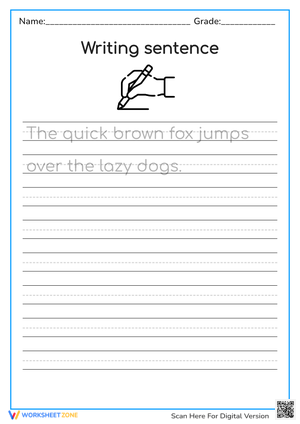
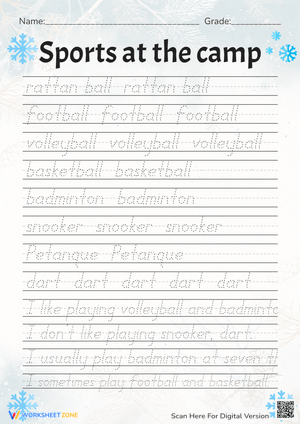
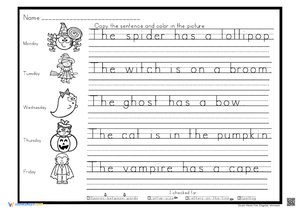
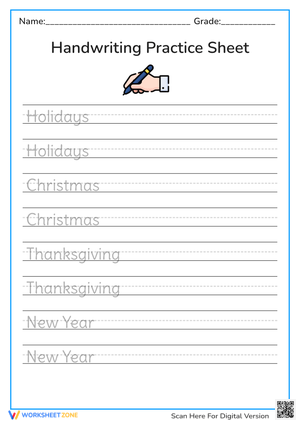
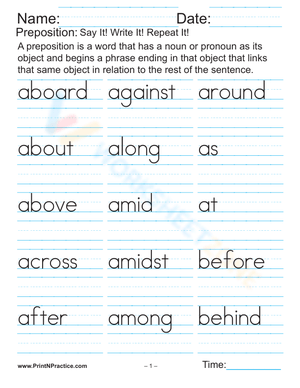
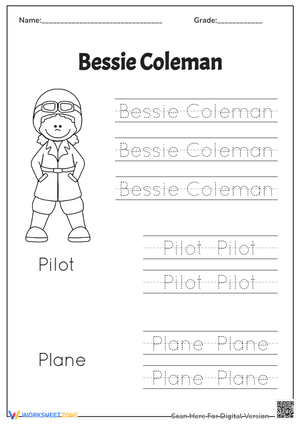
The set works through three connected skill areas: letter formation by stroke family, word and sentence spacing, and baseline alignment for both regular letters and descenders. Formation exercises are sequenced by stroke similarity rather than alphabetical order. The clock-face letters — a, c, d, g, and q — appear together because students who recognize the shared counterclockwise opening curve form all five more consistently than students who encounter them scattered across the alphabet in random order. Students trace, copy, and then write independently on each worksheet, moving from supported practice to unassisted production within a single session.
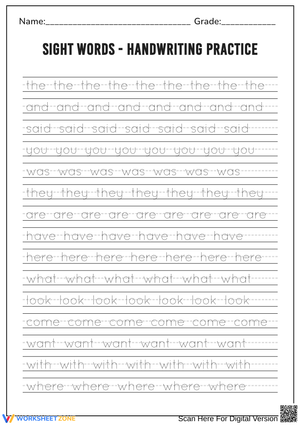
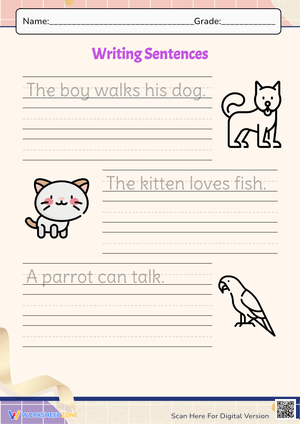
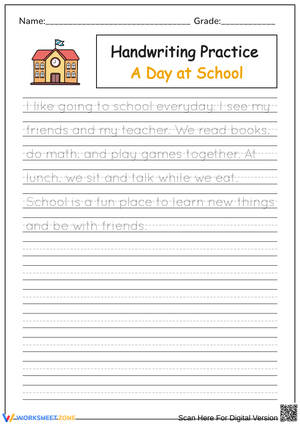
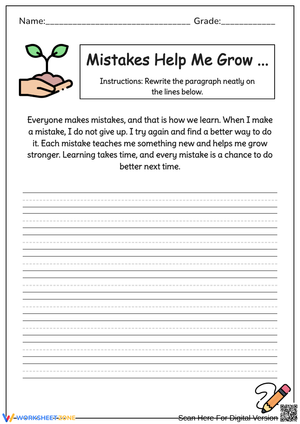
Sight words from standard Grade 2 word lists appear inside the copy sentences throughout the set. This keeps the handwriting practice from feeling isolated from the rest of literacy instruction — a student tracing and copying "they went to the store" is also reviewing high-frequency vocabulary, not just filling lines. Each worksheet's sentences are short enough to keep cognitive demand manageable but grammatically complete so students practice writing in full, punctuated sentences rather than fragments.
Frequent Student Errors Worth Watching For
The most common error at this level is not letter reversals — it is inconsistent letter height within a sentence. A student who writes a well-formed, correctly sized h in isolation will collapse it to half height when writing in a sentence because working memory is now occupied with word selection. This compression appears in student work as early as mid-September and often goes uncorrected until a teacher explicitly shows the student the size discrepancy side by side. Each worksheet includes letter-height reference points in the margin because students cannot self-correct what they do not notice, and most do not notice until it is pointed out visually.
Stroke directionality is the subtler issue. A student writing s or e from the bottom up produces a letter that looks acceptable to the eye but takes longer at speed and breaks down badly in sentence-level writing. Daily practice with worksheets that include directional arrows interrupts this before it calcifies into habit. Second grade is the realistic window for this correction — by third grade, the motor pattern is deeply enough established that retraining requires significant one-on-one time that most classrooms cannot provide.
Fitting These Worksheets Into the Daily Schedule
These 2nd grade daily handwriting printable worksheets work best as morning arrival work, after attendance but before whole-group instruction begins. Students sit down, open a folder, and begin — no transition needed. That placement also gives the teacher five or six minutes to circulate and catch grip problems and posture issues while students are focused on a low-stakes task. Teachers who move handwriting to the afternoon, or to the last block before dismissal, consistently report more incomplete work and markedly less attention to quality.
For the small group of students who are significantly behind — still reversing letters in late October, or writing with a grip that causes hand fatigue by the second line — pulling three or four students for a targeted five-minute session with one focused worksheet per student is more efficient than addressing those issues during whole-class time. The teacher can correct stroke direction, grip angle, and posture in real time without managing 22 other students simultaneously. Asking every student to circle the best-formed letter on each worksheet before submitting it takes 20 seconds and measurably improves the care given to the next attempt.
Differentiating These Worksheets Across Ability Levels
Students with weak fine motor control, or those still working through multiple reversals in the fall, move through the set at a slower pace — one letter family per session rather than the standard weekly sequence. Adding verbal cues alongside the written practice ("start at the top, swing left, close it, pull down") reduces the demands on visual processing enough that formation actually improves, rather than students completing the worksheet without internalizing the stroke. These students also benefit from using a thicker primary pencil with a rubber grip, which encourages a relaxed hold without constant reminders.
Students who move through each worksheet quickly and accurately extend the practice by writing one or two original sentences using the target words — no tracing guide, no dotted lines. This shifts the session from imitation to independent application, which is where fluency actually transfers to classroom writing. Pairing these students to read each other's work and identify the two most and least clearly formed letters builds self-assessment habits that carry directly into writing revision. The 2nd grade daily handwriting printable worksheets in this set include open extension lines on several worksheets specifically to support this kind of differentiated use without requiring separate materials for advanced students.
Standard Alignment
In Common Core-aligned states, handwriting fluency falls within the Language and Writing strands — specifically the expectation that second graders produce legible writing across all written tasks, implicit in every L.2 and W.2 benchmark requiring students to write sentences, revise drafts, or generate extended text. Texas TEKS 2.11A is more explicit, requiring students to use manuscript writing to legibly produce words, sentences, and answers independently. The instructional basis for pairing daily handwriting practice with these standards is direct: automaticity in letter formation frees working memory for composition. A student still deliberating over how to form g cannot simultaneously hold a sentence idea in mind long enough to write it down. Handwriting fluency is not cosmetic — it is a foundational condition for writing instruction to function at grade level.
Frequently Asked Questions
How long should each daily session run?
Ten to twelve minutes is the practical ceiling for most second graders before both attention and grip quality drop off. Consistency matters more than session length — five days of ten-minute practice produces better retention than a single fifty-minute block at the end of the week. If the schedule is tight on certain days, eight minutes is still worth doing.
Should the focus be print or cursive in second grade?
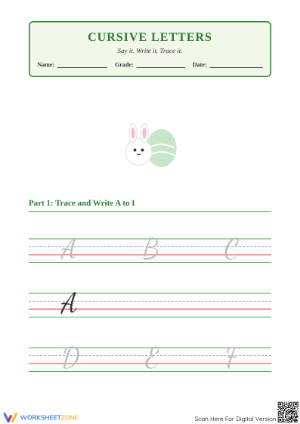
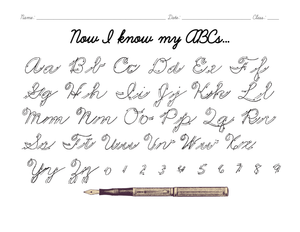
Print should be reliable before cursive is introduced. Second grade is the year to stabilize print letter size, spacing, and baseline consistency. Programs that begin cursive in second grade almost always introduce it in the spring semester — and only after students demonstrate automatic, legible print. Introducing cursive while print formation is still inconsistent creates interference in both directions and slows progress in each.
What can I do about a student with a very tight pencil grip?
A tight grip typically signals one of two things: the student is compensating for limited hand strength, or they have learned that pressing harder produces more visible marks. Rubber pencil grips encouraging a relaxed tripod hold help, as do thicker primary pencils that make the grip more natural without instruction. Short warm-up exercises — pinching and releasing, or drawing large circular shapes on a whiteboard — reduce tension before students pick up a pencil. Reminding students to check their own grip mid-practice, rather than only at the start, builds the self-monitoring habit more reliably than a single reminder at the beginning of the session.
How do these worksheets fit into a small-group intervention?
They work well as the anchor activity for a focused five-to-seven-minute pullout session. Group students who share the same specific error — say, all three students collapsing tall letters in sentence writing — and work through one targeted worksheet together while you observe and correct in real time. The 2nd grade daily handwriting printable worksheets in this set can be reprinted as many times as needed, which matters for students who require significantly more practice repetitions before a stroke pattern becomes automatic.
What do I do with students who finish well ahead of their classmates?
Check the work first. Students who finish in half the time have usually learned to overlook quality gaps. If the work is genuinely clean, direct them to write one or two original sentences using the target words from that day's worksheet — no tracing guide. That shift from copying to independent production is where real fluency develops, and it keeps faster students engaged without requiring a separate parallel activity during the handwriting block.












 Interactive Worksheet Maker
 Quiz Maker
 Word Search Maker
 Crossword Puzzle Maker
 Word Scramble Generator
 Sentence Scramble Generator
 Handwriting Worksheet Generator
 Name Tracing Generator
 Fill In The Blank Generator