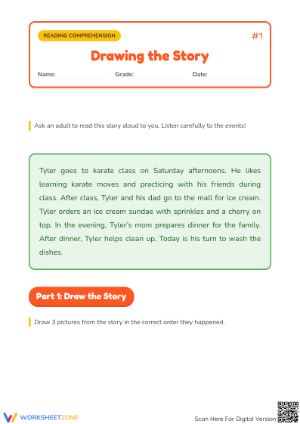
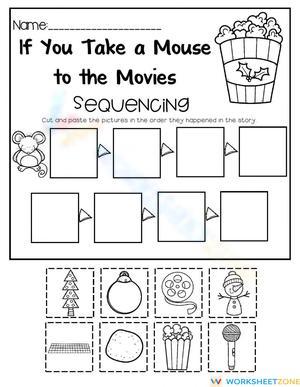
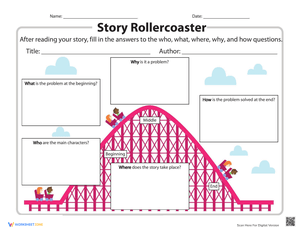
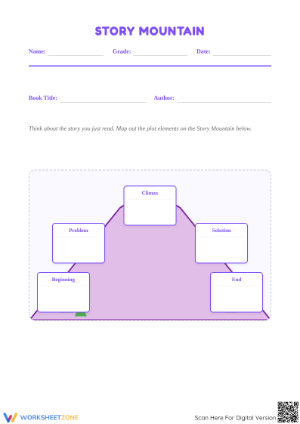
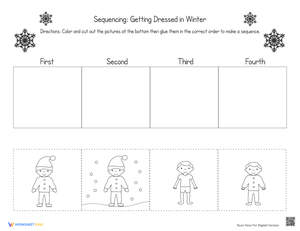
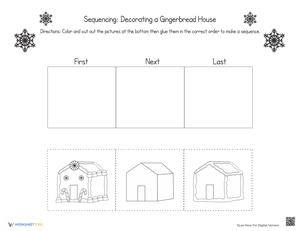
These sequencing events worksheets for 2nd grade give teachers a direct line to the skill that breaks down most visibly when it's missing — students who can't track event order retell stories as jumbled highlights, write narratives that open with the climax because that's what stuck, and circle "then" in every sentence whether it marks time or not. The set targets that gap with structured, varied practice across multiple text types and task formats.
What Students Practice in Each Worksheet
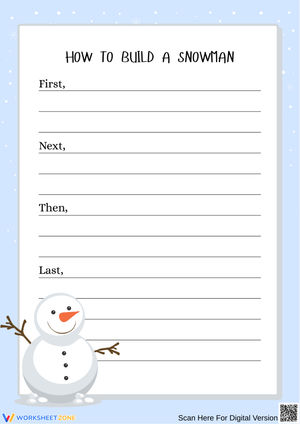
The skills cover the full range of second-grade sequencing demands. Students work with transition words — first, next, then, afterward, and finally — to sort scrambled events into correct order, and the task formats vary enough that the same underlying skill gets practiced in genuinely different ways:
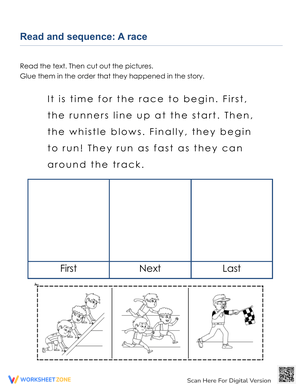
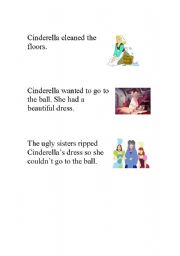
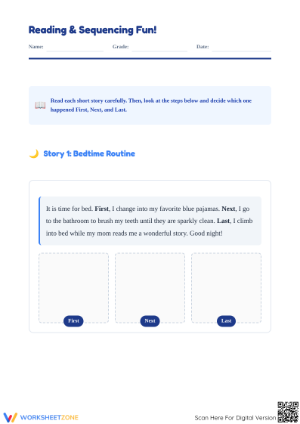
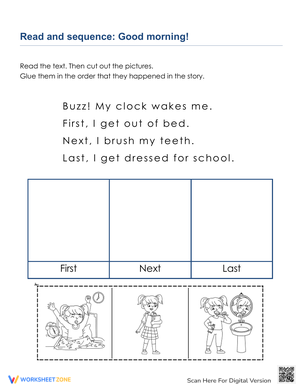
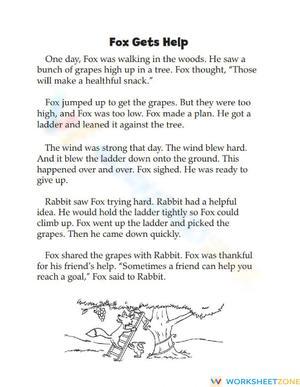
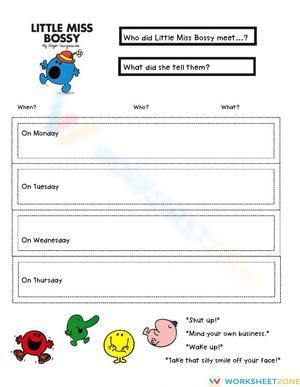
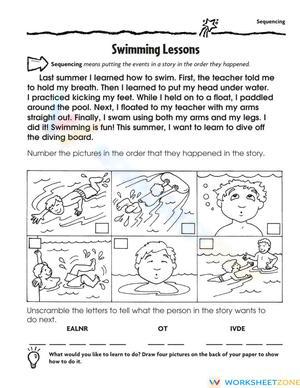
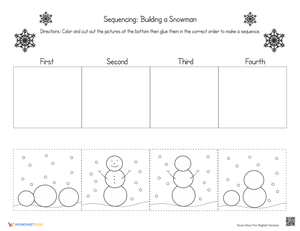
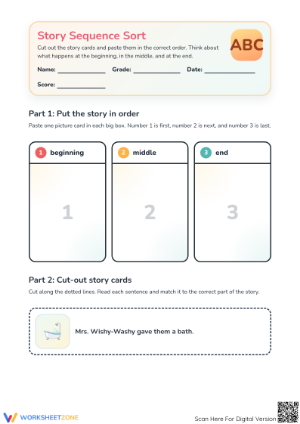
- Cut-and-paste sentence strips — students physically reorder scrambled sentences from brief narratives before recording them in sequence
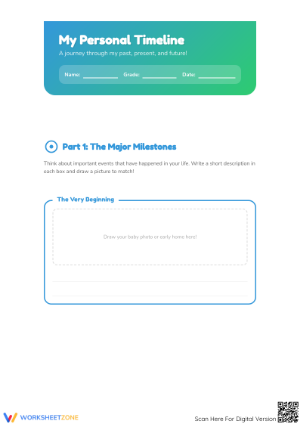
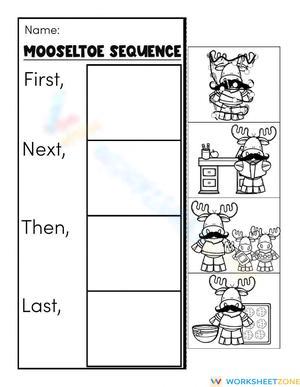
- Flowchart frames — students write a one-sentence summary in each box, deciding which details actually move the story forward versus which ones just decorate it
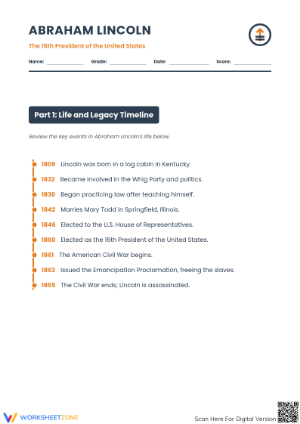
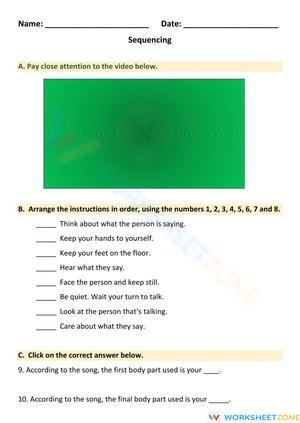
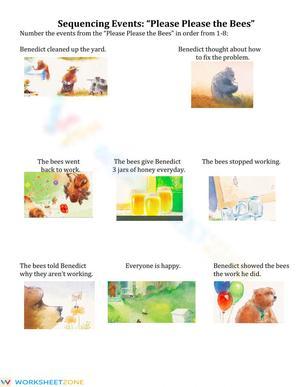
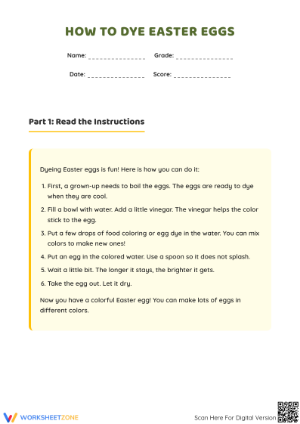
- Numbered retell tasks — students read a short passage and assign event numbers without visual or physical manipulation
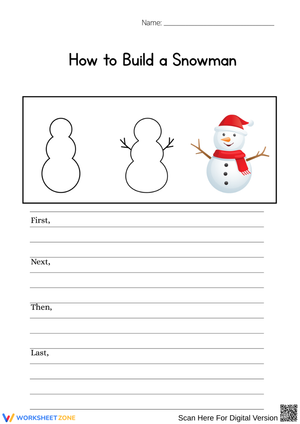
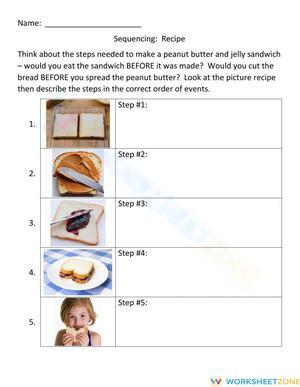
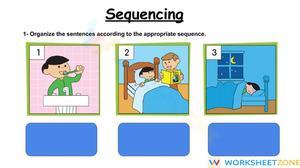
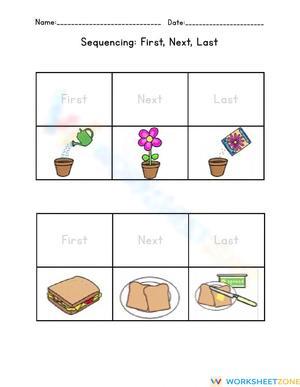
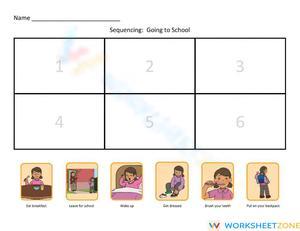
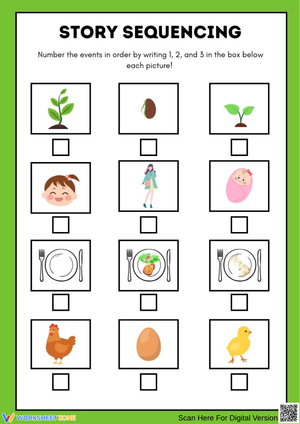
- Picture-only sequences — images with no text, stripping decoding out of the equation to isolate logical ordering
- Writing extensions — students use a completed sequence chart as a plan for a short retell in their own words
That variety matters at this grade level because different formats reveal different gaps. A student who succeeds at cut-and-paste but struggles with the numbered retell is processing the task visually and spatially, not yet internalizing chronological logic on its own. A student who handles picture sequences well but misorders text-based events is telling you something specific about how they're reading — and that's information a single format would never surface.
Student Error Patterns Teachers Should Anticipate
The most consistent error we see in student work: placing the most emotionally vivid event first. A student reading a story about a dog that gets lost, searches through a storm, and finally finds its way home will often write "the dog ran through the storm" as event one — not because they misread the text, but because that image dominates their memory of it. The worksheet format catches this because the task requires students to account for every event, and a misplaced middle event leaves a gap that's hard to ignore once the chart is filled in.
A second error is over-applying signal words. Second graders who have just learned that "then" marks sequence will circle it in sentences like "she smiled, and then walked away," treating every instance as a chronological marker rather than a simple connective. Teaching students to ask "does this word tell me when in the story this happened?" — and then checking their circled words against that test — corrects this quickly. The worksheets that include mixed-use transition examples give teachers a natural opening to address the distinction before it becomes a habit.
Building These Worksheets Into Your Weekly Lesson Plans
The most practical entry point for these sequencing events worksheets for 2nd grade is a whole-group read-aloud. Read a short passage aloud, then distribute the corresponding worksheet so students complete the sequence chart while the story is still fresh. This keeps cognitive demands reasonable — students aren't simultaneously decoding and ordering. Once they know the format, the same worksheet works as a small-group follow-up after independent reading, with students comparing their choices and defending them using signal words they found in the text.
Picture-sequence worksheets make solid Monday warm-ups. They take roughly eight minutes, require no prior reading, and give you a quick read on whether the first/middle/last framework is still intact after the weekend. The cut-and-paste formats fit well into literacy stations — two students working through the same scrambled strips will debate whether the storm scene or the hiding scene comes first, and that conversation is exactly the oral reasoning practice that surfaces again in retelling assessments.
Standard Alignment
These worksheets address CCSS.ELA-LITERACY.RL.2.5, which asks second graders to describe the overall structure of a story — how the beginning introduces it and the ending concludes it. Sequencing is the underlying skill that standard depends on: a student cannot describe narrative structure without first establishing what happened in what order. The worksheets also support CCSS.ELA-LITERACY.RL.2.1, since identifying key events requires students to return to the text and locate supporting detail rather than reconstruct events from memory alone.
The signal-word work connects directly to CCSS.ELA-LITERACY.L.2.3, the language convention standard covering how word choice affects meaning and reader understanding. In many classrooms this standard gets treated as a writing standard, but reading for transition words and using them accurately in writing are the same skill viewed from opposite sides. These worksheets work both sides of that connection without requiring separate instruction for each.
Adjusting the Worksheets for a Range of Learners
For students who are not yet reading independently, the picture-sequence worksheets carry the full weight of the skill without requiring text access. These students demonstrate real logical reasoning — correctly ordering a five-image sequence showing a plant's life cycle — without decoding becoming a barrier. When you want to move them toward text-based work, pair them with a stronger reader for the cut-and-paste format: the partner reads the sentence strips aloud while the student with the reading challenge handles the ordering decisions.
Students who find three-step sequences easy benefit most from the worksheets built around longer narratives — six or seven events from a multi-paragraph passage — because those tasks require holding significantly more in working memory at once. For this group, the flowchart worksheets also serve as pre-writing frames. Once a student has mapped an existing story's events across the boxes, the same blank chart applies directly to planning an original narrative, with no additional materials needed.
For students who need further challenge, ask them to complete a worksheet and then rewrite the same sequence using a different set of transition words — swapping "first/next/finally" for "before/during/after" or "initially/later/in the end." This pushes attention toward semantic precision rather than rote application of familiar phrases, and the resulting sentences are noticeably more varied than what these students produce in independent writing without that prompt.
Frequently Asked Questions
Do these worksheets work better with familiar texts or passages students haven't read before?
Both approaches work, but they measure different things. A worksheet used with an unfamiliar passage shows how well a student applies sequencing strategies independently while reading — closer to a test condition. Using it after a shared read-aloud keeps the focus on the sequencing task itself, which is the better choice when introducing the format or working with a student who is still building fluency.
How directly do these worksheets connect to the second-grade writing standards?
Second graders who work through sequencing events worksheets for 2nd grade consistently produce more organized narrative writing — clearer openings, events that build on each other rather than pile up, and conclusions that feel like conclusions rather than abrupt stops. The flowchart format transfers most directly: several teachers use a completed class sequence chart as the model when introducing personal narrative drafting, pointing to each box and saying "this is your plan."
What's the most efficient way to use these for formative assessment?
The picture-only sequence worksheets are the cleanest assessment tool because reading difficulty isn't a variable. For text-based measurement, the sequencing events worksheets for 2nd grade that ask students to number events from a short unseen passage give both an accuracy score and positional data — you can see whether a student consistently misplaces middle events, opening events, or conclusions. That pattern tells you more than a raw score does and points directly to where re-teaching is needed.
Can the flowchart worksheets apply to a chapter book the class is reading together?
Yes — the flowchart format adapts well to chapter-level work when you assign one box per chapter rather than one box per event. At the end of a reading unit, this gives students a visual record of the full narrative arc before a retell or writing task. It's the same sequencing skill applied across a longer span of reading, and the familiar format keeps students from feeling like they're doing something entirely new.












 Interactive Worksheet Maker
 Quiz Maker
 Word Search Maker
 Crossword Puzzle Maker
 Word Scramble Generator
 Sentence Scramble Generator
 Handwriting Worksheet Generator
 Name Tracing Generator
 Fill In The Blank Generator