


























Views
Downloads

Essential Sequencing Practice Worksheet | Grade 3 ELA
Paste this activity's link or code into your existing LMS (Google Classroom, Canvas, Teams, Schoology, Moodle, etc.).
Students can open and work on the activity right away, with no student login required.
You'll still be able to track student progress and results from your teacher account.
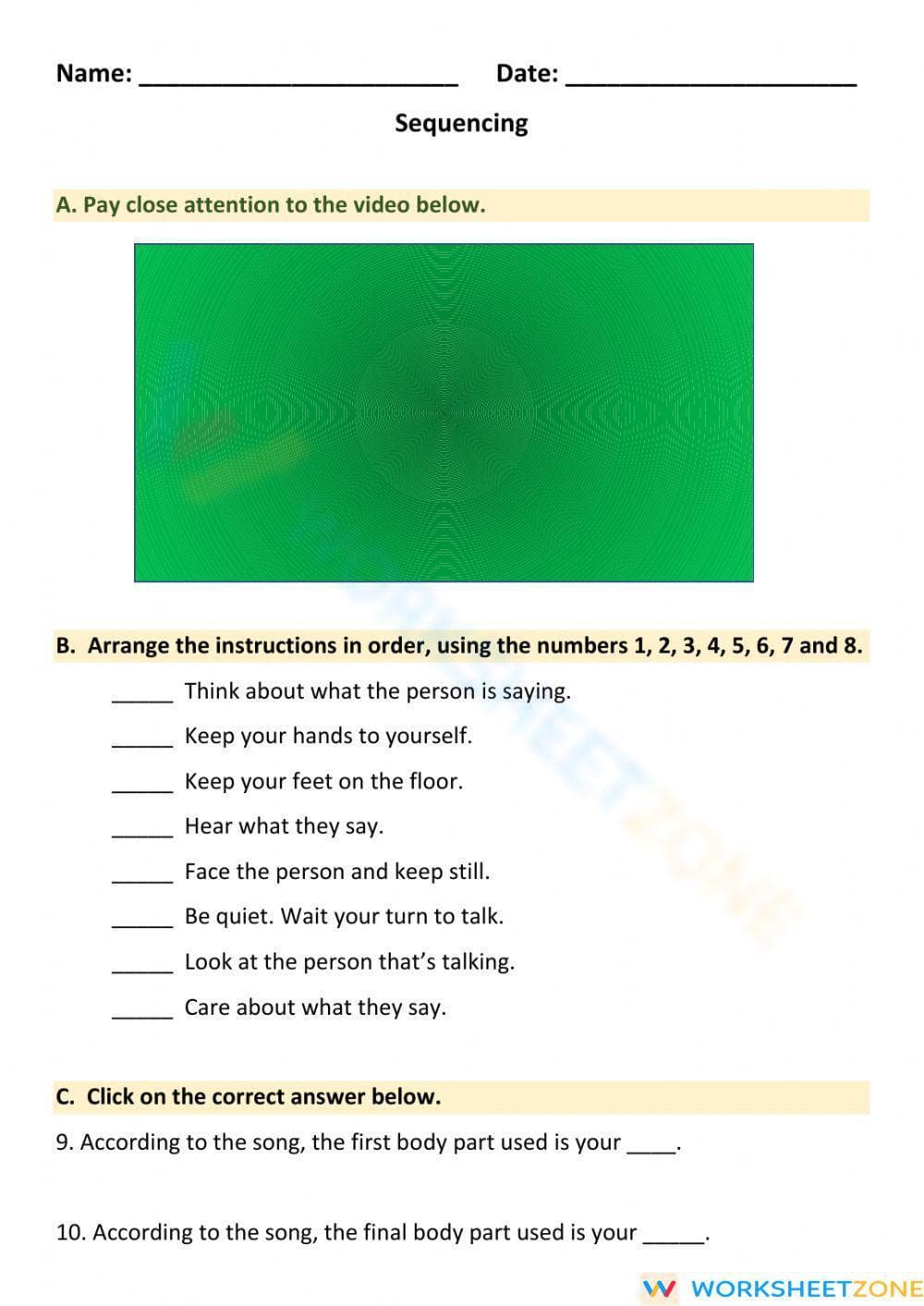
Mastering the chronological order of instructions is a foundational literacy skill for elementary students. This sequencing worksheet provides a focused environment for learners to practice organizing procedural steps related to active listening. By analyzing specific behaviors and their logical progression, students strengthen their comprehension of informational structures and improve their ability to follow multi-step directions accurately.
At a Glance
- Grade: 3 · Subject: English Language Arts
- Standard:
CCSS.ELA-LITERACY.RI.3.3— Describe the relationship between steps in technical procedures in a text.- Skill Focus: Chronological Sequencing
- Format: 1 page · 10 problems · Answer key included · PDF
- Best For: Independent practice and listening skills review
- Time: 15–20 minutes
This comprehensive resource features a ten-task structure designed for clarity and efficiency. The primary activity requires students to sequence eight distinct listening instructions using numerical ordering, transitioning from auditory perception to internal processing. Two additional concluding questions reinforce comprehension by requiring students to identify specific body parts mentioned in the accompanying media, ensuring a thorough check of detail-oriented observation.
The zero-prep design of this worksheet ensures a smooth transition from instruction to application in under two minutes of teacher preparation time. First, print the single-page document or assign the interactive digital version (1 minute). Next, distribute the materials and provide students with access to the source media (1 minute). Finally, review the completed tasks using the provided answer key during a quick whole-class check or individual conference.
This resource aligns directly with CCSS.ELA-LITERACY.RI.3.3, which requires students to describe the relationship between steps in technical procedures. By ordering the "rules" of listening, students demonstrate their understanding of logical flow and procedural sequence. Supporting standards include CCSS.ELA-LITERACY.SL.3.2, focusing on information presented in diverse media formats. Both standard codes can be copied directly into lesson plans, IEP goals, or district curriculum mapping tools.
Deploy this worksheet during the independent practice phase of a gradual release lesson on procedural texts or active listening strategies. It serves as an excellent formative assessment tool; teachers should observe if students struggle with the middle steps of the sequence, which often indicates a need for further scaffolding in logical reasoning. Expect completion within a twenty-minute window during a literacy station or as a focused morning work activity.
This material is ideally suited for general education students in Grade 3, while offering valuable remediation for Grade 4 learners or challenge opportunities for advanced Grade 2 students. The clear language and structured numbering system support English Language Learners (ELLs) in acquiring procedural vocabulary. It pairs naturally with a short video clip or an anchor chart detailing "Whole Body Listening" techniques to provide a visual reference for the tasks.
According to the RAND AIRS 2024 analysis, explicit teaching of procedural sequencing significantly enhances a student's ability to navigate complex technical texts. This worksheet targets the CCSS.ELA-LITERACY.RI.3.3 standard by requiring students to identify the chronological relationship between steps in a listening protocol, a skill that translates to academic success in ELA and science. By practicing with ten task points, students engage in high-repetition cognitive ordering that solidifies the "first, then, next" logic required for grade-level proficiency. The integration of listening skills with sequencing ensures students apply logical frameworks to behavioral expectations. This approach aligns with evidence-based practices that prioritize the gradual release of responsibility in informational literacy, providing a printable and interactive bridge between direct instruction and independent mastery of procedural structures.


