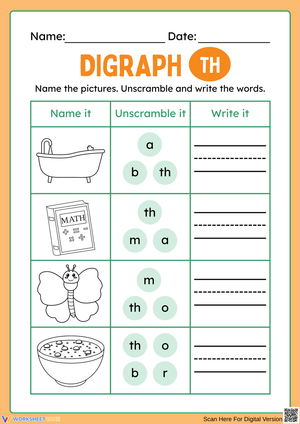
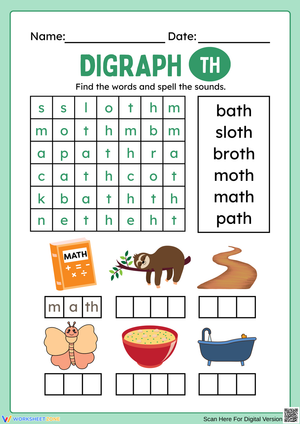
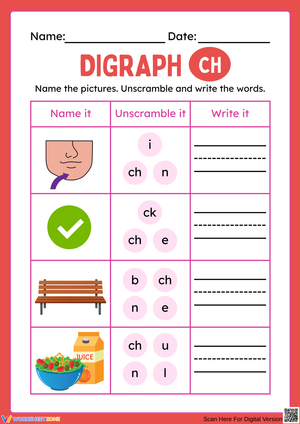
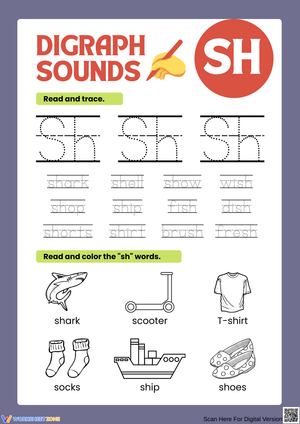
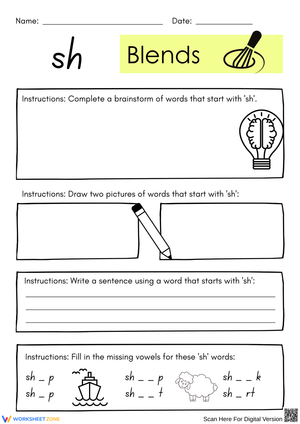
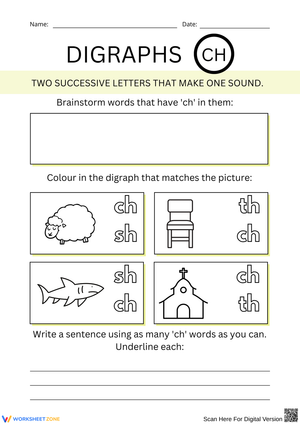
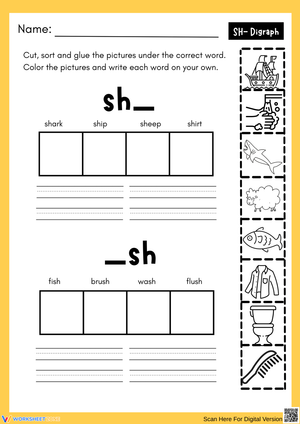
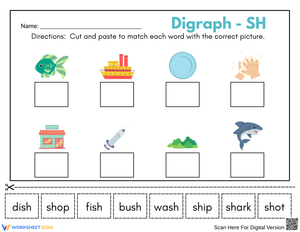
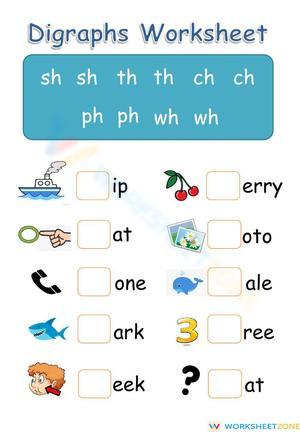
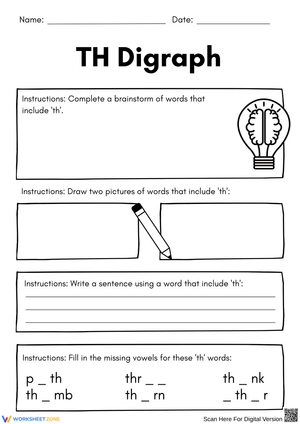
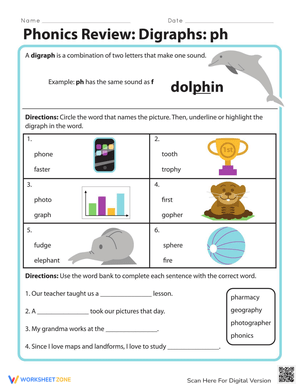
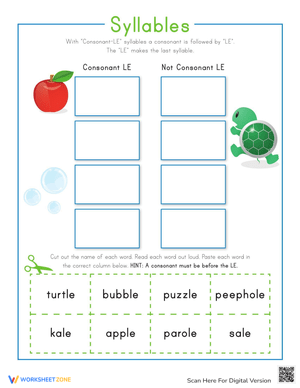
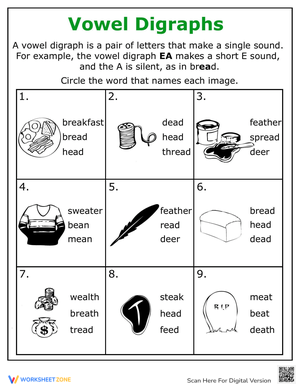
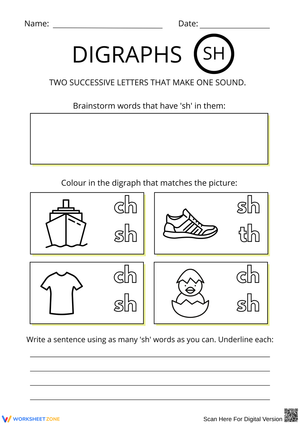
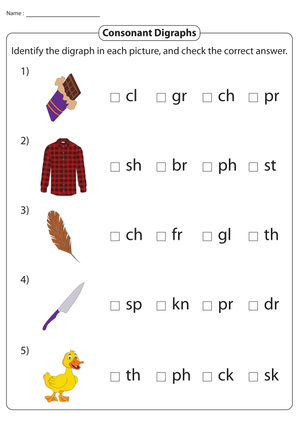
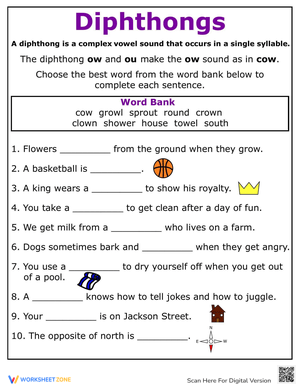
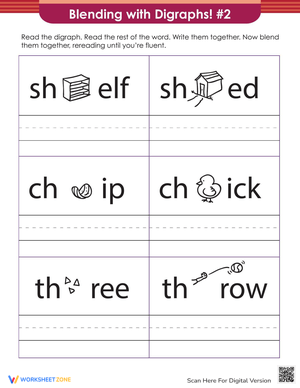
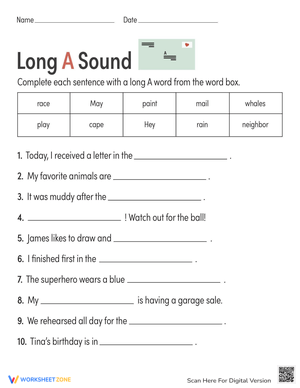
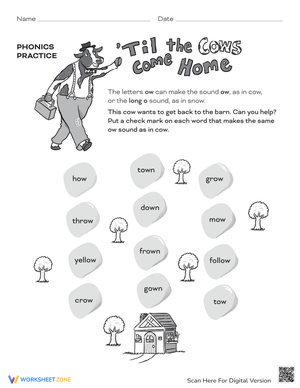
These 2nd grade digraphs printable worksheets cover the full scope of two-letter sound patterns second graders need to read and spell with confidence: consonant digraphs ch, sh, th, wh, ck, ph, and ng, plus the vowel teams ai, ay, ee, ea, and oa. Each worksheet moves students through decoding, sorting, and production tasks for one specific pattern. Teachers get a set that drops directly into guided reading rotations, word work stations, or short morning warm-ups with no additional prep.
The Specific Skills Each Worksheet Targets
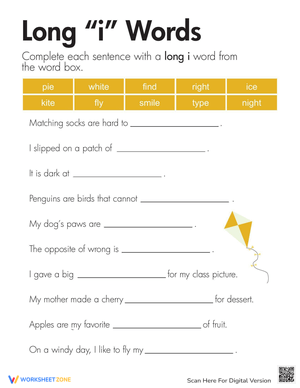
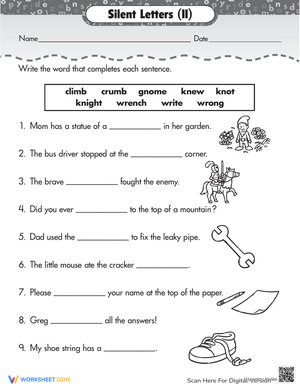
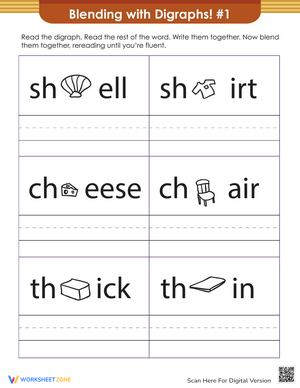
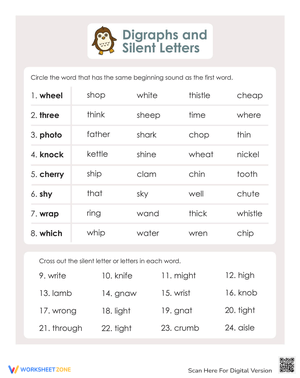
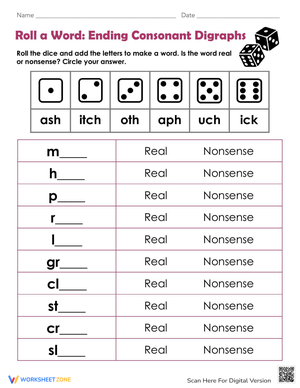
Activities fall into three levels of demand. Recognition tasks ask students to underline or circle the target digraph within word lists and short sentences. Sorting tasks have them categorize words by pattern — placing chart and chick in the ch column, shirt and shelf in the sh column — which requires both hearing and seeing the distinction at the same time. Production tasks ask students to complete sentence frames using a word bank, then write an original sentence using a target word of their choosing.
The vowel team worksheets add a comparison layer: students sort ai words and ay words side by side, which surfaces the position rule on its own — ai appears in the middle of a word, ay at the end. Most students at this stage have enough phonics exposure to notice that pattern themselves when the data is arranged in front of them. Noticing it is more durable than being told it.
Frequent Mistakes to Watch For and Address
The most instructionally important confusion involves the two sounds of th. Students typically learn the unvoiced version first — the breath-only sound in thin, thank, and three — and apply it to every th word they encounter. The voiced version in this, that, and they gets mispronounced or hardened during read-aloud. This rarely surfaces as a spelling error, so it can go uncorrected for weeks. A brief whole-class comparison before the th worksheet catches it early.
The ch/sh split produces the most common spelling errors in the set. Students who decode chair without hesitation in context will write "shair" in dictation — recognition and production draw on different memory systems, and success in one doesn't guarantee the other. The ph digraph brings a predictable substitution: most students write "foto" or "fone" until the Greek-origin pattern is explicitly taught. Expect it; the worksheet makes it visible quickly. A third pattern worth flagging is ck placement — students know the pattern exists but apply it freely at word beginnings, writing "ckick" for kick or "ckat" for cat. The rule that ck follows only a short vowel at the end of a one-syllable word needs direct explanation before students work on that worksheet.
Fitting These Worksheets Into Your Literacy Block
Small-group guided reading is the highest-yield context. Introduce the digraph, model two examples on a whiteboard, then hand each student the corresponding worksheet while you circulate and listen to how they read the words aloud. That listening matters more than what they mark on the paper: a student who reads phone as /pōn/ needs a different follow-up than one who reads it correctly but writes "fone" in the sentence task.
For the word work station, a sorting worksheet paired with a small set of word cards extends the activity without requiring teacher presence. Students complete the printed sort, then flip the cards and try to write two additional words from memory — a two-minute retrieval step that deepens retention more than another pass through the same list would. Keep completed worksheets in individual student folders rather than discarding them; students return to those sheets during independent writing, particularly in the days right after the lesson.
These 2nd grade digraphs printable worksheets also support a "Digraph of the Week" routine well. Introduce the pattern on Monday, run the worksheet for guided practice on Tuesday or Wednesday, use Thursday for dictation, and keep the completed worksheet at students' writing spots through Friday. Five days of low-stakes repeated exposure does what a single lesson cannot — it moves the pattern from recognition into automatic use during writing.
Standard Alignment
These worksheets address CCSS.ELA-LITERACY.RF.2.3, which requires second graders to know and apply grade-level phonics and word analysis skills in decoding words. The vowel team activities map directly to RF.2.3.b — spelling-sound correspondences for additional common vowel teams. The consonant digraph work extends the first-grade standard RF.1.3.a, building automaticity with ch, sh, th, wh, and ph before students encounter those patterns in the longer, more demanding texts of second grade. The ph digraph also connects to RF.2.3.e, which covers words with inconsistent but common spelling-sound correspondences. In classroom terms, these patterns show up on mid-year and end-of-year decoding probes, and the sorting and production tasks here directly rehearse the skills those assessments measure.
Adapting the Set for Students at Different Points in Phonics Development
For a mixed-ability classroom, these 2nd grade digraphs printable worksheets offer a practical option: assign the recognition and sorting tasks to students who need more controlled practice, and the sentence-writing and production tasks to students ready to apply patterns independently — all without creating a separate resource for each group.
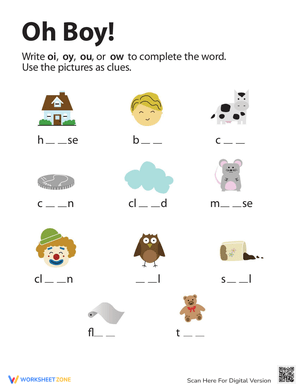
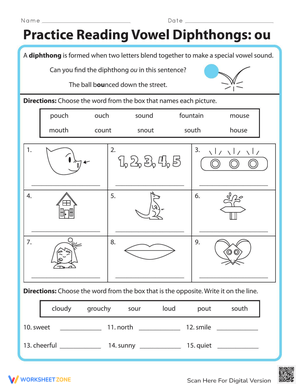
English Language Learners often have the phonics concept but lose confidence when the worksheet word is unfamiliar in meaning. Picture-word matching activities help here — the image anchors the vocabulary so the phonics task doesn't collapse into a vocabulary problem. For students working with dyslexia or other decoding challenges, pre-highlighting the digraph within the first three words on each worksheet reduces the initial visual scanning demand and keeps focus on sound-to-symbol mapping. Students who are clearly ahead of grade level can extend the production task by writing a short paragraph that uses three digraph words, which forces the pattern into varied syntactic positions — a more demanding application than a single sentence.
Frequently Asked Questions
What is the difference between a digraph and a blend, and how do the worksheets address that distinction?
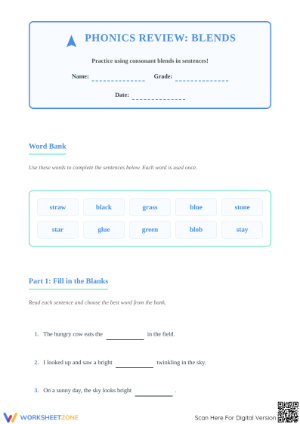
In a blend — st, bl, tr — both letter sounds remain audible; you can pull them apart and still hear each one separately. In a digraph — sh, ch, th — the two letters produce a single sound that neither letter makes on its own. Several worksheets include a comparison sorting task where students categorize examples of each, giving teachers a quick check on whether the distinction has landed before students move into independent work.
Do the worksheets address both sounds of "th" — voiced and unvoiced?
Yes. The th worksheets include words from both categories: voiced examples like this, that, them, and they alongside unvoiced examples like thin, thank, and three. A margin note flags the distinction for teachers. Most students won't notice the two-sound split on their own, so raising it briefly before the worksheet prevents the unvoiced-only assumption from becoming a reading habit.
Are vowel teams included, or does the set focus only on consonant digraphs?
Vowel teams are included. They are technically a subset of digraphs — two letters, one sound — and the 2nd grade digraphs printable worksheets treat them as their own category with dedicated sorting and fill-in activities. The ai/ay distinction gets its own worksheet because that position rule is one of the most commonly tested phonics patterns on second-grade reading assessments.
Can these worksheets be sent home for homework?
The activity formats — circling, sorting, and sentence completion — are clear enough for at-home use once students have seen the model in class. Send a worksheet home after the in-class introduction, not before, so students are reinforcing a pattern they've already practiced rather than encountering it cold. A completed worksheet also gives parents a direct window into the current phonics focus, which tends to improve the quality of follow-up conversations at home.












 Interactive Worksheet Maker
 Quiz Maker
 Word Search Maker
 Crossword Puzzle Maker
 Word Scramble Generator
 Sentence Scramble Generator
 Handwriting Worksheet Generator
 Name Tracing Generator
 Fill In The Blank Generator