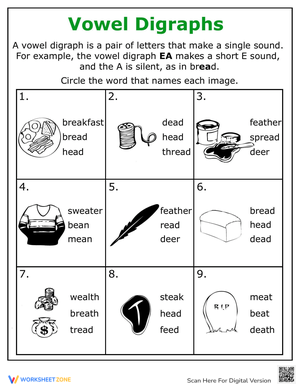
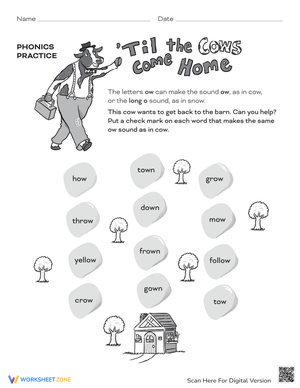
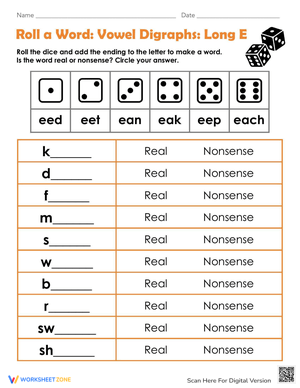
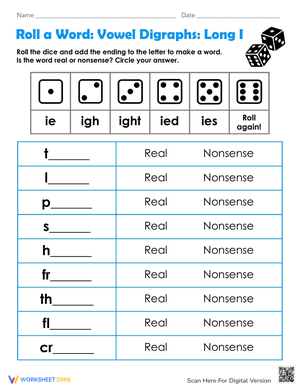
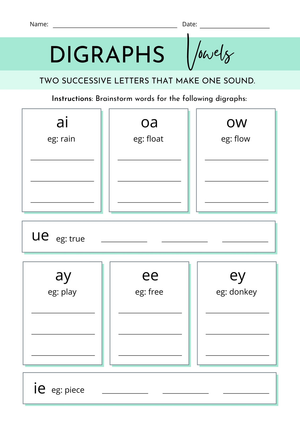
These 2nd grade vowel digraphs printable worksheets address the specific phonics transition that produces more second-grade spelling errors than almost any other concept — the shift from single-vowel decoding to two-vowel patterns that behave differently depending on which pair appears and where it falls in a word. The set covers ai, ay, ee, ea, oa, oe, ie, and ue, with each worksheet concentrating on one pattern or a closely related pair rather than surveying all eight at once.
The Specific Skills Each Worksheet Targets
Activities across the set move students from recognizing a vowel team in isolation to applying it in connected text. The formats vary by worksheet:
- Word sorts that place ai words and ay words in adjacent columns — students sort rain, trail, and paid on one side and play, stay, and tray on the other, which makes the positional rule visible before the teacher names it explicitly
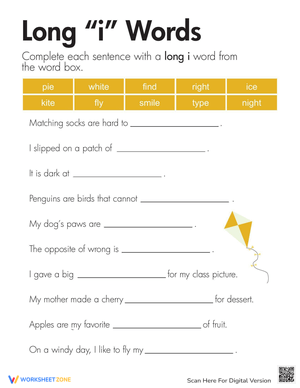
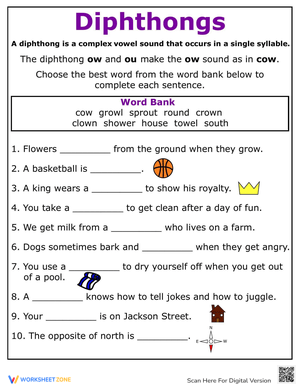
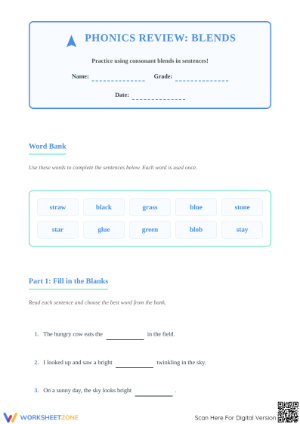
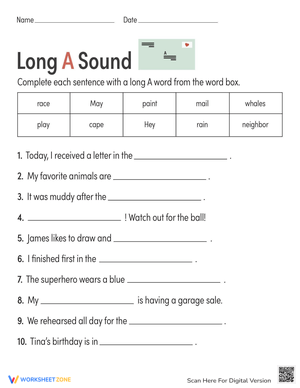
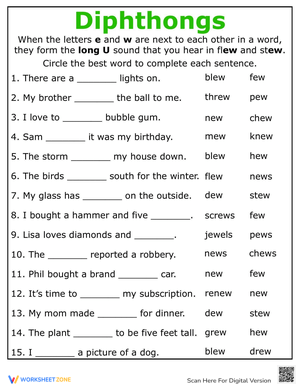
- Fill-in-the-blank sentences drawn from grade-level vocabulary, where students select the correct vowel team spelling from a word bank rather than circling letters in an isolated list
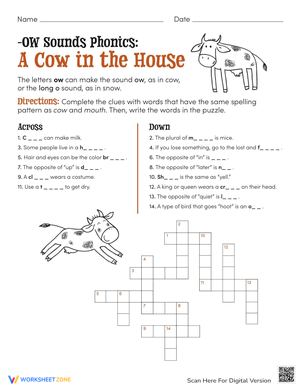
- Decodable short passages built around the target digraph, giving students practice in connected text rather than word lists — the kind of application that transfers to independent reading
- Color-by-digraph activities that require correct vowel team identification before the coloring step, so accuracy drives the task rather than completion alone
- Spelling-from-dictation sections where students write the target word after hearing it used in a sentence, practicing full encoding rather than passive recognition
Student Spelling Errors That Surface in Practice
The most predictable error is positional confusion between ai and ay. Both produce the long a sound, so once students learn that fact, they apply one form indiscriminately. A student who has heard the rule correctly will still write "rayn" for rain or "staied" for stayed, applying the end-of-syllable form where the medial form belongs. This is not carelessness — it reflects an incomplete understanding of the positional constraint. The word sorts in the set surface this gap reliably: after a student has placed rain, tail, wait, and braid in one column and play, say, away, and birthday in another, the rule becomes something they can articulate rather than something they are trying to absorb through exposure.
The ea digraph creates a separate problem. The "when two vowels go walking" generalization works well for oa in boat and ee in tree, so students extend it confidently to ea — and then misspell bread as "breed" or head as "heed." These exceptions need explicit instruction rather than self-correction. Several worksheets include minimal pair comparisons — bread alongside bead, head alongside heat, thread alongside treat — that make the contrast visible and give teachers a natural moment to address the exception directly.
Where These Worksheets Fit in the Lesson Week
The 2nd grade vowel digraphs printable worksheets built for warm-up use are most effective in the five to eight minutes immediately after explicit phonics instruction and before students move into reading groups. Students have just seen the target pattern demonstrated; immediate application keeps the rule active in working memory long enough for practice to consolidate it. Pushing practice to homework means some students will spend twenty minutes encoding the pattern incorrectly without any feedback — reinforcing a habit that takes longer to undo than it would have taken to correct in the moment.
In a center rotation, the word sort worksheets hold up as genuinely independent tasks. The directions are self-contained and students do not need teacher proximity to complete them accurately. The decodable passage worksheets work better in a teacher-led small group, where miscues surface immediately and the text generates real discussion: why does "meat" use ea while "beet" uses ee? For homework, the fill-in-the-blank format is transparent to parents without requiring phonics training — whether a child selected the right or wrong word from the bank is easy to see, so the feedback loop does not collapse at the kitchen table.
Standard Alignment
CCSS.ELA-LITERACY.RF.2.3.B requires second graders to know spelling-sound correspondences for additional common vowel teams. In classroom terms, this standard gets concentrated instructional attention during the second and third quarters of second grade, after students have consolidated CVC and CVCe patterns and before instruction moves toward multisyllabic words and morphological units. The worksheets address RF.2.3.B through both decoding and encoding — students read digraph words in context and write them in dictation and sentence-completion tasks — which means the set serves the full literacy block rather than just the phonics lesson. The decodable passage worksheets also support RF.2.4, which covers reading with enough accuracy and fluency to sustain comprehension.
Reaching Different Readers With the Same Set
For students still building their sight vocabulary or consolidating basic decoding, 2nd grade vowel digraphs printable worksheets that include picture cues alongside printed words keep attention focused on the vowel team rather than on guessing the word from context. A student who does not yet recognize the word "trail" in isolation can anchor the spelling to an image of a hiking path — the picture removes one cognitive demand without removing the phonics task itself. This visual support also reduces frustration for English Language Learners who know the sound-spelling correspondence but not the meaning of the target word.
For students reading above grade level, the same digraph patterns appear inside multisyllabic words — explain, approach, proceed, obtain, thirteen — and extension worksheets target that harder vocabulary while keeping the phonics focus identical to the grade-level material. This avoids the common mistake of giving advanced second graders repeated practice on vocabulary they mastered months earlier. The complexity rises through the words, not through an entirely different skill.
Frequently Asked Questions
When in second grade should vowel digraph instruction begin?
Most teachers introduce vowel teams after students have firm control of the CVCe pattern — typically around October or November. Students who cannot yet reliably decode words like cake, pine, and note will find vowel team instruction disorienting rather than helpful, because the two concepts share enough surface similarity to produce interference. The worksheets in the set assume CVCe mastery as an entry point, not a parallel skill still in development.
How are vowel digraphs different from vowel diphthongs, and should I teach that distinction to second graders?
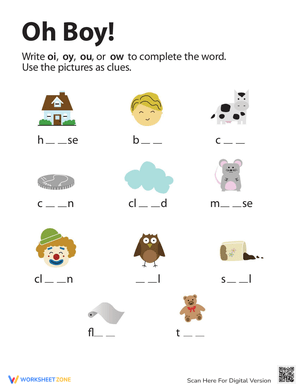
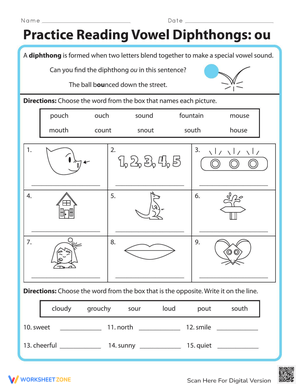
A vowel digraph produces a single, steady vowel sound: the oa in boat holds one position from start to finish. A diphthong glides between two sounds within the same syllable — notice how your mouth shifts through two positions on the oi in boil or the ou in cloud. For most second graders, the umbrella term "vowel team" covers both without requiring the technical distinction, and introducing the contrast at this stage often creates more confusion than clarity. The digraph-diphthong difference is better saved for third grade or later, when students encounter diphthong patterns explicitly in their scope and sequence.
Can these worksheets be used with students outside second grade?
Advanced first graders who have finished CVCe work by spring are strong candidates for the earlier worksheets in the set — phonics readiness, not grade level, determines fit. Third graders who scored below grade-level benchmarks on vowel teams in fall screening use 2nd grade vowel digraphs printable worksheets for targeted intervention without any modification; the vocabulary reads as appropriate for that age rather than as content built for younger students. Third graders on or above grade level are better served by the multisyllabic extension materials, where the same digraph patterns appear inside longer words and carry harder decoding demands.












 Interactive Worksheet Maker
 Quiz Maker
 Word Search Maker
 Crossword Puzzle Maker
 Word Scramble Generator
 Sentence Scramble Generator
 Handwriting Worksheet Generator
 Name Tracing Generator
 Fill In The Blank Generator