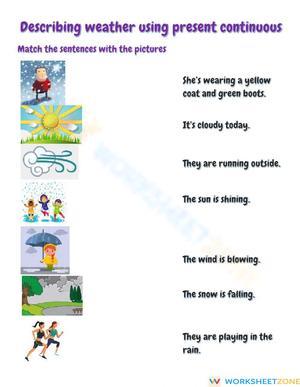
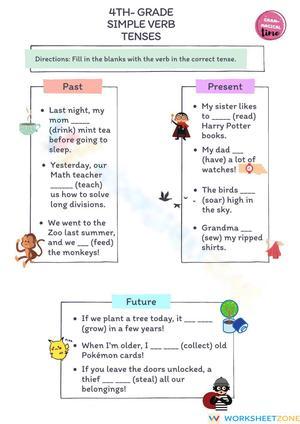
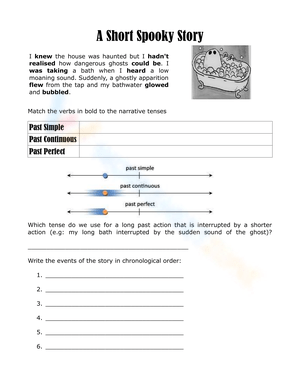
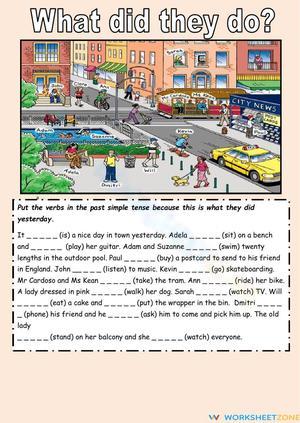
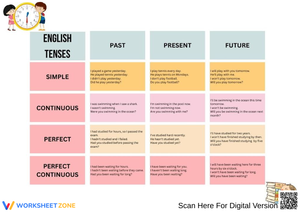
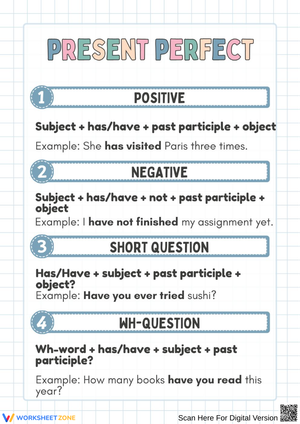
These 2nd grade tenses pdf worksheets give second-grade teachers a focused set of practice tools for one of the clearest grammar turning points in the primary curriculum — the moment students must stop treating all verbs as interchangeable and start signaling time with precision. The set covers past, present, and future tenses, with concentrated attention on the irregular verb forms the Common Core specifically calls out at this level. Each worksheet targets a distinct skill, so teachers can slot them where they belong in a unit rather than assigning them in sequence.
The Specific Skills Each Worksheet Targets
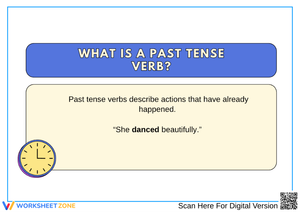
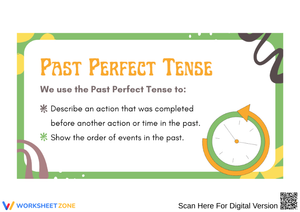
Irregular past tense carries the most instructional weight in this set. Verbs like run/ran, sit/sat, tell/told, and give/gave are words students hear and read every day but cannot form by rule alone — there is no pattern that generates sat from sit. Exercises across the 2nd grade tenses pdf worksheets include:
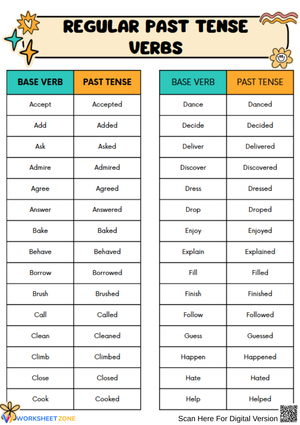
- base-form-to-past-tense matching with high-frequency irregular pairs
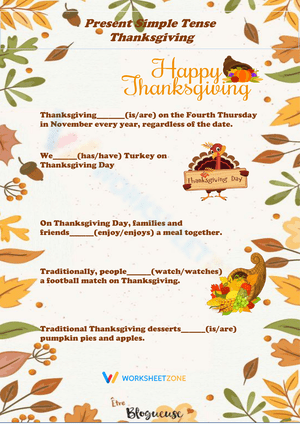
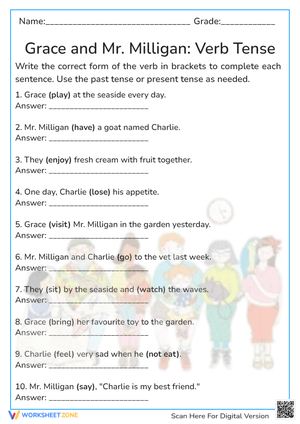
- sentence fill-in using a provided irregular verb bank
- full sentence rewrites that convert present-tense statements to past tense without prompts
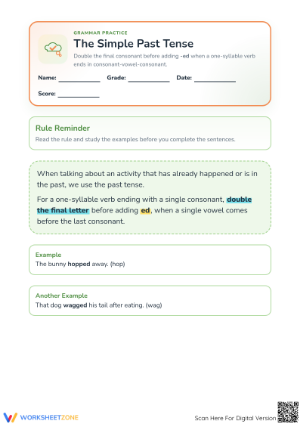
- -ed suffix spelling practice: doubling the final consonant (hop → hopped) and dropping the silent e (bake → baked)
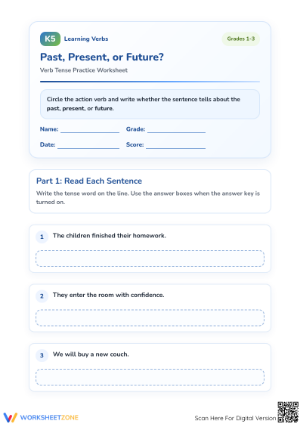
- future tense construction using will plus the base verb
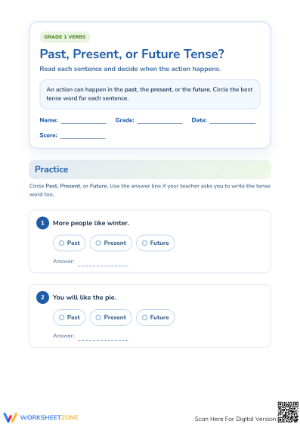
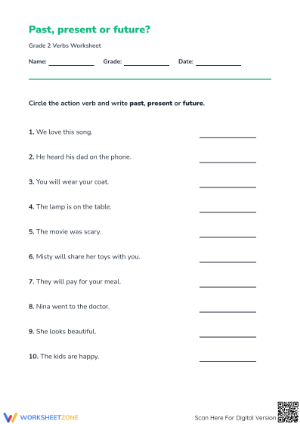
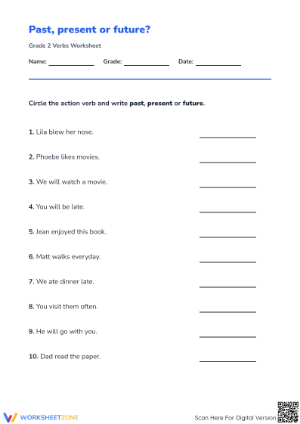
- tense-sorting tasks where students identify the time marker in a sentence before labeling the tense
That progression — recognition, then guided production, then independent production — follows the actual sequence through which students internalize unpatterned forms. The tense-sorting exercise pulls all three tenses together and works best as a unit review rather than an introduction.
Student Errors That Appear Predictably in This Work
Over-regularization is the most persistent error at this grade level, and it is developmental, not careless. Students who correctly write "She jumped" and "He kicked" will still produce "She goed" and "He runned." That is not a memory failure — it is the brain extending a rule it just learned to contexts where the rule does not apply. Recognizing this helps teachers respond without frustration: the student has internalized the -ed pattern; they just have not yet learned when to abandon it.
A second error pattern shows up in sentences with explicit time markers. A student will write "Yesterday I go to my grandma's house" — yesterday is right there, but the verb did not shift. The worksheets that require students to underline the time marker before writing the verb address this directly. Making the two-step process visible — find the signal, then choose the form — reduces that kind of miss significantly. A third, less obvious problem: students often misspell -ed endings by writing what they hear rather than applying a rule. "She walkt home" and "He wantid lunch" are phonetically logical, but these patterns appear in written work more often than teachers expect.
Smart Ways to Work These Worksheets Into Your Week
The tense-sorting worksheet earns its place as a Monday warm-up — three to five minutes after morning meeting, before writing notebooks come out. Students read a set of sentences, underline the time marker, and label the tense. That brief routine anchors the week's grammar focus without requiring any setup. The irregular verb matching worksheets belong mid-lesson, right after you have introduced a small cluster of high-frequency irregular forms. Students need immediate reinforcement before that instruction fades from working memory — do not send those worksheets home as homework where errors go uncorrected and get practiced repeatedly.
The sentence transformation worksheets — where students rewrite a present-tense sentence in past and future tense — work well as a literacy center station. Pairs will argue: "Is it ate or eated?" Those disagreements are worth five minutes of whole-class discussion at the end of center time and teach more than a corrected worksheet alone ever would. Save the paragraph-editing worksheet for the end of the unit. It asks students to locate and fix all tense errors across several connected sentences, and that kind of sustained attention makes sense only after the individual skills are already solid.
Standard Alignment
These worksheets align to CCSS.ELA-LITERACY.L.2.1.D, which requires second graders to form and use the past tense of frequently occurring irregular verbs — the standard names example pairs like sat, hid, and told. This is the reason irregular forms carry more instructional weight in this set than regular -ed constructions: regular past tense is largely addressed in first grade, and the second-grade expectation zeroes in specifically on the harder, unpatterned forms. The worksheets also support CCSS.ELA-LITERACY.L.2.1 broadly, which covers command of standard English grammar conventions in writing, connecting directly to the narrative and informational writing standards students work toward throughout second grade.
Fitting These Worksheets to a Range of Learners
For students still building basic irregular verb recognition, the matching exercises and word-bank tasks reduce the memory demand and let them focus on form without stalling on recall. Pairing those worksheets with a small anchor chart — ten to twelve high-frequency irregular verbs alongside their past-tense counterparts — lets students work independently without stopping every thirty seconds. That reference tool keeps the exercise productive rather than discouraging, which matters at a grade level where frustration with written tasks can build fast.
Students who have already internalized the common irregular forms can move to the production-level 2nd grade tenses pdf worksheets: writing original sentences in a specified tense, editing a short paragraph for tense consistency, or annotating their corrections with a brief reason. For students who finish quickly, ask them to pull out their own writing notebook and circle every verb, then check whether each one matches the tense the piece is written in. That extension costs no additional materials and gives students a genuine application instead of a repeat exercise.
Frequently Asked Questions
Which irregular verbs should I introduce first?
Begin with the pairs students encounter constantly in read-alouds and early chapter books: go/went, see/saw, eat/ate, run/ran, and come/came. Getting those five automatic gives students immediate wins in their writing and builds the confidence to tackle less familiar irregular forms. These 2nd grade tenses pdf worksheets front-load those high-frequency pairs so the first exercises feel accessible rather than overwhelming.
Should I teach all three tenses at the same time?
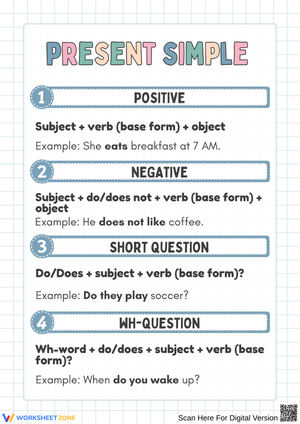
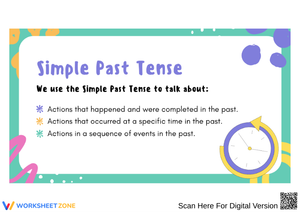
Most teachers find sequenced introduction more effective than covering past, present, and future simultaneously — and the research on cognitive load supports that. Present tense first, since it requires the least transformation from everyday speech. Past tense second, with regular -ed forms before irregular ones. Future tense last, because will plus the base verb is actually straightforward once students understand why tense exists at all. The tense-sorting worksheet works well as a unit-end review once all three have been introduced separately.
How do the -ed spelling rules fit with the irregular verb focus?
They run on separate tracks. The -ed spelling variations — doubling the final consonant, dropping the silent e — get a dedicated worksheet before students encounter mixed practice. Combining those rules with irregular forms in the same exercise tends to overwhelm second graders; both demands are heavy and they compete for the same working memory resources. Treating them separately gives each concept enough room to take hold before the two appear together.
What about students who are still developing as readers?
For students whose reading is still building, the exercises that pair a picture with a sentence carry more of the meaning load and let students focus on the verb decision rather than decoding the whole sentence first. Reading aloud also helps — hearing "I walk-t home" versus "I walk-id home" activates pronunciation patterns that often lead students to the correct spelling on their own, without any additional explanation from the teacher.












 Interactive Worksheet Maker
 Quiz Maker
 Word Search Maker
 Crossword Puzzle Maker
 Word Scramble Generator
 Sentence Scramble Generator
 Handwriting Worksheet Generator
 Name Tracing Generator
 Fill In The Blank Generator