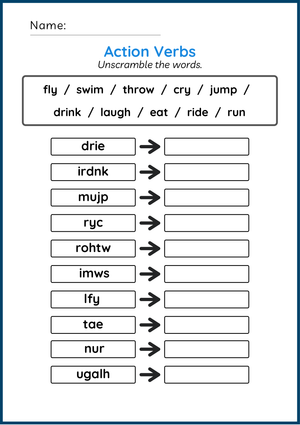
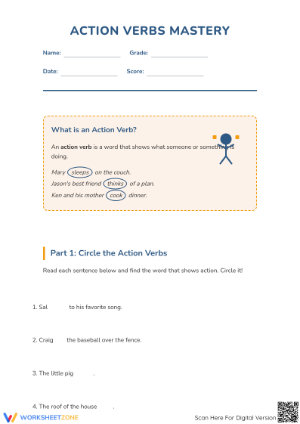
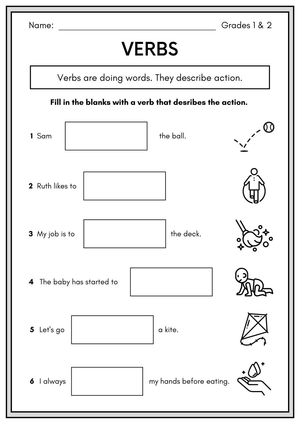
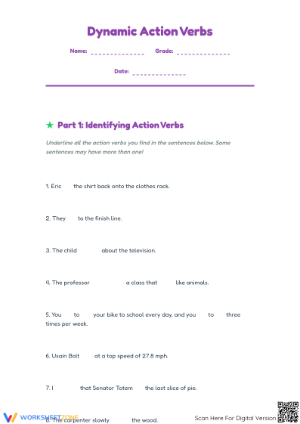
These action verbs worksheets for 2nd grade give teachers a targeted practice set at the exact point in the curriculum where verb identification starts to matter for independent writing. Second graders are composing full sentences and short narratives by fall, but many still can't isolate the verb in a sentence they just wrote. That disconnect is what these worksheets are built to close.
The Specific Skills Covered in Each Worksheet
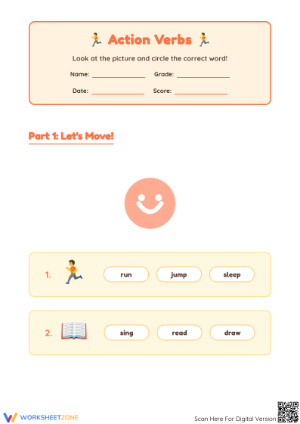
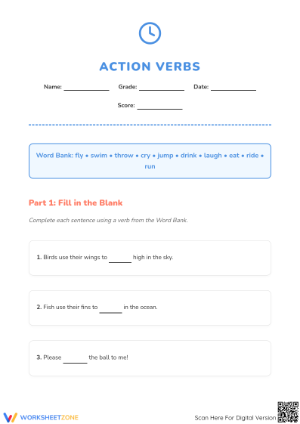
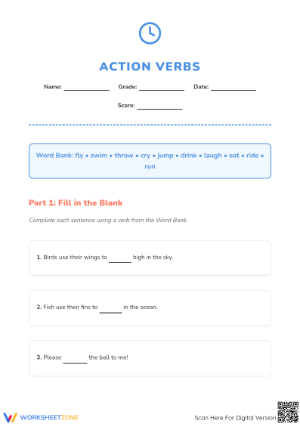
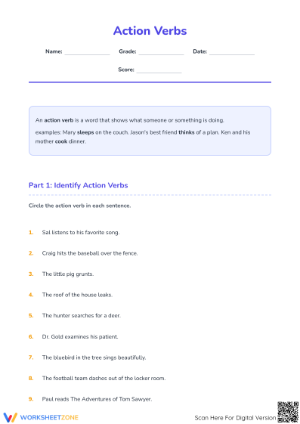
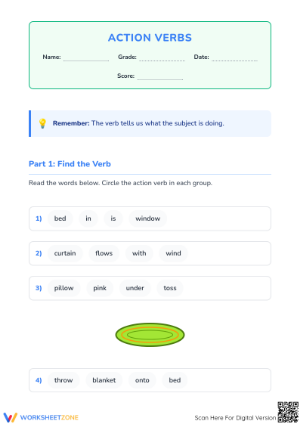
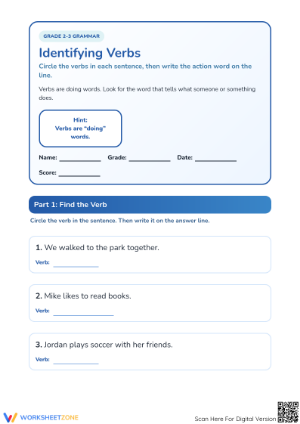
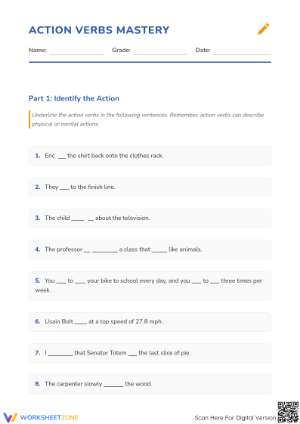
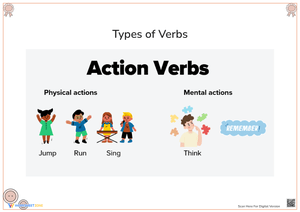
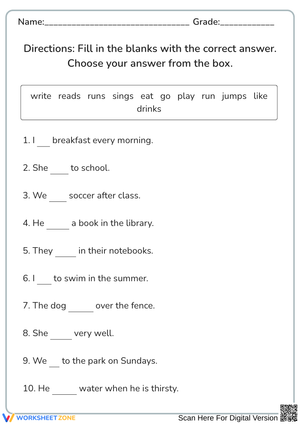
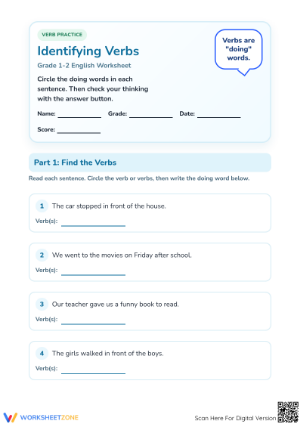
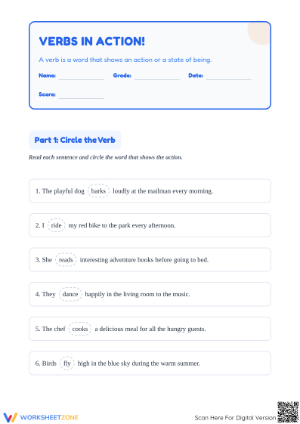
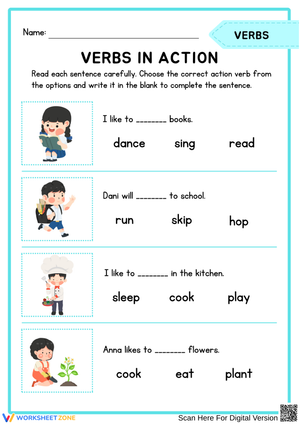
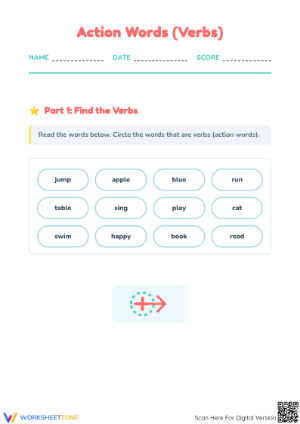
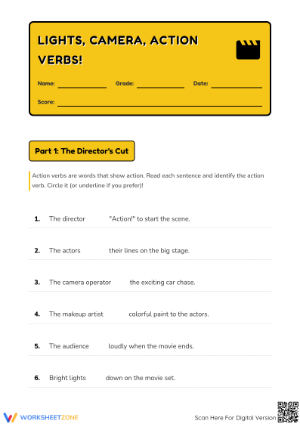
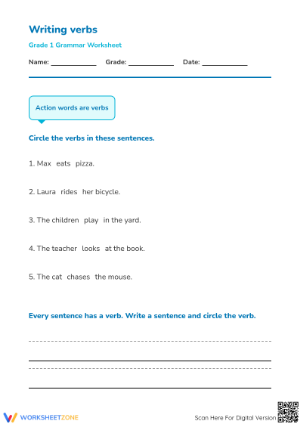
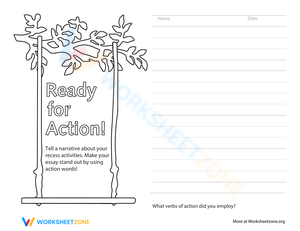
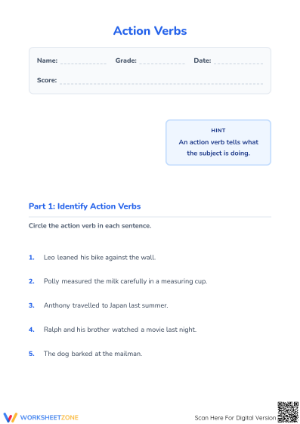
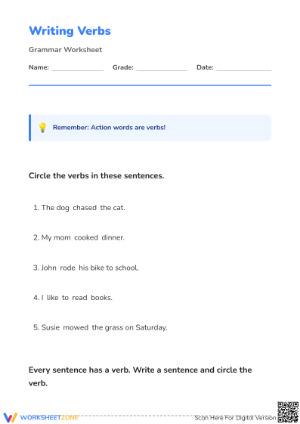
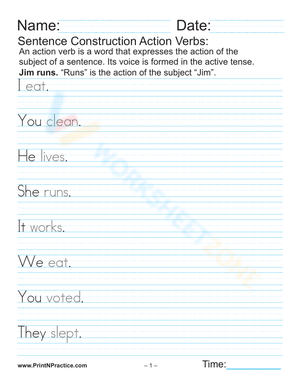
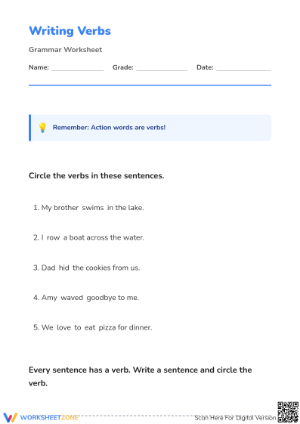
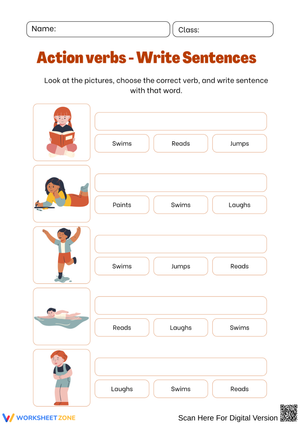
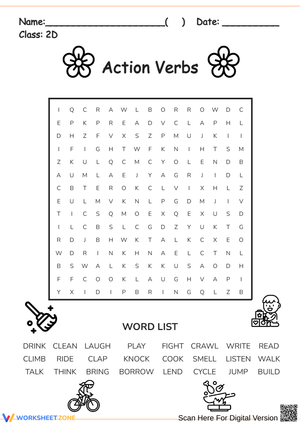
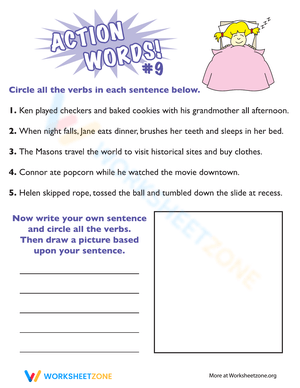
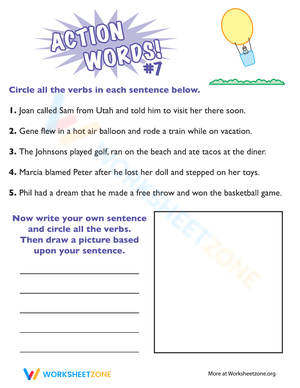
Action verbs worksheets for 2nd grade in this set cover more skill territory than identification-only exercises. Each worksheet focuses on one or two discrete tasks rather than bundling every verb concept together. Recognition comes first: students underline or circle action verbs in provided sentences, separating the verb from the surrounding nouns and adjectives. Sorting tasks then ask students to distinguish physical actions — run, jump, eat — from mental ones like think, wonder, and believe. That distinction gets its own dedicated practice because mental verbs genuinely confuse second graders; a student who marks "kicked" without hesitation will sometimes mark "problem" in "She thinks about the problem," because the concrete noun feels more active than the abstract verb. Word-completion exercises give a verb bank and a partial sentence, requiring students to match meaning to syntax. A final task type asks students to write original sentences using a given verb — the only exercise that shows whether a student can retrieve and apply the concept rather than just recognize it when prompted.
Common Student Errors Worth Watching For
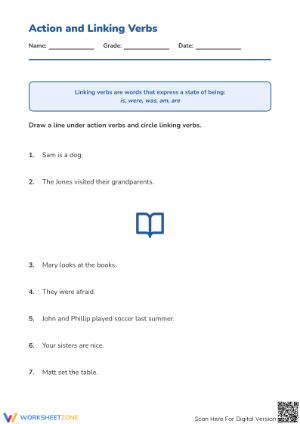
The most consistent error at this level is marking linking verbs as action verbs. A student who correctly circles "ran" in "The dog ran fast" will often also circle "is" in "The dog is fast," because both words occupy the same grammatical position. The student is reading by location in the sentence, not by meaning. These worksheets surface that confusion early, particularly in exercises where linking verbs appear alongside action verbs in the same sentence set. When you see this pattern in student work, the fix is usually a quick conversation — "what is the dog actually doing?" — rather than a full re-teach.
A second pattern shows up in the sorting tasks. Students frequently place "feel" and "like" in the physical column because those words seem body-based. Some students also resist categorizing "know" as a verb at all. These are not random guesses — they reflect genuine uncertainty about what makes a word a verb, not carelessness. Using these sorting errors as class discussion prompts during review turns them into productive teaching moments rather than just wrong answers to move past.
Standard Alignment
These worksheets align with CCSS.ELA-LITERACY.L.2.1, the second-grade standard for grammar and usage conventions in standard English, and most directly with L.2.1.d, which addresses forming and using past-tense irregular verbs. That standard presupposes students already understand what a verb is and does — so verb identification instruction typically occupies the first eight to ten weeks of second grade, before tense formation work begins in earnest. The sentence-writing exercises also support W.2.3, the narrative writing standard, where strong verb choice directly improves the quality of student stories at this level.
How to Build These Worksheets Into Your Lesson Plans
The most practical entry point is the Monday morning warm-up — five minutes of verb identification reactivates the concept from the previous week without requiring a full re-teach. Action verbs worksheets for 2nd grade also slot neatly into the independent practice phase of a gradual release lesson: model one sentence on the board, complete two or three items together as a class, then send students to their seats while you pull a small group. The physical-mental sorting worksheets work especially well as closing activities. Students frequently disagree on whether "feel" belongs with physical or mental verbs, and that five-minute disagreement at the end of class — if you stop to address it — tends to produce some of the most substantive grammar discussion you'll run all week.
Adapting These Worksheets Across a Range of Learners
Students who have identification solid can move into word-choice work: take any sentence from a worksheet, remove the verb, and challenge them to supply three different verbs that all fit — then choose the most specific one. Replacing "went" with "sprinted" or "shuffled" is a different cognitive task than circling an existing verb, and it extends fluent students without requiring different materials. For students still uncertain about where the verb lives in a sentence, narrow the task: read the sentence aloud with them, ask "what is the subject doing right now?", and have them mark that word only. A short word bank printed at the top of the worksheet keeps spelling from getting in the way of the grammar concept. For English language learners, starting with the physical-action exercises works best — students can act out the verb before they mark it, and that physical rehearsal connects the English word to its meaning faster than any written definition does.
Frequently Asked Questions
Do these worksheets address the difference between action verbs and linking verbs?
Several worksheets in the set include sentences where linking verbs — is, are, was, were — appear alongside action verbs in the same exercise, so students have to decide which words qualify. At second grade, the full formal lesson on linking vs. action verbs typically comes later in the year, but exposure through these identification and sorting exercises builds the vocabulary for that later instruction. If your students are ready for that contrast earlier, the sorting worksheets are the right starting point.
My students mark verbs accurately on a worksheet but then write sentences like "The cat very fast" in their stories. What's happening?
Recognizing a verb in an existing sentence and generating one under the pressure of composition are genuinely different demands. On a worksheet, students pattern-match against a sentence that already exists; in their own writing, they retrieve the verb from memory while managing spelling, punctuation, and meaning at the same time. The sentence-writing exercises built into action verbs worksheets for 2nd grade address exactly this transfer gap — producing an original sentence using a given verb raises the cognitive load just enough to begin closing the distance between worksheet performance and writing performance. If the two still diverge noticeably after several weeks, a brief daily habit of writing one new action verb alongside a quick sketch often bridges the gap over time.
When in the school year do these worksheets fit best?
Most teachers introduce action verb identification in the first unit of second grade, typically within the first six to eight weeks, as a continuation of parts-of-speech work that began in first grade. Physical action verbs come first because students can act them out; mental verbs land more reliably once students have a working definition of what a verb does — usually by late October. By midyear, as students are writing multi-sentence narratives, the instructional focus shifts from identification to verb choice, and these worksheets serve that revision work just as well as they served the identification work back in September.












 Interactive Worksheet Maker
 Quiz Maker
 Word Search Maker
 Crossword Puzzle Maker
 Word Scramble Generator
 Sentence Scramble Generator
 Handwriting Worksheet Generator
 Name Tracing Generator
 Fill In The Blank Generator