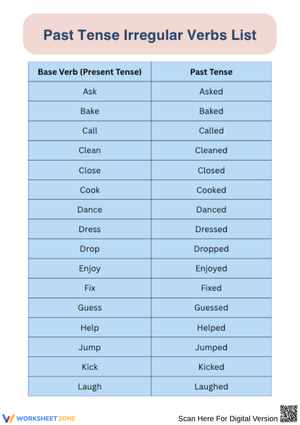
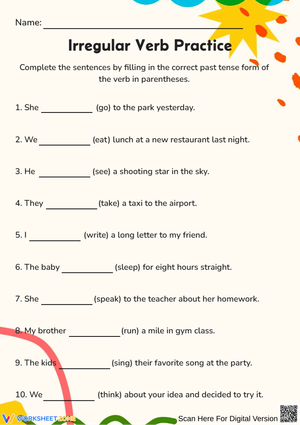
These past tense verbs pdf worksheets for 2nd grade give teachers a print-ready set that covers the -ed suffix rule with its spelling variations, the three distinct sounds of -ed, and the high-frequency irregular verbs students need to produce accurately before third-grade writing expectations increase. Each worksheet targets one specific piece of the skill rather than mixing regular verbs, irregular verbs, and spelling rules into a single overloaded task.
What Each Worksheet Targets
The past tense verbs pdf worksheets for 2nd grade in this collection move through the skill the way most teachers sequence it — establishing the plain -ed addition first, then introducing the spelling rules that complicate it, and finishing with the irregular verbs that resist the rule entirely.
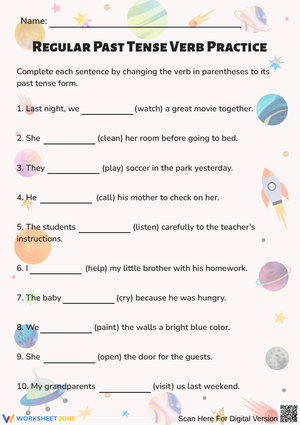
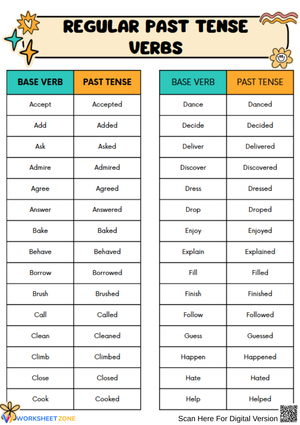
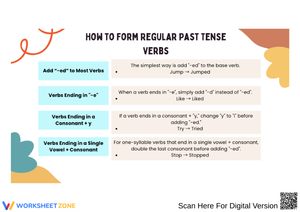
- Adding -ed to regular verbs with no spelling change: walk → walked, help → helped, jump → jumped
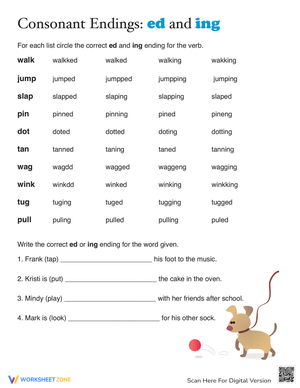
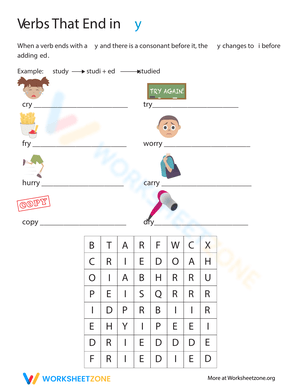
- Applying the consonant-doubling rule for short-vowel CVC verbs: hop → hopped, pin → pinned, drag → dragged
- Using the silent-e drop before adding -ed: race → raced, bake → baked, smile → smiled
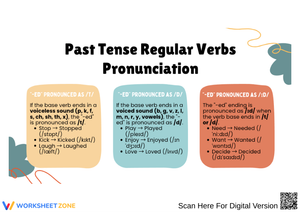
- Sorting -ed words by their spoken ending — /t/ as in jumped, /d/ as in climbed, or /id/ as in landed — bridging phonics and grammar in the same task
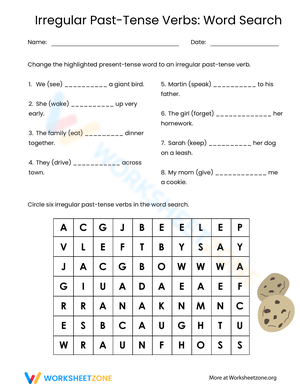
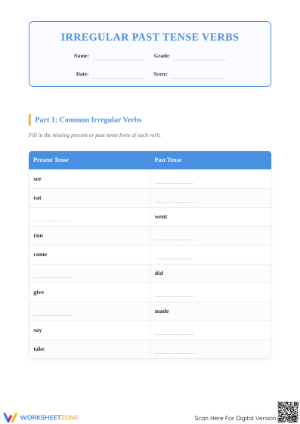
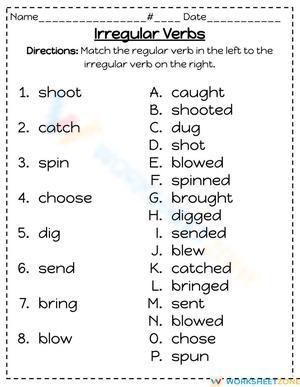
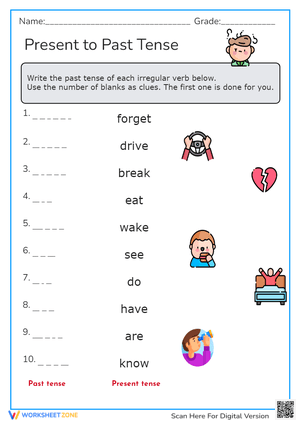
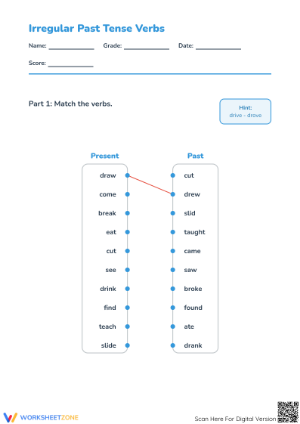
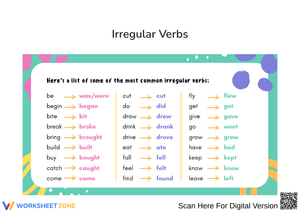
- Matching irregular verbs to their past tense forms: go/went, eat/ate, see/saw, run/ran, tell/told, give/gave, come/came
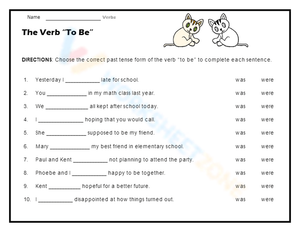
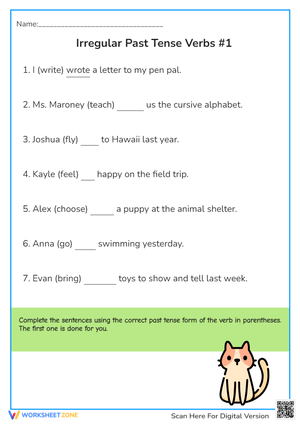
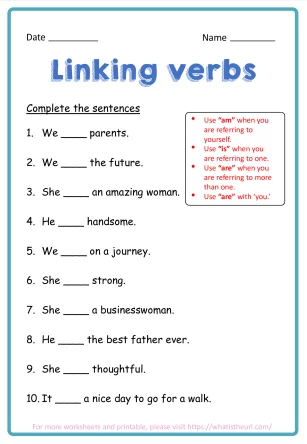
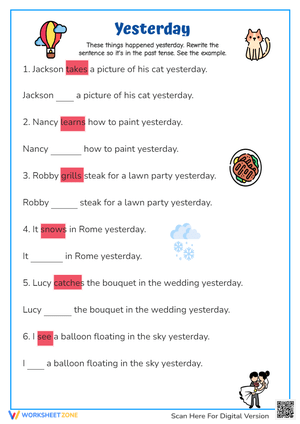
- Completing sentences using time-marker context clues such as yesterday, last night, and this morning
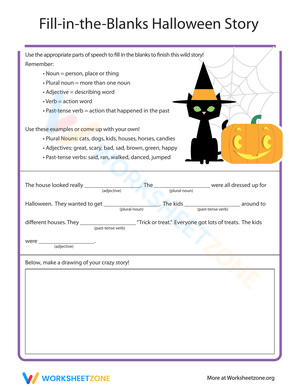
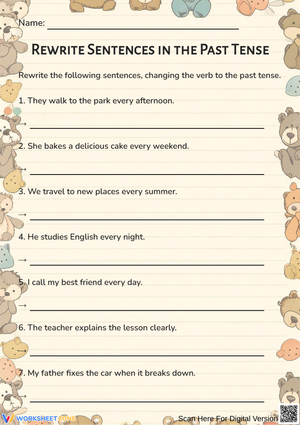
- Rewriting present-tense sentences in the past tense and underlining past tense verbs inside short passages
Frequent Student Errors Worth Watching For
The error that surprises new teachers most is not the student who forgets the -ed suffix — it is the student who applies it to every verb, including irregular ones. Writing "eated," "goed," and "sayed" with full confidence signals that the child has internalized the base rule and is extending it logically. That is progress, not regression. The trouble is that roughly fifteen to twenty high-frequency English verbs refuse the rule entirely, and those same verbs appear in almost every story a second grader writes. The irregular pair-matching worksheets address this by giving students repeated exposure to the specific base-past combinations they keep confusing — far more efficient than circling the same error in running writing week after week.
The spelling variations on regular verbs are a separate problem. A student who writes "walk → walked" correctly will still write "hop → hoped" instead of "hopped," or "race → raceed" instead of "raced." They know the suffix attaches; they have not yet connected the consonant-doubling or silent-e rules to the specific verb types where those rules apply. Worksheets that isolate one spelling pattern at a time — one worksheet for CVC doubling, a separate one for e-drop verbs — let students encounter the rule in concentrated form before seeing it folded into a longer mixed list.
How to Build These Worksheets Into Your Lesson Plans
The fill-in-the-blank and sentence-completion worksheets fit naturally into the first eight to ten minutes of a language block while attendance runs and students settle in. The task requires real thinking but not the kind of fresh working memory that math problem-solving demands, so the timing works well. The -ed sound-sorting worksheet transfers easily into a word study rotation alongside phonics station tasks — the format and the clock time needed are compatible enough that no special setup is required.
For whole-class instruction, put a fill-in-the-blank worksheet under a document camera and ask students to write their answers on whiteboards or scrap paper, then hold them up. You get a class-wide formative read in about fifteen seconds. That quick check tells you whether the group is ready to move toward irregular verbs or needs another day on regular-verb spelling rules. Reserve the sentence-rewriting worksheets for post-lesson independent practice — that task asks students to hold the rule in mind while also managing sentence structure, and it goes better after guided instruction than during it. Several teachers use the irregular verb matching worksheet as a Monday check-in after introducing a new verb cluster the previous Friday, deliberately building in a short retrieval gap that makes the practice more durable than two consecutive sessions would. These past tense verbs pdf worksheets for 2nd grade also work well as sub plans: the formats are self-explanatory enough that a substitute can run them without a prepared lesson script.
Standard Alignment
These past tense verbs pdf worksheets for 2nd grade align directly with CCSS.ELA-LITERACY.L.2.1.D, which requires students to form and use the past tense of frequently occurring irregular verbs (e.g., sat, hid, told). In classroom terms, that standard means students need to produce forms like went, said, and came inside their own writing — not just recognize them on a matching exercise. The irregular pair and sentence-writing worksheets address that production demand directly. The -ed spelling-variation worksheets support the broader L.2 language conventions standard, which holds students responsible for correctly inflecting regular verbs in writing — a convention that grade-level compositions are expected to demonstrate consistently by year's end.
Adapting the Set for a Range of Learners
Students who struggle with the irregular verb worksheets can keep a printed reference list of base-past tense pairs on their desk during independent practice. The goal is to keep their attention on recognizing and using the correct form rather than letting pure recall failure stop the practice entirely. That reference list eventually comes away as recall solidifies — but attempting to build fluency without any reference support when a student is still mid-acquisition wastes the practice session.
Students who move through the regular verb worksheets quickly are ready for a short composition task: write three to four sentences, each using a different past tense verb, about something that actually happened. That shift from isolated exercises to real writing shows whether the rule transfers to authentic production. For students who continue over-regularizing four or five weeks into the unit, limiting the irregular worksheet load to three or four verb pairs per session — spread across several short sittings — works better than pushing through a full list at once. Front-loading ten new irregular pairs in a single session rarely produces usable recall by the following day.
Frequently Asked Questions
Which irregular verbs should I introduce first?
Prioritize the verbs that appear most often in student writing: went, said, saw, got, came, and did. Errors with these are visible constantly because students reach for them in almost every narrative they attempt. Once those forms are stable in writing, move to slightly less frequent pairs like told, ate, and ran. Lower-frequency forms like drew or flew can wait until the core set is automatic.
How do I explain the three sounds of -ed without confusing students?
Skip the phonetic terminology and use direct comparison instead. Say the words aloud: "Listen to the end of jumped — that's a /t/ sound. Now climbed — that's /d/. Now landed — that one actually says /id/." Most students hear the difference as soon as you contrast the examples clearly. The sorting worksheet reinforces this by asking students to say each word aloud before placing it in a column, which keeps the ear involved rather than treating the task as purely visual.
Should these worksheets go home as homework or stay in class?
Matching and fill-in-the-blank worksheets travel home well because the task is self-contained — a caregiver does not need to understand the lesson context to offer help. The sentence-rewriting worksheets work better in class, where you see the process and can address errors before they become practiced habits. If you do send a rewriting worksheet home, include a short rule reminder at the top so families have something concrete to reference.
How do I know when students are ready to move from regular to irregular verbs?
Watch for two things in combination: consistent correct spelling on the consonant-doubling and e-drop patterns on worksheets, and accurate production in independent writing — journals, writing workshop drafts, anything that isn't a structured exercise. Students who succeed on fill-in tasks but still write "hoped" for "hopped" in a journal entry need more time with regular verbs before irregular forms get added to the mix. When the regular patterns appear correctly in daily writing without apparent effort, the class is ready to move.












 Interactive Worksheet Maker
 Quiz Maker
 Word Search Maker
 Crossword Puzzle Maker
 Word Scramble Generator
 Sentence Scramble Generator
 Handwriting Worksheet Generator
 Name Tracing Generator
 Fill In The Blank Generator