


























Views
Downloads

Grade 1-3 Pronouns Worksheet | Essential Printable Practice
Paste this activity's link or code into your existing LMS (Google Classroom, Canvas, Teams, Schoology, Moodle, etc.).
Students can open and work on the activity right away, with no student login required.
You'll still be able to track student progress and results from your teacher account.
This comprehensive pronouns packet helps students master the art of replacing repetitive nouns with functional pronouns. By engaging with matching exercises, sentence-level choices, and narrative completion, learners develop the linguistic flexibility needed for fluent writing and reading comprehension. This resource ensures students understand how words like 'he', 'she', and 'they' create cohesive text.
At a Glance
- Grade: 1-3 · Subject: ELA
- Standard:
CCSS.ELA-LITERACY.L.1.1.D— Use personal, possessive, and indefinite pronouns correctly in writing and speaking- Skill Focus: Noun-pronoun substitution
- Format: 3 pages · 24 problems · Answer key included · PDF
- Best For: Independent practice or sub plans
- Time: 20–30 minutes
What's Inside
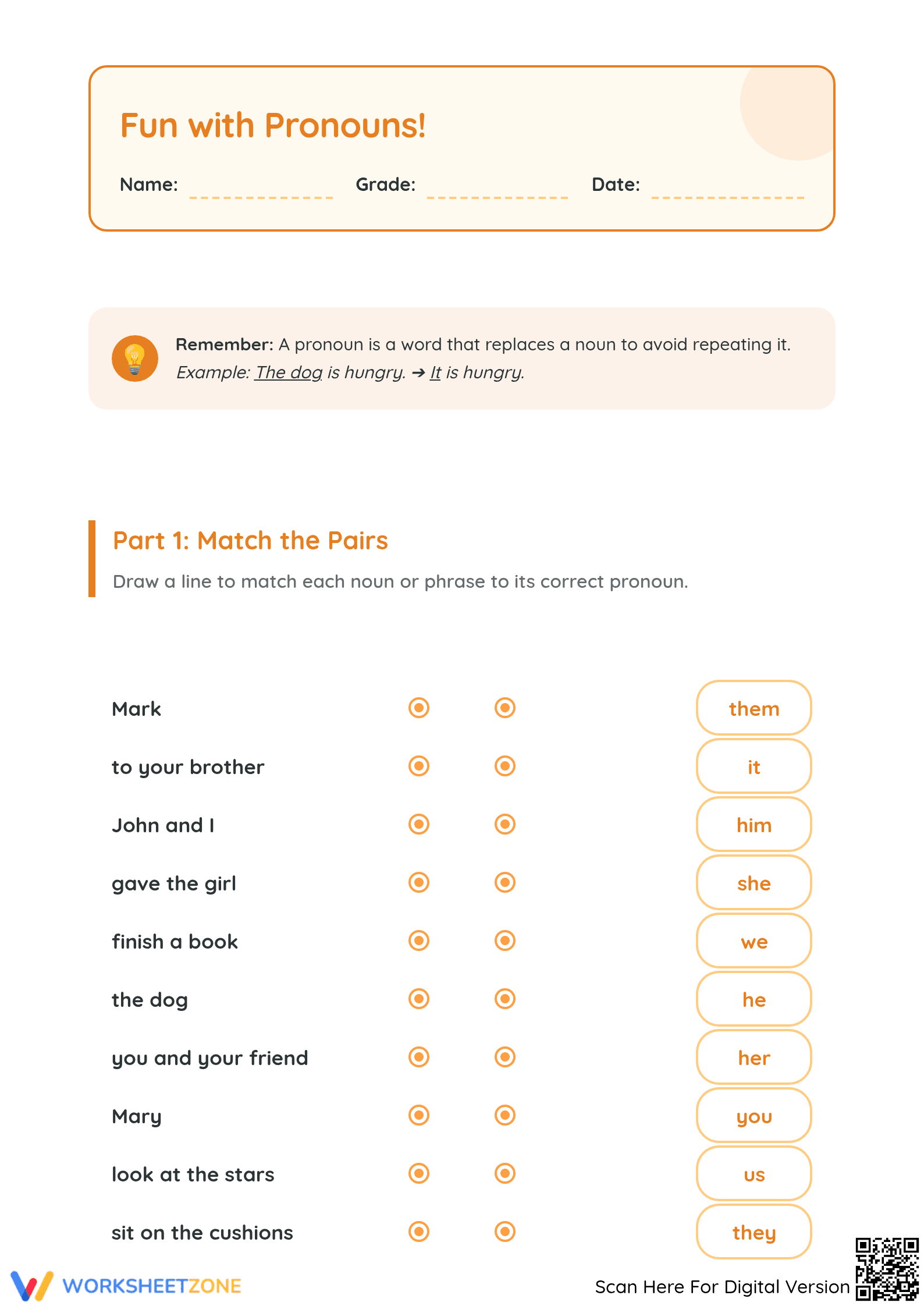
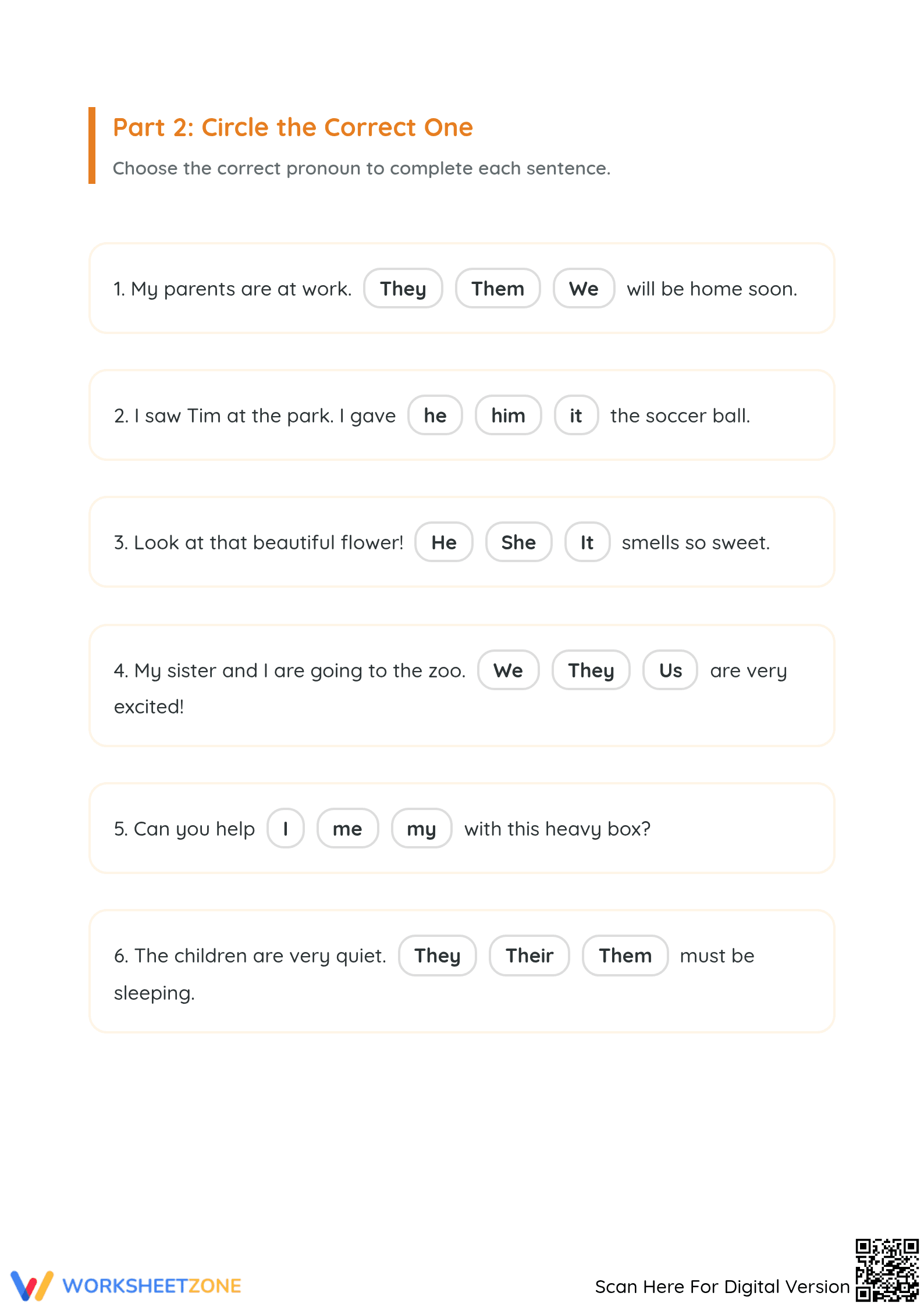
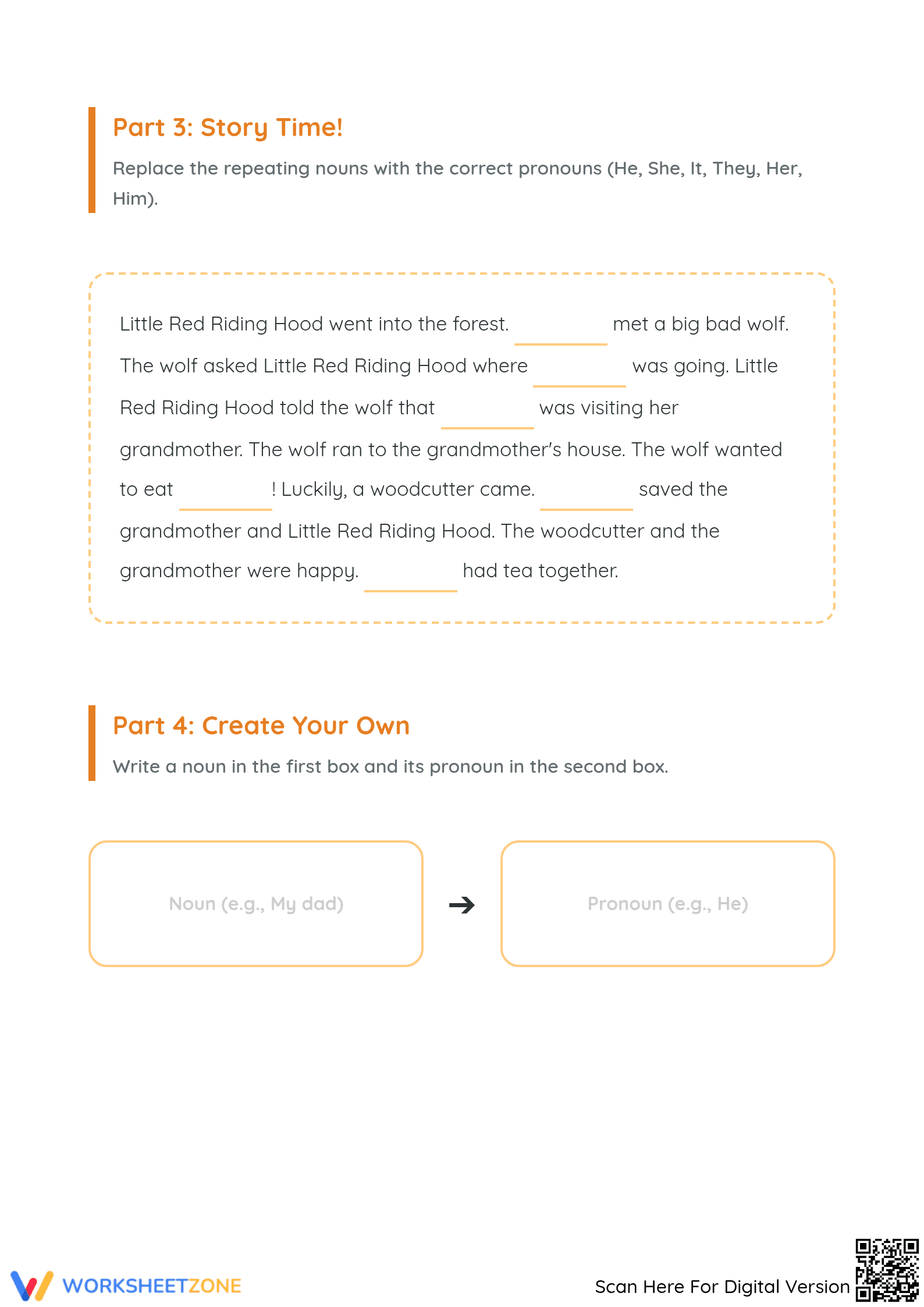
This 3-page instructional set contains four distinct sections designed to build confidence. Page one features a 10-item matching task connecting phrases to pronouns. Page two offers 6 multiple-choice sentences to test contextual application. The final page includes a 7-blank story completion task based on Little Red Riding Hood and a creative application box. A full 3-page answer key is provided for rapid grading.
Zero-Prep Workflow
- Print: Select the pages you need and hit print; total setup takes less than 30 seconds.
- Distribute: Hand out the packets for a quiet morning work session or a focused literacy center.
- Review: Use the included answer keys to provide immediate feedback or allow students to self-correct their work in under 5 minutes.
This streamlined workflow makes the packet an ideal choice for emergency substitute folders or last-minute lesson supplements.
Standards Alignment
The primary focus is `CCSS.ELA-LITERACY.L.1.1.D`, which requires students to use personal, possessive, and indefinite pronouns. The worksheet specifically targets personal pronouns in the nominative and objective cases. Both standard codes can be copied directly into lesson plans, IEP goals, or district curriculum mapping tools to document evidence of standards-based instruction.
How to Use It
Use this resource during the "You Do" phase of a gradual release lesson. After introducing pronouns with an anchor chart, assign the matching page to verify basic identification. For a formative assessment, observe students during the "Story Time" section on page three; their ability to maintain pronoun-antecedent agreement in a narrative context reveals their true level of mastery. Expect completion in 25 minutes.
Who It's For
This packet is designed for general education students in Grades 1 through 3. It is also highly effective for English Language Learners (ELL) who are practicing English syntax and word functions. Pair this worksheet with a short reading passage to have students highlight every pronoun they find before completing the written tasks.
The use of pronouns is a fundamental component of syntactic development in early elementary education. According to Fisher & Frey (2014), the gradual release of responsibility model is most effective when students move from discrete skill identification, such as the 10 matching tasks provided here, to contextual application in narrative text. This worksheet mirrors that research-backed progression by transitioning from simple word-to-word matching to a 7-blank story completion exercise. By requiring students to replace repetitive nouns like "Little Red Riding Hood" with "she" or "her," the resource reinforces the standard CCSS.ELA-LITERACY.L.1.1.D. This specific instructional sequence helps students internalize the function of pronouns as tools for sentence variety and clarity. Educators can utilize the 24 distinct tasks to gather data on student mastery of word classes, ensuring that foundational grammar skills are solidified before moving toward more complex composition requirements in later grades.


