These window of tolerance worksheets for 12th grade cut into a problem that seniors present more than any other grade level: dysregulation that reads, on the surface, as attitude or apathy. The set gives students structured tools to map their own arousal patterns—not just label emotions, but trace the physical signals that show up before a meltdown or a shutdown, and practice concrete return strategies for both ends of the spectrum.
What Students Practice Across the Set
Each worksheet targets a distinct layer of emotional self-knowledge. The earlier worksheets establish personal baselines—students document physical cues like jaw clenching, chest tightness, or mental fogginess that mark the edges of their regulated zone. Later worksheets raise the analytical demand: students track arousal patterns across a full week, note how sleep and social conflict shift their window, and write structured reflections connecting past dysregulated moments to the cues they can now name in advance.
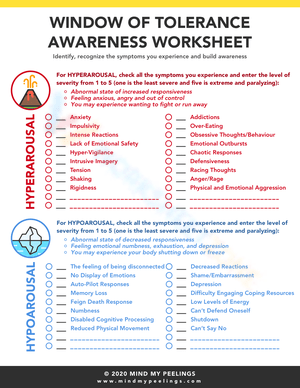
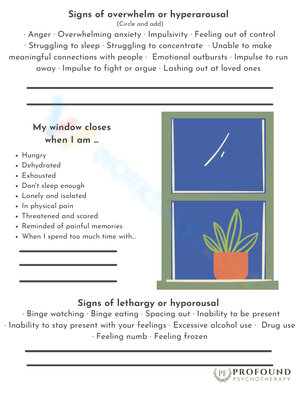
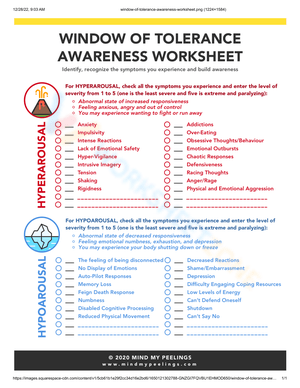
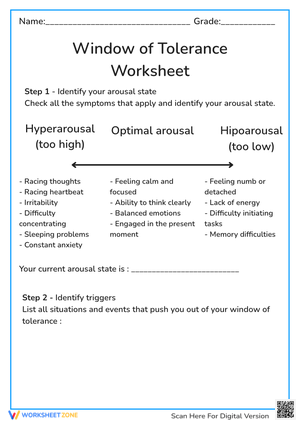
- Identifying personal hyperarousal signals—panic responses, hypervigilance, difficulty staying seated—versus hypoarousal signals such as blank staring, emotional flatness, and withdrawal from group work
- Mapping environmental inputs (academic load, sleep quality, social stressors) against observed shifts in regulated state
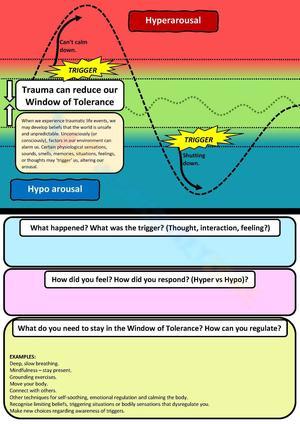
- Distinguishing return strategies by arousal direction: sensory grounding techniques for the fight-or-flight edge, activating movement and verbal naming exercises for the freeze edge
- Applying the framework to senior-specific stressors—college admission decisions, financial uncertainty, shifting peer relationships near graduation
- Writing short analytical reflections that move from body awareness to behavioral pattern recognition
At 17 and 18, students are cognitively capable of real systems-level thinking about their own nervous systems, but they need concrete anchors. These worksheets ask for personal physical data before asking for conceptual labeling—a sequence that respects where the prefrontal cortex actually is at this age rather than assuming full abstract-reasoning capacity from the start.
Patterns in Student Work That Are Worth Anticipating
The most consistent error is conflating the two out-of-window states. Students hear "hyperarousal" and "hypoarousal" once, then decide they experience one or the other—not both. A student who presents as visibly anxious during exam week often shifts into a flat, disengaged freeze state by Friday afternoon. When they complete mapping worksheets that only capture one mode, their self-portrait stays incomplete, and the coping strategies they practice don't address half their actual experience. Tracking arousal across multiple time points in a single day—rather than asking students to reflect on "a hard week" in the abstract—catches this pattern before it calcifies.
A second pattern is subtler and more common among students carrying chronic stress: they describe their hyperaroused state as normal. Racing thoughts and a tight stomach have been baseline for so long that nothing registers as outside-the-window. These students often mark themselves as regulated on self-report sections even when the behavioral descriptions they write in the same worksheet clearly indicate otherwise. Watching for that discrepancy—between the arousal rating they assign and the behaviors they describe—is one of the more reliable formative reads the set generates.
How to Fit These Worksheets Into the Senior-Year Schedule
The most natural entry point is an advisory or homeroom block in September, before college application pressure reaches its peak. Introducing the window concept early means students already have the vocabulary when they need it most—not in November when they are managing early-decision stress. Window of tolerance worksheets for 12th grade work particularly well as a Monday morning opener during that stretch: five minutes of quiet self-tracking before the week's academic demands land establishes the habit without pulling time from content instruction.
For teachers integrating these into an English or social-emotional learning class, the analytical reflection worksheets pair cleanly with journaling units. Students who resist emotional check-ins as "feelings work" often engage more readily when the task is framed as data collection—which is exactly what the physical-cue tracking worksheets ask them to do. That language shift matters with seniors who feel too old for what they perceive as elementary social-emotional activities. Calling it self-monitoring or stress physiology changes who opts in.
Standard Alignment
This set addresses CASEL's Self-Awareness and Self-Management competencies, specifically the ability to accurately label emotions, recognize the connection between physical sensations and behavior, and apply strategies for managing stress in context. At the 12th-grade level, those competencies are expected to operate across novel, high-stakes situations—which is precisely where a physiological framework like the window of tolerance earns its instructional place. Students are not just naming feelings; they are building a transferable analytical system they carry into post-secondary environments where stress will land differently than it does in a structured school day.
Adapting the Worksheets Across a Mixed-Ability Class
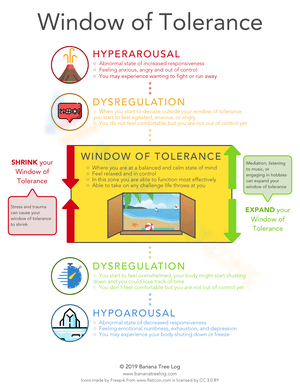
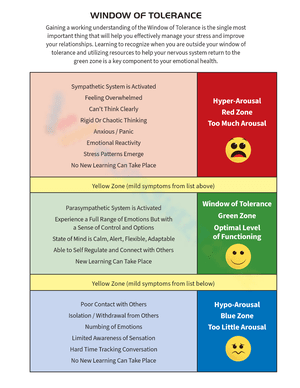
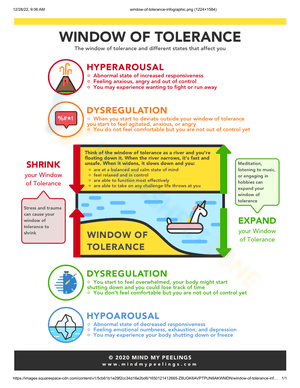
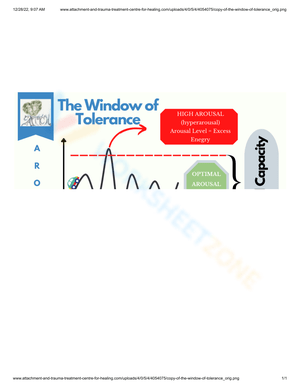
Window of tolerance worksheets for 12th grade in this set vary in cognitive demand, which makes differentiation practical rather than burdensome. Students who need more support work from the baseline physical-cue worksheets, which include guided sentence stems and a labeled diagram of the arousal spectrum that reduces the working-memory load of holding the framework in mind while writing. Students ready for more complexity get the open-format tracking worksheets, where they design their own weekly log and write analytical paragraphs connecting environmental variables to arousal shifts without structured prompting.
For students with IEPs or 504 plans that include emotional regulation goals, the physical-cue identification worksheets support behavioral progress monitoring directly—teachers can use them as brief start-of-class check-ins rather than as standalone lesson activities. One honest limitation: the open-format analytical worksheets frustrate students who struggle with unstructured writing prompts, even when they fully understand the underlying concept. A brief whole-class discussion before students write independently closes most of that gap without requiring a separate modified version.
Frequently Asked Questions
Are these worksheets appropriate for students with trauma histories?
Yes, and they are particularly useful in that context. Students with trauma often have narrower windows and have spent years without language for what that narrowing feels like. The physical-cue tracking worksheets give them a non-judgmental framework—this is what is happening in your nervous system, not a character flaw. That reframe is significant on its own. If you are working with a student carrying acute trauma, coordinate with your school counselor before using the reflective worksheets that ask students to revisit past dysregulated events; those require a baseline sense of safety to be productive.
How much class time do the worksheets take?
The baseline identification worksheets run about 10 to 15 minutes. The weekly tracking and analytical reflection worksheets need 20 to 30 minutes to be meaningful—rushing the written reflection defeats the purpose. Most teachers introduce the concept in one class session, then assign the tracking work across several days and debrief in a later session. That spacing also reinforces the concept through lived experience between the two lessons, which is more effective than a single extended block.
Can I use these worksheets with a student who is currently in crisis?
These resources support regulated self-reflection—they are not crisis intervention tools. A student in acute distress needs immediate support from a school counselor, not a worksheet. The set works best when introduced during lower-stress periods so students build the skills before they need them, not during a moment when applying any new framework is already beyond reach.
Do these resources serve students entering the workforce as well as those heading to college?
Window of tolerance worksheets for 12th grade in this set draw scenarios from both college and early workplace contexts, so the content stays relevant regardless of post-secondary path. The underlying framework—recognizing arousal signals, identifying triggers, choosing a return strategy—transfers to any environment where stress will arrive without warning and without a teacher present to help manage it.












 Interactive Worksheet Maker
 Quiz Maker
 Word Search Maker
 Crossword Puzzle Maker
 Word Scramble Generator
 Sentence Scramble Generator
 Handwriting Worksheet Generator
 Name Tracing Generator
 Fill In The Blank Generator