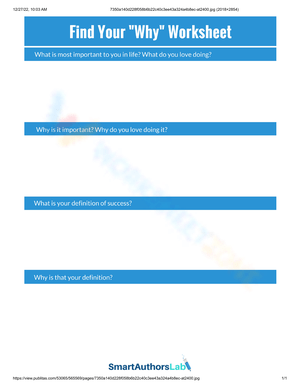
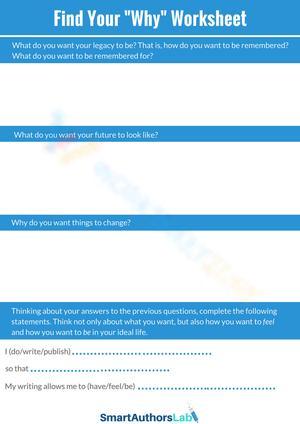
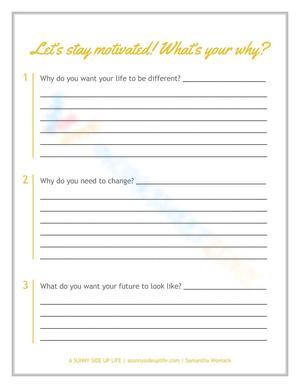
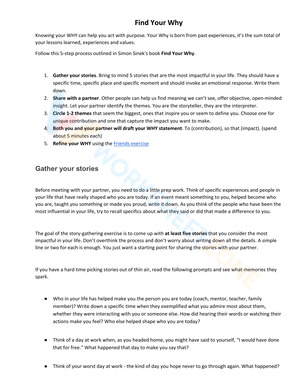
12th grade find your why pdf worksheets give counselors, senior advisors, and English teachers a structured entry point into one of the harder conversations of the school year — helping 17- and 18-year-olds name what actually drives them before the logistics of applications, financial aid deadlines, and graduation planning swallow that question entirely. The set moves students through identity reflection, values clarification, and personal mission drafting, with each worksheet pushing toward a more precise articulation of purpose rather than a polished-sounding answer students think adults want to hear.
Skills These Worksheets Build
The exercises follow a deliberate sequence. Early worksheets ask students to look backward — identifying moments when time seemed to stop, when they stayed late on a project without being asked, or when they found themselves defending a position without fully understanding why. That backward inventory often surfaces patterns students haven't consciously noticed. Later worksheets shift the lens outward: students examine the values embedded in the choices of people they respect, then hold those values against their own. The final exercises bring everything forward, asking students to draft a personal why statement that connects past experience to future direction.
Specific skills targeted across the set include:
- Distinguishing intrinsic motivators from external pressures — separating what students actually care about from what they've been told to care about
- Identifying recurring themes across different life domains: school, work, family, and community involvement
- Translating abstract values into concrete, observable behaviors they can point to in their own histories
- Writing a personal mission statement specific enough to guide a real decision, not generic enough to fit anyone
- Using observations of mentors and family members as contrast points that clarify their own emerging values
Mistakes Students Make That These Worksheets Help You Catch
The most consistent error is conflating "what" with "why." A student will write I want to be an engineer as her why, which is actually her what. When pushed to go deeper, the genuine why might be something like I want to design physical spaces that work for people with limited mobility — a statement with enough specificity to actually inform a decision. Getting students across that threshold takes direct instruction, and the prompts in these exercises push the distinction deliberately, often by asking students to answer "but why does that matter to you?" three times in a row.
A second pattern that shows up constantly in senior work: performative purpose. Students who are deep in application mode have often internalized the question "what will sound good on my personal statement?" so thoroughly that they can't separate it from "what is actually true for me?" A student who genuinely cares about local theater will write I am passionate about international humanitarian work because it reads as more impressive. These worksheets work best when teachers establish early — and without apology — that a genuine small why will always beat a borrowed large one. That message has to come from the teacher explicitly; the prompts alone won't produce it.
How to Build These Worksheets Into Your Senior Year Planning
Senior fall is not the right moment for a full "find your why" unit. Students have application deadlines hitting in October and November, and anything framed as additional self-reflection homework tends to be resented or rushed. The stronger move: use one worksheet in September as a standalone advisory activity, framed explicitly as personal statement pre-writing. That framing gives students an immediate, practical reason to engage, and the reflection they produce often becomes raw material for their essays without ever feeling like extra work.
12th grade find your why pdf worksheets also earn their place in the spring, during the post-acceptance lull when seniors have committed to a school but haven't fully made peace with the transition. That window — roughly March through April — is when many students feel directionless despite having "figured everything out." A values-mapping exercise during that stretch gives them something concrete to do with the low-grade anxiety sitting underneath the surface, and it tends to surface second thoughts about a chosen path early enough to address them rather than two semesters into college.
Adjusting These Worksheets for a Range of Learners
Students who arrive with a clear direction — the ones who've wanted to go into nursing since ninth grade or who already have a family business mapped out — often have the hardest time with this work. They conflate certainty with understanding. They know their "what" so firmly that they've never had to articulate their "why." For these students, the most useful exercises are the ones that press on values: Why does this path matter to you? What would it cost you to walk away from it? Those prompts reveal whether the commitment is genuinely theirs or inherited from an expectation they've never examined.
Students on the other end — genuinely undecided, overwhelmed, or facing significant uncertainty about post-secondary options — often freeze when they encounter abstract future-oriented prompts. For those students, redirect them to a single specific memory first: a time they did something no one asked them to do. That concrete anchor produces more honest initial writing than asking an undecided senior to stare at a blank values checklist. 12th grade find your why pdf worksheets that sequence backward-first consistently generate more substantive responses from students who struggle with open-ended future questions, and teachers can assign those exercises first without disrupting the overall arc of the set.
Standard Alignment
These worksheets align to the CASEL Self-Awareness competency, particularly the sub-skills of identifying personal values and developing a sense of purpose. Several states with codified SEL frameworks — including Illinois (ISBE Goal 31) and Washington (EALR 4) — identify purpose-identification and values-clarification as explicit learning targets for high school exit. Within college and career readiness frameworks, the habit of documented self-reflection appears in the ACT Holistic Framework's behavioral domain and in many state CTE pathway requirements that ask students to articulate career motivation alongside technical skills. Teachers in states without standalone SEL standards often embed these exercises in senior English or advisory coursework, where the mission-drafting component supports argumentative writing and audience-awareness objectives.
Frequently Asked Questions
Can individual worksheets be pulled for one-on-one counseling sessions rather than whole-class use?
Yes — and in some cases that's where they produce the best work. Each worksheet stands alone, so a counselor can pull the values-clarification exercise for a student paralyzed between two college choices without running through the full set in order. The personal mission drafting worksheet works especially well as a pre-session assignment: students come to the appointment with something already written, which shifts the conversation from general exploration to specific response. That shift alone tends to make appointments considerably more productive than starting from a blank verbal exchange.
What should teachers do when a student's stated why is entirely about money or prestige?
Treat it as honest data rather than a problem to correct. A student who genuinely identifies financial security as a core motivator — particularly one who has watched economic instability affect her family — is telling the truth about what matters most, and that deserves acknowledgment. The follow-up the worksheets guide toward is: What kind of work could produce that outcome and engage you enough to stay in it? That question bridges an honest motivation to a more sustainable direction. Counselors who immediately redirect students away from financial goals tend to lose their trust, and once that happens the reflection work stops being genuine.
How do teachers handle consistently shallow responses across the class?
Surface-level responses almost always signal one of two things: students don't feel safe enough to be honest, or they haven't had enough lived experience to answer the question as posed. For the first group, having a few students share genuine drafts aloud drops the safety threshold for the rest. For the second group, backward-looking prompts — describe the last time you did something no one asked you to do — produce far more honest material than forward-looking vision questions. It's a question most seniors can actually answer, and it gets something real on the page that later exercises can build from.
How much time should each worksheet take?
Plan a minimum of 30 minutes per worksheet. The values-mapping and mission-drafting exercises regularly need 45 minutes when students are writing seriously. Rushing the mission statement exercise produces exactly the generic output the whole process is trying to avoid. Many teachers spread the set across four to six advisory sessions rather than blocking full class periods, and that spacing tends to improve the quality of responses — a meaningful number of students come back to the next session having quietly revised their thinking between meetings.












 Interactive Worksheet Maker
 Quiz Maker
 Word Search Maker
 Crossword Puzzle Maker
 Word Scramble Generator
 Sentence Scramble Generator
 Handwriting Worksheet Generator
 Name Tracing Generator
 Fill In The Blank Generator