




























0
Views
0
Downloads

0.0
0
Save
0 Likes
Share
Understanding Your Window of Tolerance Worksheet
0 Views
0 Downloads

Paste this activity's link or code into your existing LMS (Google Classroom, Canvas, Teams, Schoology, Moodle, etc.).
Students can open and work on the activity right away, with no student login required.
You'll still be able to track student progress and results from your teacher account.
Information
Description
What It Is:
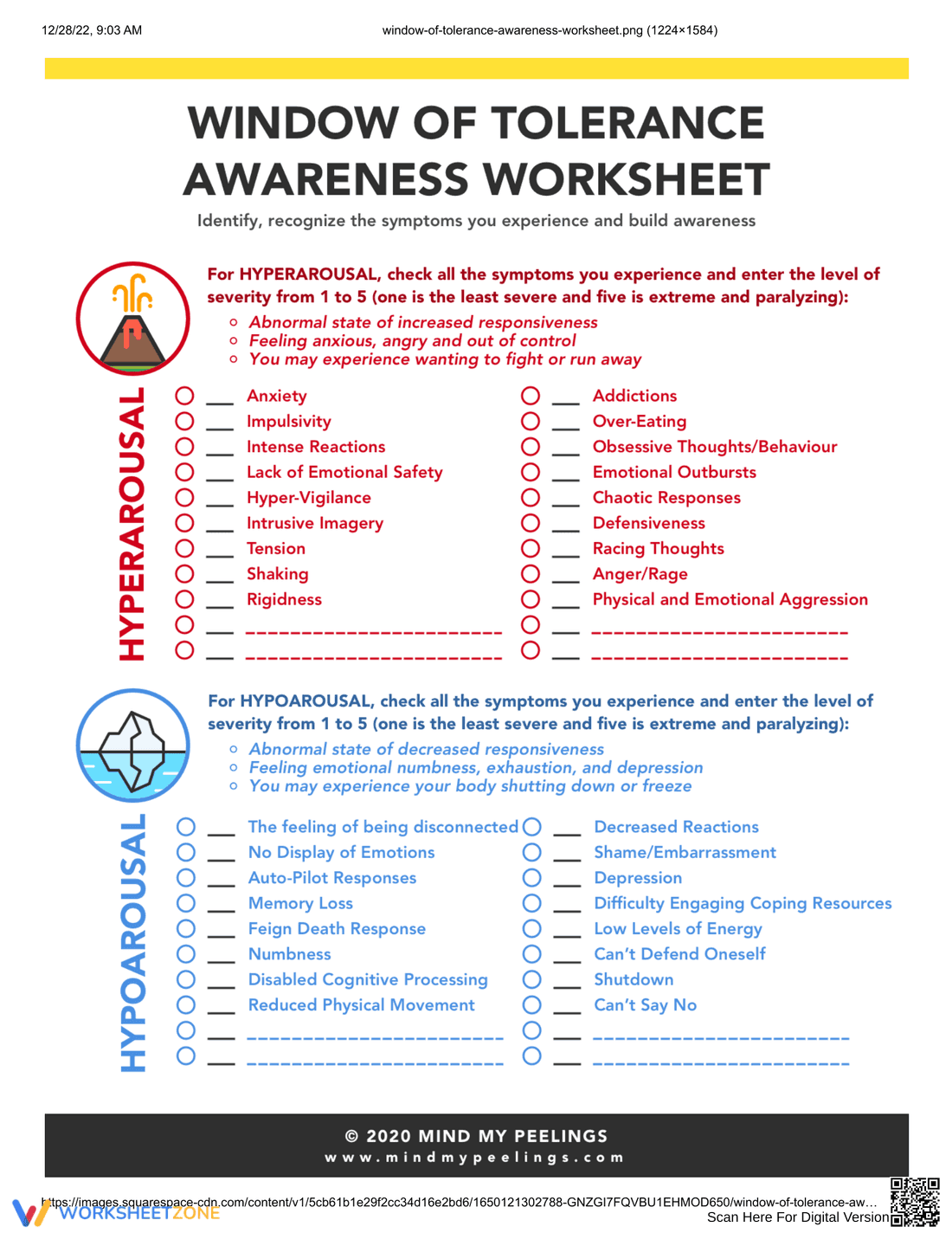
This is a 'Window of Tolerance Awareness Worksheet' designed to help individuals identify and recognize symptoms related to hyperarousal and hypoarousal. The worksheet lists symptoms associated with each state, such as anxiety, impulsivity, and intense reactions for hyperarousal, and feeling disconnected, numbness, and decreased reactions for hypoarousal. Users are instructed to check the symptoms they experience and rate the severity from 1 to 5, with 1 being the least severe and 5 being extreme.
Grade Level Suitability:
This worksheet is most suitable for high school students (grades 9-12) and adults. The concepts of hyperarousal and hypoarousal, along with the associated symptoms, require a certain level of emotional maturity and self-awareness. The vocabulary used is also more appropriate for older adolescents and adults.
Why Use It:
This worksheet can be used to promote self-awareness and emotional regulation. By identifying and rating their symptoms, individuals can gain a better understanding of their own responses to stress and trauma. This can lead to improved coping strategies and a greater sense of control over their emotions. It's useful for identifying triggers and patterns of emotional dysregulation.
How to Use It:
To use this worksheet, read through the list of symptoms under both the 'Hyperarousal' and 'Hypoarousal' sections. Check the boxes next to any symptoms that you experience. Then, for each symptom you've checked, rate its severity on a scale of 1 to 5, with 1 being the least severe and 5 being the most extreme. The completed worksheet can then be used for self-reflection or to facilitate discussion with a therapist or counselor.
Target Users:
The target users for this worksheet are individuals who are interested in learning more about their emotional responses, particularly those who may be experiencing symptoms of anxiety, trauma, or other mental health challenges. It can be beneficial for individuals in therapy, counseling, or self-help programs, as well as for educators and mental health professionals working with these populations.
This is a 'Window of Tolerance Awareness Worksheet' designed to help individuals identify and recognize symptoms related to hyperarousal and hypoarousal. The worksheet lists symptoms associated with each state, such as anxiety, impulsivity, and intense reactions for hyperarousal, and feeling disconnected, numbness, and decreased reactions for hypoarousal. Users are instructed to check the symptoms they experience and rate the severity from 1 to 5, with 1 being the least severe and 5 being extreme.
Grade Level Suitability:
This worksheet is most suitable for high school students (grades 9-12) and adults. The concepts of hyperarousal and hypoarousal, along with the associated symptoms, require a certain level of emotional maturity and self-awareness. The vocabulary used is also more appropriate for older adolescents and adults.
Why Use It:
This worksheet can be used to promote self-awareness and emotional regulation. By identifying and rating their symptoms, individuals can gain a better understanding of their own responses to stress and trauma. This can lead to improved coping strategies and a greater sense of control over their emotions. It's useful for identifying triggers and patterns of emotional dysregulation.
How to Use It:
To use this worksheet, read through the list of symptoms under both the 'Hyperarousal' and 'Hypoarousal' sections. Check the boxes next to any symptoms that you experience. Then, for each symptom you've checked, rate its severity on a scale of 1 to 5, with 1 being the least severe and 5 being the most extreme. The completed worksheet can then be used for self-reflection or to facilitate discussion with a therapist or counselor.
Target Users:
The target users for this worksheet are individuals who are interested in learning more about their emotional responses, particularly those who may be experiencing symptoms of anxiety, trauma, or other mental health challenges. It can be beneficial for individuals in therapy, counseling, or self-help programs, as well as for educators and mental health professionals working with these populations.


