These living and non living things worksheets for 10th grade push students past the elementary rock-and-animal sorting and into the kind of analytical reasoning 10th grade biology demands — evaluating edge cases against all eight characteristics of life, writing evidence-based arguments, and defending a classification with scientific reasoning rather than intuition. The set gives 10th grade teachers a practical tool for one of the unit's hardest teaching problems: getting students to treat life not as an obvious category but as a precise biological standard with non-negotiable criteria.
The Specific Skills Targeted Across the Set
The eight core characteristics of life — cellular organization, metabolism, homeostasis, response to stimuli, growth and development, reproduction, heredity, and adaptation through evolution — anchor every worksheet. Students don't simply define these traits; they apply them. Each worksheet presents a subject (a bacteriophage, a dormant seed, a crystal, a fire) and asks students to evaluate it against each criterion before reaching a final classification.
A significant portion of the worksheets use the Claim-Evidence-Reasoning (CER) format. After marking which characteristics apply, students write a claim about whether the subject is living or non-living, cite specific evidence from a provided data table or reading passage, and articulate the reasoning that ties that evidence to the biological definition of life. This is the written-response format that high school science assessments regularly demand, and students need repetition with it well before it's high stakes.
Why the Borderline Cases Belong at the Center of This Unit
A living and non living things worksheets for 10th grade that limits itself to clear-cut examples — a dog here, a rock there — gives students nothing to genuinely reason through. The borderline cases are what make this unit stick. Viruses, prions, dormant tardigrades, crystallizing minerals: each sits at the edge of the biological definition of life, and that ambiguity is exactly where analytical thinking develops.
Viruses draw the most debate. Students see that bacteriophages carry genetic material and evolve over generations, and many conclude that qualifies them as living. The worksheets return students to the full checklist: no cellular structure, no independent metabolism, no self-directed reproduction. A virus cannot replicate without hijacking a host cell's machinery — that single gap disqualifies it under the strict biological standard. Getting students to write out that reasoning, rather than just nodding during a lecture, is where the conceptual shift actually happens.
Building These Worksheets Into Your Biology Unit
The virus debate worksheet runs best on day four or five of the unit — after students have had enough exposure to the characteristics of life to use the framework, but not so much that edge cases feel easy. Dropping it in too early produces guessing. Dropping it in too late produces boredom. The productive window is when students feel confident about clear-cut examples but haven't yet been tested on ambiguous ones.
The CER worksheets function well as exit tickets at the close of a lesson targeting a specific characteristic. Spend forty minutes on homeostasis, then close with a five-minute CER prompt about a dormant seed in sub-zero soil — does homeostasis still apply when all detectable metabolic activity has stopped? Students write their claim and one sentence of reasoning before leaving. That response tells you immediately who has the concept and who is still treating each characteristic as independent of the others.
A living and non living things worksheets for 10th grade also works well as a group accountability task. Assign each lab group a different borderline entity and ask them to prepare a 90-second classification defense using only the evidence on the worksheet. Groups assigned fire or crystals tend to generate the strongest class discussion because they have to argue against the gut response most of their classmates share.
Classification Errors Students Consistently Make at This Level
The most persistent mistake is treating the characteristics of life as an OR condition rather than an AND condition. Students understand the difference in theory, but under pressure they still write things like "A virus must be alive because it has DNA." Fire catches the same students: it consumes energy, it grows, it responds to its environment. Many 10th graders mark fire as potentially living on the first pass. The worksheets address this by requiring a full-row evaluation before any final classification — making the missing criteria visible on the page rather than easy to ignore.
A reliable second error involves reproduction and the mule. Students argue that a sterile mule cannot be living because it fails the reproduction criterion. They're conflating the individual with the species, and that confusion shows up clearly in written reasoning sections. The distinction between species-level reproduction and individual-level reproduction is worth naming explicitly in class before that worksheet goes out — students who miss it tend to double down in their CER responses rather than revise when pushed.
A third pattern: students apply "response to stimuli" far too broadly. A thermostat responds to temperature; a weather vane responds to wind. Students who categorize these as potentially living based on responsiveness alone haven't grasped that biological response involves receptor proteins and signaling pathways — not any mechanical reaction to environmental change. Flagging this before students begin the relevant worksheets saves significant re-teaching time later in the unit.
Standard Alignment
These resources align with NGSS HS-LS1-1 (From Molecules to Organisms: Structures and Processes), which asks students to construct explanations for how the structure of cellular components supports the essential functions of living organisms. The worksheets address this directly: when a student argues in a CER response that a virus is non-living because it lacks the cellular machinery for independent metabolism, that reasoning is precisely what HS-LS1-1 targets. The worksheets also support the NGSS scientific practices strand by asking students to use evidence and reasoning to construct and evaluate explanations rather than simply recall definitions.
Adjusting These Worksheets Across Different Learner Levels
A living and non living things worksheets for 10th grade can feel daunting for students who enter the course with gaps from earlier science classes. For those students, the most effective adjustment is providing a printed reference card listing all eight characteristics with a one-line definition for each. Removing the recall burden shifts their energy toward the application task, which is where the actual learning target sits at this level. A half-sheet reference card is quick to prepare and easy to phase out as students internalize the list over the course of the unit.
Students who are already comfortable with the eight characteristics benefit from the extension prompts in the harder case studies — particularly the prion and synthetic biology scenarios, which ask whether artificially assembled entities or misfolded proteins can qualify as living. These prompts don't have clean answers. Students who handle ambiguity well will push further than the worksheet requires, and the disagreement those prompts generate is typically the most productive discussion of the unit.
For students with strong writing skills, the CER sections can be extended by requiring them to address a counterargument. If the claim is that a tardigrade in cryptobiosis is still living, they should be able to anticipate and rebut the argument that an organism showing no detectable metabolic activity fails the life criteria. That layer asks for exactly the kind of reasoning AP Biology and advanced coursework will expect from them within a year or two.
Frequently Asked Questions
Are these worksheets specific to 10th grade, or do they fit other high school biology courses?
The content and reasoning demands fit a standard 10th grade biology course well, and they'd also work in 9th grade honors biology or any introductory high school life science course that covers the characteristics of life. The CER format and the borderline-case complexity would feel underprepared for AP Biology, where students are expected to move quickly into the molecular mechanisms behind each characteristic rather than dwelling on classification exercises.
How much class time does the virus debate worksheet typically require?
Most classes finish the core analysis in 20 to 25 minutes, with another 10 minutes if you run a full-class debrief afterward. Teachers who use it as a standalone formative task generally complete everything in one period. If you assign the CER extension as homework and debrief the following day, the two-session format tends to produce stronger written reasoning than completing the full task in a single sitting.
Do students need prior cell biology knowledge to use these worksheets?
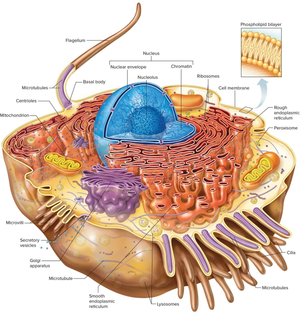
Basic cell vocabulary — knowing what a cell membrane and nucleus are — makes the cellular organization characteristic significantly easier to apply. Deep organelle knowledge isn't necessary at this point. If students are at the very beginning of the biology unit, a brief explanation of what "cellular organization" actually means in biological terms, given before distributing the worksheet, saves more instructional time than it costs.












 Interactive Worksheet Maker
 Quiz Maker
 Word Search Maker
 Crossword Puzzle Maker
 Word Scramble Generator
 Sentence Scramble Generator
 Handwriting Worksheet Generator
 Name Tracing Generator
 Fill In The Blank Generator