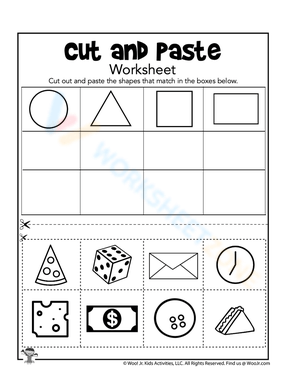
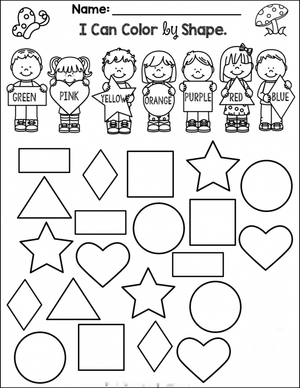
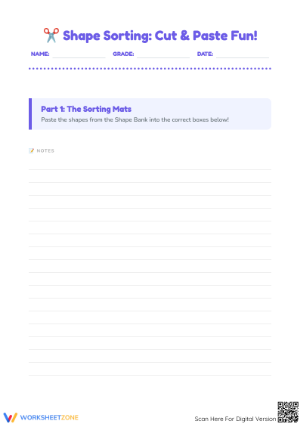
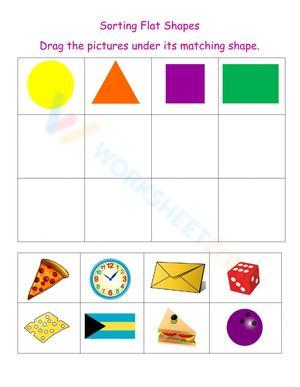
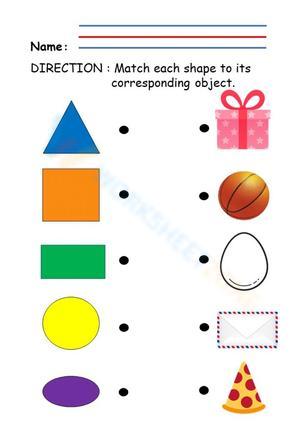
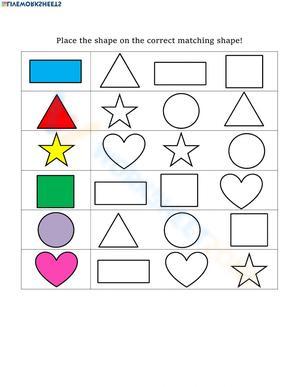
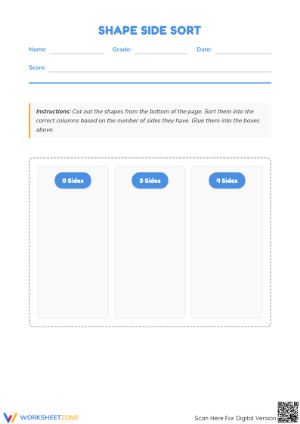
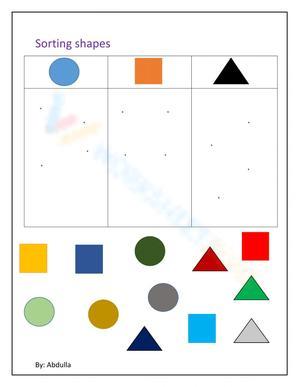
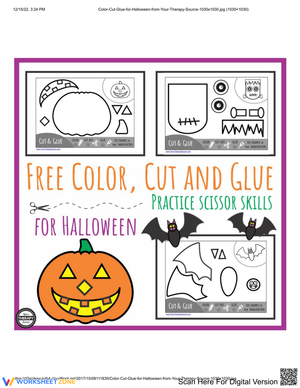
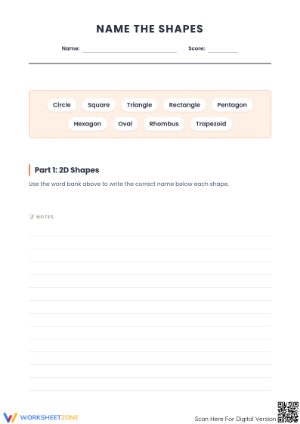
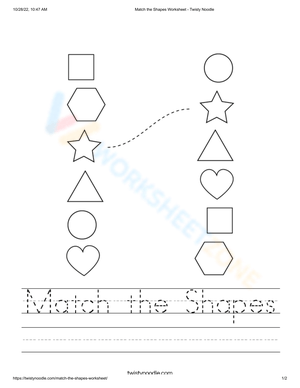
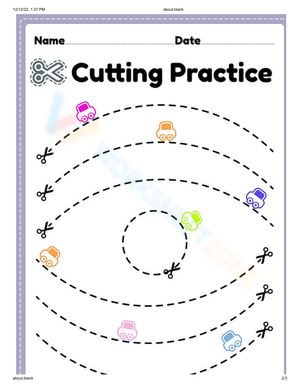
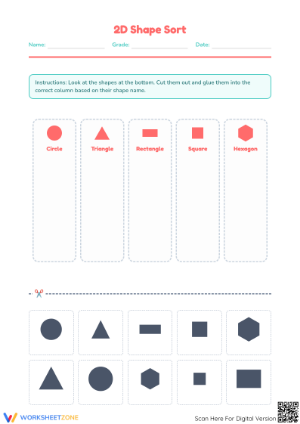
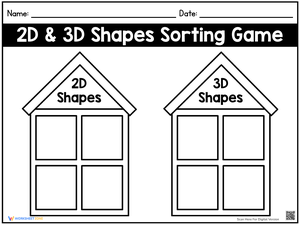
These geometry others printable worksheets for 1st grade target the specific conceptual shift that defines the Grade 1 geometry domain: moving students from recognizing shape names to analyzing the attributes that make each shape what it is. The set covers defining attributes, shape composition and decomposition, partitioning circles and rectangles into equal shares, and real-world identification of three-dimensional solids. Each worksheet targets a distinct lesson objective, so teachers reach for whichever one fits the current instructional focus rather than treating the collection as a prescribed sequence.
Skills and Concepts Each Worksheet Addresses
The worksheets span all four skill clusters in the CCSS Grade 1 geometry strand.
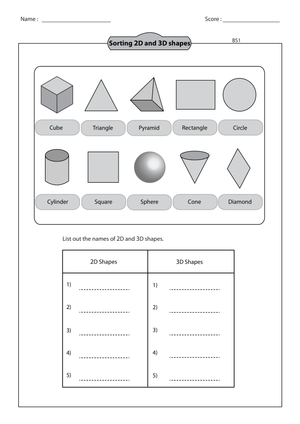
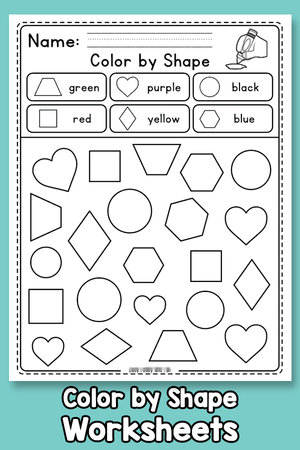
- Defining vs. non-defining attributes: Students sort, label, and draw shapes based on number of sides and vertices — not color, overall size, or orientation. One worksheet presents the same shape in five different rotations and asks students to underline only the features that remain constant across all five.
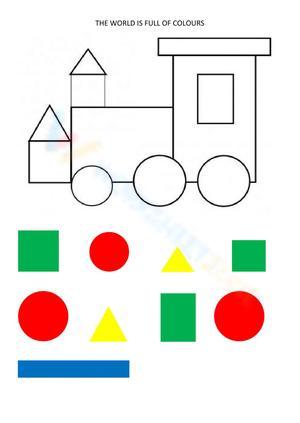
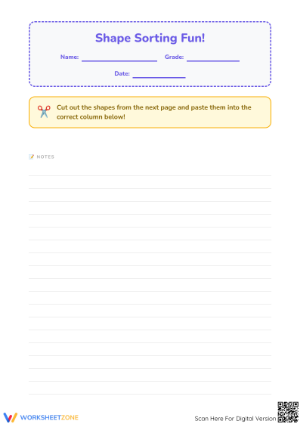
- Shape composition: Students combine two or more named shapes to produce a larger figure, then record which pieces they used and how they arranged them. Both open-ended combination tasks and target-specified builds are included.
- Partitioning into equal shares: Students draw lines to divide circles and rectangles into halves and fourths, label each share using grade-level vocabulary, and work through tasks that establish that more equal shares produces smaller shares — the conceptual bridge to 2nd-grade fraction work.
- Three-dimensional form recognition: Students match photographs of real-world objects to geometric names — a soup can to cylinder, a party hat to cone, a tissue box to rectangular prism — and identify one defining feature of each solid they name.
- Positional and spatial language: Students read short scene descriptions and mark which object is above, below, beside, in front of, or behind a stated reference point, building vocabulary that carries directly into reading comprehension alongside geometry.
Predictable Errors to Watch For as Students Work
The most reliable error in Grade 1 geometry is orientation confusion. A student who correctly names a triangle pointing up will frequently label the same shape rotated 90 degrees as "not a triangle" — or simply leave it blank. This happens because young learners default to visual pattern-matching before they have internalized attribute analysis. The attribute worksheets counter that tendency directly by presenting each shape in four or five orientations on the same task. Students cannot match to a mental template; they have to check the number of sides and vertices every time.
Partitioning produces a different class of errors. Students draw a line through a circle, call it halves, and both shares look plausible at a glance — but one is slightly larger than the other. The paper format is useful precisely here because you can see the angle of the line. The harder case is the student who is 10 or 15 degrees off: the shares look nearly equal on the printed page. That is the moment to have the student fold the worksheet along their drawn line and observe whether the two halves align. Most students recognize the mismatch immediately and self-correct — a more durable outcome than being told the answer is wrong.
A third error cluster: students treat size and color as defining attributes. A child whose exposure has been limited to large, primary-colored classroom displays will sometimes sort a small, gray hexagon into the "not a shape" category. One worksheet casts students as shape detectives who must rule on whether an unusual-looking figure still qualifies — a task structure that brings the misconception to the surface rather than working around it.
Standard Alignment
Within these geometry others printable worksheets for 1st grade, each of the three CCSS Grade 1 geometry standards has its own dedicated set of practice pages. 1.G.A.1 — distinguishing defining from non-defining attributes — is the most conceptually foundational, and its worksheets fit best after students have built basic shape vocabulary but before they move into composing figures, roughly mid-unit. 1.G.A.2 — composing two-dimensional and three-dimensional shapes — produces the most open-ended student work; these pages give teachers a written record of student reasoning that manipulative-only tasks do not. 1.G.A.3 — partitioning shapes into equal shares — is often under-resourced relative to its importance: this is where the concept of a fraction as an equal part of a whole first becomes explicit, and the worksheets sequence the move from halves to fourths across multiple sessions rather than compressing both into a single lesson.
Where These Worksheets Fit in Your Lesson Planning
The most productive use of these materials is as a consolidation step following hands-on exploration, not as the vehicle for first instruction. During a shape composition lesson, students might spend 15 minutes building figures with pattern blocks, then move directly to the corresponding worksheet while that physical work is still fresh. The paper task becomes a record of thinking — students commit what they built to the page and label the components — rather than an introduction to it. The sequence keeps cognitive load manageable by having students work through the novel challenge concretely before asking them to represent it abstractly.
The attribute-identification worksheets work well as a 5–8 minute warm-up at the start of a geometry lesson, spaced a day or two after initial instruction. Running the partitioning worksheets near the end of a lesson — after a class discussion about equal shares — gives you a same-day formative read on who internalized the concept before the next session. The 3D recognition worksheets, which depend less on prior discussion, hold up as independent station work once students have had one whole-group exposure to solid names and real-world examples.
How to Adapt These Worksheets for Mixed Readiness Levels
For students who need additional support with attribute analysis, a small reference card makes a significant difference: a printed strip showing each shape name beside a labeled diagram with arrows marking the sides and vertices. This removes the vocabulary-retrieval barrier without removing the geometric reasoning. Students still sort, draw, and analyze independently; they just are not stalled by forgetting what "vertex" means while they are in the middle of counting vertices.
For students who move through the work quickly, the composition worksheets become significantly more demanding with one added constraint: a fixed number of shapes. "Build a figure using exactly four triangles and one square" is a harder problem than "build a house using any shapes you like," and the follow-up prompt — "can you build a different figure using the same pieces?" — pushes students toward combinatorial reasoning rather than open-ended construction. For English language learners, the positional-language worksheets carry both mathematical and linguistic weight. These geometry others printable worksheets for 1st grade pair well with an illustrated vocabulary anchor chart posted during instruction; students reference the visual support during the task without losing the spatial-reasoning challenge the worksheet is built around.
Frequently Asked Questions
Do the worksheets assume prior shape vocabulary instruction?
The attribute and composition worksheets assume students can recognize and name circles, squares, rectangles, triangles, and hexagons from earlier instruction. Students arriving without that foundation will need a brief vocabulary introduction before the tasks are meaningful. The 3D recognition worksheets, which pair photographs of real-world objects with geometric names, tend to be accessible earlier in a unit because the visual anchor makes new vocabulary concrete immediately.
Is there a recommended sequence for using the worksheets?
Each worksheet is a standalone practice page, so teachers are not locked into a fixed order. That said, the natural instructional progression — attributes first, composition next, partitioning last — mirrors the conceptual flow in the standards. Teachers who follow that order will find each worksheet reinforces prior learning without repeating it.
Can these be used during math stations or small-group instruction?
Yes, with some setup adjustments. The attribute-sorting worksheets work especially well in partner structures where students discuss their reasoning before writing answers — the conversation surfaces misconceptions faster than silent independent work. Small-group use is most productive with the partitioning tasks, where you can watch for the slightly-off-center line errors described above and prompt students to fold the paper along their drawn line before committing an answer. The 3D recognition worksheets function as reliable independent station work once whole-group instruction on solid names has been completed.
Do these worksheets align with state geometry standards outside of Common Core?
The conceptual content — defining attributes, shape composition, and equal-share partitioning — appears in most state Grade 1 geometry frameworks regardless of whether the state uses Common Core coding. These geometry others printable worksheets for 1st grade are indexed to 1.G.A.1 through 1.G.A.3; teachers in non-CCSS states should cross-reference those descriptors against their own framework. The alignment is close in most cases, though specific vocabulary expectations — whether "trapezoid" appears explicitly at Grade 1, for instance — can vary by state.













 Interactive Worksheet Maker
 Quiz Maker
 Word Search Maker
 Crossword Puzzle Maker
 Word Scramble Generator
 Sentence Scramble Generator
 Handwriting Worksheet Generator
 Name Tracing Generator
 Fill In The Blank Generator