




























0
Views
0
Downloads

0.0
0
Save
0 Likes
Share
Explore the Construction Scene
0 Views
0 Downloads

Paste this activity's link or code into your existing LMS (Google Classroom, Canvas, Teams, Schoology, Moodle, etc.).
Students can open and work on the activity right away, with no student login required.
You'll still be able to track student progress and results from your teacher account.
Information
Description
What It Is:
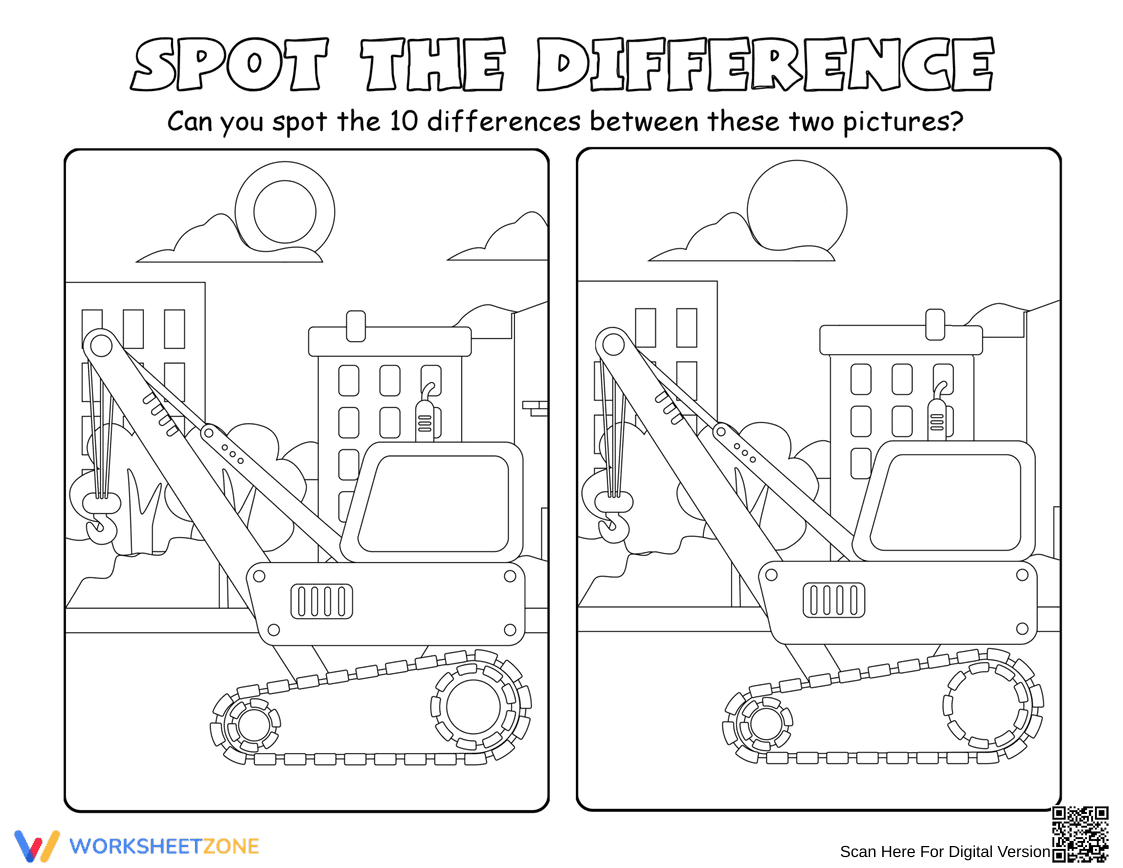
This is a 'Spot the Difference' worksheet featuring two nearly identical pictures of a construction crane in a city setting. The objective is to find the 10 differences between the two images. The crane is detailed, and the background includes buildings, clouds, and a sun.
Grade Level Suitability:
Suitable for Preschool, Kindergarten, and possibly 1st grade. The activity requires visual discrimination skills and attention to detail, which are developing at these ages. The subject matter (construction equipment) may also appeal to younger children.
Why Use It:
This worksheet helps improve visual perception skills, concentration, and attention to detail. It also encourages problem-solving and can be a fun way to practice observation skills.
How to Use It:
Provide the worksheet and a pencil or crayon. Instruct the child to carefully compare the two pictures and circle or mark each of the 10 differences they find.
Target Users:
Preschoolers, kindergarteners, and first graders who are developing visual discrimination and observation skills. Can also be used for children who enjoy puzzles and spotting differences.
This is a 'Spot the Difference' worksheet featuring two nearly identical pictures of a construction crane in a city setting. The objective is to find the 10 differences between the two images. The crane is detailed, and the background includes buildings, clouds, and a sun.
Grade Level Suitability:
Suitable for Preschool, Kindergarten, and possibly 1st grade. The activity requires visual discrimination skills and attention to detail, which are developing at these ages. The subject matter (construction equipment) may also appeal to younger children.
Why Use It:
This worksheet helps improve visual perception skills, concentration, and attention to detail. It also encourages problem-solving and can be a fun way to practice observation skills.
How to Use It:
Provide the worksheet and a pencil or crayon. Instruct the child to carefully compare the two pictures and circle or mark each of the 10 differences they find.
Target Users:
Preschoolers, kindergarteners, and first graders who are developing visual discrimination and observation skills. Can also be used for children who enjoy puzzles and spotting differences.


