These 1st grade time to the hour printable worksheets give first graders structured, visual practice reading analog clock faces and connecting each hour position to its digital equivalent. The set addresses the core skill in CCSS 1.MD.B.3 — identifying the hour and minute hands and recording time in both formats — before students encounter the more disorienting territory of half-hours. Each worksheet isolates a discrete piece of that skill so teachers can see exactly where a student's understanding breaks down.
What Each Worksheet Targets
The exercises in this set approach telling time from multiple angles, which matters because students can memorize one format while remaining confused by another. Specific tasks across the worksheets include:
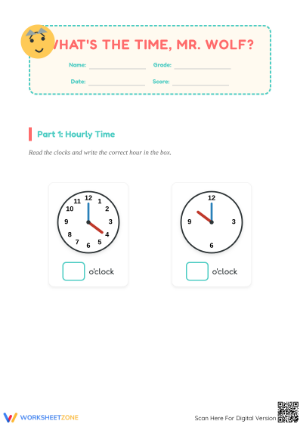
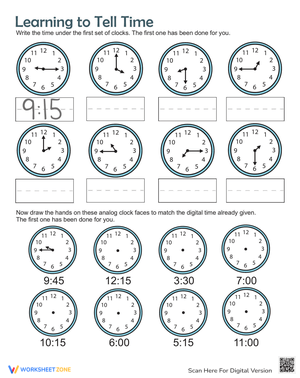
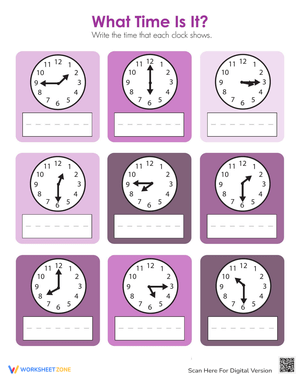
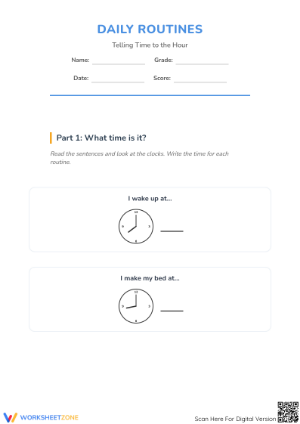
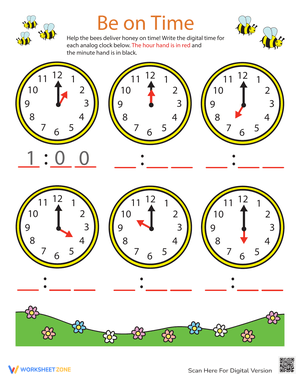
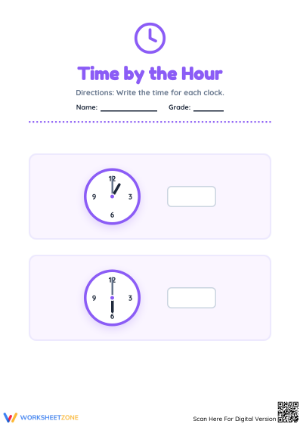
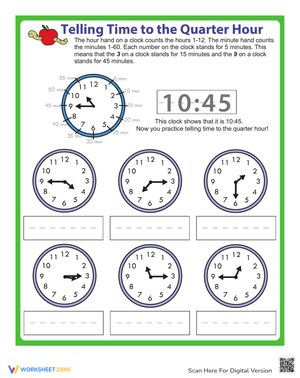
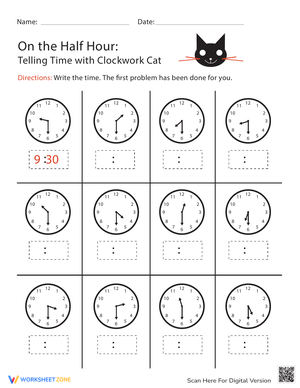
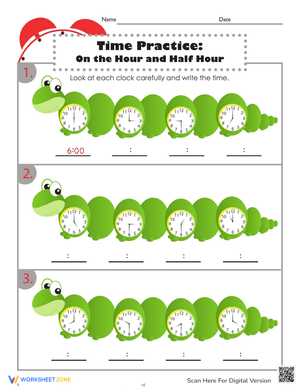
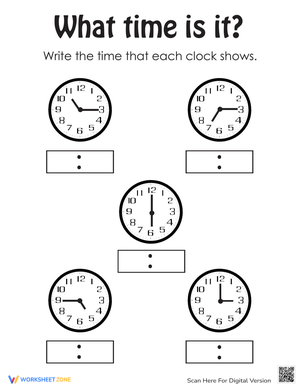
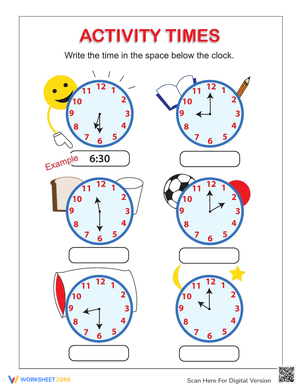
- Reading a drawn analog clock and writing the corresponding digital time (e.g., 7:00)
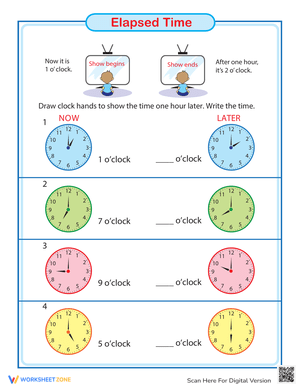
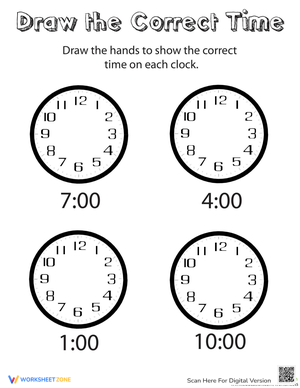
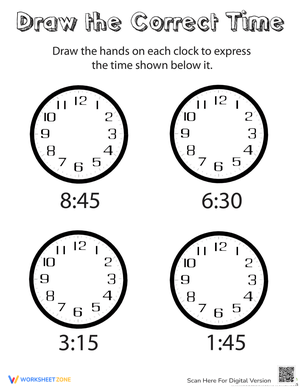
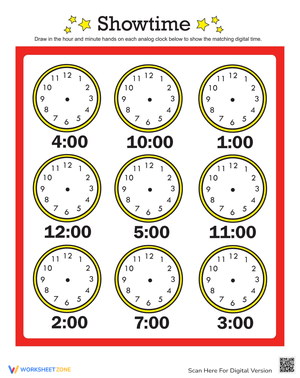
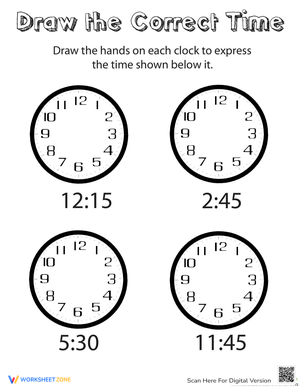
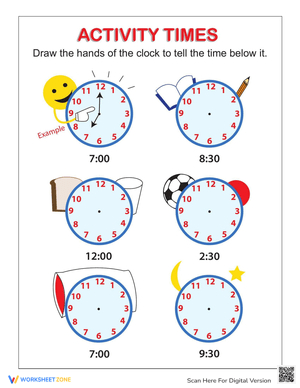
- Drawing the hour and minute hands on a blank clock face for a given digital time
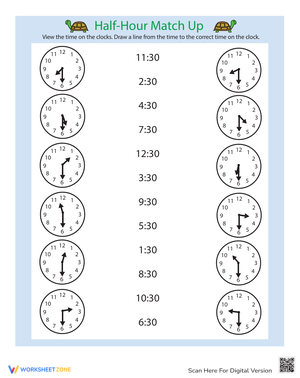
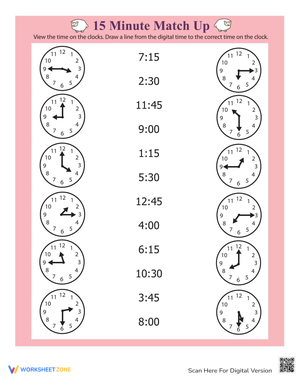
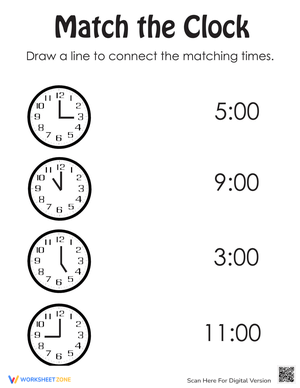
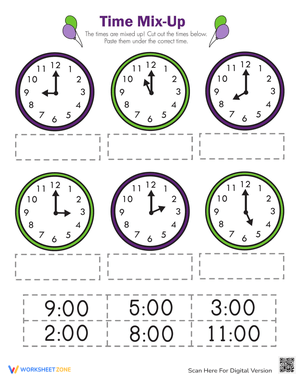
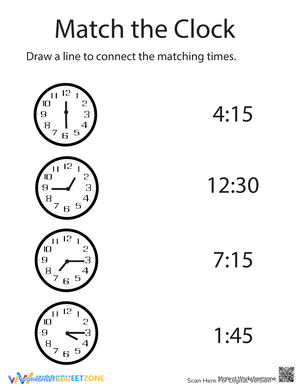
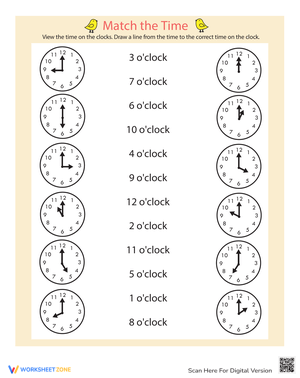
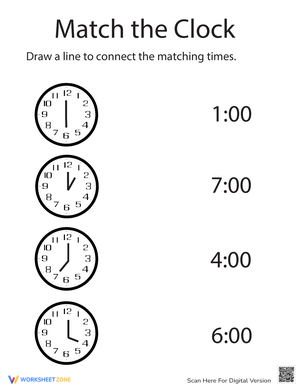
- Matching a column of analog clock images to their digital counterparts by drawing connecting lines
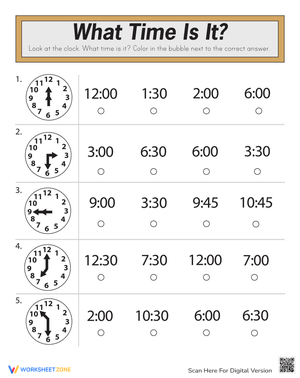
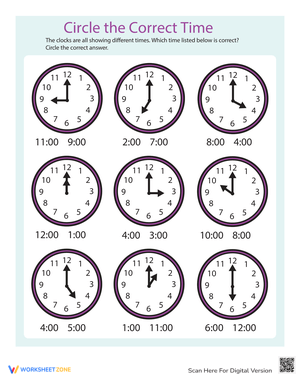
- Circling the correct time from three answer choices after reading an analog display
- Completing a daily routine sequence by placing times in order from morning to evening
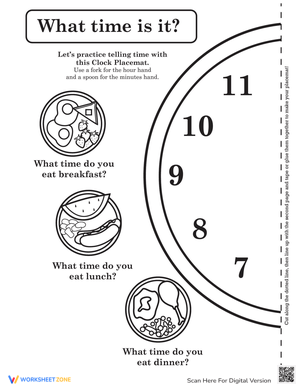
The daily routine exercise deserves specific mention. When students connect 8:00 to "getting on the bus" or 12:00 to "eating lunch," they stop treating the clock as an abstract symbol system and start treating it as genuinely useful information. That shift in orientation sticks better than repetitive drills alone.
Common Student Errors Teachers Should Watch For and Address
The most persistent error in this unit isn't the one teachers expect. Most students quickly learn which hand is short and which is long. The harder problem is what happens when the hour hand sits just past a number — say, slightly past the 3 and drifting toward the 4. Students reliably read that as 4 o'clock, not 3 o'clock, because the hand appears to be "moving away" from the 3. This error won't surface on a worksheet that only shows hands positioned directly on a number, so make sure at least some clock images show the hour hand a bit past its target.
A second error appears on drawing tasks: students draw both hands the same length. They know the hour hand points in the correct direction, but they draw it as long as the minute hand because they're focused on direction rather than proportion. Having students use two colored pencils — red for the short hour hand, blue for the long minute hand — eliminates most of this confusion fast. A teacher can scan the room in seconds and identify any student who drew a red hand reaching all the way to the edge of the clock face.
A third, quieter error: when writing digital time, many first graders write 3:0 instead of 3:00. They understand the concept but drop the trailing zero because it feels redundant. Address this explicitly before it becomes a habit — a brief class discussion about what the two zeros actually represent ("zero minutes past the hour") usually resolves it.
Standard Alignment
CCSS.MATH.CONTENT.1.MD.B.3 requires students to tell and write time in hours and half-hours using both analog and digital clocks. In classroom terms, this standard typically arrives mid-year, after students have had sustained work with number order and counting to 12. The hour-only portion of 1.MD.B.3 must come first — teachers who introduce half-hours before students can reliably read full hours find that the half-hour creates real confusion about the hour hand's position, because at the half-hour mark the hour hand sits between two numbers rather than directly on one. These worksheets address the hour-only portion of the standard deliberately, giving students a stable foundation before that complexity enters the picture.
Building These Worksheets Into Your Lesson Plans
Morning work is the strongest placement for this skill. Two or three clock-reading problems as students settle in creates the daily repetition that consolidates recognition — the same way sight word practice works best in short, frequent doses rather than long weekly sessions. Spaced retrieval over several weeks outperforms a concentrated two-day unit, and morning warm-ups make that spacing automatic without requiring any additional planning.
Math center rotations are a natural fit for the hand-drawing worksheets. Laminate a few of them and supply dry-erase markers so students reuse the same worksheet across multiple rotations without burning through paper. One center pairing that works especially well: place a geared learning clock at the station alongside the worksheet so students set the physical clock first, then record what they see. The act of moving real hands helps students who freeze when facing a static image on paper.
These 1st grade time to the hour printable worksheets also work as a quick exit ticket in the final five minutes of a math lesson. A single clock image with a blank line for the digital time tells you immediately whether a student understood the day's concept. Stack those exit tickets in a folder and you have running documentation of each child's progress without building a separate assessment system.
Adapting the Set for Mixed-Readiness Classrooms
Students who are still solidifying number recognition to 12 benefit from starting with the matching exercises, where they can rely on visual pattern recognition — the position of the hands — rather than numeral recall. For those students, keep the numbers printed on the clock face. Removing the numbers from the clock face is a reasonable challenge for students who have already mastered reading with the numbers present, since it forces them to rely on hand position alone.
For students who move through the set quickly, add a written component: after reading each clock, they write what they might reasonably be doing at that time of day. This pushes them toward the real-world application that 1st grade time to the hour printable worksheets exist to develop — rather than re-drilling a skill they've already secured.
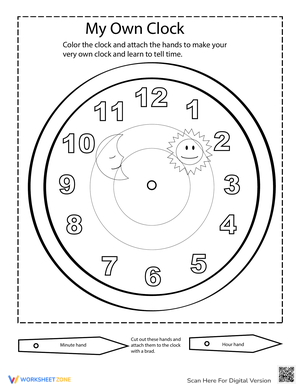
Students with fine motor challenges sometimes struggle disproportionately on the hand-drawing tasks, not because they misunderstand time but because placing a short line precisely inside a small clock face is physically demanding. For these students, offer larger clock templates or substitute a cut-and-paste format where they attach pre-drawn hands rather than drawing freehand. The underlying cognitive task stays the same; only the motor demand changes.
Frequently Asked Questions
How often should students practice with these worksheets each week?
Three to four short sessions per week outperforms a single long block. One worksheet used as morning work or a warm-up keeps the skill active without dominating instructional time. Students who practice in brief daily sessions for two to three weeks almost always outperform students who completed twice as many problems in a concentrated unit — the spacing itself does meaningful work.
How do I know when a student is ready to move on to half-hours?
The reliable signal is whether a student draws hands accurately on a blank clock face for any hour from 1 through 12 — not just the easy anchors like 12:00 or 3:00. If a student hesitates on 7:00 or 9:00, they aren't ready for half-hours. Rushing that transition is one of the most common pacing errors in this unit. The 1st grade time to the hour printable worksheets in this set include enough variety of hour positions that a teacher can use them as a quick readiness check before introducing 1.MD.B.3's second half.
What's the most effective way to help students distinguish the two hands?
The word-length mnemonic works reliably: hour is a short word, so the hour hand is short; minute is a longer word, so the minute hand is long. Reinforce it by having students say the pairing aloud while pointing — not just hear it once. More durable than the mnemonic, though, is color-coding. When students always draw the hour hand in one specific color, the association between "short, red hand = hours" becomes automatic far faster than verbal reminders alone achieve.
What should I do when a student understands digital clocks but struggles with analog?
Start that student on the matching exercises where digital times are already printed. They read the digital side with confidence and study the analog clock face for the same time. This builds analog recognition through a format the student already trusts rather than requiring them to decode an unfamiliar representation from the beginning. Most students make the analog-to-digital transfer within a week once that bridge is established.













 Interactive Worksheet Maker
 Quiz Maker
 Word Search Maker
 Crossword Puzzle Maker
 Word Scramble Generator
 Sentence Scramble Generator
 Handwriting Worksheet Generator
 Name Tracing Generator
 Fill In The Blank Generator