


























Views
Downloads

Printable Convert the Dates Worksheet | Grade 1 & 2 Math
Paste this activity's link or code into your existing LMS (Google Classroom, Canvas, Teams, Schoology, Moodle, etc.).
Students can open and work on the activity right away, with no student login required.
You'll still be able to track student progress and results from your teacher account.
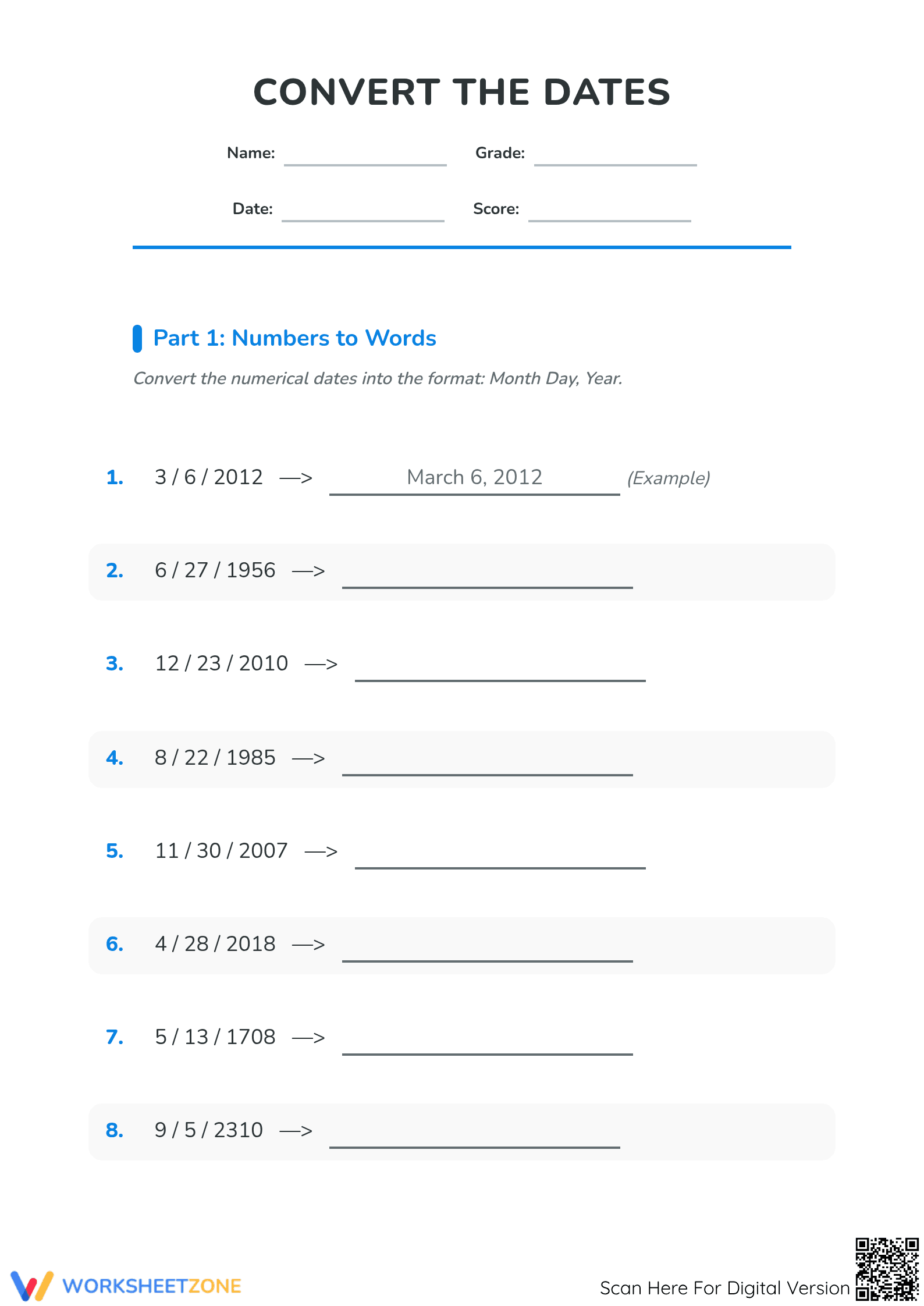
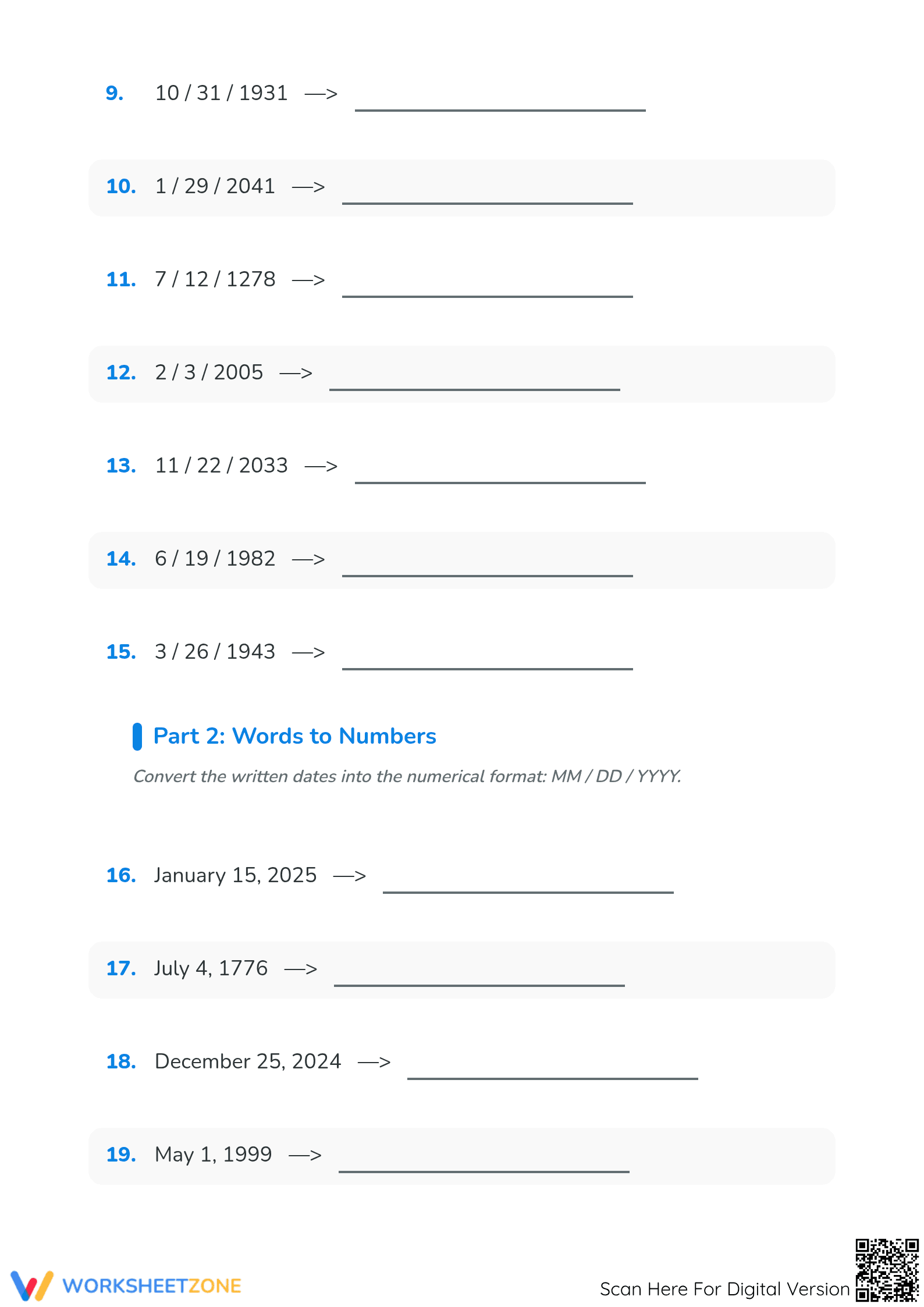
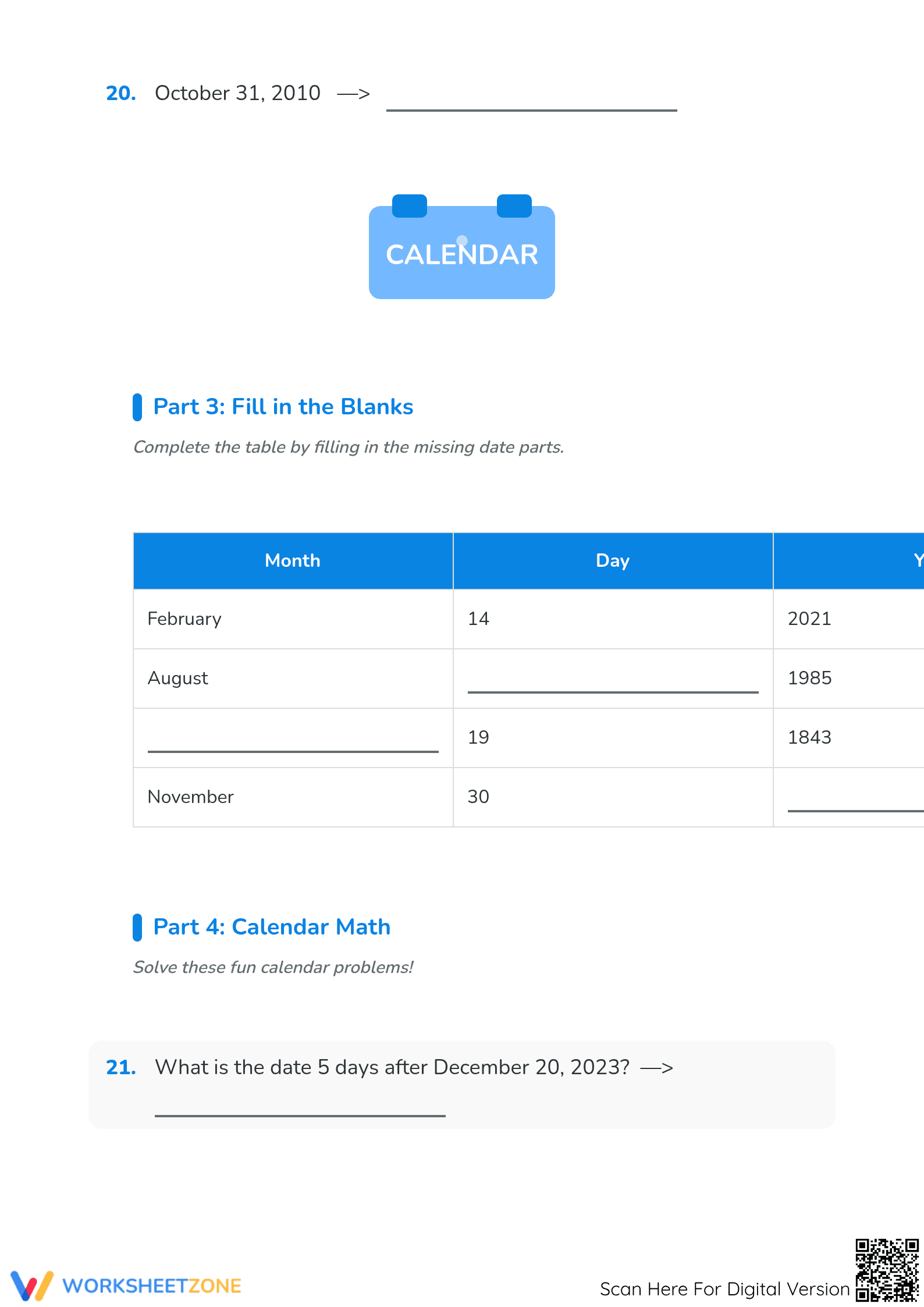
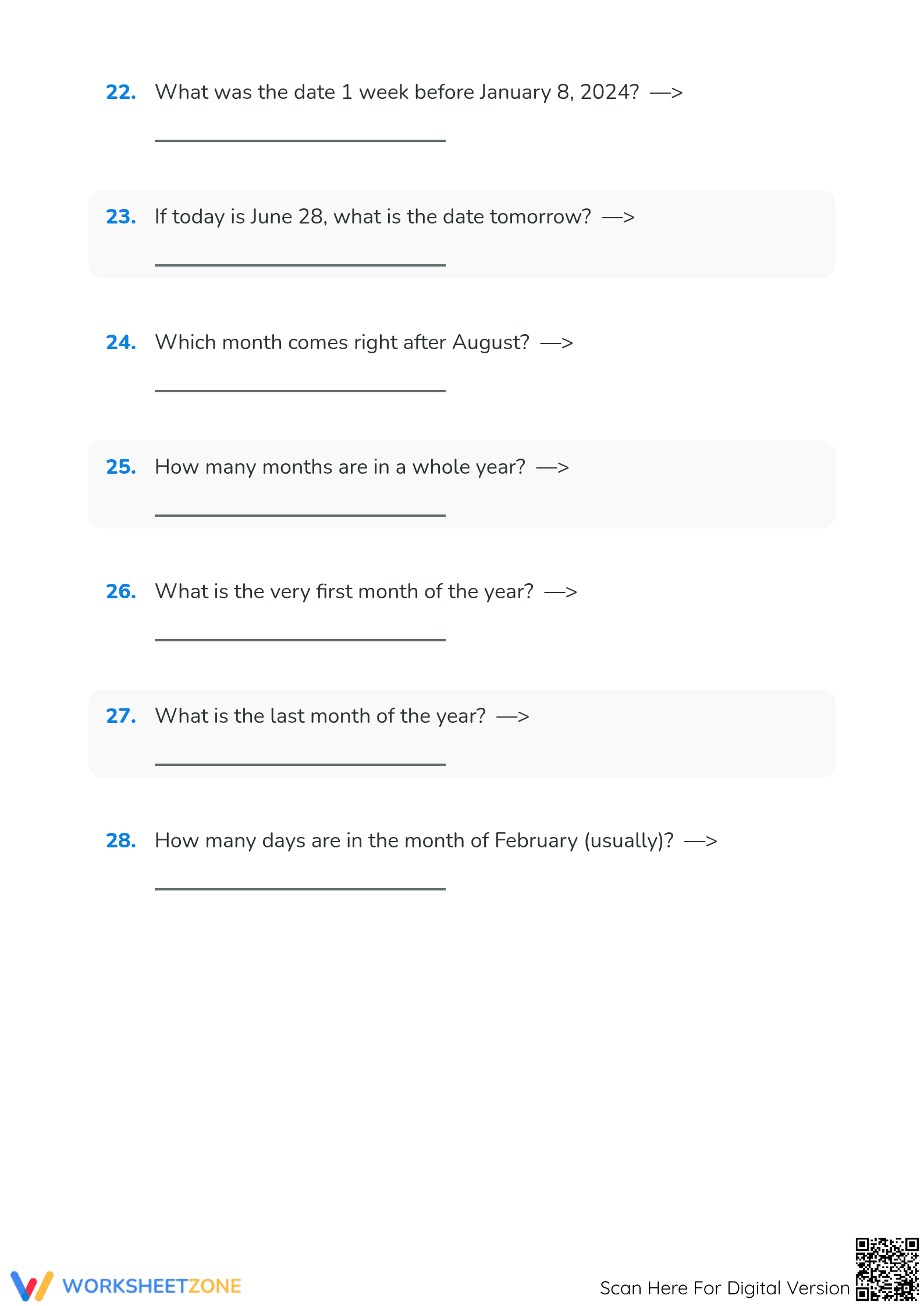
Master the art of reading and writing dates with this comprehensive 4-page worksheet. Designed for Grade 1 and Grade 2 students, this resource focuses on the essential skill of converting numerical dates into word format and back again. Students develop accuracy and confidence through structured practice that bridges numerical literacy with formal writing standards.
At a Glance
- Grade: 1–2 · Subject: Math
- Standard:
CCSS.MATH.CONTENT.2.MD.C.7— Tell and write time and dates using standard notation and words- Skill Focus: Calendar date conversion and logic
- Format: 4 pages · 28 problems · Answer key included · PDF
- Best For: Daily math warm-ups or assessment
- Time: 20–35 minutes
This high-quality PDF packet contains four distinct sections across four pages. Part 1 features 15 exercises for converting numerical strings to full Month-Day-Year words. Part 2 reverses the challenge with word-to-number conversion. Part 3 utilizes a structured table for missing date components, while Part 4 offers 8 calendar math word problems to test logical reasoning. A full answer key ensures immediate feedback.
Teachers can implement this resource in three easy steps. First, print the 4-page PDF packet (approx. 10 seconds). Second, distribute to students with no additional teacher modeling required thanks to the built-in examples (approx. 30 seconds). Third, review using the included answer key (approx. 60 seconds). Total teacher prep time is under two minutes, making it an ideal choice for busy classrooms or sub plans.
Standards Alignment
The primary alignment is CCSS.MATH.CONTENT.2.MD.C.7, which requires students to tell and write time from analog and digital clocks, often extended in local curricula to include reading and writing calendar dates. This worksheet ensures students can write the dates correctly as specified in common primary education goals. This standard code can be copied directly into lesson plans or district curriculum mapping tools.
How to Use It
Use this packet during the "You Do" phase of a measurement lesson to verify independent mastery of calendar formats. It also serves as an excellent formative assessment tool; observe if students struggle with the transition from zero-padded months to single digits. Completion usually takes 20 to 35 minutes depending on the grade level and student familiarity with month names.
Who It's For
This resource is tailored for first and second-grade students who are learning the mechanics of formal writing and measurement. It is particularly effective for students requiring extra repetition or for English Language Learners (ELL) who need to practice month-name spelling. It pairs naturally with a classroom calendar chart or a daily morning meeting routine.
Research highlights that consistent practice with calendar math and date notation significantly improves a child's understanding of temporal sequences and numerical relationships. According to a ScienceDirect TpT Analysis (2024), structured worksheets that provide immediate feedback through answer keys and repetitive conversion tasks help solidify the transition between abstract numerical data and concrete linguistic representations. Mastering the CCSS.MATH.CONTENT.2.MD.C.7 standard through these 28 targeted problems allows students to internalize the formatting conventions of the Gregorian calendar, a prerequisite for more advanced historical and scientific data interpretation. By engaging in both word-to-number and number-to-word conversions, learners build cognitive flexibility. This worksheet provides the essential repetitions needed to move from guided instruction to independent fluency in date notation, ensuring that primary-grade students are prepared for more complex chronological tasks in later academic years.


