


























Views
Downloads

Printable Reading Dates Worksheet | Grade 1 Math
Paste this activity's link or code into your existing LMS (Google Classroom, Canvas, Teams, Schoology, Moodle, etc.).
Students can open and work on the activity right away, with no student login required.
You'll still be able to track student progress and results from your teacher account.
This essential worksheet helps first-grade students master the skill of reading and writing calendar dates. Through a series of clear and structured fill-in-the-blank problems, learners will build confidence in identifying the month, day, and year from a standard calendar, a foundational skill for understanding time and data.
At a Glance
- Grade: 1 · Subject: Math
- Standard:
CCSS.MATH.CONTENT.1.MD.C.4— Organize and interpret data about time using a calendar.- Skill Focus: Reading and Writing Calendar Dates
- Format: 3 pages · 8 problems · Answer key included · PDF
- Best For: Independent practice, morning work, or math centers
- Time: 15–20 minutes
What's Inside
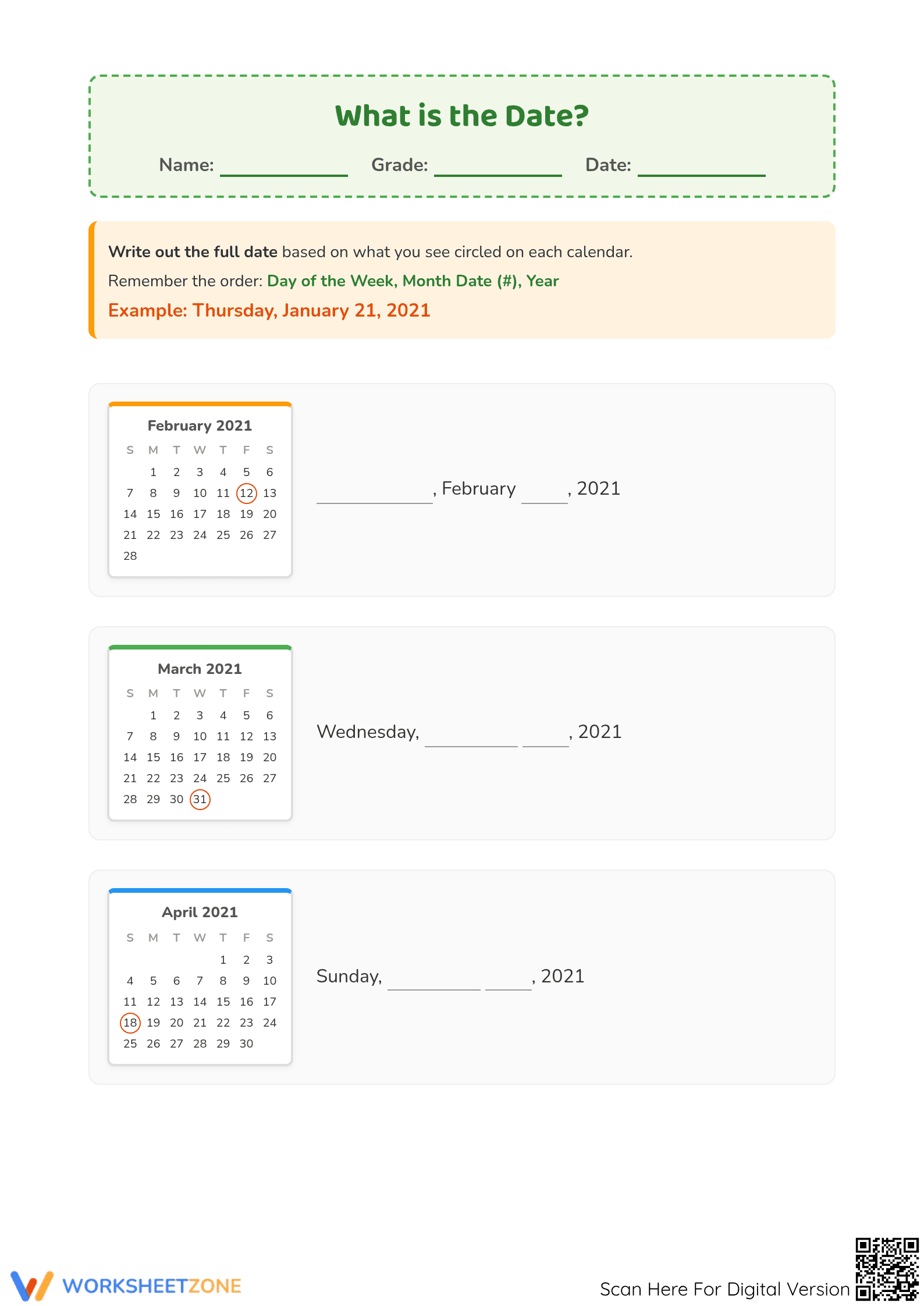
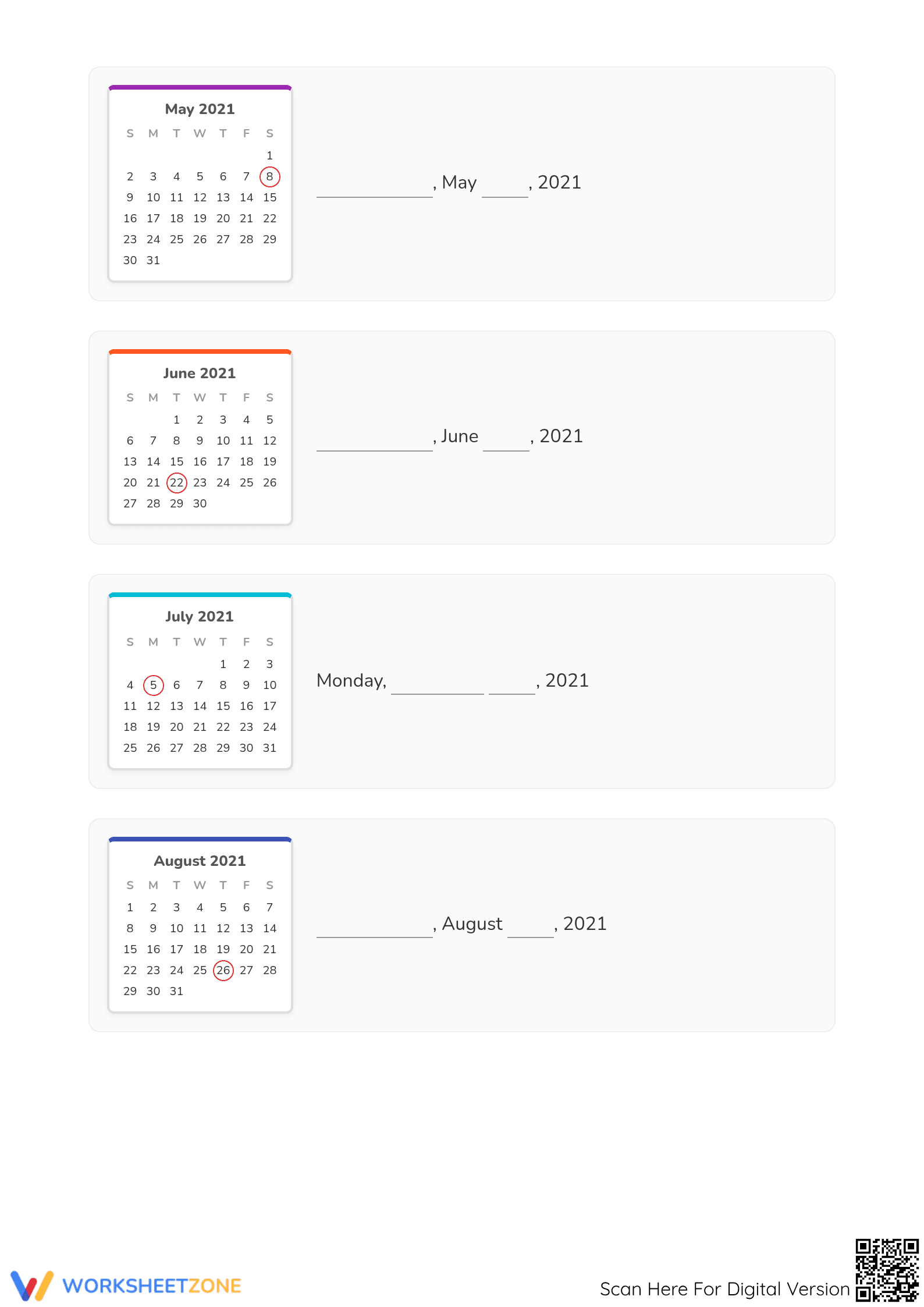
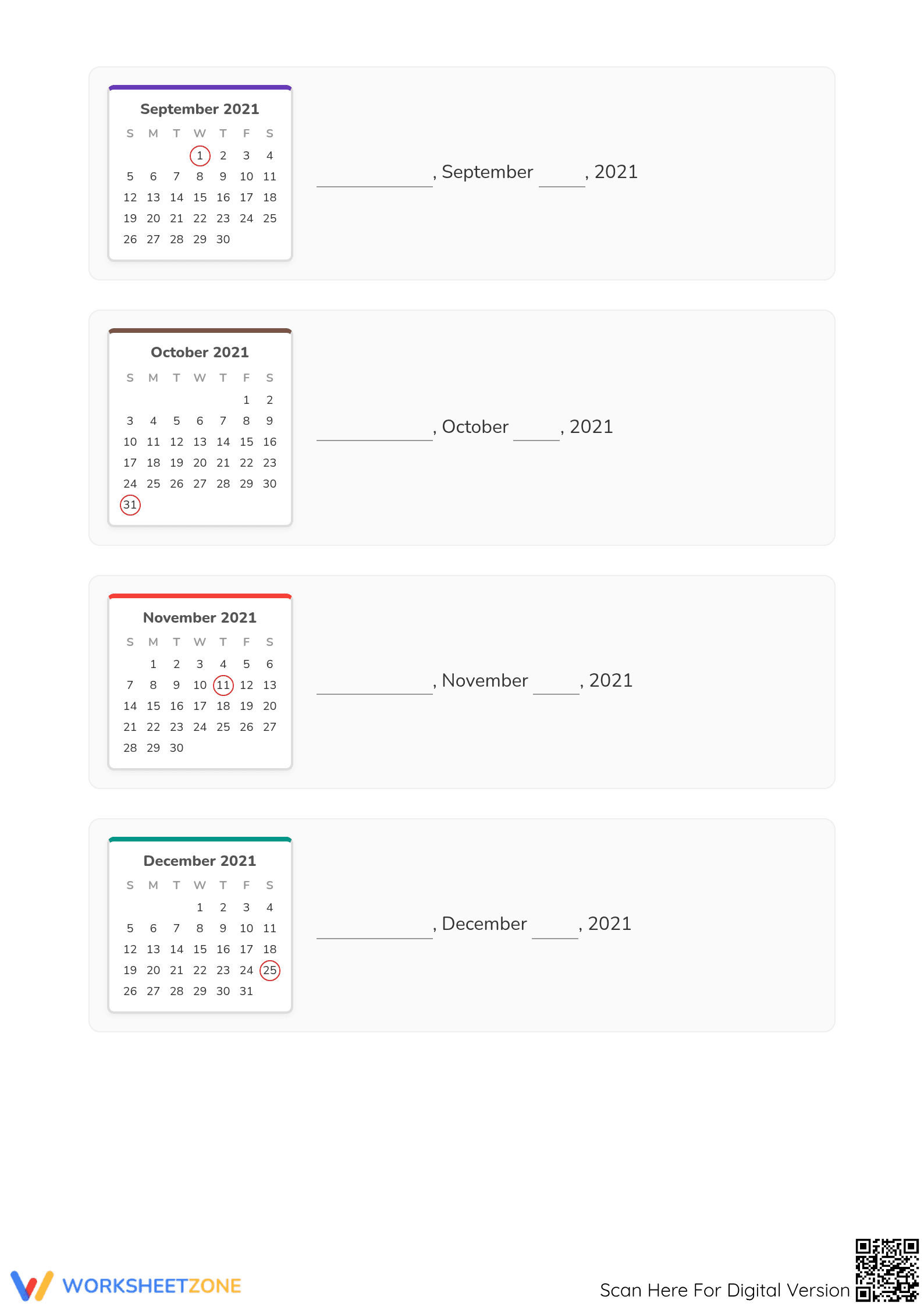
This resource includes two pages of student activities and a complete one-page answer key for easy grading. Each page presents four calendar-based problems. Students are shown a calendar month with a date circled and are tasked with writing the full date in a sentence frame provided. This straightforward format allows students to focus entirely on the skill of translating calendar information into written form.
Skill Progression
The worksheet is designed to follow a gradual-release model, supporting students as they move toward independence.
- Guided practice: The first few problems (1-2) act as a clear introduction, where the teacher can model how to locate the month, date, and day from the calendar image.
- Supported practice: The next set of problems (3-6) allows students to work with a partner or with teacher support, reinforcing the process of constructing a full date sentence.
- Independent practice: The final problems (7-8) provide an opportunity for students to demonstrate their understanding on their own, serving as a quick formative assessment.
Standards Alignment
This worksheet is directly aligned with the foundational principles of early elementary data and measurement standards. The primary standard addressed is CCSS.MATH.CONTENT.1.MD.C.4, which focuses on having students organize, represent, and interpret data. By reading and transcribing date information from a calendar, students are engaging in a key form of data interpretation. This activity also supports precursor skills for telling and writing time. Both standard codes can be copied directly into lesson plans, IEP goals, or district curriculum mapping tools.
How to Use It
This versatile worksheet is perfect for a variety of classroom moments. Use it as a morning work activity after a lesson on calendars to reinforce the concept. It also serves as an effective independent practice station during math centers. For a formative assessment, observe which part of the date (month, number, day of the week) gives students the most trouble. This resource is designed to be completed in a single 15 to 20-minute session.
Who It's For
This worksheet is designed for first-grade students who are learning about the calendar for the first time. It is also suitable for second graders needing a review or kindergarteners ready for a challenge. The clear visuals and repetitive structure make it accessible for diverse learners, including English Language Learners. Pair this activity with a daily classroom calendar routine to build strong real-world connections.
Developing proficiency in reading and representing data is a critical early math skill. This worksheet supports standard CCSS.MATH.CONTENT.1.MD.C.4 by asking students to interpret and transcribe calendar dates, a foundational data-handling task. Repeated, structured practice on discrete skills leads to greater retention and fluency. This resource offers 8 opportunities for students to practice translating a visual data model (the calendar) into a standard written format, building automaticity with a skill essential for understanding schedules, timelines, and other data representations in later grades.


