




























Views
Downloads



Time by the Hour Worksheet: Grade 1 Essential Practice

Paste this activity's link or code into your existing LMS (Google Classroom, Canvas, Teams, Schoology, Moodle, etc.).
Students can open and work on the activity right away, with no student login required.
You'll still be able to track student progress and results from your teacher account.
Mastering the concept of telling time to the hour is a foundational milestone for early learners. This comprehensive worksheet provides structured practice for students to identify, write, and draw times on analog and digital clocks, ensuring they develop a solid grasp of temporal intervals and daily schedules.
At a Glance
- Grade: 1 · Subject: Math
- Standard:
CCSS.MATH.CONTENT.1.MD.B.3— Tell and write time in hours and half-hours using analog and digital clocks- Skill Focus: Telling time to the hour
- Format: 5 pages · 12 problems · Answer key included · PDF
- Best For: Early elementary time-telling introductory practice
- Time: 15–20 minutes
What's Inside
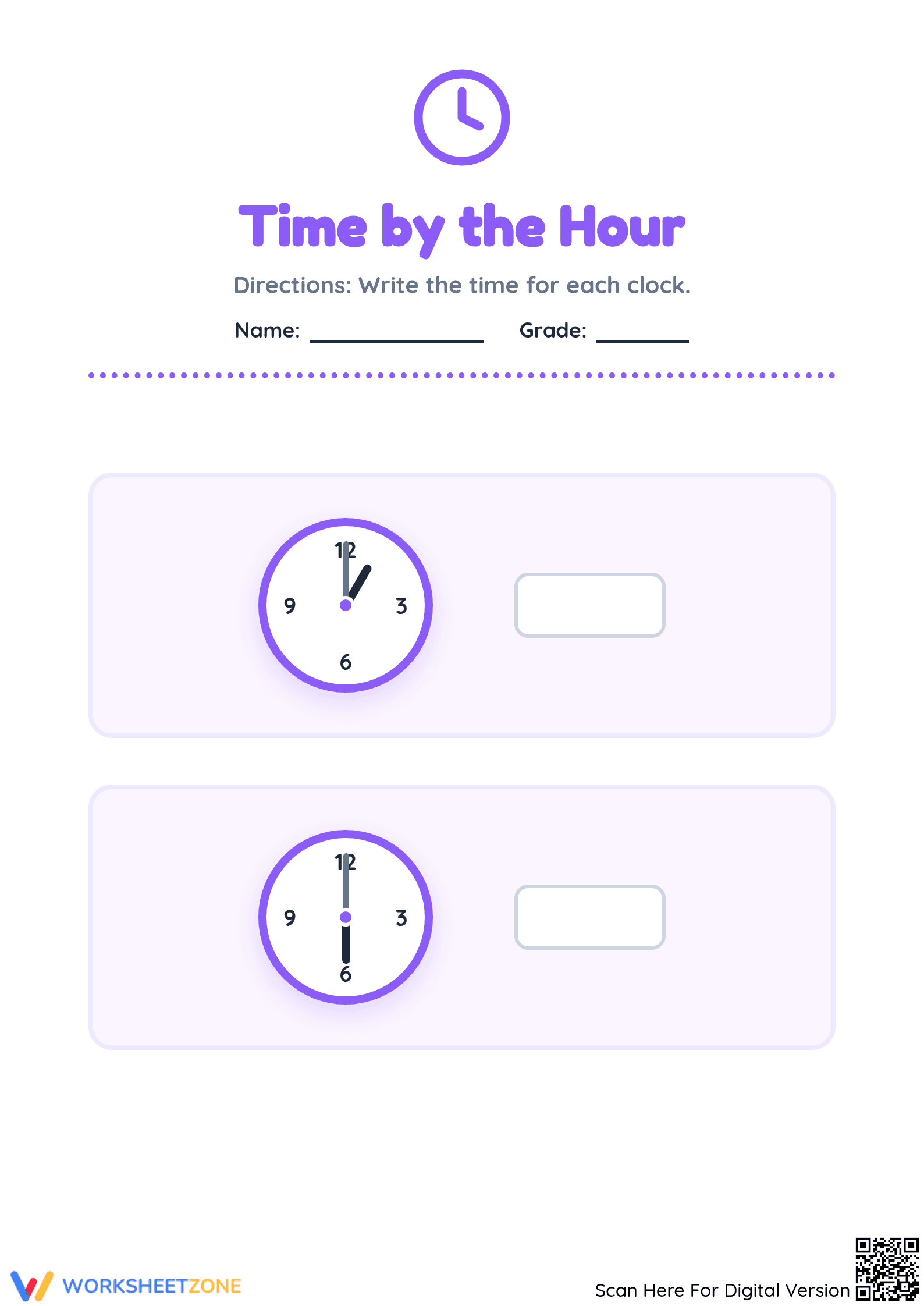
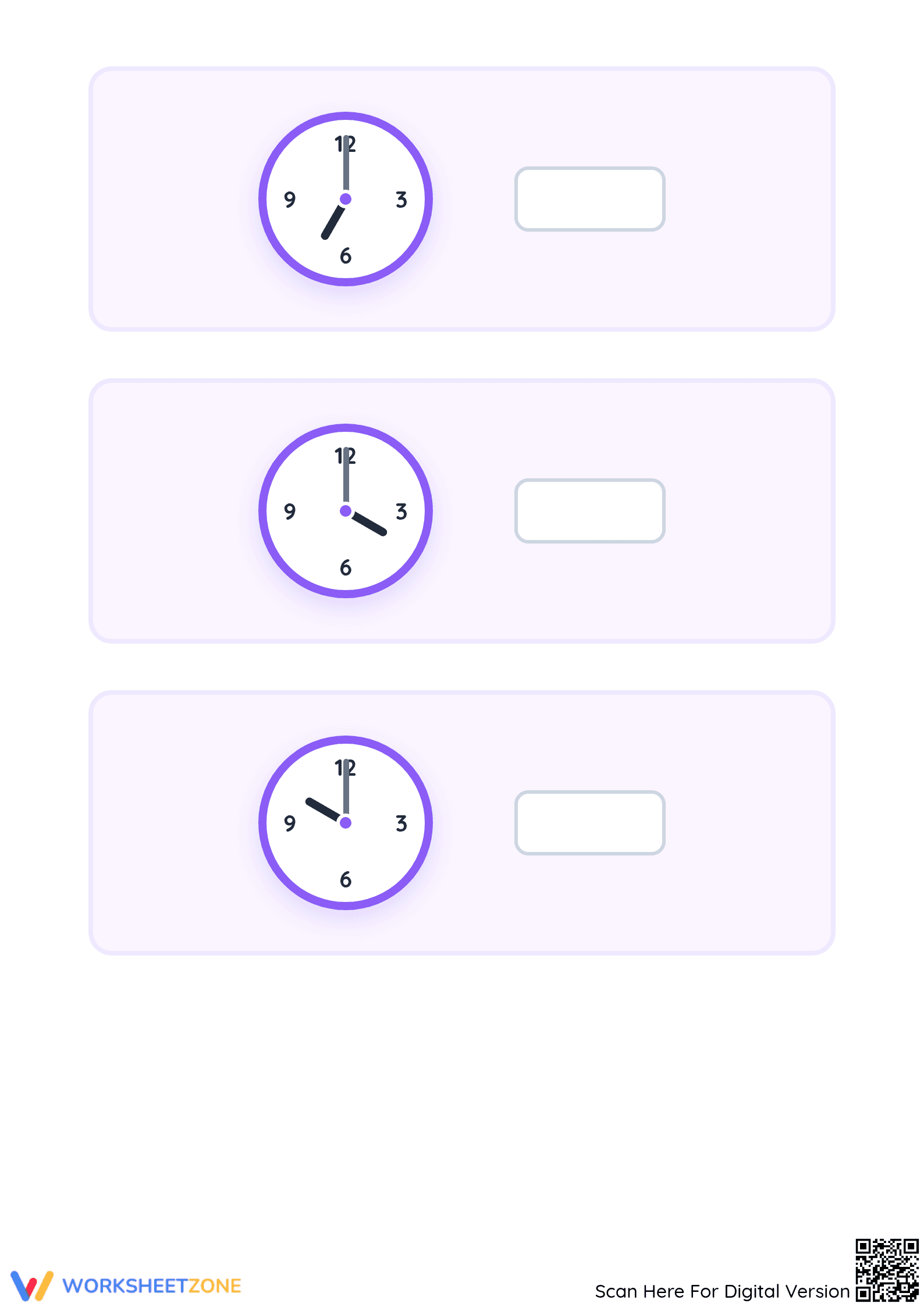
This five-page practice set features ten high-contrast analog clock faces where students must write the corresponding digital time in provided boxes. The final section requires students to read a digital timestamp and draw the hour and minute hands on blank clock faces. This variety ensures students can both decode and encode temporal data. A full answer key is included.
Zero-Prep Workflow
The Zero-Prep Workflow is designed for maximum efficiency. First, print the document (approximately 30 seconds for a full class set). Second, distribute the worksheets during your math block (under 1 minute). Finally, review the completed work using the included answer key (2 minutes). Total teacher preparation time remains under two minutes, making it ideal for substitute folders or morning work routines.
Standards Alignment
Primary alignment is to CCSS.MATH.CONTENT.1.MD.B.3: "Tell and write time in hours and half-hours using analog and digital clocks." This resource focuses specifically on the hourly portion of the standard, providing the prerequisite mastery needed before introducing half-hour increments. Both standard codes can be copied directly into lesson plans, IEP goals, or district curriculum mapping tools.
How to Use It
Use this worksheet as an independent practice session immediately following a direct instruction lesson on clock components. Alternatively, utilize the first two pages as a "do-now" activity to activate prior knowledge. Educators should observe students during the drawing section to ensure they distinguish between the lengths of the hour and minute hands. Expect completion within 15 to 20 minutes for most Grade 1 students.
Who It's For
This resource is tailored for Grade 1 students, though it is highly effective for Kindergarteners ready for advanced concepts or Preschool learners exploring daily routines. It pairs naturally with classroom clock manipulatives or primary math passages. For differentiation, allow students to model times physically before writing. This hands-on approach supports visual and tactile learners effectively.
According to the NAEP framework, early exposure to measurement concepts like telling time is critical for mathematical fluency. This worksheet addresses CCSS.MATH.CONTENT.1.MD.B.3 by requiring students to translate between analog and digital representations, a skill Fisher & Frey (2014) identify as essential for scaffolded learning in the primary grades. By focusing on "on the hour" increments, the resource reduces cognitive load, allowing students to focus on the orientation of the clock hands. EdReports 2024 evaluations emphasize that high-quality practice materials must provide clear visual cues and balanced task variety to be effective. This worksheet delivers twelve distinct opportunities for students to prove mastery, ensuring they are prepared for complex half-hour and quarter-hour intervals. The clear layout and repetitive practice structure align with evidence-based instructional design for early learners, providing a robust foundation for future time-telling skills and temporal reasoning.


