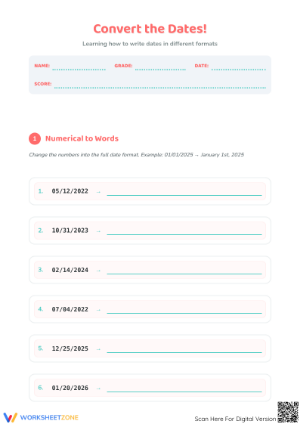
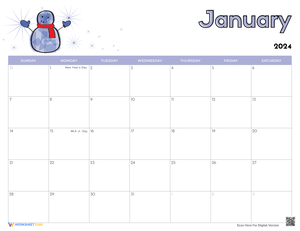
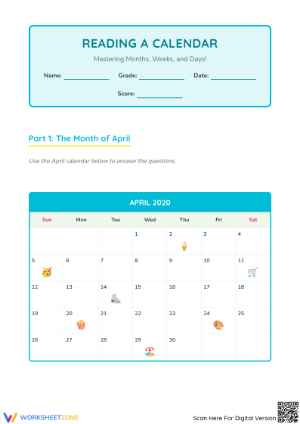
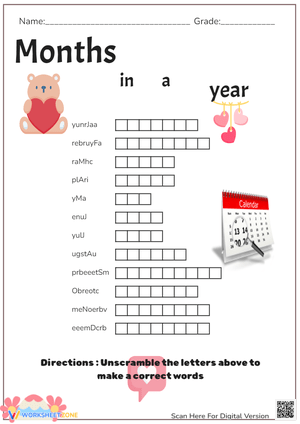
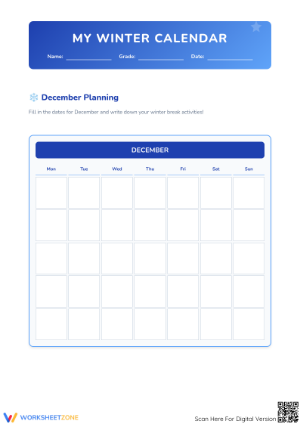
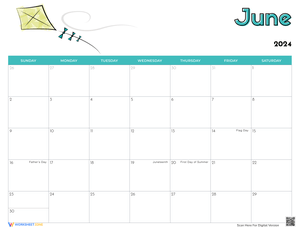
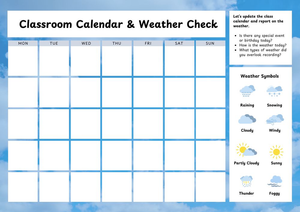
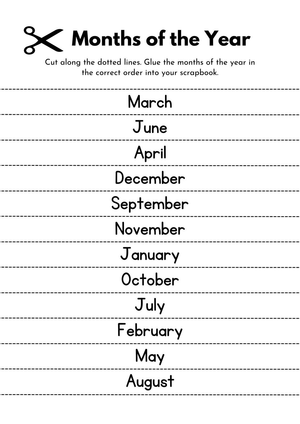
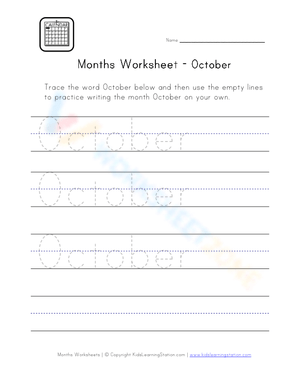
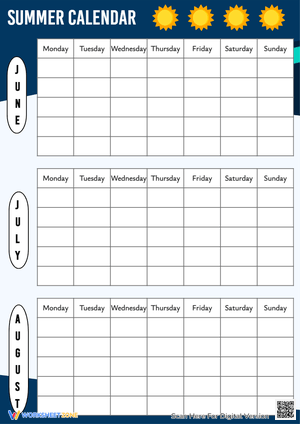
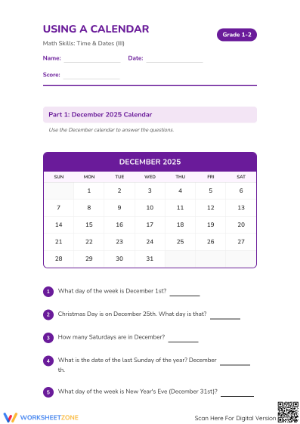
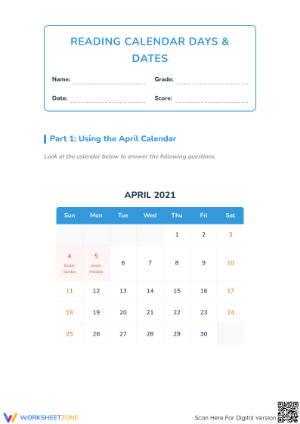
These days weeks and months on a calendar worksheets for 1st grade give teachers a ready-made collection of standalone activities that move students from reciting the days in order to reading a real month-view grid, locating specific dates, and reasoning about time across week and month boundaries. Each worksheet targets one focused skill — sequencing months, applying yesterday-today-tomorrow logic, or counting days within a given week — so students build understanding one layer at a time rather than facing an undifferentiated mix of concepts at once. The set sustains several weeks of daily calendar practice without repetition.
What's Inside the Set
The worksheets cover the full scope of first-grade calendar literacy. Skills addressed include:
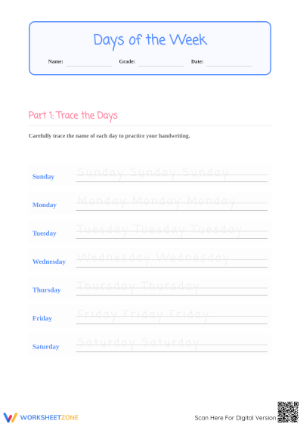
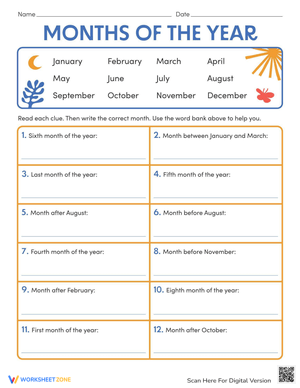
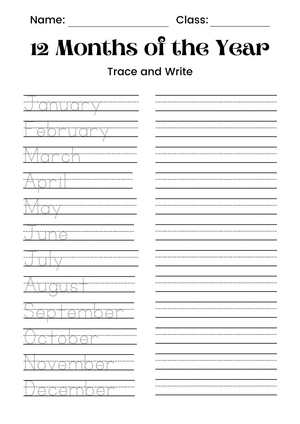
- Sequencing the seven days and twelve months in correct order, through cut-and-paste tasks and fill-in-the-blank prompts
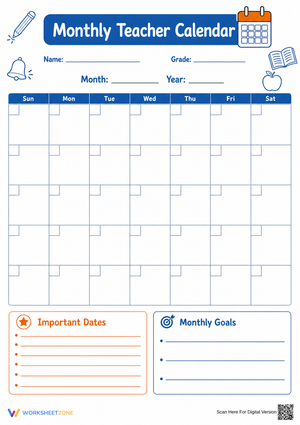
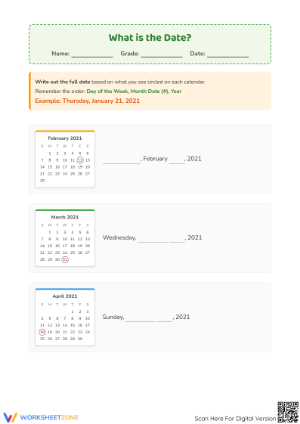
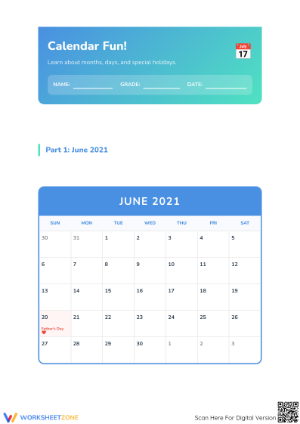
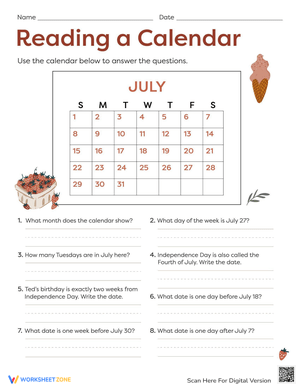
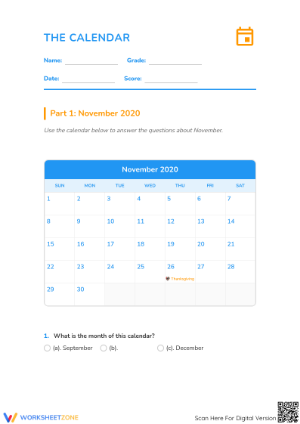
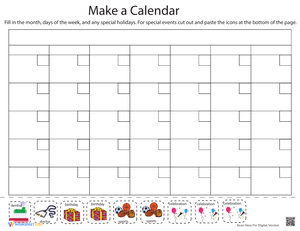
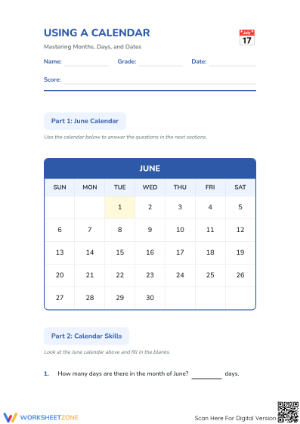
- Reading a month-view calendar grid — identifying which day of the week a given date falls on, marking all occurrences of a named day, and circling dates that meet a described condition
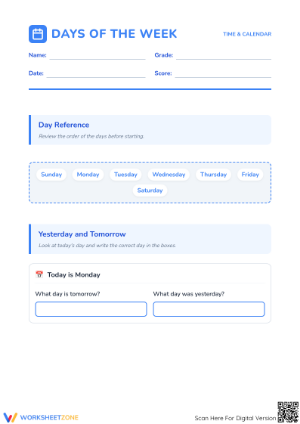
- Applying yesterday-today-tomorrow reasoning, including problems where "today" sits at a month boundary
- Counting total days in a week, total weeks in a month, and identifying the number of weekdays versus weekend days in a specific month
- Calendar vocabulary: weekday, weekend, leap year, and the names of the four seasons used as month groupings
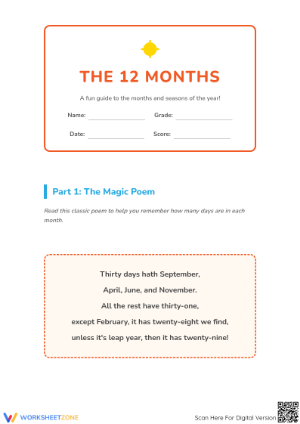
One worksheet includes a visual reference panel illustrating the Knuckle Rule — the physical mnemonic where raised knuckles represent 31-day months and the valleys between them represent shorter months. Students use the panel as a self-check tool during independent work rather than interrupting the lesson to ask. The structured variety across the worksheets is why a days weeks and months on a calendar worksheets for 1st grade works best distributed across several weeks rather than assigned all at once.
Standard Alignment
Calendar practice in first grade supports two specific Common Core standards. 1.MD.3 asks students to tell and write time using measurable units — calendar units (day, week, month) are the natural entry point before clock reading. 1.NBT.1, which extends counting sequences to 120, is reinforced every time students count forward from a date, total the days in a month, or calculate how many days remain until a named event. At the practice level, Mathematical Practice Standard MP.7 (Look for and make use of structure) is the most instructionally relevant standard: students notice that adding seven to any date always lands on the same day of the week, and that the seventh column of a calendar grid always carries the same day name — observations that build early algebraic thinking through a familiar, real-world structure. One honest note: CCSS does not include a dedicated, numbered calendar standard. Teachers in states that follow CCSS closely can cite the standards above without fabricating alignment. States with supplemental frameworks — Texas TEKS 1.7A is the most commonly cited — name calendar units explicitly and directly.
Mistakes Students Make That These Worksheets Surface
The most consistent error in this unit is the week-start confusion. US calendars begin with Sunday, but a growing number of students encounter digital calendars — on phones, tablets, or apps set to European defaults — that start the week on Monday. Both feel correct to a six-year-old, and the error persists silently through weeks of practice unless a teacher makes the convention explicit before students see the first grid. Thirty seconds at the start of any calendar-reading worksheet, pointing at Sunday in the first column, prevents most of the confusion.
A subtler error appears in yesterday-today-tomorrow problems when "today" is the 1st of the month. Students who handle mid-month problems correctly will write "0" or leave the blank empty, because they have no mental model of the calendar continuing backward into the previous month. This is a structural gap, not a failure to understand sequence — a brief class discussion about turning a calendar page back resolves it. Watch also for students who can sing the months in order but cannot retrieve "what comes before October?" without starting from January. The song gives them a one-directional chain; worksheet questions that ask for backward retrieval break that dependency faster than any additional singing will.
How to Build These Worksheets Into Your Lesson Plans
The most productive placement for this set is the first five to eight minutes of morning meeting. Display the classroom calendar, update the date together as a class, then hand students the corresponding worksheet as the day's independent opening task. Because the worksheet mirrors what just happened on the class calendar, students begin with context rather than cold-starting on unfamiliar problems. This whole-group-first, individual-second sequence follows gradual release and keeps cognitive demand manageable for first graders still developing independent work habits.
A different approach that also works well: use a days weeks and months on a calendar worksheets for 1st grade as a Friday closure activity. End-of-week placement lets students use the actual current month as the context for every problem — they fill in the real date, name the current month, and calculate how many days remain until the next weekend. Weekend proximity focuses attention in ways that fictional calendar scenarios rarely do. Save the more complex worksheets — those involving multi-step date calculations or month-boundary reasoning — for Tuesday or Wednesday, when students are past Monday reorientation and not yet mentally checking out for the week.
Differentiating the Set for a Range of Learners
For students who freeze when working from memory, a laminated reference strip listing the seven days on one side and the twelve months on the other removes the recall barrier without reducing the calendar-reading practice. These students are typically managing working memory load rather than a conceptual gap — keeping the strip accessible lets them succeed on grid-reading tasks while the sequential names stick through repeated exposure. Pull the strip for independent assessments once a student can reproduce the order unprompted on two separate days.
Students who move through the grade-level worksheets quickly are ready for two extensions that stay within the calendar context: calculating the number of days between two dates within the same month, and determining what day of the week a date from next month will fall on using only the current-month grid. Both require the same structural thinking as the standard tasks, just at a higher level of abstraction. Pairing a fast finisher with a student still building fluency for a brief teach-back on the Knuckle Rule reinforces retention for both — explaining a mnemonic requires reconstructing it from understanding rather than replaying a memorized string.
Frequently Asked Questions
Do these worksheets assume students already know the days and months, or do they build that knowledge from the start?
The earlier worksheets in the set introduce days and months through tracing, ordering, and cut-and-paste tasks — no prior knowledge of the names is assumed. Students who already know the names benefit from the sequencing and application practice; students encountering them for the first time use those same tasks to build initial familiarity. The calendar-grid and word-problem worksheets appear later in the set, after students have had enough repeated exposure to handle application-level questions without getting stuck on pure recall.
How do I explain February's length and leap years without overwhelming first graders?
Keep it honest and brief: February usually has 28 days, and every four years it gets one extra day called a leap day. First graders accept this as a calendar quirk without needing the astronomical explanation. The worksheets that address month lengths treat February as 28 days — the standard assumption for a non-leap teaching year — with a short note acknowledging the exception. The full explanation of divisibility and four-year cycles fits better in third or fourth grade, once students have the number sense to process it.
Can this set work for advanced kindergartners or second graders who need review?
The introductory worksheets — sequencing, tracing, and basic vocabulary tasks — work well for advanced kindergartners who demonstrate strong counting skills and can follow short written directions. For second-grade review, the calendar-grid and date-calculation worksheets are the most useful; the tracing tasks will feel too easy and reduce engagement. The days weeks and months on a calendar worksheets for 1st grade is written at a first-grade reading level, with short directions and controlled vocabulary, making it a practical fit for any student reading at or near that level regardless of grade placement.
How often should students practice with these worksheets to build lasting retention?
Short daily practice outperforms longer weekly sessions for sequential memory work of this kind. Four to five minutes of calendar practice four or five times per week builds the spaced retrieval effect — each return to the material before it fully fades strengthens long-term recall more reliably than one extended session per week. Teachers who use these worksheets only during a dedicated calendar unit typically see students lose month-order recall within a few weeks of stopping. Keeping one calendar worksheet in rotation as a weekly morning warm-up through the second semester maintains retention without requiring significant instructional time.













 Interactive Worksheet Maker
 Quiz Maker
 Word Search Maker
 Crossword Puzzle Maker
 Word Scramble Generator
 Sentence Scramble Generator
 Handwriting Worksheet Generator
 Name Tracing Generator
 Fill In The Blank Generator