


























0
Views
0
Downloads

0.0
0
Save
0 Likes
Share
Phonics Practice Test: Blends and Digraphs
0 Views
0 Downloads
Paste this activity's link or code into your existing LMS (Google Classroom, Canvas, Teams, Schoology, Moodle, etc.).
Students can open and work on the activity right away, with no student login required.
You'll still be able to track student progress and results from your teacher account.
Information
Description
What It Is:
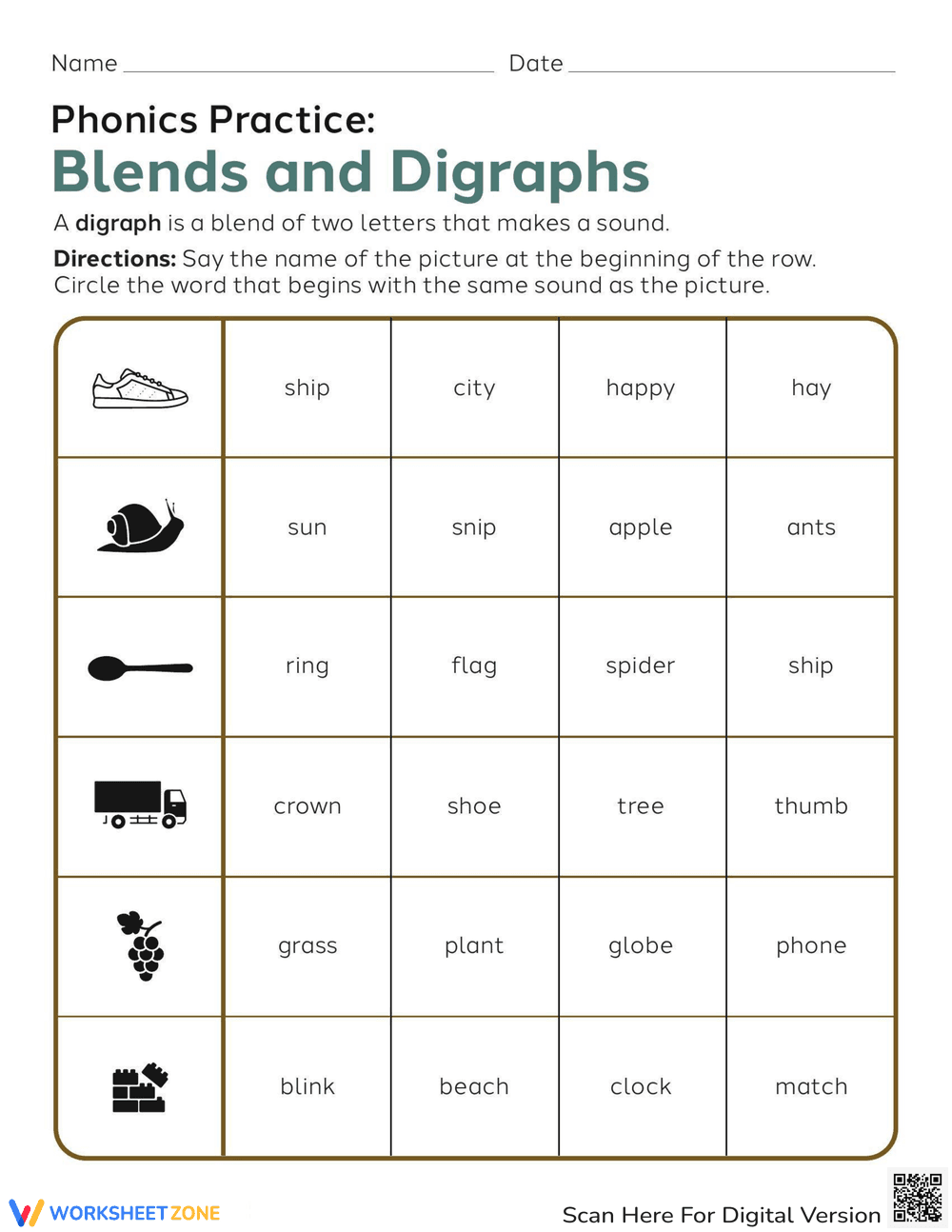
This is a phonics worksheet focusing on blends and digraphs. The worksheet contains a grid with pictures on the left side of each row. Students are instructed to say the name of the picture and then circle the word in that row that begins with the same sound as the picture. Pictures include a shoe, snail, spoon, truck, grapes, and blocks.
Grade Level Suitability:
This worksheet is suitable for Kindergarten and 1st grade. The activity focuses on identifying beginning sounds, a foundational skill typically taught in these grades. The words are simple and the instructions are clear.
Why Use It:
This worksheet helps students practice phonemic awareness and develop their understanding of blends and digraphs. It reinforces the connection between sounds and letters, improving reading and spelling skills. The visual format makes it engaging for young learners.
How to Use It:
First, have the student say the name of the picture in each row. Then, guide them to pronounce each word in that row and identify the word that starts with the same sound as the picture. Finally, instruct them to circle the matching word.
Target Users:
This worksheet is designed for kindergarten and first-grade students who are learning about blends, digraphs, and beginning sounds. It can also be used for students who need extra practice with phonemic awareness or as a review activity.
This is a phonics worksheet focusing on blends and digraphs. The worksheet contains a grid with pictures on the left side of each row. Students are instructed to say the name of the picture and then circle the word in that row that begins with the same sound as the picture. Pictures include a shoe, snail, spoon, truck, grapes, and blocks.
Grade Level Suitability:
This worksheet is suitable for Kindergarten and 1st grade. The activity focuses on identifying beginning sounds, a foundational skill typically taught in these grades. The words are simple and the instructions are clear.
Why Use It:
This worksheet helps students practice phonemic awareness and develop their understanding of blends and digraphs. It reinforces the connection between sounds and letters, improving reading and spelling skills. The visual format makes it engaging for young learners.
How to Use It:
First, have the student say the name of the picture in each row. Then, guide them to pronounce each word in that row and identify the word that starts with the same sound as the picture. Finally, instruct them to circle the matching word.
Target Users:
This worksheet is designed for kindergarten and first-grade students who are learning about blends, digraphs, and beginning sounds. It can also be used for students who need extra practice with phonemic awareness or as a review activity.


