


























Views
Downloads

Printable Essay Writing Template | Grade 3
Paste this activity's link or code into your existing LMS (Google Classroom, Canvas, Teams, Schoology, Moodle, etc.).
Students can open and work on the activity right away, with no student login required.
You'll still be able to track student progress and results from your teacher account.
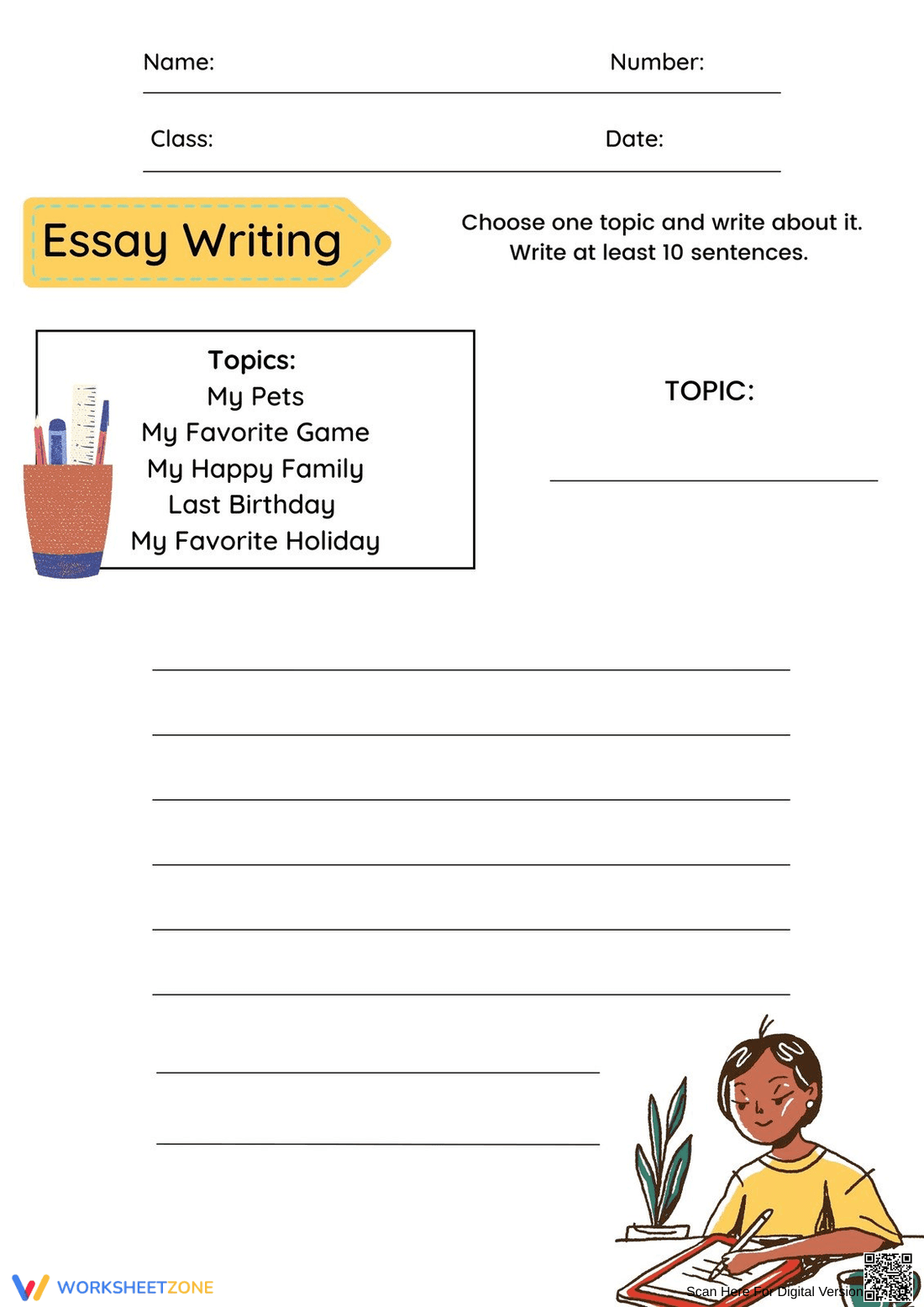
This simple essay writing template helps students structure their thoughts and practice foundational writing skills. By choosing from five engaging prompts, young writers can confidently draft a ten-sentence paragraph or short essay. The clear layout minimizes distractions, allowing students to focus entirely on expressing their ideas clearly.
At a Glance
- Grade: 3 · Subject: ELA
- Standard:
CCSS.ELA-LITERACY.W.3.2— Write informative texts to examine a topic clearly.- Skill Focus: Paragraph writing and topic development
- Format: 1 page · 1 writing task · No answer key · PDF
- Best For: Independent writing practice
- Time: 20–30 minutes
Inside this single-page resource, teachers will find a straightforward writing template featuring a choice board of five relatable topics, such as "My Pets" and "Last Birthday." The worksheet includes a designated space for the chosen topic title and ample lined sections for students to draft their ten-sentence response. The clean, uncluttered design provides a structured environment for open-ended writing without overwhelming the student.
Zero-Prep Workflow
- Print (1 minute): Simply download the PDF and print a class set. No special formatting or cutting is required.
- Distribute (1 minute): Hand out the template during your designated writing block or place it in a literacy center.
- Review (3 minutes): Quickly scan completed drafts to check for sentence count, basic punctuation, and topic adherence.
With under two minutes of total teacher prep time, this template is an ideal, self-explanatory activity for emergency sub plans or quick formative assessments.
Standards Alignment
This resource aligns with CCSS.ELA-LITERACY.W.3.2, requiring students to write informative or explanatory texts to examine a topic and convey ideas and information clearly. By selecting a topic and generating at least ten sentences, students practice introducing a subject and grouping related information together. Both standard codes can be copied directly into lesson plans, IEP goals, or district curriculum mapping tools.
How to Use It
This template works exceptionally well as an independent practice activity following a mini-lesson on paragraph structure. Teachers can assign it during morning work or as a quiet literacy center task. As a formative assessment tip, observe whether students are successfully writing complete sentences rather than fragments when trying to reach the ten-sentence minimum. Expect students to complete this writing task in approximately 20 to 30 minutes.
Who It's For
This worksheet is designed primarily for third-grade students developing their stamina for longer writing tasks. It serves as an excellent tool for reluctant writers who benefit from having pre-selected, highly relatable topics to choose from. For differentiation, teachers can pair this template with a graphic organizer or sentence starter anchor chart to support students who need help initiating their writing process.
Developing early writing stamina requires consistent, structured opportunities for students to generate text on familiar subjects. Aligning with CCSS.ELA-LITERACY.W.3.2, which emphasizes the ability to write informative texts to examine a topic clearly, this template provides the necessary framework for independent practice. According to Fisher & Frey (2014), providing students with choice in their writing topics significantly increases engagement and the volume of text produced during independent work periods. By offering five distinct, relatable prompts and a clear ten-sentence goal, this resource helps bridge the gap between sentence-level writing and paragraph construction. The straightforward design reduces cognitive load, allowing young learners to focus entirely on idea generation and sentence fluency rather than formatting concerns, ultimately building the confidence needed for more complex composition tasks.


