


























Views
Downloads

Printable Narrative Story Organizer | Grade 2-3 ELA
Paste this activity's link or code into your existing LMS (Google Classroom, Canvas, Teams, Schoology, Moodle, etc.).
Students can open and work on the activity right away, with no student login required.
You'll still be able to track student progress and results from your teacher account.
This Narrative Story Organizer helps young writers transition from creative inspiration to structured storytelling. By providing a clear visual framework, the worksheet empowers students to develop coherent plots with intentional character development and logical sequencing. It serves as an essential scaffold for primary students learning to expand their narrative writing capabilities.
At a Glance
- Grade: 2 · 3 · Subject: English Language Arts
- Standard:
W.3.3— Write narratives to develop real or imagined experiences using effective technique and clear sequences- Skill Focus: Narrative Structure & Sequencing
- Format: 3 pages · 8 tasks · No answer key needed · PDF
- Best For: Pre-writing and story planning sessions
- Time: 20–30 minutes
What's Inside
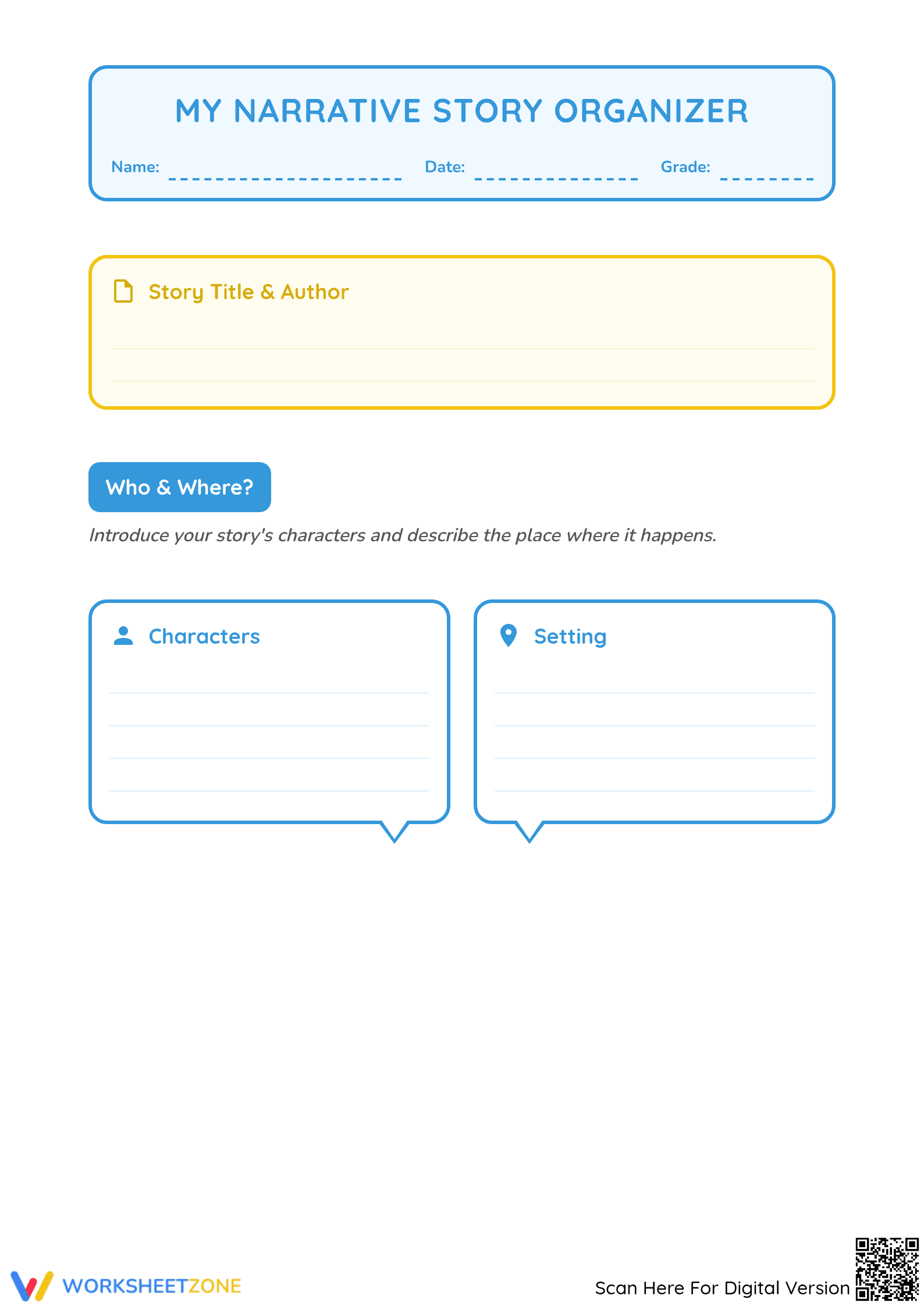
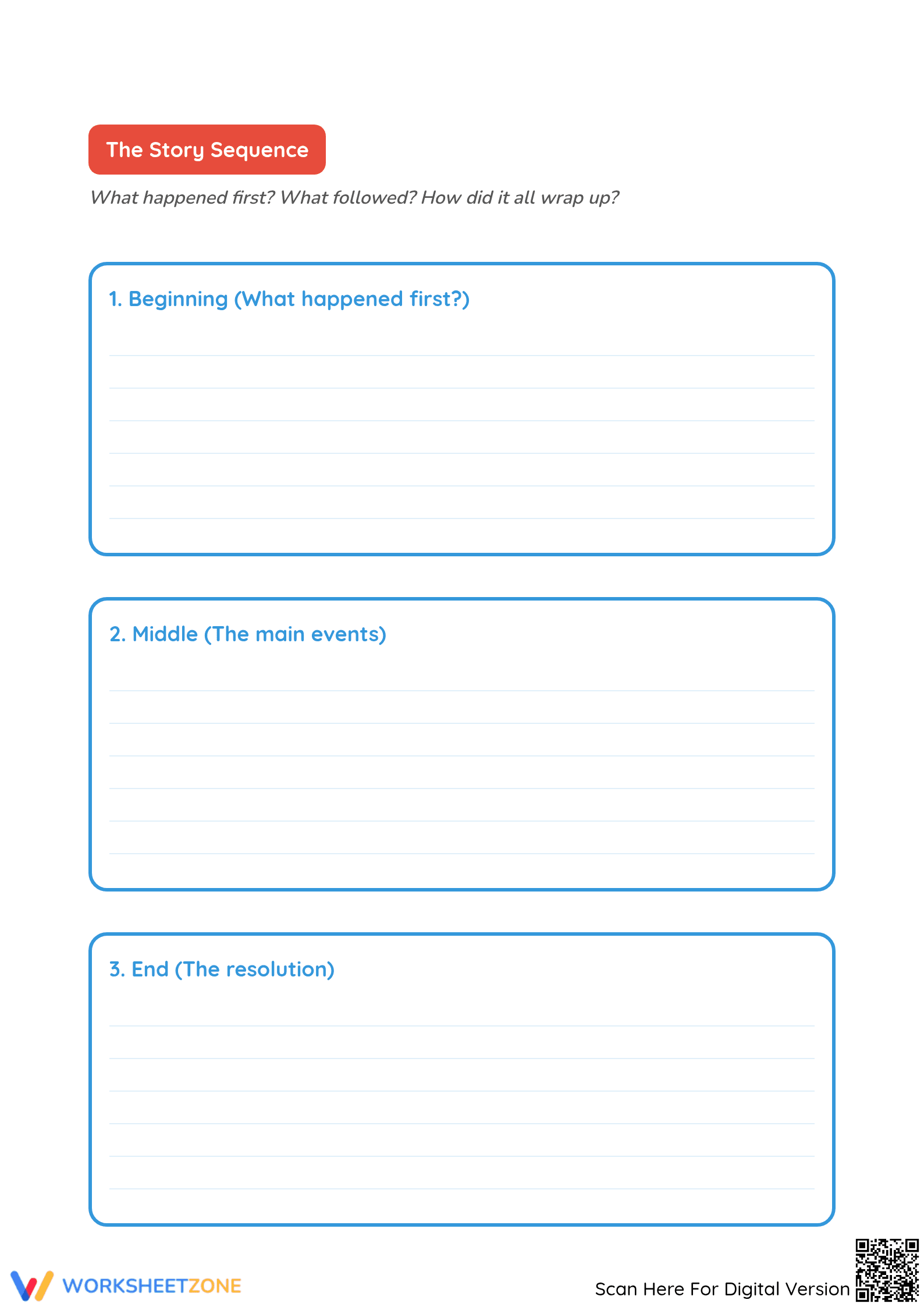
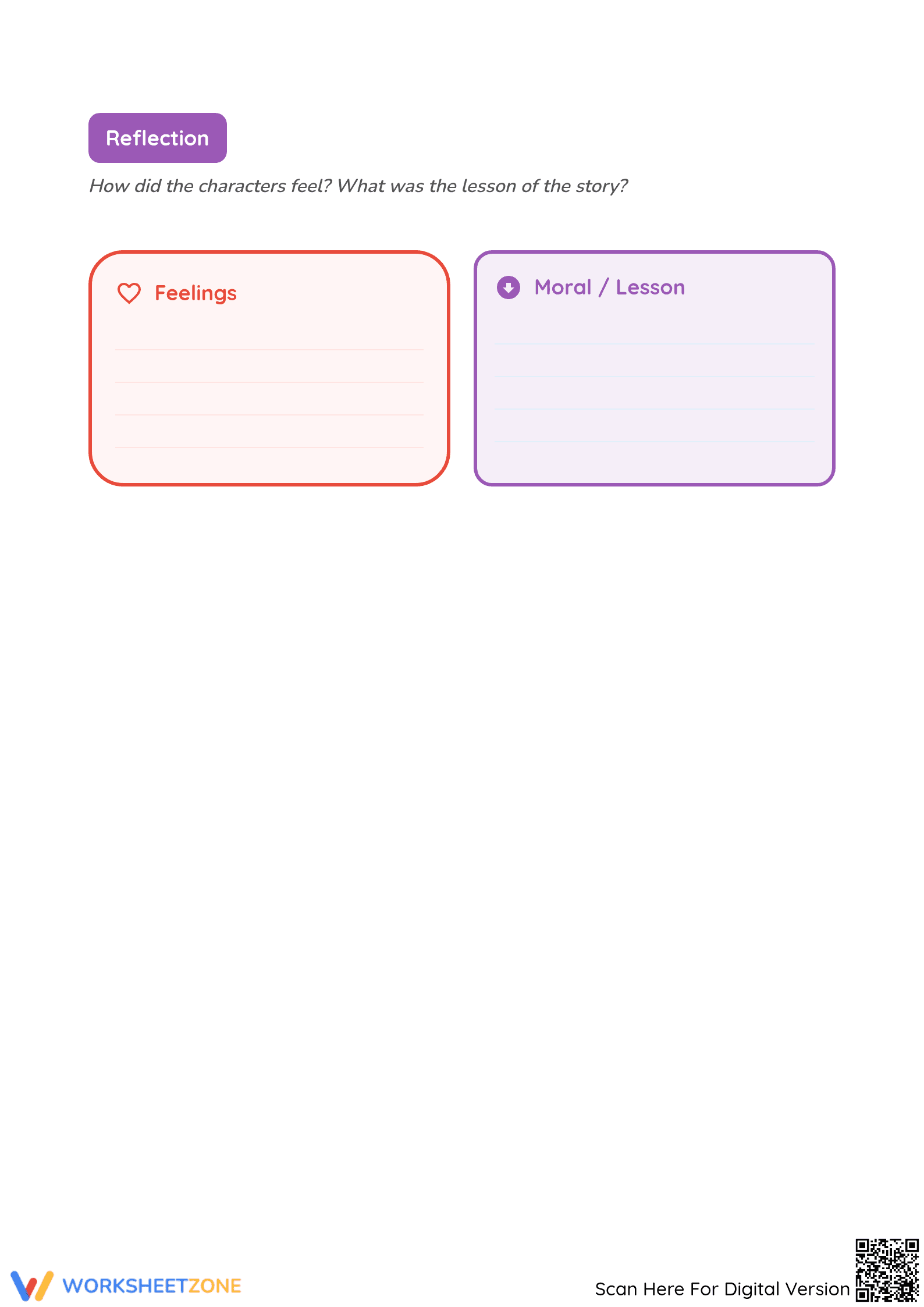
This three-page PDF offers a comprehensive planning suite. The first page identifies the author and establishes the "Who and Where" through character and setting boxes. The second page focuses on the core sequence, dividing the plot into Beginning, Middle, and End. The final page concludes with a reflection section where students identify character feelings and lessons.
Skill Progression
- Guided Brainstorming: Students begin by identifying the concrete elements of their story's world, including characters and setting locations.
- Supported Practice: Writers transition to mapping out the logical narrative arc, ensuring the beginning, main events, and resolution are captured.
- Independent Reflection: Students move to independent analysis of deeper themes such as emotional resonance and the underlying moral or lesson.
This progression ensures students move from basic facts to abstract reflection using a gradual release of responsibility model.
Standards Alignment
The primary focus of this resource is `W.3.3`, which requires students to write narratives that develop experiences using descriptive details and clear event sequences. It specifically supports `W.3.3.A` (establishing a situation) and `W.3.3.B` (using dialogue and descriptions). This standard code can be copied directly into lesson plans, IEP goals, or district curriculum mapping tools.
How to Use It
Use this organizer during the pre-writing phase of a narrative unit. Before students begin their rough drafts, have them complete these pages to ensure their ideas have sufficient depth and a logical flow. Additionally, use the completed organizers for a peer session where students explain their story arcs to a partner. This provides a valuable formative-assessment opportunity to observe if students understand plot resolution and can articulate their story's central message.
Who It's For
This resource is designed for Grade 2 and Grade 3 students, but it serves as an excellent modification for older students needing more structure. It pairs naturally with a short story mentor text or a teacher-led direct instruction lesson on the elements of fiction, providing the necessary organizational support for diverse learners.
The use of graphic organizers in narrative writing is a proven strategy for improving the quality of student compositions. According to Fisher & Frey (2014), providing students with structured scaffolds during the pre-writing phase significantly enhances their ability to maintain logical sequencing and include essential story elements like character motivation and resolution. This organizer specifically targets the requirements of `W.3.3` by guiding students through the development of real or imagined experiences. By breaking the writing process into manageable sections—such as the "Who & Where" and the "Story Sequence"—this worksheet helps students manage the cognitive load of complex storytelling. Research indicates that when students have a clear roadmap for their narratives, they produce work with greater descriptive detail and more coherent thematic structures. This printable resource ensures that every student has access to the structural cues necessary for academic success in early literacy and writing.


