The Essential Role of Vowel Digraphs in Early Literacy Development
Vowel digraphs represent a significant milestone in a student's journey toward reading fluency. As young readers move beyond the basic decoding of consonant-vowel-consonant (CVC) words, they encounter the complexity of two vowels working together to produce a single phoneme. This transition is often where many students face their first major hurdle in phonetic acquisition. Understanding that two distinct letters like 'e' and 'a' can combine to make one long 'e' sound requires a shift from letter-by-letter processing to pattern recognition. For teachers, providing a structured approach to these patterns is vital for preventing reading plateaus in the first and second grades. A solid foundation in vowel digraphs allows students to tackle more complex texts with confidence. Without this mastery, students often struggle with word recognition, which directly impacts their reading comprehension. By mastering these patterns through consistent practice with vowel digraphs worksheets, students can internalize these sounds, allowing for faster and more accurate word retrieval during independent reading sessions.
Common Vowel Digraph Patterns and Phonetic Rules
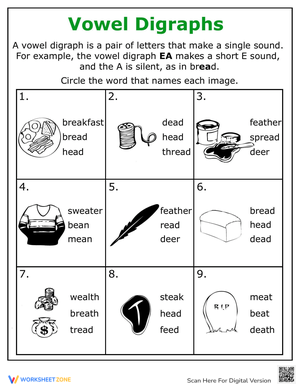
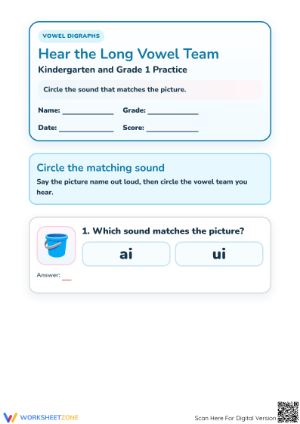
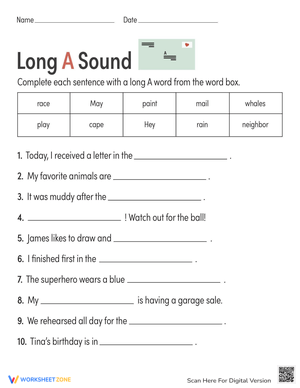
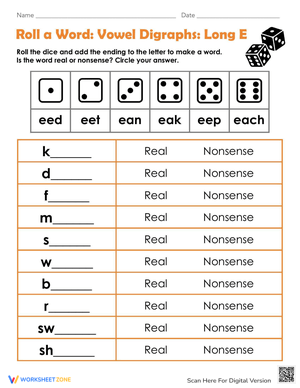
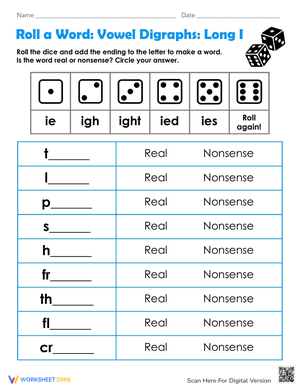
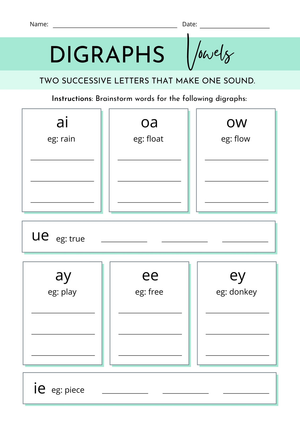
Teaching vowel digraphs effectively requires an understanding of the various patterns students will encounter. The most frequent digraphs include 'ai', 'ay', 'ee', 'ea', 'oa', 'ie', and 'ue'. Each of these pairs has its own set of rules and, occasionally, exceptions that can trip up early learners. For instance, the 'ea' digraph can produce the long 'e' sound as in 'team', but it can also produce the short 'e' sound as in 'bread'. Helping students recognize these variations is a key part of phonics instruction. Using targeted worksheets that focus on one specific pattern at a time helps students isolate the sound and practice it until they reach a level of automaticity.
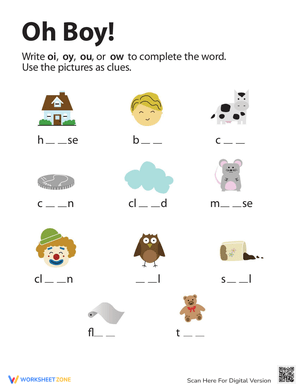
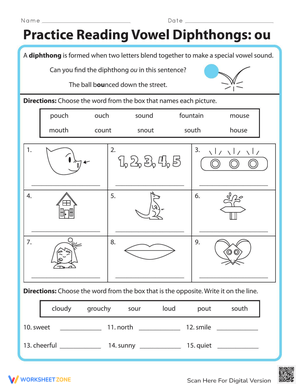
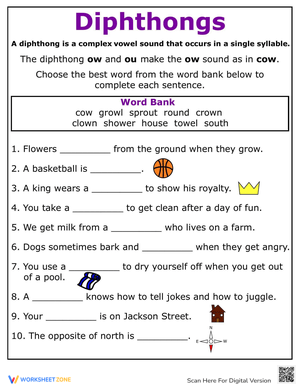
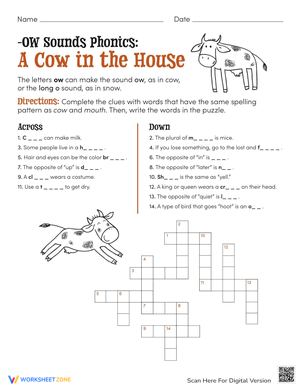
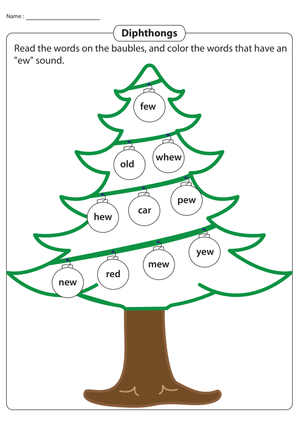
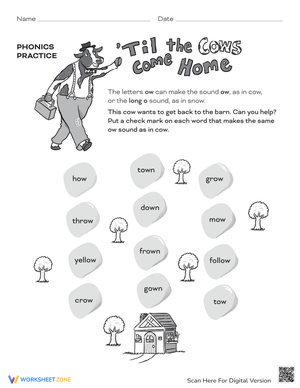
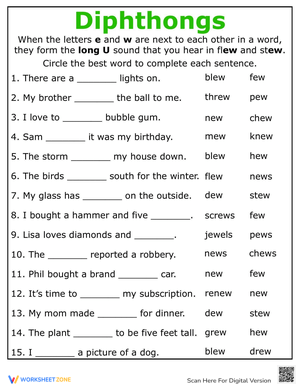
According to EasyTeacherWorksheets Vowel Digraphs, students often find the 'oa' and 'ee' digraphs easier to master because they follow a predictable long vowel sound pattern. Their research suggests that providing at least 15 minutes of daily targeted practice helps bridge the gap between simple CVC decoding and fluent multisyllabic word recognition. Beyond the common long vowel digraphs, teachers must also introduce diphthongs and other complex vowel teams. Patterns like 'oi', 'oy', 'ou', and 'ow' require students to hear the sliding sound between two vowels. Classroom activities that involve sorting words by their vowel sound help students distinguish between these closely related phonemes and identify the spelling patterns that correspond to the sounds they hear.
Strategic Scaffolding with Vowel Digraphs worksheets
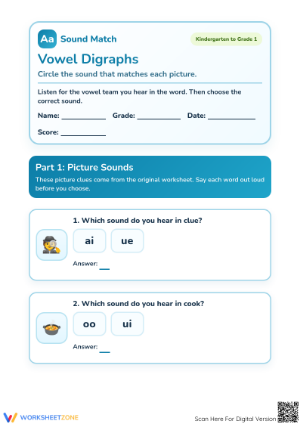
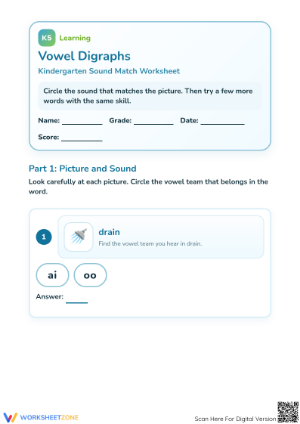
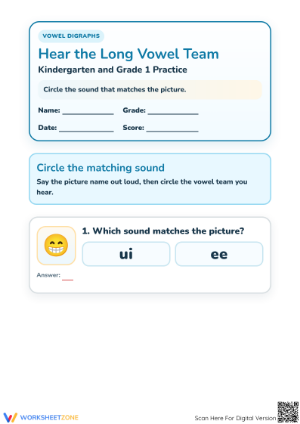
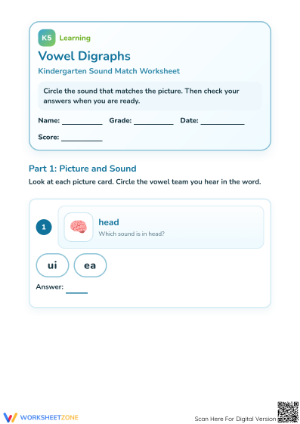
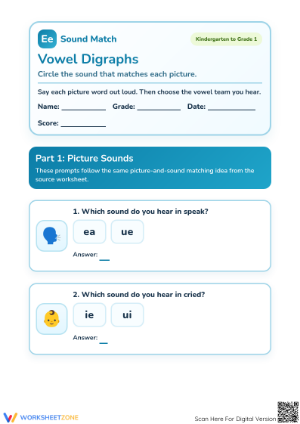
Scaffolding is a fundamental principle in effective teaching, especially when introducing complex phonetic concepts. When students first start working with vowel digraphs, they need a lot of support. This might begin with visual aids and word walls that highlight specific digraphs in bright colors. As they gain confidence, they can move to more independent activities. Vowel digraphs worksheets offer a versatile way to provide this scaffolding. You can choose worksheets that start with simple identification—finding the digraph in a word—and progress to more challenging tasks like using those words in original sentences. Effective worksheets should offer a variety of engagement types to cater to different learning styles. For visual learners, word-picture matching is an excellent way to reinforce the connection between the written digraph and the sound it represents. Kinesthetic learners might benefit from activities that involve cutting and pasting word tiles into categories. By varying the tasks within the phonics block, teachers can keep students engaged while reinforcing the same core concepts through multiple modalities.
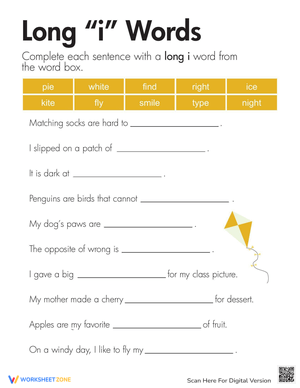
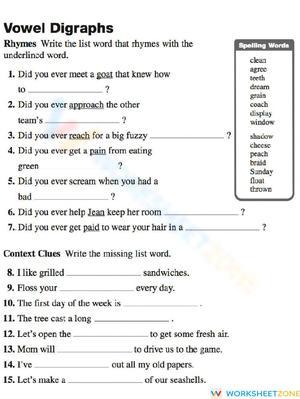
Expert analysis of phonics progression shows that students who encounter vowel digraphs in the middle of first grade show a 22% higher retention rate when those sounds are reinforced through tactile word sorting and repetitive visual identification. This data underscores the importance of moving beyond simple rote memorization to active, hands-on engagement with phonetic patterns. As students progress, the level of difficulty should increase proportionally. Intermediate worksheets might focus on sentence completion or finding 'hidden' digraphs within a short paragraph. This helps students transition from seeing words in isolation to recognizing them in context, which is where true reading fluency begins to take root.
Differentiating Phonics Instruction for Diverse Learners
No two students learn at the same pace, and differentiation is the key to ensuring that every student reaches the desired learning objectives. For advanced students, this might mean providing worksheets that focus on less common digraphs or those with multiple sounds. These students can also be challenged to find examples of digraphs in their independent reading books and create their own word lists or stories using those patterns. This helps them stay engaged while their peers master the more fundamental vowel teams. For students who are struggling, more intensive support is needed. This might involve breaking down the digraphs into even smaller chunks or using more visual cues. Many teachers find success using color-coded worksheets where the vowel digraph is highlighted or underlined. This draws the student's eye directly to the pattern they are learning, helping them focus on the sound without getting overwhelmed. Small group instruction is also highly effective for these learners, as it allows the teacher to provide immediate feedback and correction.
Teacher Tips for Effective Digraph Mastery
Success in teaching vowel digraphs often comes down to the small, daily routines established in the classroom. One effective strategy is the use of 'sound of the week.' By focusing on one specific digraph for an entire week, you allow students to see it and hear it in multiple contexts. This immersive approach helps cement the sound in the students' long-term memory. Another tip is to encourage students to become 'digraph detectives' by finding the week's digraph on posters or in books. Integrating technology can also be a powerful way to reinforce digraphs. While the core of your practice might involve vowel digraphs worksheets, supplementing these with interactive phonics games can provide extra engagement. However, it's important to balance screen time with traditional activities. The act of writing the letters helps build muscle memory and reinforces spelling patterns. Using printable worksheets ensures that students are physically engaging with the material, which is a critical component of early literacy development.
Frequently Asked Questions About Vowel Digraphs
1. What is the difference between a vowel digraph and a vowel blend?
A vowel digraph consists of two vowels that combine to make one single sound, such as the 'ee' in 'seed' or the 'oa' in 'boat'. In contrast, a vowel blend involves two vowels where you can hear a slight slide between the two sounds, like the 'oi' in 'oil' or the 'ou' in 'house'. While they are similar, the distinction is important for more advanced phonetic analysis and spelling.
2. At what age should children start learning vowel digraphs?
Most children begin learning vowel digraphs in late kindergarten or early first grade, once they have a firm grasp of individual letter sounds and can decode basic CVC words. However, the exact timing can vary depending on the student's individual readiness and the specific curriculum being used. It is important to wait until the foundational skills are solid before moving on to these more complex patterns.
3. How can I help students struggling to remember vowel digraph sounds?
For students who struggle, use multiple sensory approaches. Incorporate visual aids like color-coded charts, auditory practice through songs and rhymes, and tactile activities like sand writing or using letter tiles. Providing plenty of repetitive practice with vowel digraphs worksheets and offering immediate, positive feedback can also build their confidence and help them internalize the sounds over time.
4. Are there any 'tricky' vowel digraphs that need extra attention?
Yes, some digraphs like 'ea' and 'oo' are trickier because they can represent more than one sound. 'Ea' can sound like a long 'e' (leaf) or a short 'e' (bread), while 'oo' can sound like the 'oo' in 'book' or the 'oo' in 'moon'. Teaching these variations explicitly and providing lots of examples in context is the best way to help students navigate these complexities.
5. How do vowel digraphs relate to reading fluency?
Mastery of vowel digraphs is a critical component of reading fluency. When students can recognize these patterns automatically, they can decode words much faster and with less effort. This allows them to focus their cognitive energy on understanding the meaning of what they are reading, rather than just sounding out individual letters. Fluency is the bridge between decoding and comprehension, and digraphs are a major part of that bridge.












 Interactive Worksheet Maker
 Quiz Maker
 Word Search Maker
 Crossword Puzzle Maker
 Word Scramble Generator
 Sentence Scramble Generator
 Handwriting Worksheet Generator
 Name Tracing Generator
 Fill In The Blank Generator