


























Views
Downloads

Vowel Digraphs Printable Worksheet | Kindergarten & Grade 1
Paste this activity's link or code into your existing LMS (Google Classroom, Canvas, Teams, Schoology, Moodle, etc.).
Students can open and work on the activity right away, with no student login required.
You'll still be able to track student progress and results from your teacher account.
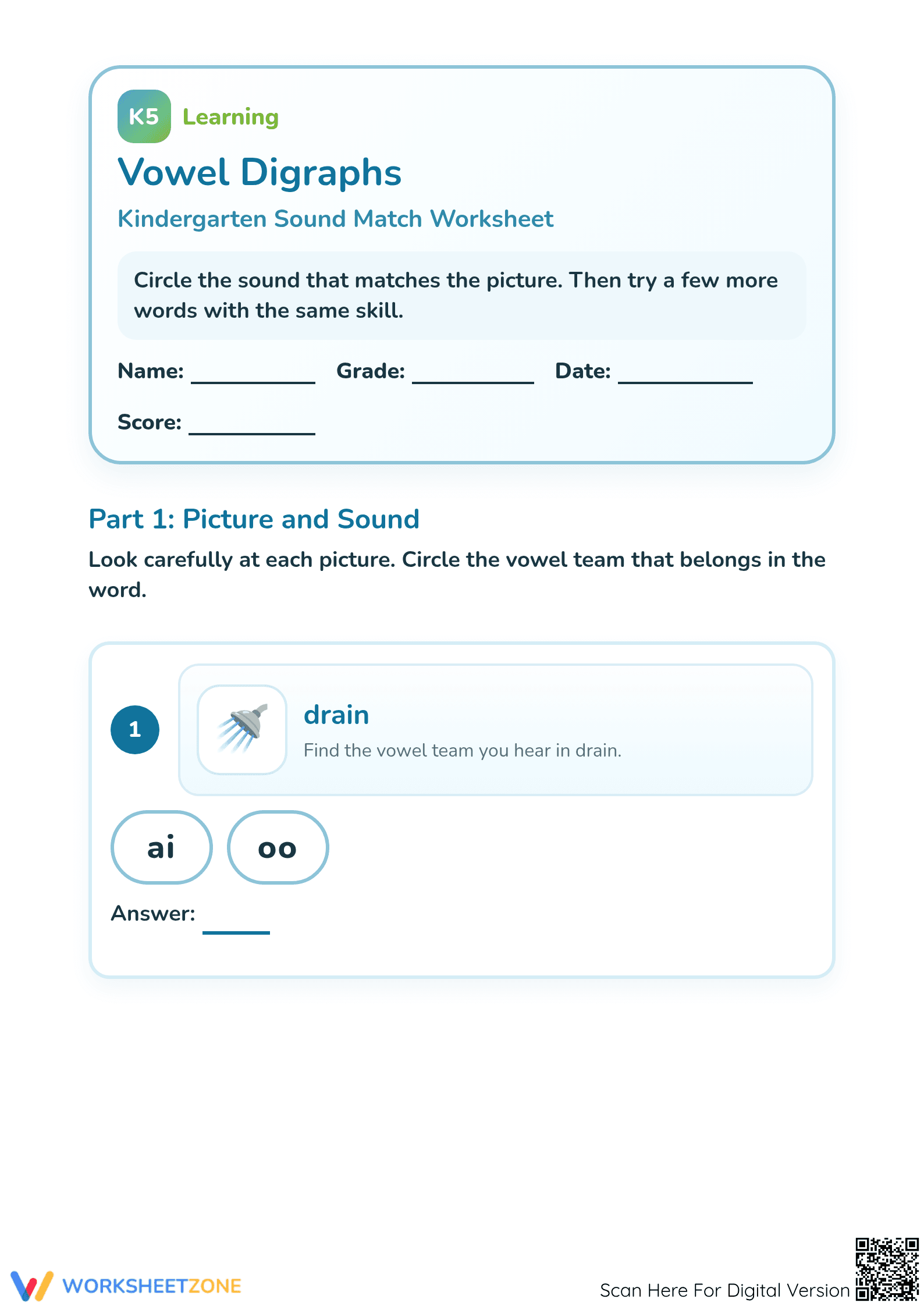
Mastering vowel digraphs is critical for developing early reading fluency and phonics proficiency. This Grade 1 and Kindergarten worksheet provides students with targeted practice identifying and applying common vowel teams like ai, ee, ea, and oa. By connecting visual cues with auditory sounds, learners bridge the gap between letter recognition and word construction in a structured environment.
At a Glance
- Grade: K–1 · Subject: ELA Phonics
- Standard:
CCSS.ELA-LITERACY.RF.1.3.C— Know common vowel team conventions for representing long vowel sounds- Skill Focus: Long Vowel Digraphs
- Format: 3 pages · 8 problems · Answer key included · PDF
- Best For: Literacy centers and independent phonics practice
- Time: 15–20 minutes
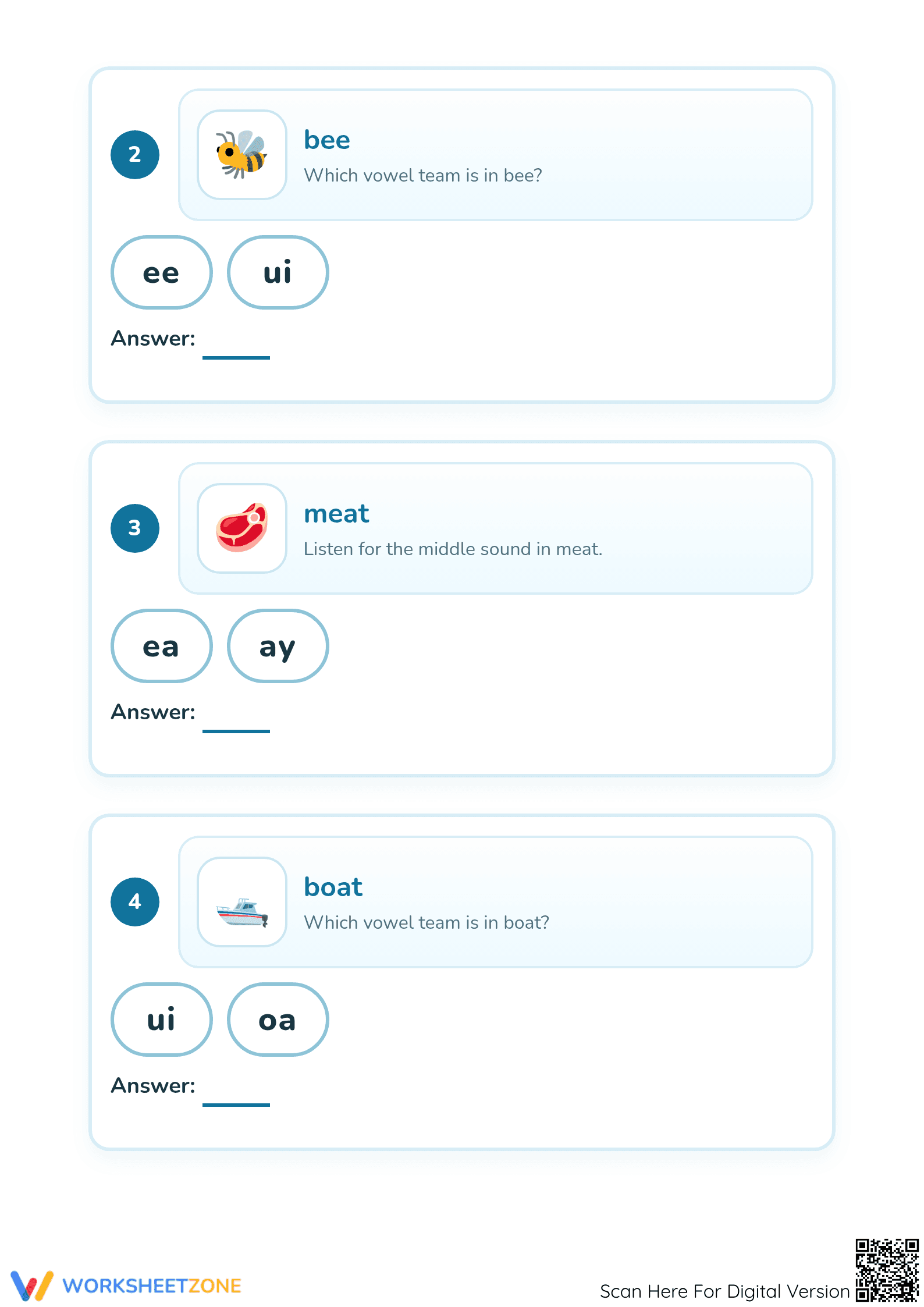
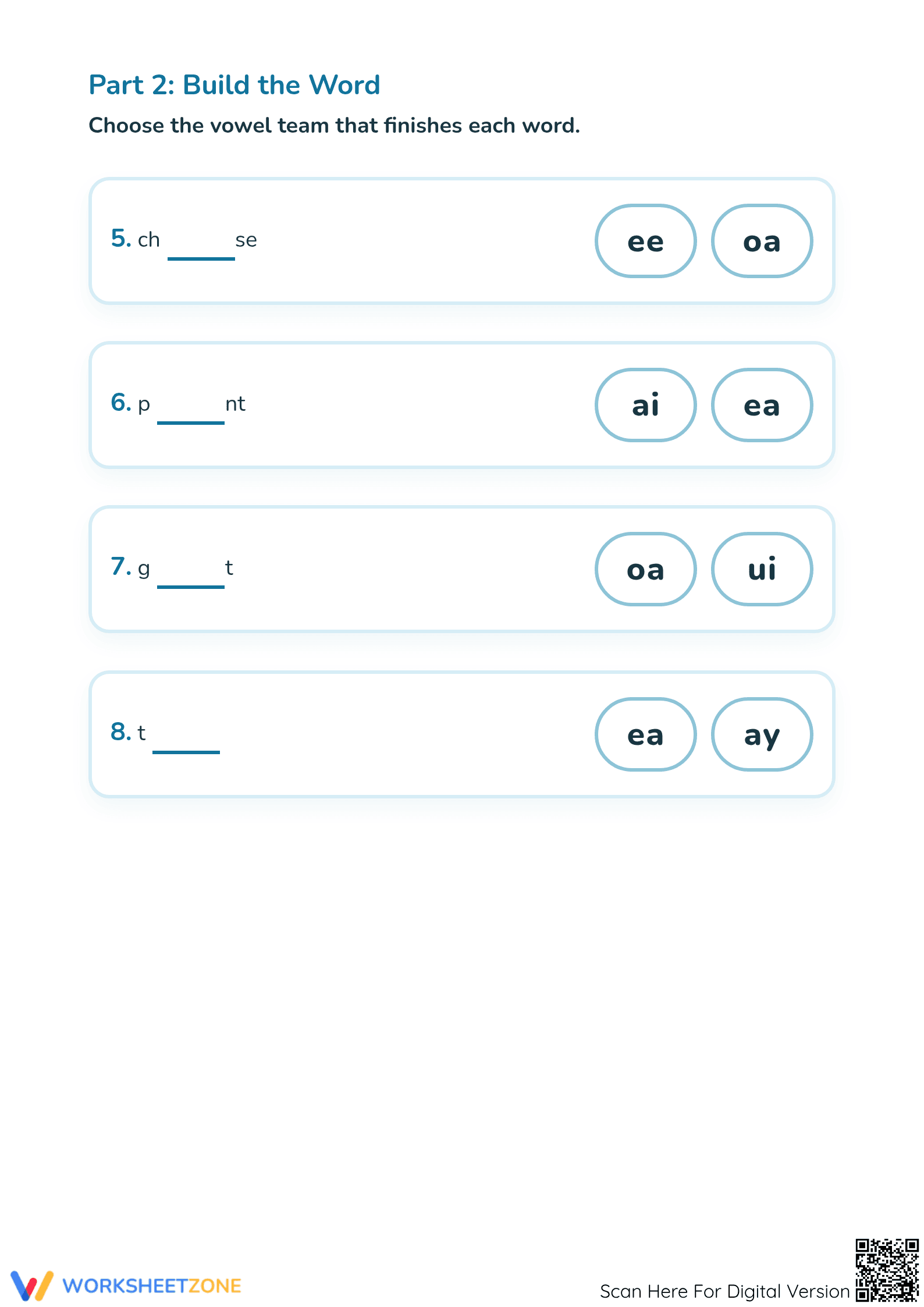
This 3-page printable features eight phonics tasks. Part 1 uses high-quality illustrations to match sounds to pictures, while Part 2 focuses on word construction through a fill-in-the-blank format. Each page features large text and dedicated answer lines to support emerging writers. A full answer key is included for quick grading and immediate student feedback.
- Guided practice: Students begin by selecting the correct vowel team from two choices to match illustrated words such as "bee" or "boat".
- Supported practice: Learners transition to auditory-visual matching, listening for the medial sound in common nouns before choosing the appropriate digraph.
- Independent practice: The final section requires students to complete word spellings by choosing the correct vowel team, such as identifying the 'ee' in 'cheese'.
This resource is strictly aligned to `CCSS.ELA-LITERACY.RF.1.3.C`, which requires students to know final -e and common vowel team conventions for representing long vowel sounds. By focusing on specific digraphs like ai, ea, and oa, the worksheet directly addresses the foundational skills needed for decoding multisyllabic words. This standard code can be copied directly into lesson plans, IEP goals, or district curriculum mapping tools.
How to Use It
Use this during phonics blocks as a post-lesson assessment. Observe if students whisper words aloud to 'hear' the digraph, a key indicator of phonemic awareness. It also works as a quiet morning work activity or a structured homework assignment to reinforce classroom instruction. Most students will complete the 3-page set within 15 minutes, making it an efficient check for understanding.
Who It's For
Designed for Kindergarten and Grade 1, this also supports advanced Preschoolers or second graders needing remediation. Picture cues make it effective for English Language Learners developing vocabulary alongside phonics. Pair this with a vowel team anchor chart or a decodable reader focused on long vowels for a complete instructional cycle that supports diverse classroom populations.
Research from Fisher & Frey (2014) emphasizes that explicit phonics instruction regarding vowel teams is essential for transitioning to complex reading tasks. This worksheet addresses `CCSS.ELA-LITERACY.RF.1.3.C` by requiring students to apply common vowel team conventions. By isolating digraphs such as 'ai', 'ea', and 'oa', learners develop orthographic mapping skills necessary for literacy success. Assessments from NAEP suggest that early mastery of these structures predicts third-grade reading comprehension levels. This 8-task practice set provides the repeated exposure needed for students to move skills to automaticity. The combination of pictorial support and word construction ensures that visual and auditory learners can navigate the phonics curriculum. This resource serves as a reliable tool for teachers and reading specialists to monitor progress toward foundational standards. It provides a clear evidence base for formative assessment during the school year.


