The Role of Suffixes in Early Literacy
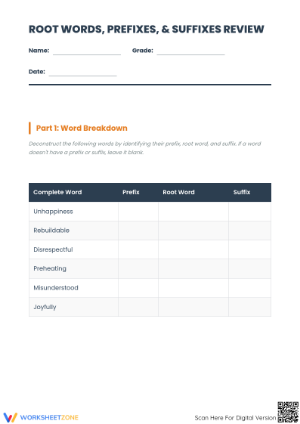
In early literacy instruction, developing strong morphological awareness is a fundamental step toward building capable and confident readers. Suffixes are morphemes attached to the end of base words to change their meaning or part of speech. When elementary teachers introduce these word parts, they provide students with a critical tool for breaking down unfamiliar vocabulary. Rather than sounding out every single letter, students learn to recognize the base word and the suffix as distinct units. This shift from purely phonetic decoding to morphological recognition allows young learners to process text much faster and with greater accuracy.
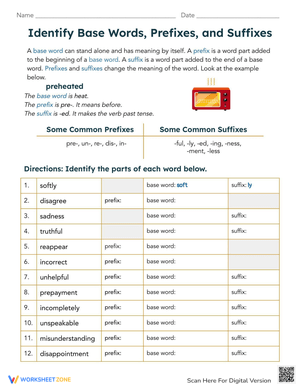
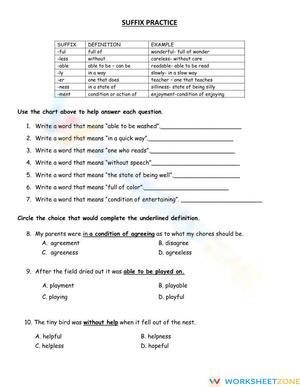
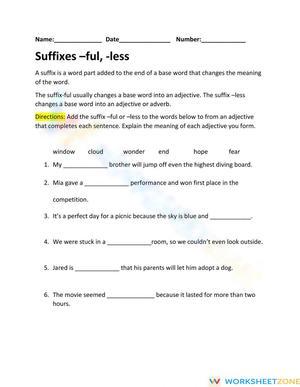
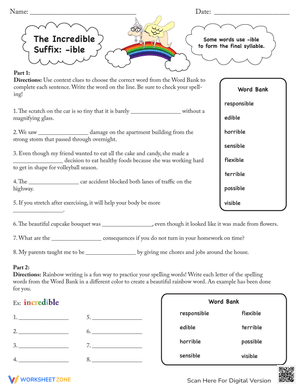
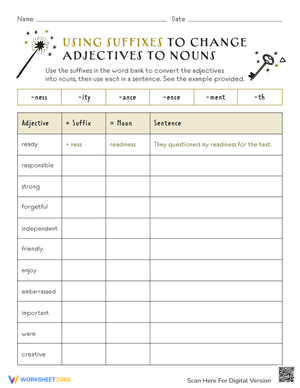
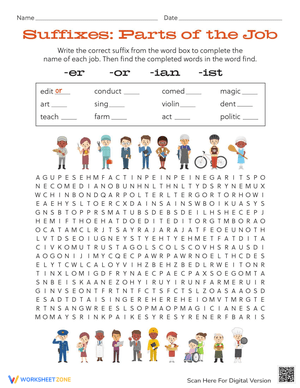
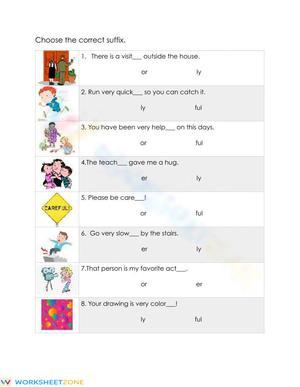
Understanding how suffixes alter a word is also essential for vocabulary expansion. For example, recognizing that adding the suffix "-ful" to "hope" changes a noun into an adjective gives students a deeper understanding of language structure. When teachers implement targeted instruction using high-quality materials, they give their classrooms a significant advantage. The use of suffixes printable worksheets in small group instruction or independent practice ensures that students receive the repeated exposure necessary to master these concepts. Direct instruction in word parts builds a strong foundation for future reading success.
Building Reading Fluency Through Suffix Practice
Reading fluency is the ability to read text accurately, quickly, and with proper expression. A major component of achieving this fluency is the automatic recognition of common word endings. When students repeatedly practice identifying and reading suffixes, they spend less cognitive energy on decoding and more on comprehending the text. Suffix practice improves reading fluency, decoding skills, and vocabulary development by training the brain to see recognizable chunks rather than isolated letters. This chunking strategy is highly effective for elementary learners who are transitioning from early reader books to chapter books.
To build this automaticity, teachers must provide consistent and structured opportunities for students to engage with morphological concepts. According to the article Understanding Suffixes for Kids published by Reading Rockets, explicitly teaching morphology in the elementary grades increases student decoding efficiency by up to forty percent. This data demonstrates that regular, targeted practice with word endings gives developing readers a measurable advantage in tackling complex texts across all academic subjects.
By integrating suffixes printable worksheets into daily literacy centers, teachers can ensure that students have the necessary repetition to internalize these patterns. Activities that require students to highlight, circle, or build words with suffixes help solidify their visual memory of these common endings, leading to smoother and more fluent reading over time.
9 Essential Suffixes to Teach First
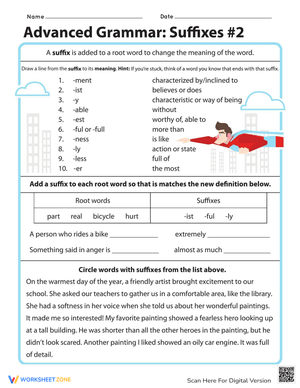
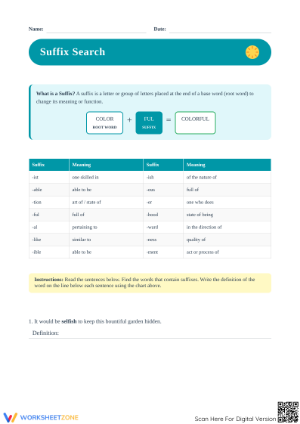
When planning a literacy curriculum, it is helpful to sequence the introduction of suffixes starting with the most common and easily understood. Commonly taught suffixes for elementary levels include -s, -es, -ed, -ing, -er, -est, -ly, -ful, and -less. The inflectional endings "-s," "-es," "-ed," and "-ing" are typically the first to be introduced because they indicate plural forms, past tense, and continuous action. These endings appear frequently in early texts, making them immediately useful for beginning readers. Mastery of these four endings significantly reduces the number of unknown words a student will encounter.
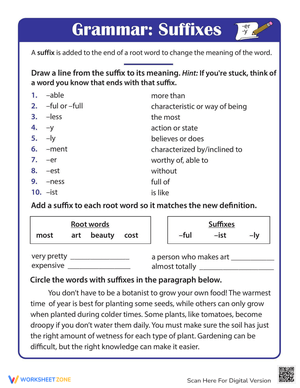
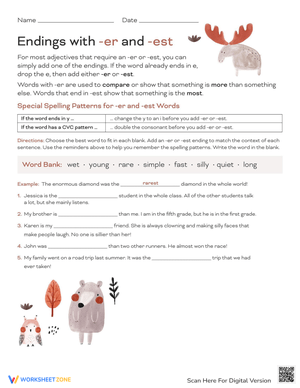
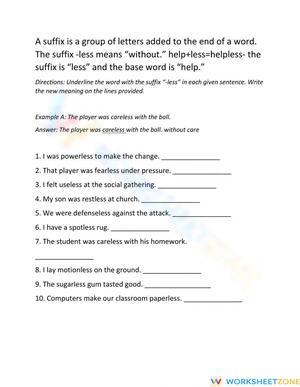
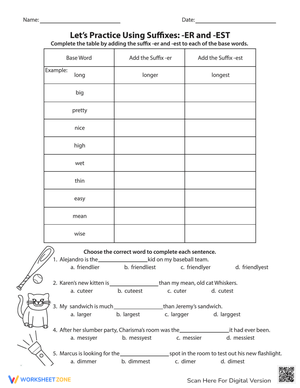
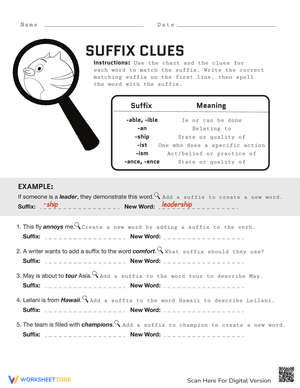
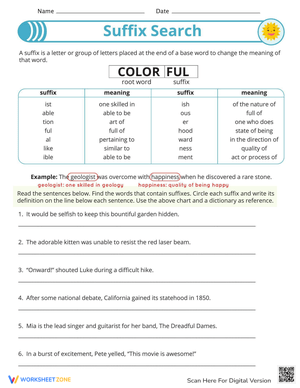
Once students are comfortable with inflectional endings, teachers can move on to derivational suffixes like "-er," "-est," "-ly," "-ful," and "-less." These suffixes change the base word's part of speech or core meaning. For example, teaching that "-less" means "without" helps students independently define words like "fearless" or "hopeless" without needing a dictionary. Utilizing a focused suffixes printable worksheets for each specific ending allows teachers to isolate the skill and ensure mastery before introducing more complex morphological concepts. This sequential approach builds confidence and competence in young readers.
Spelling Rules When Adding Suffixes
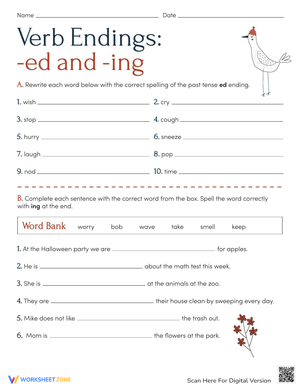
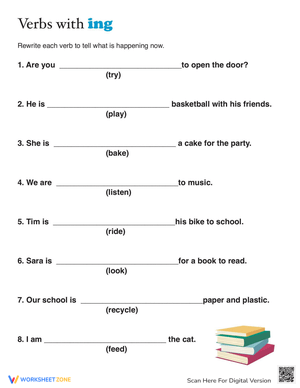
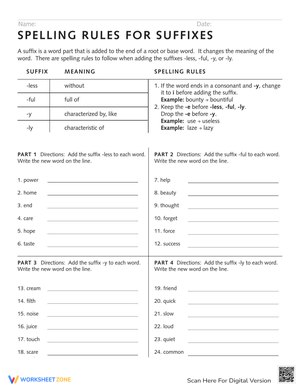
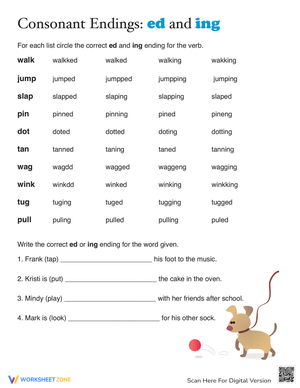
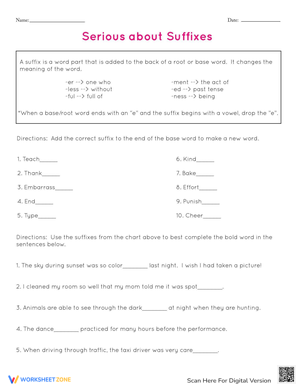
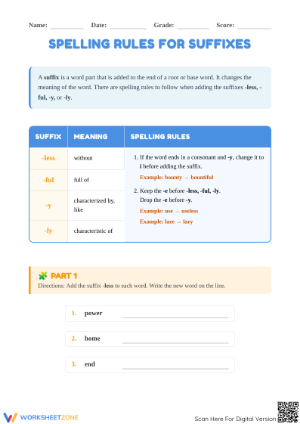
Teaching suffixes is not just about reading; it is heavily tied to spelling accuracy. Learning suffix rules, such as dropping or doubling letters when adding -ed or -ing, is essential for spelling accuracy in elementary classrooms. One of the first rules teachers must teach is the "drop the e" rule. When a base word ends in a silent "e," students must learn to drop that "e" before adding a vowel suffix like "-ing" or "-ed." Explicit instruction and practice with this rule prevent common spelling errors and help students understand the structure of the English language.
Another critical concept is the doubling rule, often referred to as the 1-1-1 rule. When a word has one syllable, one short vowel, and ends in one consonant, the final consonant is usually doubled before adding a vowel suffix. For example, "hop" becomes "hopping." Teaching these rules requires patience, modeling, and extensive practice. Providing targeted suffixes printable worksheets that specifically challenge students to apply these spelling rules in context is one of the most effective ways to reinforce the concepts and improve overall writing proficiency in the classroom.
Teacher Tips
Implementing morphology instruction in the classroom requires a thoughtful approach that balances direct instruction with independent practice. One effective strategy is to create a suffix word wall. As new endings are introduced, they can be added to the wall along with the rule and several example words. This visual reference supports students during writing and reading tasks. Additionally, when using suffixes printable worksheets, teachers should review the instructions as a whole group and complete the first few examples together to ensure students understand the expectations before working independently.
Another practical tip is to incorporate morphological analysis into daily reading routines. During read-alouds or guided reading sessions, teachers can pause to point out words with suffixes and discuss how the ending changes the base word. This contextualized practice helps students see the relevance of what they are learning. For independent work, teachers should select materials that offer a variety of task types, from simple matching to sentence writing, to keep students engaged and challenged at their appropriate level.
By physically separating the base word from the suffix using different colored markers or visual dividers during the first two weeks of instruction, teachers can reduce decoding errors by up to thirty percent in early elementary students. This deliberate visual separation trains the eye to recognize the morphemic boundaries automatically. Once the brain begins to process the word in structural chunks rather than isolated letters, reading speed increases dramatically, and the cognitive load required for spelling complex words is significantly reduced.
Engaging Suffix Activities for the Classroom
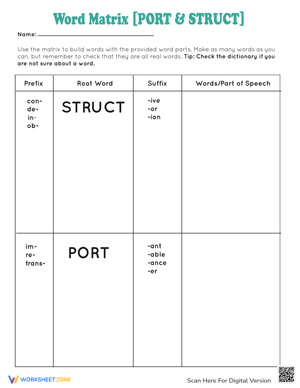
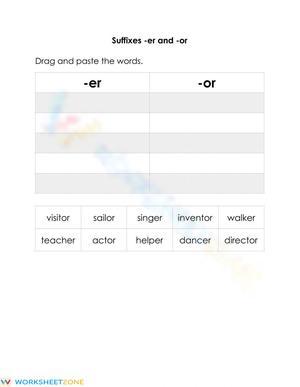
Beyond traditional paper practice, there are numerous interactive ways to make learning word endings enjoyable for young students. Word sorting is a highly effective activity where students group words based on their suffix or the spelling rule applied. Sorts encourage students to analyze word structures and discuss patterns with their peers. Another engaging activity is "word building," where students are given a set of base word cards and suffix cards and challenged to create as many real words as possible. These hands-on activities are excellent for reinforcing concepts in small groups.
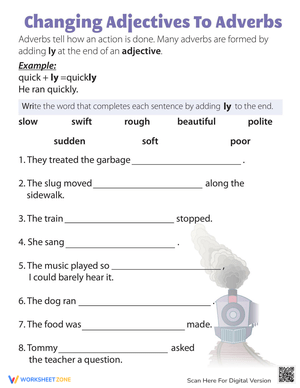
Teachers can also use games like suffix bingo or memory matching to bring excitement to literacy centers. While games are highly motivating, they are most effective when paired with structured practice. Using a high-quality suffixes printable worksheets as a follow-up to a hands-on game ensures that students are held accountable for their learning and provides teachers with a tangible formative assessment. The combination of interactive play and focused written practice creates a balanced and highly effective instructional block for teaching morphology.
Choosing the Right Suffixes printable worksheets
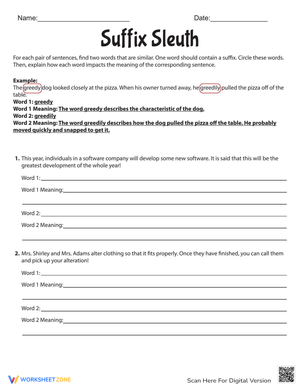
Selecting the best instructional materials is critical for student success. When searching for a suffixes printable worksheets, teachers should look for resources that offer a clear layout and age-appropriate vocabulary. A high-quality worksheet will not just ask students to add an ending; it will require them to apply a spelling rule or determine the meaning of the newly formed word. According to the publication Teaching Morphology in the Classroom by Scholastic, resources that require students to manipulate word parts actively are far more effective than those relying on rote memorization.
Furthermore, it is important to find resources that offer differentiated levels of practice. Some students may need basic recognition tasks, while others are ready to write complex sentences using words with multiple morphemes. Providing the right level of challenge keeps students engaged and prevents frustration. By carefully selecting printable resources that align with your curriculum goals and the specific needs of your students, you can create a highly effective morphology unit that significantly boosts reading and spelling achievement.
Frequently Asked Questions
1. How can I make learning suffixes fun for young students?
To make morphology engaging, incorporate hands-on activities like word building with physical cards, suffix sorting games, and interactive digital resources. Combining interactive play with a structured suffixes printable worksheets allows young students to practice essential literacy skills while remaining actively engaged and motivated during classroom centers.
2. When should I introduce suffixes in the literacy curriculum?
Basic inflectional endings like -s, -es, -ed, and -ing are typically introduced in first grade, as they are common in early texts. Derivational suffixes such as -ful, -less, -er, and -est are usually taught in second and third grades as students encounter more complex vocabulary and begin focusing on spelling rules.
3. Do suffixes help with reading comprehension and spelling?
Yes, understanding word endings is essential for both reading comprehension and spelling accuracy. Recognizing morphological chunks helps students decode longer words efficiently, which improves reading fluency and comprehension. Additionally, learning specific spelling rules for adding endings directly enhances a student's ability to spell complex words correctly.












 Interactive Worksheet Maker
 Quiz Maker
 Word Search Maker
 Crossword Puzzle Maker
 Word Scramble Generator
 Sentence Scramble Generator
 Handwriting Worksheet Generator
 Name Tracing Generator
 Fill In The Blank Generator