


























Views
Downloads
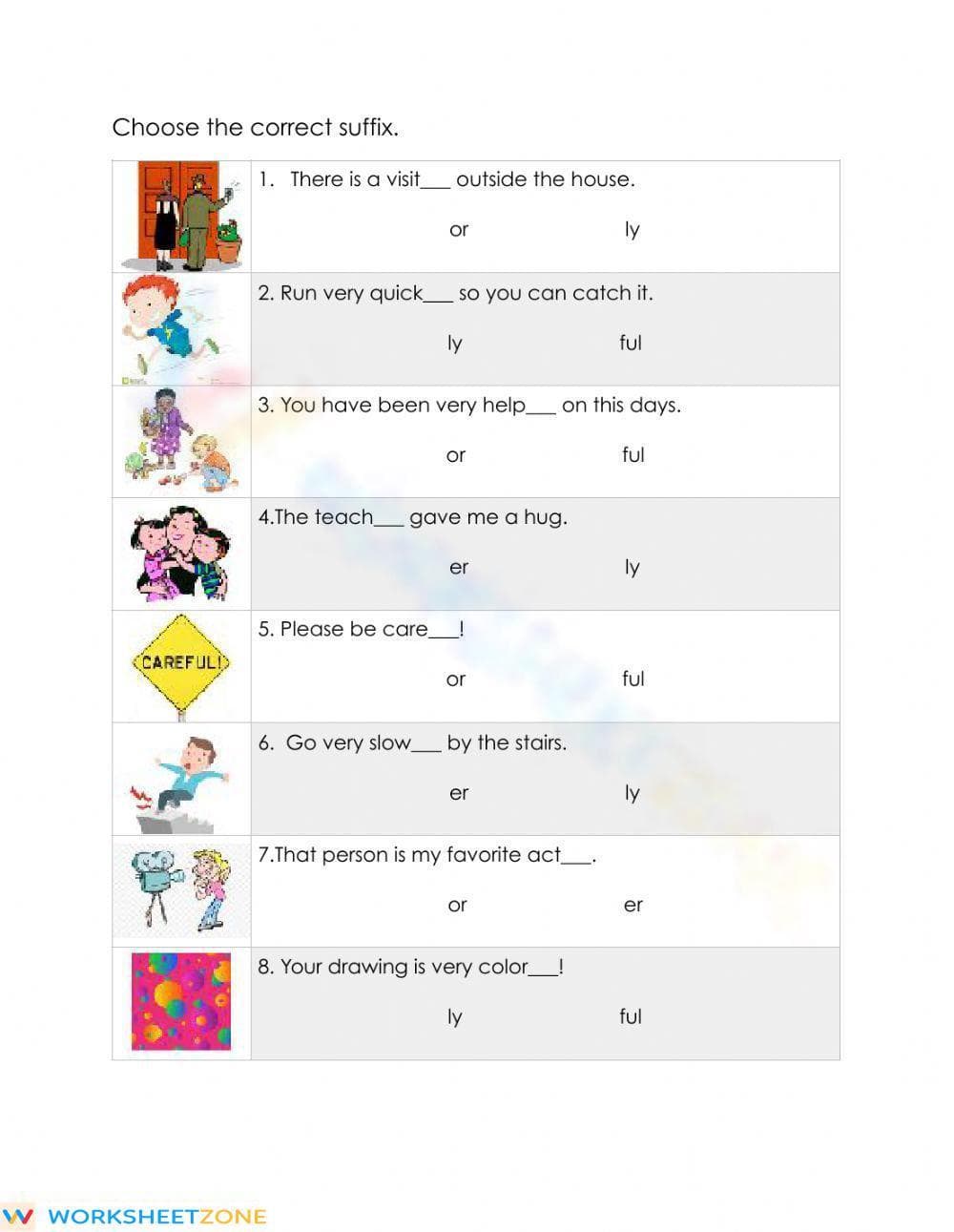
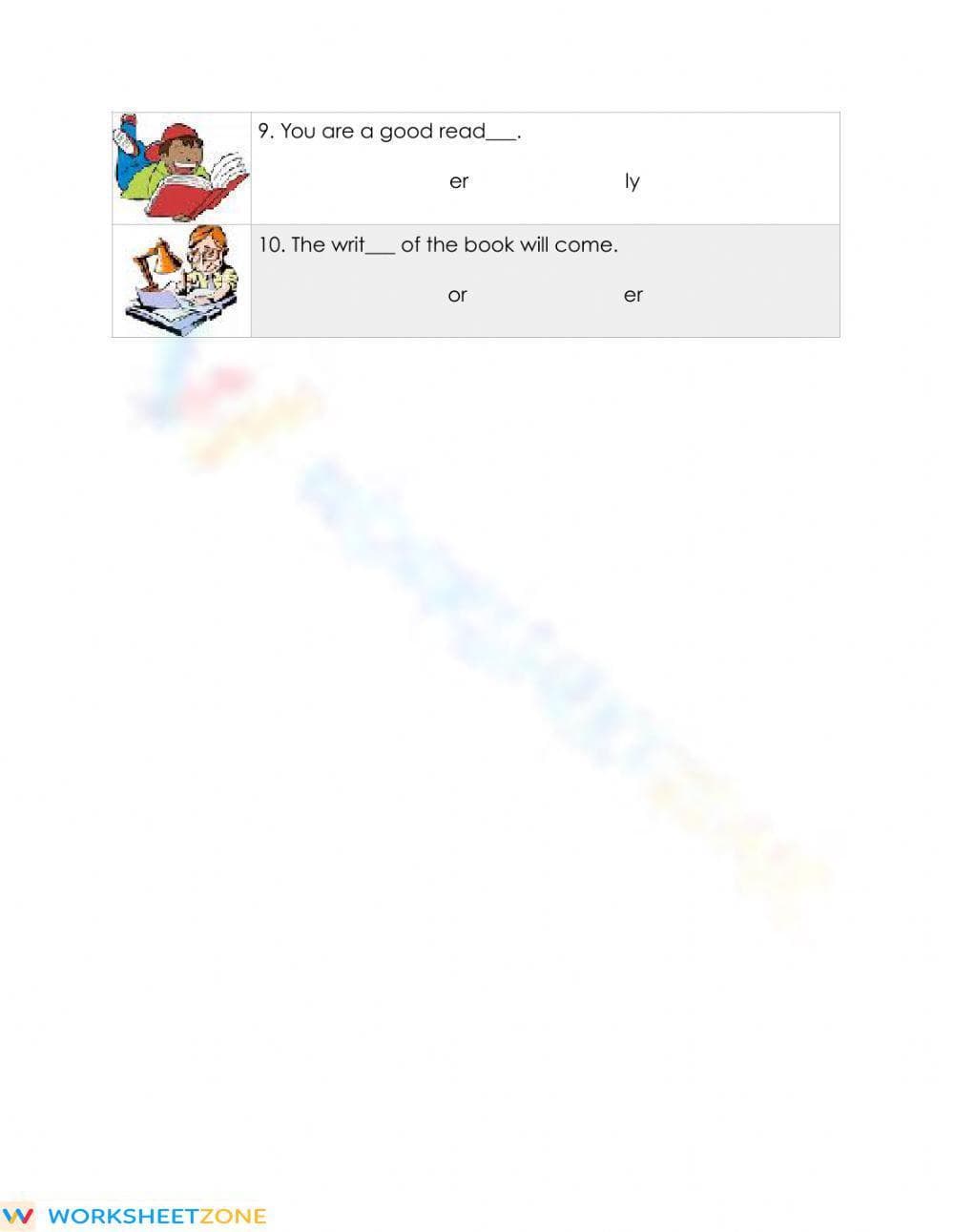

Printable Suffixes Worksheet | Grade 1-2 -er -or -ly -ful
Paste this activity's link or code into your existing LMS (Google Classroom, Canvas, Teams, Schoology, Moodle, etc.).
Students can open and work on the activity right away, with no student login required.
You'll still be able to track student progress and results from your teacher account.
This printable English Language Arts worksheet focuses on the essential skill of identifying and using suffixes to modify root words. Students practice choosing between -er, -or, -ly, and -ful to complete sentences accurately. By engaging with these ten structured exercises, learners develop a stronger grasp of word structure and lexical meaning in Grade 1 and Grade 2.
At a Glance
- Grade: 1-2 · Subject: English Language Arts (ELA)
- Standard:
CCSS.ELA-LITERACY.L.1.4.B— Use frequently occurring affixes as a clue to the meaning of a word- Skill Focus: Common Suffixes (-er, -or, -ly, -ful)
- Format: 2 pages · 10 problems · Answer key included · PDF
- Best For: Independent grammar practice or quick homework
- Time: 15–20 minutes
What's Inside
Inside this two-page PDF, you will find ten individual sentence-completion tasks, each accompanied by a clear, engaging illustration to provide visual context for early readers. Every problem offers a choice between two specific suffixes, such as "or" versus "ly" or "er" versus "ful." This clear structure helps students focus on morphological changes without being overwhelmed. An answer key is included.
Skill Progression
- Guided practice: The first four problems introduce the suffixes in simple sentences with direct visual support to build student confidence.
- Supported practice: Items five through eight move toward slightly more complex vocabulary like "careful" and "slowly," requiring students to analyze the root word's function.
- Independent practice: The final two tasks on the second page require students to apply their knowledge to "reader" and "writer" without multiple-choice distractors beyond the suffix options.
This worksheet follows the gradual-release model, moving students from basic recognition to active selection.
Standards Alignment
This resource is meticulously aligned to CCSS.ELA-LITERACY.L.1.4.B, which requires students to use frequently occurring affixes as a clue to the meaning of a word. By distinguishing between an actor (e.g., visitor, actor) and a quality (e.g., helpful, colorful), students master how suffixes change the meaning of root words. This code maps directly to lesson plans or IEP goals.
How to Use It
Use this worksheet as a focused follow-up after a direct instruction lesson on suffixes. It is particularly effective during small-group literacy rotations where a teacher can observe a student's reasoning as they choose between an adverbial suffix (-ly) or a noun-forming suffix (-er). For a formative assessment, note if students struggle specifically with the "or" versus "er" distinction for people, which indicates a need for further phonological awareness.
Who It's For
This resource is designed for Grade 1 and Grade 2 students who are building their foundational reading and writing skills. It is also an excellent tool for English Language Learners (ELLs) who benefit from the visual cues provided next to each sentence. Pair this worksheet with a suffix anchor chart or a short reading passage that highlights these specific word endings for maximum instructional impact.
The acquisition of morphological awareness, specifically the ability to manipulate common suffixes like -er and -ful, is a critical predictor of later reading comprehension and vocabulary growth. According to research cited in EdReports 2024, high-quality foundational skills instruction must include explicit practice with affixes to help students decode multisyllabic words and determine word meaning in context. This worksheet aligns with these evidence-based practices by providing ten targeted opportunities to apply CCSS.ELA-LITERACY.L.1.4.B in a structured format. By mastering these frequently occurring suffixes, students reduce their cognitive load during reading. The integration of visual supports alongside linguistic tasks ensures that the material is accessible while maintaining the rigor required for standards-based achievement. This resource serves as a reliable component of a comprehensive literacy program focused on building robust lexical knowledge.


