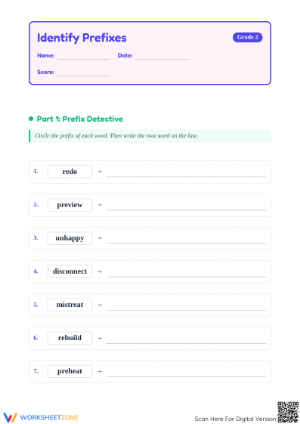
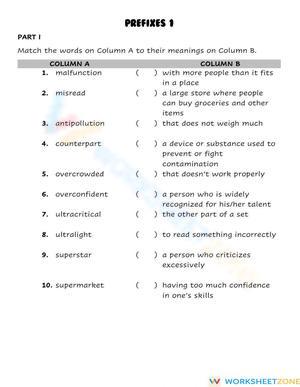
Establishing a Strong Foundation with Prefixes
Teaching prefixes is more than just memorizing letters at the start of a word. It unlocks a code for students to decipher complex words throughout their academic journey. A prefix is an affix placed at the beginning of a word that changes its meaning significantly. Knowing that the prefix "un-" means "not" gives a student access to words like "unusual," "unhappy," and "unfriendly." This foundational skill is essential for vocabulary acquisition and morphological awareness. By focusing on base words and how prefixes modify them, teachers provide students with a strategy for reading comprehension that they can use independently. These prefixes worksheets resources bridge the gap between simple word recognition and deep semantic understanding. Instruction usually begins in second grade and continues through middle school as words become more abstract and complex Greek and Latin prefixes are introduced to the curriculum.
Strategic Use of Prefixes worksheets in Literacy Blocks
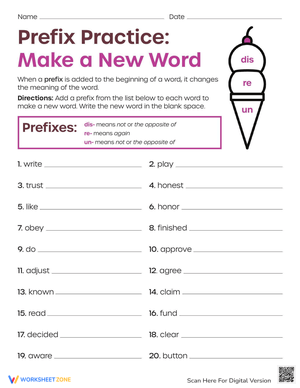
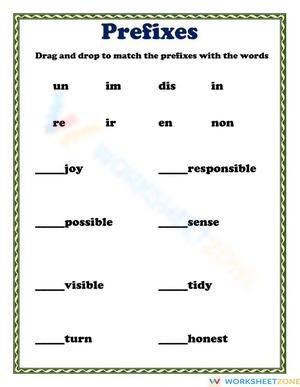
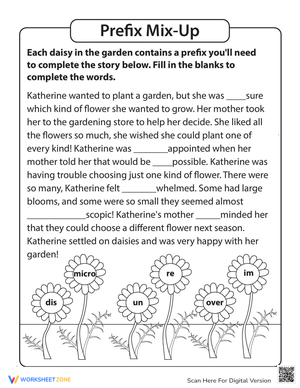
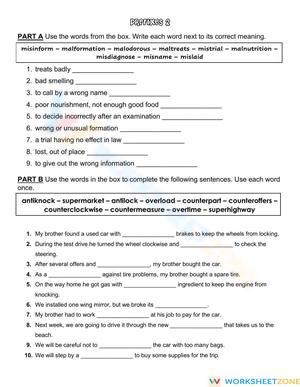
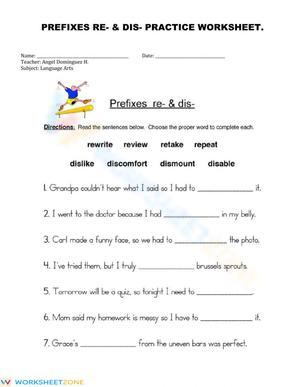
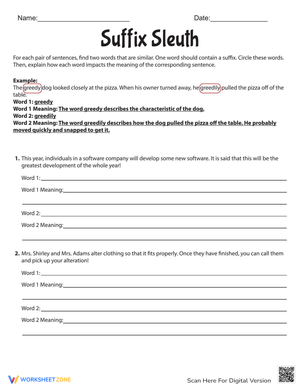
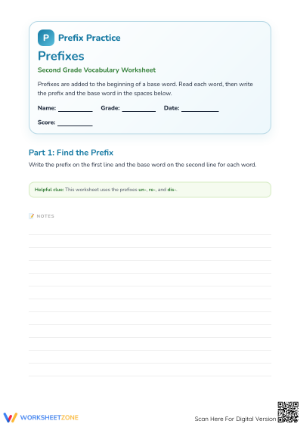
When planning a literacy block, having access to a high-quality prefixes worksheets can save teachers hours of preparation time. These digital resources are ideal because they can be printed for individual student use, projected onto a smartboard for whole-class modeling, or uploaded to a digital classroom platform. For teachers managing multiple reading groups, these worksheets provide a structured activity that students can often complete with minimal supervision once the initial concept has been taught. You might use a matching worksheet during a small-group intervention to help struggling readers visualize how "re-" combines with "play" to form "replay." Alternatively, a sentence-completion exercise can serve as a quick formative assessment at the end of a lesson. The flexibility of the PDF format ensures that whether you are in a traditional classroom or a homeschool setting, you have immediate access to targeted practice materials that align with your specific instructional goals. Resources from Super Teacher Worksheets and English for Everyone also suggest that visual aids paired with these worksheets can significantly aid retention during these focused literacy sessions.
Analyzing Common Prefixes: Meanings and Examples
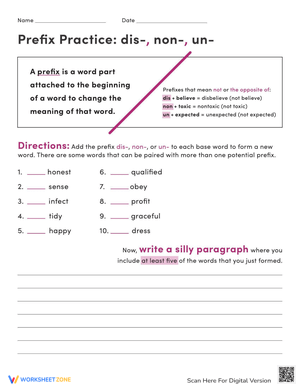
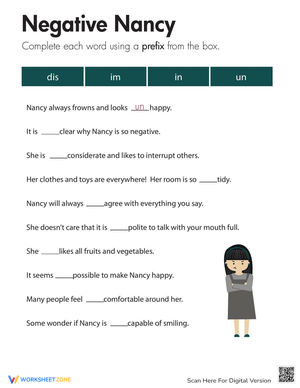
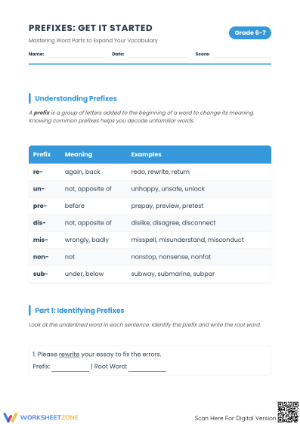
Understanding prefix nuances is essential for students to move beyond basic decoding and start truly comprehending the texts they read. Some prefixes are straightforward, while others are subtle and require multiple exposures to master. For example, "pre-" consistently indicates something happens "before," as in "preview" or "preheat." However, negative prefixes like "un-," "dis-," "im-," and "non-" require more careful study as their usage depends on the specific root word and the historical origin of the word.Morphological research suggests that teaching prefixes in related clusters—such as grouping prefixes of negation together—is more effective than teaching them in isolation. This builds a conceptual map of how language works, rather than just forcing students to memorize disconnected rules. Helping a fourth grader see that "incorrect," "disobey," and "nonsense" all share a theme of "not" or "opposite" strengthens their semantic processing and word-retrieval speeds.
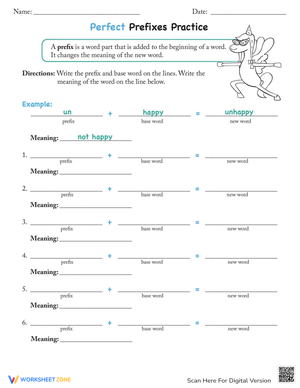
- un-: means "not" or "opposite" (e.g., unhappy, untie)
- re-: means "again" or "back" (e.g., rewrite, return)
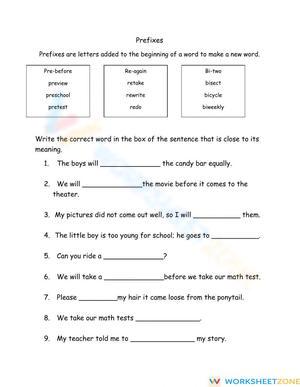
- pre-: means "before" (e.g., preschool, prepay)
- mis-: means "wrong" or "badly" (e.g., mistake, misunderstand)
- dis-: means "not" or "away" (e.g., disagree, disappear)
Morphological Awareness and Reading Comprehension
The link between morphological awareness and reading comprehension is well-documented in literacy research. When students understand how words are built, they spend less cognitive energy on decoding and more on understanding the text's message. According to resources from K5 Learning, mastering prefixes and suffixes significantly boosts reading comprehension by allowing students to decode unfamiliar words independently. Research indicates that approximately 60% of new words encountered in upper elementary texts contain affixes, making structured practice with prefix worksheets a high-impact intervention for vocabulary growth. This data point highlights why it is so important to integrate prefix study into daily reading routines. It is not an "extra" activity but a fundamental part of teaching students how to read and analyze text. Using prefixes worksheets files allows for the repetitive, varied practice necessary for this skill to become automatic. As students move into grades 4, 5, and 6, the complexity of the prefixes they encounter increases, shifting from simple Anglo-Saxon prefixes to more complex Greek and Latin roots that form the basis of scientific and academic language.
Differentiating Instruction for Grades 2 through 6
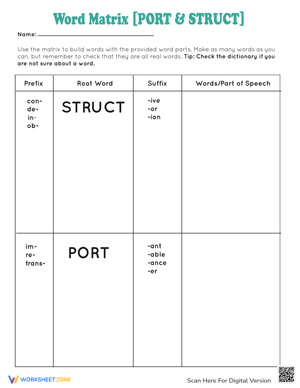
Differentiation is a hallmark of effective teaching, especially when it comes to linguistic skills. In a second-grade classroom, a teacher might focus on common prefixes like "un-" and "re-" with simple base words like "tie" or "read." By sixth grade, the focus shifts to prefixes with multiple meanings or complex spelling rules, such as "in-" which can mean both "not" and "into." A versatile prefixes worksheets set offers tiered activities to meet these diverse needs. For students building foundational phonics skills, a word-sort activity where they physically move prefixes to base words provides a necessary tactile experience. Advanced learners might analyze how a prefix changes a word's part of speech in a complex passage or find examples of prefixed words in a challenging science text. Tiered difficulty ensures every student works within their zone of proximal development, building confidence as they master increasingly difficult linguistic structures and expand their mental lexicons.
Teacher Tips for Successful Prefix Mastery
To make the most of your prefixes worksheets, consider these practical strategies for your classroom. First, always introduce a new prefix in context before asking students to work on a worksheet. Seeing the word "misunderstand" in a story is much more powerful than seeing it on a list. Second, encourage "word hunting" where students look for words with the week's prefix in their library books or science textbooks. You can create a "Prefix Wall" where students post the words they find. Third, use the worksheets as a springboard for verbal games. If the worksheet focuses on "pre-," ask students to come up with their own "pre-" words and explain what they would mean. This encourages creativity and shows that they truly understand the prefix's function. Finally, do not forget the power of peer teaching. Have students who have mastered a particular set of prefixes lead a small review group using a practice worksheet. This reinforces their own knowledge while providing support to their classmates. Consistency is better than intensity; five minutes of prefix practice every day is more effective than one long lesson once a month.
Classroom Implementation: From Direct Instruction to Centers
Integrating these resources into your daily schedule can be done in several ways. During direct instruction, you might use a worksheet as a guided practice tool, completing the first few items together as a class. For independent work, these prefixes worksheets files are perfect for literacy centers or stations. You can place different worksheets at different stations based on the prefixes being studied that week. Another effective implementation model is the "Exit Ticket" system. Give students a small portion of a worksheet with two or three problems to solve before they transition to lunch or recess. This provides you with immediate data on who has grasped the concept and who might need more support the next day. Consistent, low-stakes exposure is the key to moving this knowledge into long-term memory. By making prefixes a regular part of your classroom conversation, you help students see that language is a dynamic system they can explore and master.
Frequently Asked Questions
1. What are common prefixes for elementary students?
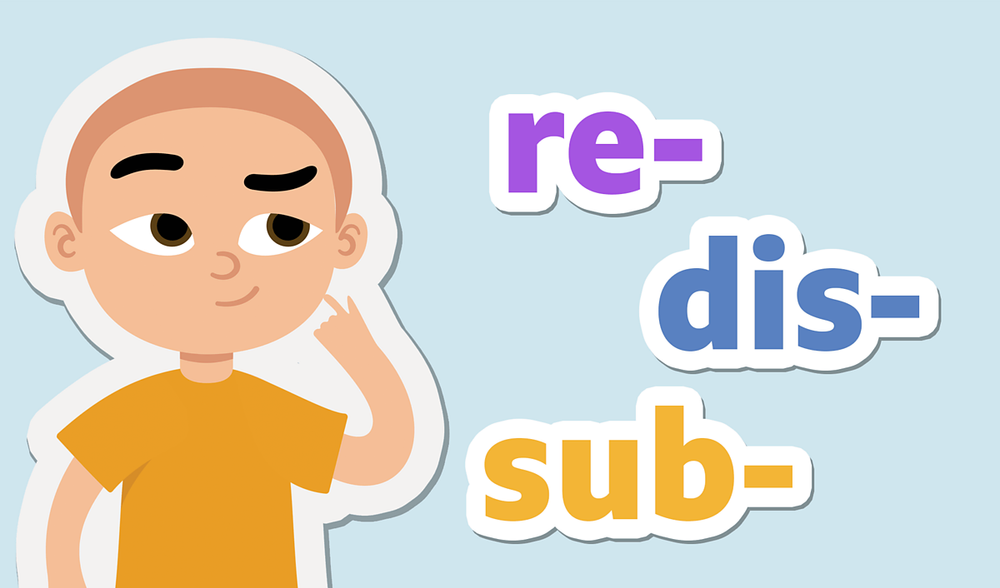
Common prefixes for beginners include "un-," "re-," "pre-," "dis-," and "mis-." These appear frequently in early reading materials and have relatively consistent meanings, making them excellent starting points for second and third graders. As students progress, they can move on to more complex ones like "non-," "im-," "ir-," and "sub-."
2. How do prefixes differ from suffixes?
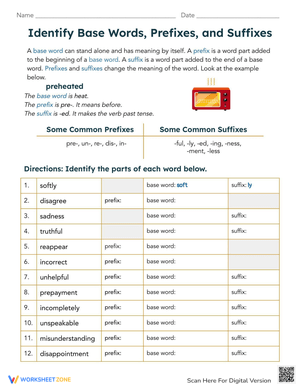
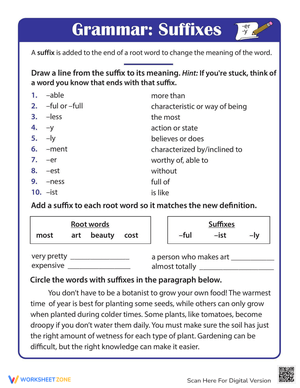
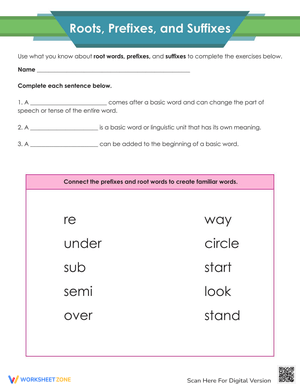
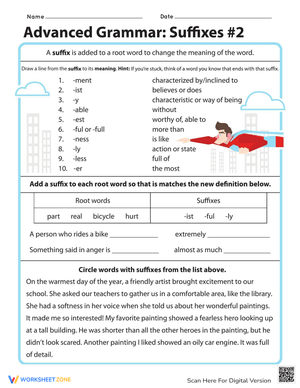
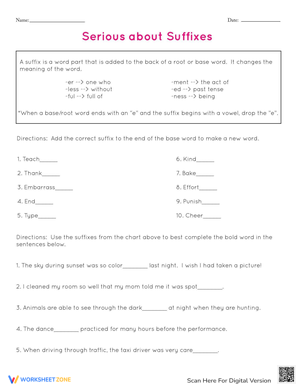
A prefix is added to the beginning of a base word, and a suffix is added to the end. Prefixes change the word's meaning but rarely change its part of speech. Suffixes, on the other hand, often change the part of speech, such as turning the verb "teach" into the noun "teacher." Understanding both is key to morphological awareness.
3. Why use PDF worksheets for teaching prefixes?
A prefixes worksheets offers ease of printing, consistent formatting, and digital sharing options. They provide a structured way for students to practice specific skills and are easily stored for future use. Teachers can print multiple copies for different reading groups or for students who need extra practice at home to reinforce classroom learning.
4. Can a word have more than one prefix?
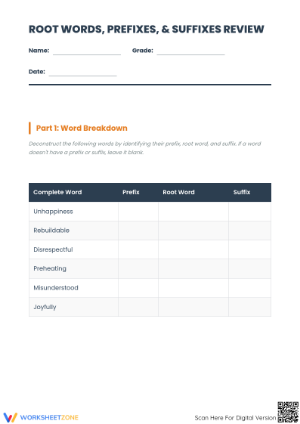
Yes, although it is less common in elementary-level vocabulary, words can certainly have multiple prefixes. An example would be "unprecedented" or "repreheated." Teaching students to peel back these layers one by one is an advanced morphological skill that helps them tackle very long and complex words in middle and high school texts.
5. At what grade level should I start teaching prefixes?
Direct instruction of prefixes typically begins in late first grade or early second grade. Students start with simple, highly frequent prefixes like "un-" and "re-." The complexity of the words and the variety of prefixes introduced increase each year, with more formal study of Greek and Latin roots often becoming a focus in fourth through sixth grade.












 Interactive Worksheet Maker
 Quiz Maker
 Word Search Maker
 Crossword Puzzle Maker
 Word Scramble Generator
 Sentence Scramble Generator
 Handwriting Worksheet Generator
 Name Tracing Generator
 Fill In The Blank Generator