Building Vocabulary Through Prefixes and Suffixes
Teaching prefixes and suffixes is a foundational component of elementary language arts instruction. When teachers introduce these morphological building blocks, they provide students with the keys to unlock hundreds of unfamiliar words. A strong grasp of affixes allows learners to break down complex vocabulary into manageable parts, improving both decoding efficiency and reading comprehension across all subject areas. By utilizing high-quality prefixes and suffixes worksheets resources, teachers can offer targeted practice that reinforces these vital concepts in a structured and engaging manner.
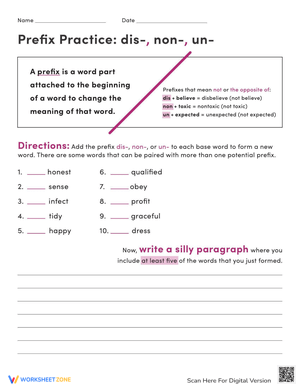
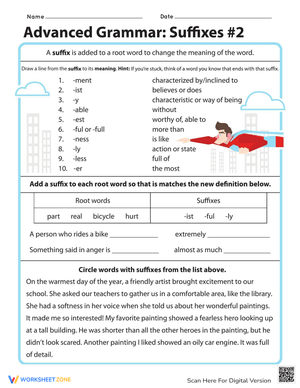
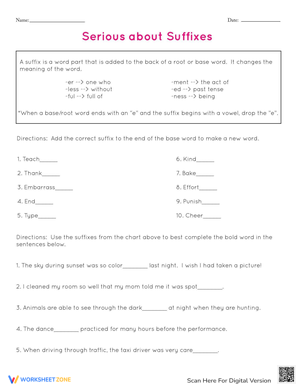
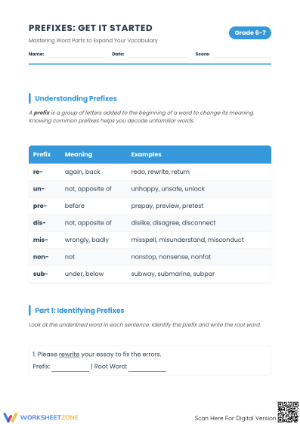
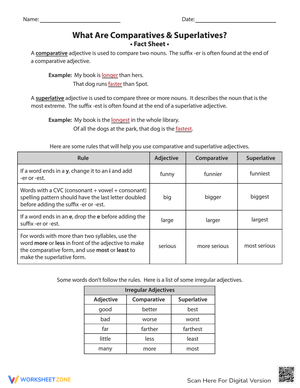
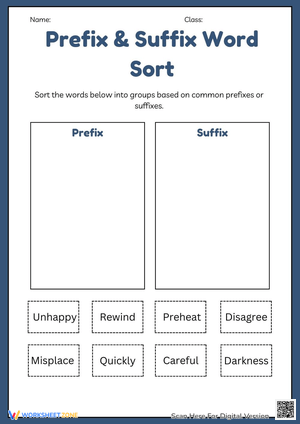
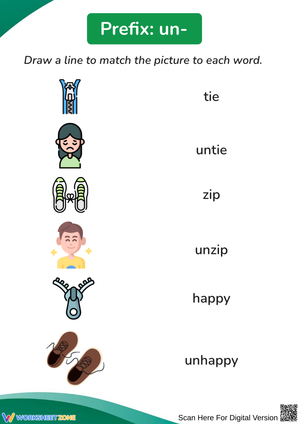
Prefixes, which are added to the beginning of a base word, alter its meaning. For example, adding "un-" to "happy" creates a word with the opposite meaning. Suffixes are attached to the end of a base word and often change its grammatical function or tense, such as turning the noun "help" into the adjective "helpful" with the addition of "-ful." Explicitly teaching these word parts empowers students to become independent word solvers. When children encounter unknown words in their independent reading, morphological awareness gives them the tools to infer meaning without constantly relying on a dictionary or teacher assistance.
Understanding Morphology in Elementary Grades
Morphology, the study of the structure and parts of words, plays a critical role in literacy development. For students in grades two through six, morphological awareness involves recognizing that words are made up of meaningful units, including roots, base words, prefixes, and suffixes. This awareness is not just about spelling; it is deeply connected to vocabulary acquisition and reading comprehension. Providing students with targeted prefixes and suffixes worksheets materials is a practical way to systematically introduce and reinforce these concepts in the classroom.
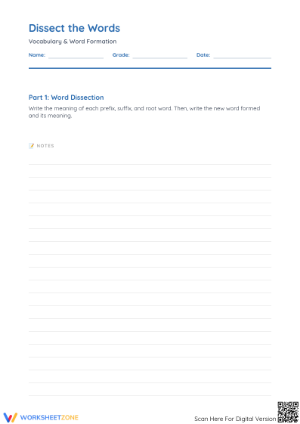
When students understand morphology, they can see the relationships between words. They learn that "teach," "teacher," and "reteach" all share a common core meaning. This insight accelerates vocabulary growth exponentially. Instead of learning thousands of individual words, students learn the meanings of a few hundred common affixes and roots, which they can then apply to thousands of new words. This generative nature of morphology makes it an incredibly powerful tool for teachers to leverage during literacy blocks and intervention sessions.
Decoding Unfamiliar Words: Strategies for Students
One of the primary goals of teaching affixes is to equip students with effective strategies for decoding unfamiliar words during independent reading. When a student encounters a long, complex word, it can be intimidating. However, if they are trained to look for familiar word parts, that intimidation often turns into confidence. Regular practice with prefixes and suffixes worksheets resources trains the eye to quickly identify prefixes and suffixes, isolating the base word to determine the overall meaning.
A highly effective decoding strategy is the "peeling off" method. Students are taught to visually or physically cover the prefix and the suffix, leaving only the base word exposed. Once they identify the base word, they can "peel" the affixes back on, one by one, to construct the full meaning of the word. This strategy requires explicit modeling by the teacher and extensive guided practice. Using prefixes and suffixes printable worksheetss that highlight or separate affixes visually can greatly assist students in mastering this technique.
Differentiating Prefix and Suffix Practice
Every classroom consists of learners with diverse needs, backgrounds, and skill levels. Therefore, differentiating affix instruction is vital to ensure all students make meaningful progress. Providing a single, one-size-fits-all assignment is rarely effective. Instead, teachers can utilize a variety of prefixes and suffixes worksheets resources to tailor instruction to individual student profiles. This differentiation can involve adjusting the complexity of the affixes taught, the format of the worksheet, or the level of scaffolding provided.
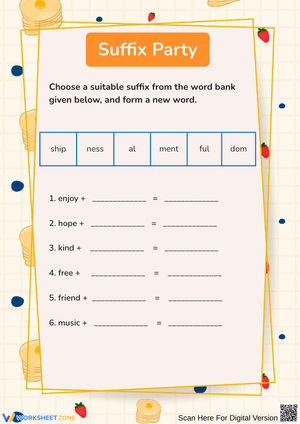
For struggling readers or English language learners, differentiation might involve starting with highly transparent affixes and providing visual supports. Worksheets that pair affixed words with images or use color-coding to distinguish the base word from the affix can be incredibly helpful. Additionally, teachers might select prefixes and suffixes worksheets materials that offer word banks or matching formats, reducing the cognitive load required for spelling and allowing students to focus primarily on meaning and recognition.
Classroom Implementation
Successfully integrating morphological instruction into the daily classroom routine requires careful planning and consistent execution. It is not enough to teach prefixes and suffixes as an isolated unit once a year; they must be woven throughout the literacy curriculum. Using prefixes and suffixes worksheets resources strategically can help establish routines that provide students with the repeated exposure necessary for mastery. A combination of whole-class instruction, small-group work, and independent practice yields the best results.
According to literacy experts, regular morphological instruction that explicitly connects affixes to their base words can improve student reading comprehension scores significantly, demonstrating the profound impact of structured vocabulary building on overall academic achievement. This data underscores the importance of moving beyond simple phonics to include meaningful word part analysis.
Connecting Affixes to Reading Comprehension
The ultimate goal of all reading instruction, including the teaching of affixes, is to improve reading comprehension. When students can quickly and accurately decode words and determine their meanings based on their morphological structure, they free up cognitive resources to focus on the overall meaning of the text. Utilizing high-quality prefixes and suffixes worksheets materials directly supports this goal by building the automaticity required for fluent, meaning-driven reading.
Consider a student reading a science text about "deforestation." If the student has been taught the prefix "de-" (meaning to remove or reverse) and the suffix "-ation" (indicating a process or action), they can combine these meanings with the base word "forest" to understand the word without needing a glossary. This independent problem-solving ability is important for comprehending complex informational texts. Regular practice with prefixes and suffixes worksheets activities that simulate these encounters helps students apply their skills in real-world reading scenarios.
Assessing Morphological Awareness
To ensure that affix instruction is effective, teachers must regularly assess their students' morphological awareness. Assessment provides valuable data that informs instructional decisions, allowing teachers to identify which affixes have been mastered and which require reteaching. While formal standardized tests may include vocabulary components, teachers also need practical, formative assessment tools. Utilizing specific prefixes and suffixes worksheets activities as quick checks for understanding is a highly efficient way to monitor progress.
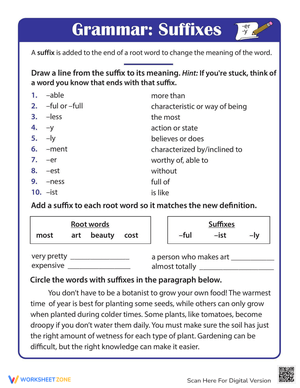
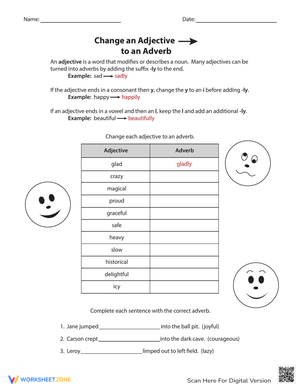
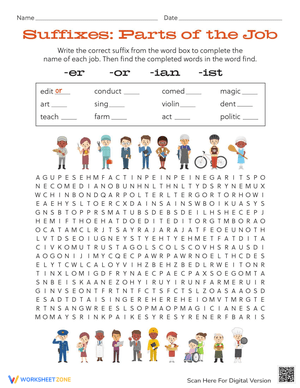
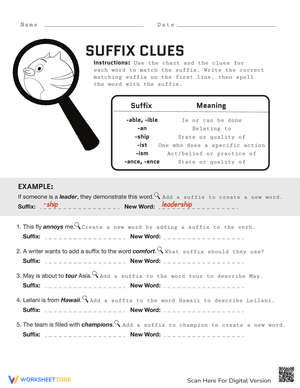
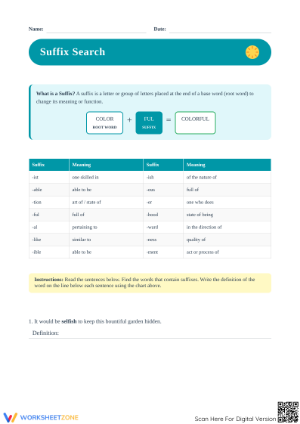
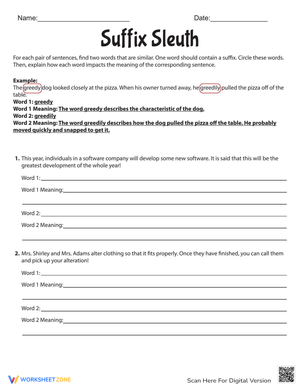
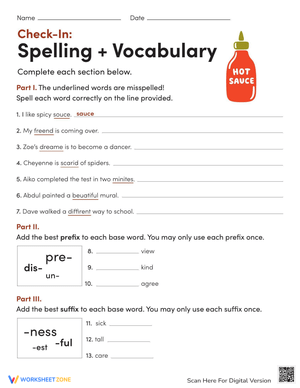
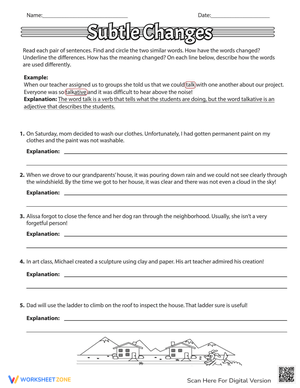
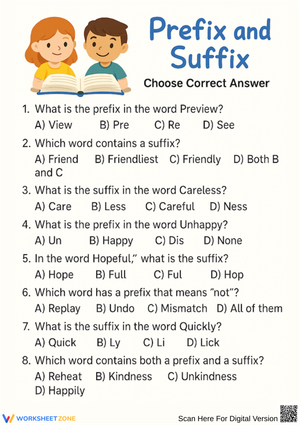
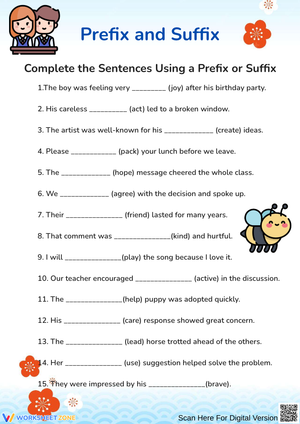
Formative assessments can take many forms. A simple matching exercise where students pair an affix with its meaning can provide a quick snapshot of basic recognition. More complex prefixes and suffixes worksheets tasks, such as asking students to add the correct affix to a base word to complete a sentence, assess their ability to apply their knowledge in context. By varying the types of assessments used, teachers can gain a comprehensive understanding of their students' morphological skills.
Frequently Asked Questions
1. What is a prefix?
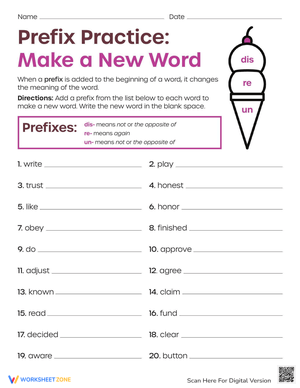
A prefix is a group of letters added to the beginning of a base word that changes its meaning. For instance, adding "re-" to "do" creates "redo," meaning to do again. Using targeted worksheets helps students identify these word parts.
2. What is a suffix?
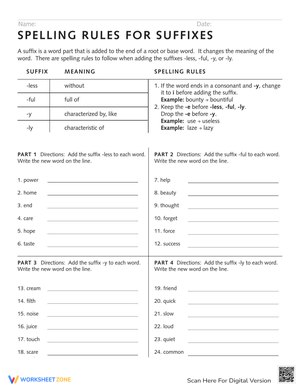
A suffix is a letter or group of letters added to the end of a base word. It often changes the word's grammatical function or tense, like adding "-ing" to "walk" to make "walking." Practice sheets solidify this understanding.
3. What is the difference between a prefix and a suffix?
The primary difference is their placement: prefixes are attached to the front of a word, while suffixes are attached to the end. Both are affixes that modify the base word, but they serve different linguistic roles.
4. How do prefixes and suffixes help in understanding new words?
Knowing common affixes allows students to break down complex, unfamiliar words into smaller, understandable parts. This morphological decoding strategy is much more efficient than memorizing every single vocabulary word they encounter.
5. Can a word have both a prefix and a suffix?
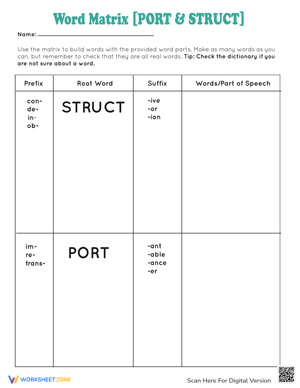
Yes, many multisyllabic words contain both. For example, in the word "unhelpful," "un-" is the prefix, "help" is the base word, and "-ful" is the suffix. Worksheets can provide excellent practice for these complex words.












 Interactive Worksheet Maker
 Quiz Maker
 Word Search Maker
 Crossword Puzzle Maker
 Word Scramble Generator
 Sentence Scramble Generator
 Handwriting Worksheet Generator
 Name Tracing Generator
 Fill In The Blank Generator