


























Views
Downloads


Reader's Theater: Summertime Blues | Essential Grade 2-3
Paste this activity's link or code into your existing LMS (Google Classroom, Canvas, Teams, Schoology, Moodle, etc.).
Students can open and work on the activity right away, with no student login required.
You'll still be able to track student progress and results from your teacher account.
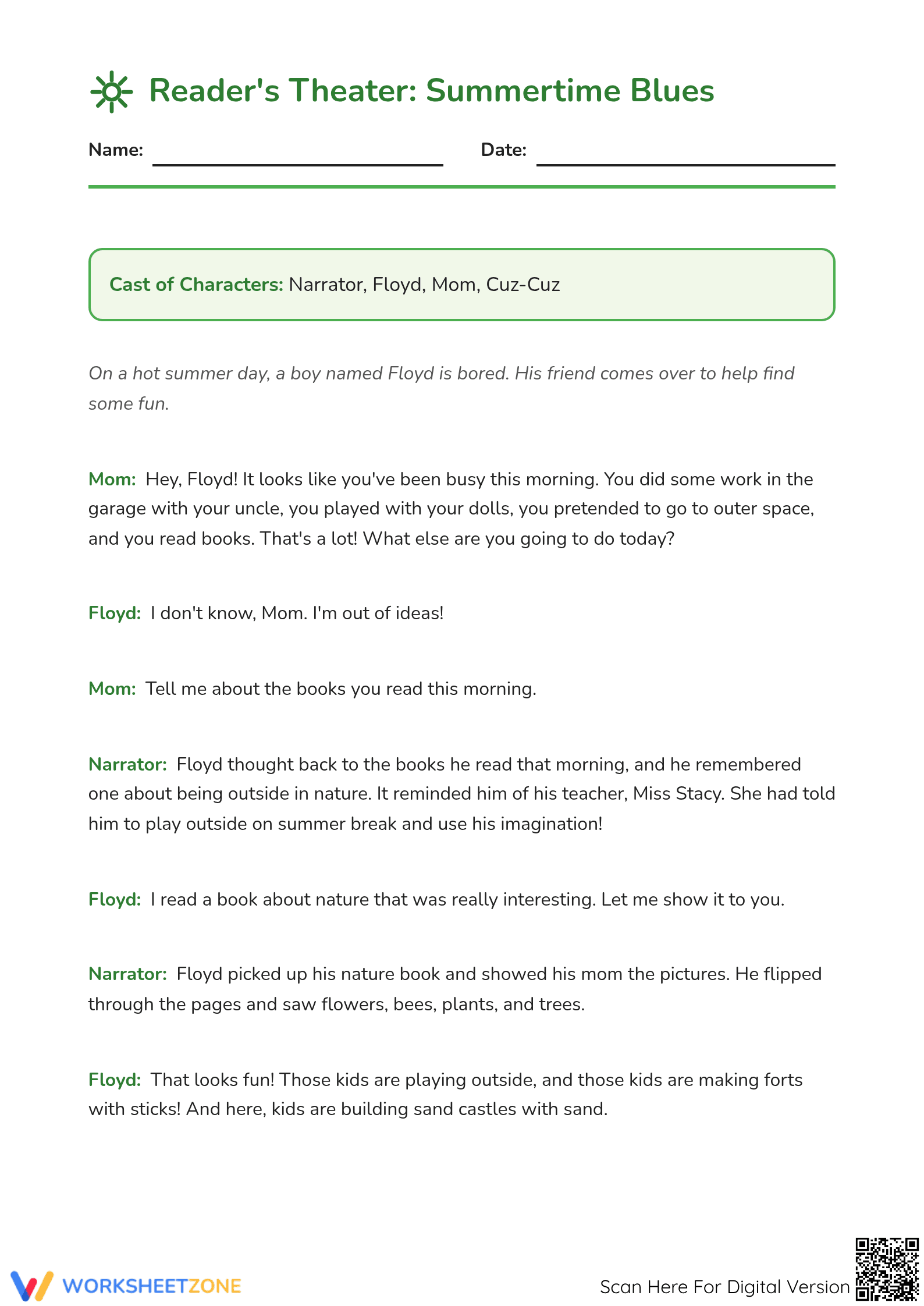
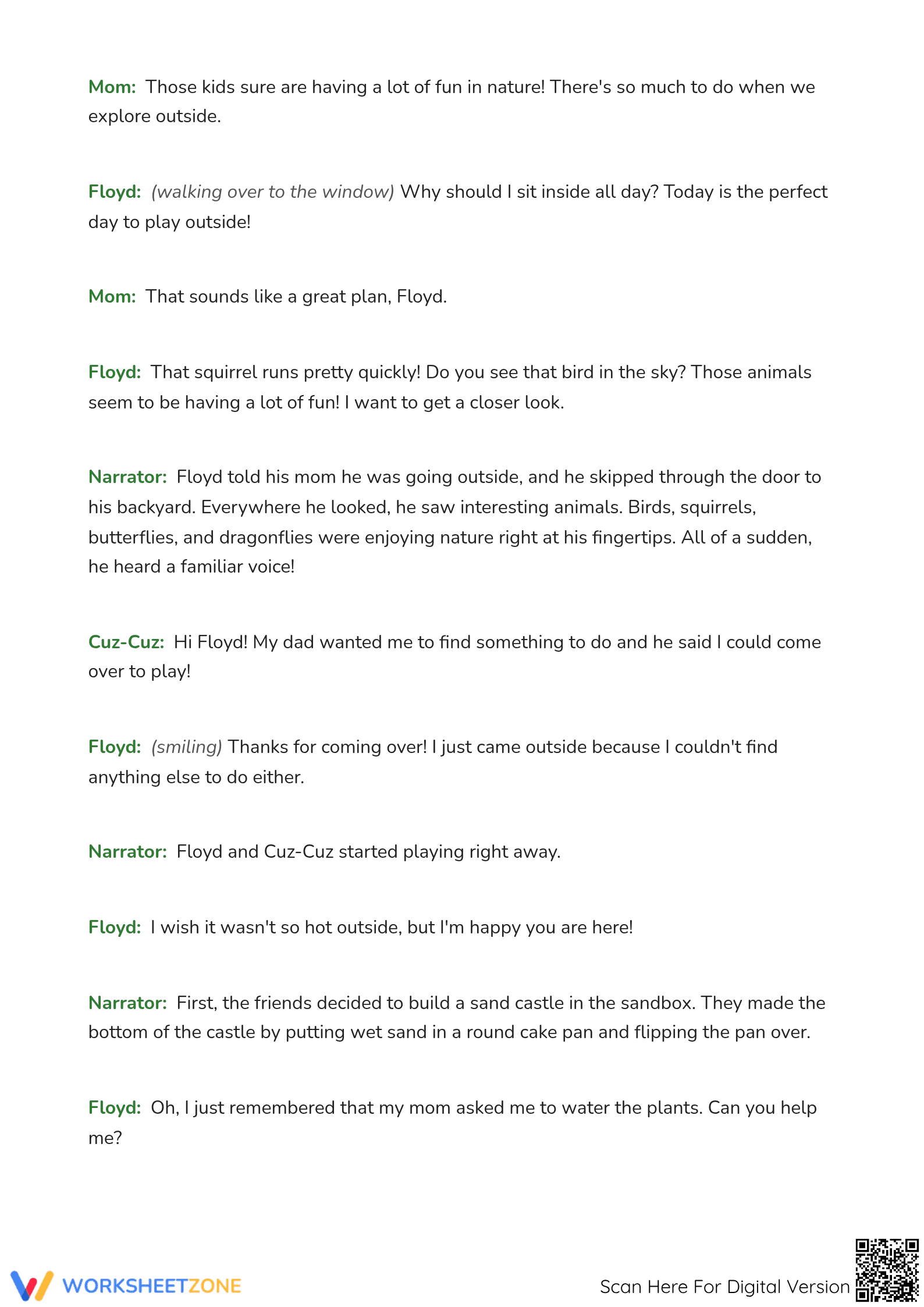
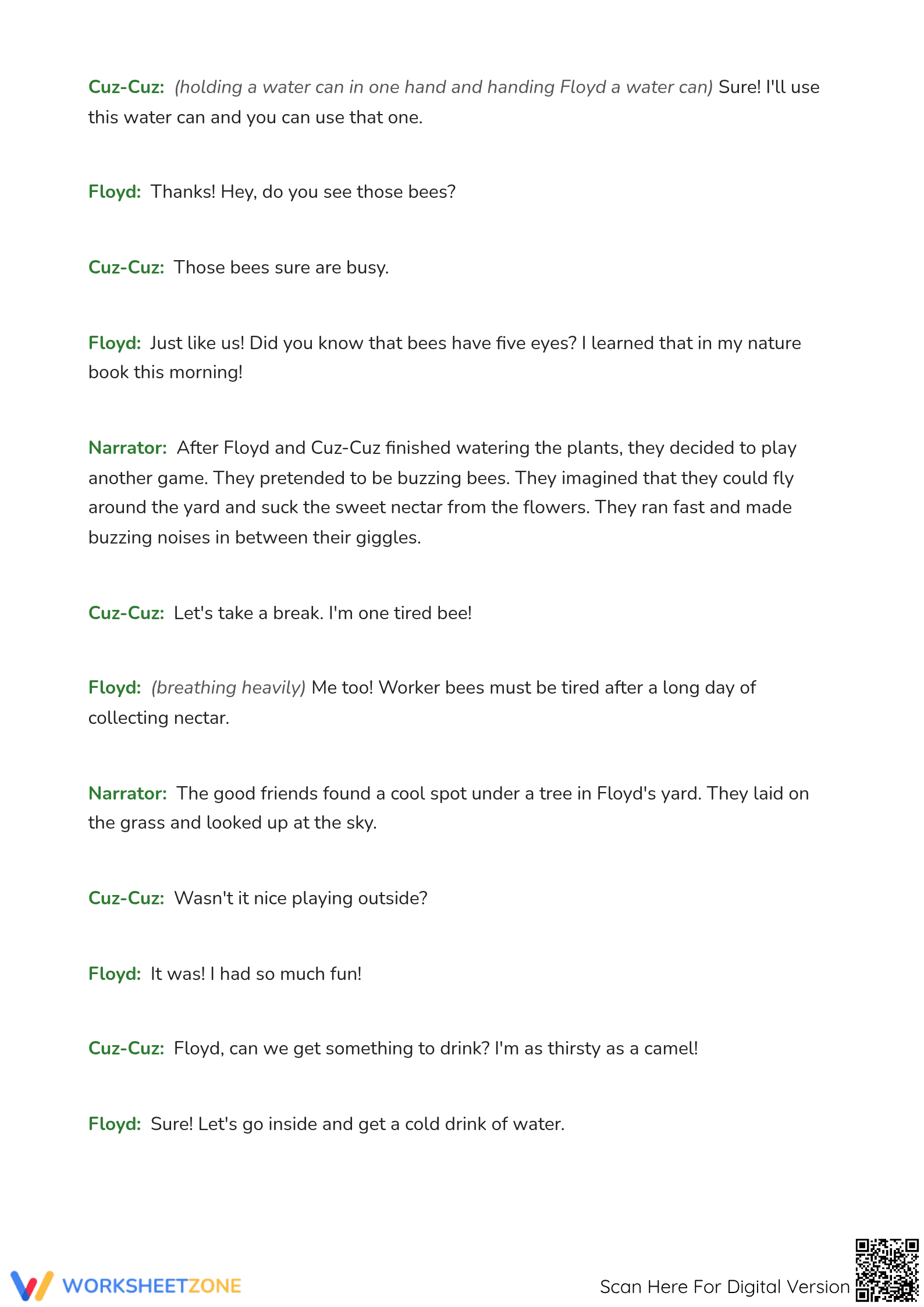
This Grade 2-3 Reader's Theater worksheet provides a complete script and comprehension suite to improve student reading fluency and structural analysis of drama. Students perform the story of Floyd and his summer adventures, then demonstrate mastery by sequencing events and identifying character traits. It offers a practical way to meet rigorous ELA standards through active participation.
At a Glance
- Grade: 2-3 · Subject: English Language Arts
- Standard:
RL.3.5— Refer to parts of dramas when writing or speaking about a text- Skill Focus: Fluency and Drama Structure
- Format: 5 pages · 6 problems · Answer key included · PDF
- Best For: Fluency practice and drama introduction
- Time: 30–45 minutes
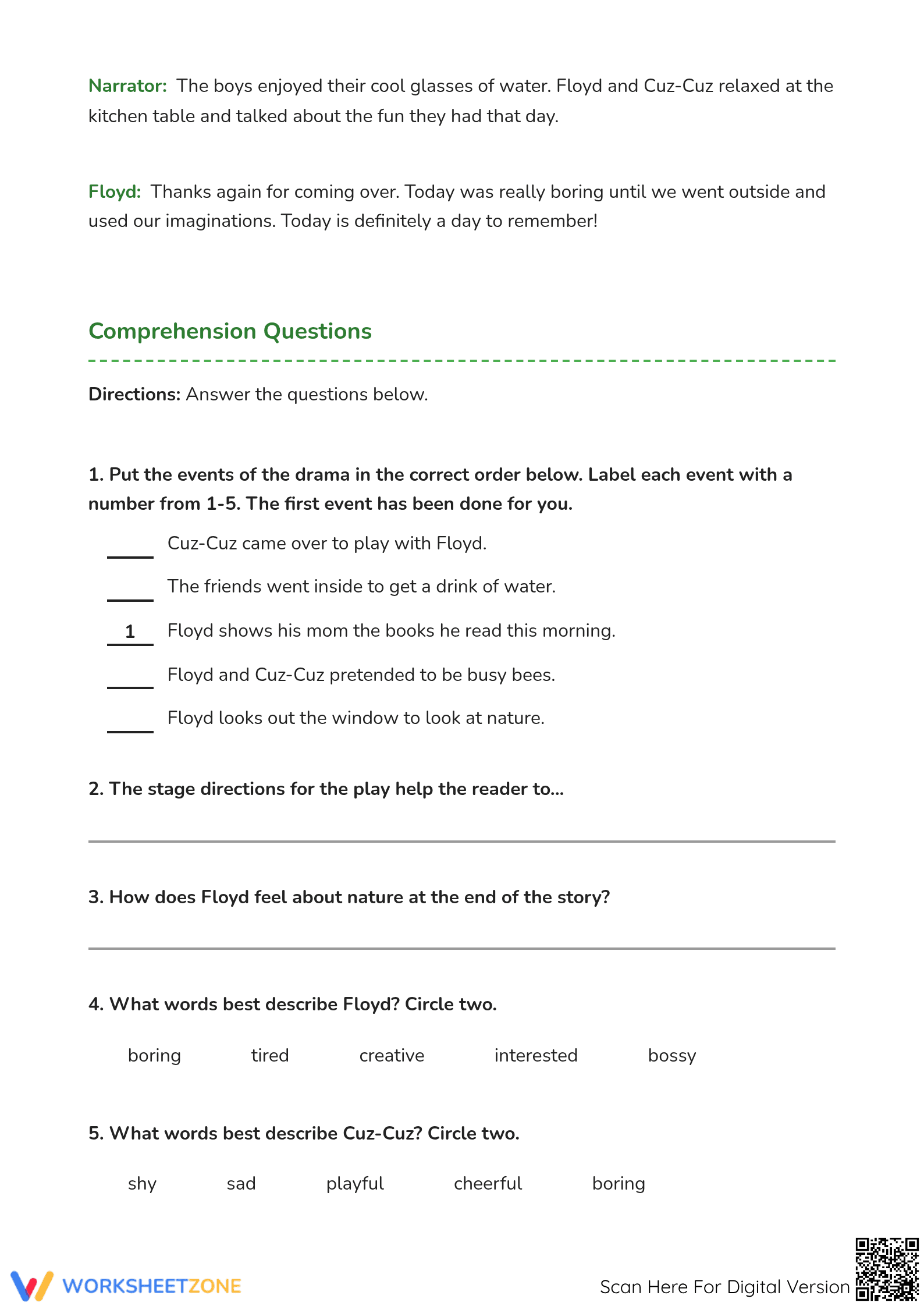
Inside this 5-page PDF, you will find a four-character script titled "Summertime Blues" featuring a narrator, a mother, and two friends. The text includes explicit stage directions to help students understand non-verbal storytelling. Following the script is a dedicated comprehension page featuring 6 multi-part tasks, including a sequencing exercise, character trait selection, and a creative drawing prompt with a written response.
Zero-Prep Workflow
The zero-prep workflow for this resource is designed for maximum efficiency in busy classrooms. First, print the 5-page packet for your small groups or the entire class, which takes less than 60 seconds. Second, distribute the scripts and assign roles to students; the clear "Cast of Characters" box makes this process take under 1 minute. Finally, review the 6 comprehension questions using the provided answer key for immediate feedback. The total teacher preparation time is less than 2 minutes, making this an ideal solution for emergency sub plans.
Standards Alignment
This resource aligns primarily with `CCSS.ELA-LITERACY.RL.3.5`, requiring students to refer to parts of dramas when speaking or writing about a text. It also supports `CCSS.ELA-LITERACY.RL.2.6` by asking students to distinguish between character perspectives and traits. Both standard codes can be copied directly into lesson plans, IEP goals, or district curriculum mapping tools.
How to Use It
Use this worksheet during your literacy block as a fluency-building activity. After a first read-through for decoding, have students perform the script in groups of four to practice expression. As a formative assessment, observe how students interpret the stage directions in parentheses. The expected completion time for the reading and assessment is 30 to 45 minutes.
Who It's For
This packet is ideal for general education students in grades 2 and 3, as well as English Language Learners who benefit from the repetitive nature of script reading. It pairs naturally with an anchor chart on the elements of drama or a direct instruction lesson on characterization. The varied question types provide entry points for diverse learners.
The Reader's Theater: Summertime Blues worksheet is specifically designed to meet the requirements of CCSS.ELA-LITERACY.RL.3.5, which tasks students with identifying and referring to the structural parts of a drama. By engaging with a multi-page script, learners move beyond simple prose to understand how stage directions and character dialogue drive a narrative forward. Research by Fisher & Frey (2014) emphasizes that repeated oral reading through Reader's Theater significantly improves reading rate and prosody, which are foundational components of overall literacy development. This resource provides a structured environment for students to practice these skills while simultaneously addressing character analysis and event sequencing. The inclusion of a comprehensive answer key and clear formatting ensures that the instructional focus remains on student performance and text-based evidence. Educators can utilize this 5-page packet to bridge the gap between basic decoding and deep, structural comprehension of the dramatic genre in elementary classrooms.


