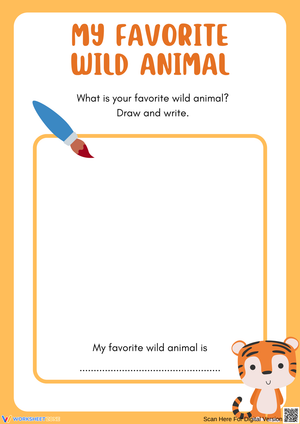
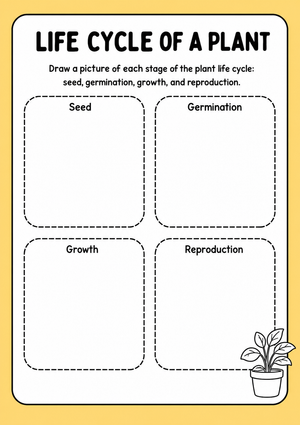
These painting and drawing printable worksheets give K–8 art teachers a structured entry into core visual elements — line quality, value, texture, color mixing, and spatial reasoning — without requiring students to begin from a blank surface. The set spans fine-motor exercises suited to early elementary through two-point perspective construction for upper grades, making it workable across a multi-grade art rotation or a single classroom with a wide readiness spread.
What Each Worksheet Builds
The foundational worksheets address line control and texture rendering. Students trace guided paths first, then independently replicate texture patterns — cross-hatching, stippling, contour shading, wavy fill — in side-by-side cells on the same worksheet. That cell format does something useful: it forces a visual comparison that teachers usually have to narrate aloud. Students see directly that stippling creates a softer optical grain than cross-hatching, and that perception becomes a decision they can act on when they later choose a technique for rendering fur versus rough stone in a finished piece.
Color theory worksheets ask students to produce rather than identify. Blank color wheel templates require students to mix and place secondary and tertiary hues before labeling them — not match paint chips to pre-printed circles. Value scale exercises pair a tint progression (hue to white in five steps) with a shade progression (hue to black in five steps) on the same row, making the difference between tint and shade immediately visible rather than definitional. The upper-grade worksheets introduce one-point and two-point perspective through a printed construction sequence: horizon line, vanishing points, orthogonals, form. Grid-drawing worksheets use a 1-centimeter grid and ask students to reproduce a reference image at twice the original scale — a format that strengthens proportional reasoning and sustained observational attention at the same time.
Technical Drawing in STEAM Contexts
The spatial habits formed in drawing practice transfer cleanly into STEAM work. When a science unit asks students to draw a labeled cross-section of the Earth, or when an engineering project requires a prototype sketch before building, students who have worked through the perspective and grid-drawing worksheets arrive with usable visual thinking skills. Grid drawing reinforces coordinate mapping in mathematics; value scales connect naturally to discussions of light intensity in physics. General education teachers who want students to represent information visually — rather than describe it only in prose — find these worksheets effective as supporting material for cross-curricular demonstrations of understanding.
Building These Worksheets Into Your Lesson Rotation
The Monday warm-up is where painting and drawing printable worksheets earn the most consistent classroom return. Five minutes, one texture or line-quality exercise, pencils only — no setup and no introduction required because the instructions are printed directly on each worksheet. The practice compounds: students who complete one texture exercise per week across a semester have rendered cross-hatching, stippling, and contour shading enough times that the techniques become automatic in project work rather than exploratory. For teachers managing centers, a drawing station stocked with grid and perspective worksheets runs independently — students work through the printed steps at their own pace while the teacher circulates elsewhere.
The same qualities that make these worksheets effective for centers make them reliable for substitute plans. A step-by-step perspective or grid-drawing worksheet requires no art background to facilitate; the substitute distributes materials and monitors the room. A labeled folder with five to seven worksheets covering different skills — texture, a value scale, a grid drawing, one perspective exercise — covers a full period without repetition.
Student Mistakes Worth Anticipating Before the Lesson Starts
Color mixing produces the most predictable confusion during first-time wet media work. Students who correctly place orange on a color diagram will still mix brown at the table — not because they misunderstand color theory, but because a wet brush carries the previous color into the next mixture. Instructing students to wipe the brush on a damp sponge between colors before the session starts, not after the first muddy batch appears, is the operational difference between a productive class and a frustrating one.
Perspective construction surfaces a specific spatial reasoning gap: students drawing a box in one-point perspective frequently make the back face larger than the front face because they apply converging-line logic in reverse, adding width as the form moves toward the horizon instead of subtracting it. Value scale exercises produce a related problem — students jump between three discrete values instead of five gradual steps, skipping the midpoint pressures entirely. Both errors are correctable with a checkpoint moment after setup, before students extend into the full construction. Catching the reversal or the gap at that stage saves revision time that most 45-minute periods cannot spare.
Standard Alignment
The worksheets address the National Core Arts Standards under the Creating and Responding process components. Texture and technique exercises engage anchor standard VA:Cr2.1 — organizing and developing artistic ideas and work — because students make deliberate rendering choices rather than completing a fill pattern by rote. Color mixing and value scale worksheets connect to VA:Re7.1 (perceiving and analyzing artistic work) when teachers add a written annotation: asking students to explain in a sentence why two adjacent values look distinct, or what went wrong in a color mixture, places reflective language directly alongside the physical practice. Perspective construction worksheets address VA:Cr1.1 at the planning level, as students move from horizon placement through vanishing points to a completed form — a sequence that mirrors how technical illustrators approach spatial problems.
Adapting These Worksheets for a Spread of Student Readiness
Students with limited fine motor control benefit from printing texture worksheets on cardstock rather than standard copy paper. The heavier surface provides more resistance, which helps students who press too hard and tear through standard-weight sheets. For students who move through the primary tasks quickly, ask them to recreate the same texture pattern in a cell approximately thumbnail size — that scale reduction demands far greater control and produces a visible difference in grain quality, creating a natural discussion about how scale affects technique choice.
On the perspective worksheets, removing the printed construction steps and providing only a blank surface with a horizon line marked forces independent sequence recall for students ready for that challenge. Students who benefit from more guided support use the fully printed version. Both can compare finished results and identify where their construction sequences diverged — a discussion more instructive than error correction in isolation.
Frequently Asked Questions
How do these worksheets support fine motor development in early elementary students?
Tracing lines, replicating texture patterns, and filling defined cells all require students to vary pressure and make small, controlled movements with the hand and wrist. Those physical demands build grip strength and hand-muscle coordination that carry into handwriting, scissor use, and any classroom task requiring precise control. For K–2 students, repeated drawing practice on structured worksheets functions as a legitimate fine motor exercise — the art outcome and the physical development happen simultaneously.
Can these be used with wet media in a classroom without a sink?
Yes. Replacing water cups with a damp sponge in a small container at each table group eliminates the most common spill source — students wipe the brush on the sponge between colors rather than rinsing, so there is no cup to tip and no puddle at the desk. Watercolor pencils and tempera paint sticks also work effectively on these worksheets and require far less water management than liquid paint. Printing on cardstock rather than standard copy paper prevents the surface from warping when wet media is applied. These painting and drawing printable worksheets hold up well under real classroom constraints, not just well-equipped studio conditions.
How should I set these up as sub plans?
Step-by-step grid drawing and color theory exercises are the most reliable choices because the instructions appear directly on each worksheet and require no art-specific knowledge to facilitate. The substitute distributes materials and monitors; students follow the printed steps independently. A folder covering different skill types keeps a full period moving without repetition:
- One texture or line-quality exercise
- A value scale worksheet
- A grid drawing with a clear reference image
- A blank color wheel for mixing practice
- A perspective construction starter with the horizon line printed
How do these worksheets connect to the National Core Arts Standards?
The Standards connection depends on how teachers frame the use of painting and drawing printable worksheets within the lesson sequence. Completion alone addresses Cr2.1 — organizing and developing technique. Adding a brief written response on the back of the worksheet pulls in Re7.1 — perceiving and analyzing. Connecting a perspective exercise to a historical example, such as showing students a Renaissance cityscape and noting that the same vanishing-point construction appears in both, activates Cn11.1 — relating artistic ideas to cultural and historical contexts. The worksheet is the mechanism; the standard is addressed through how the teacher deploys it.












 Interactive Worksheet Maker
 Quiz Maker
 Word Search Maker
 Crossword Puzzle Maker
 Word Scramble Generator
 Sentence Scramble Generator
 Handwriting Worksheet Generator
 Name Tracing Generator
 Fill In The Blank Generator