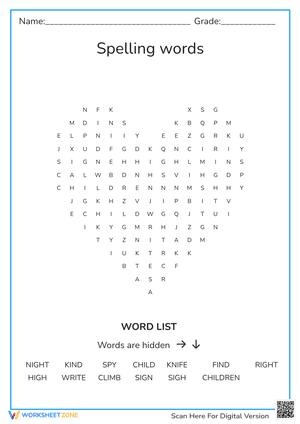
A rhyming word search gives kindergarten and first-grade teachers a quiet, independent task that targets a core early-literacy skill: recognizing rhyme. Unlike an oral rhyme game that needs a teacher or partner to run it, a printable search can sit at a center, in a morning work bin, or as an early-finisher option while you pull a small group. Students scan a grid of letters for words that rhyme with a target word, which means they are not just listening for rhyme, they are also looking closely at how rhyming words are spelled.
That spelling layer matters more than it might seem. When students hear that cat and hat rhyme, and then have to locate and circle both words in a letter grid, they begin to notice that rhyming words share the same ending sounds and often share the same spelling patterns too. This connection between sound and print is fundamental to early reading, and a word search offers a hands-on, concrete way for students to practice it without a teacher standing nearby.
Classroom Implementation
To set up a rhyming word search center with minimal prep, keep these steps in mind:
- Choose one word family per puzzle so the rhyme pattern stays consistent and easy to explain in thirty seconds.
- Print a picture-supported version for your emerging readers and a text-only version for students who are ready for it.
- Set a visible timer for center rotations so the task fits your existing rotation schedule.
- Pair the puzzle with a short partner-share step, where students read their circled words aloud to a partner before moving to the next center.
- Use finished puzzles as a quick informal check before pulling your next guided reading group, so you know which students may need a rhyme warm-up first.
This structure keeps the activity low-prep for you while giving students a consistent routine they can complete with growing independence across the year. The setup is straightforward enough that you can introduce it once and rely on it throughout the year.
Connecting to Guided Reading and Small-Group Support
Rhyming word searches fit naturally into guided reading rotations. Before a small-group lesson on a text built around a specific word family, a quick rhyming word search using that same family primes students to notice the pattern once they see it in connected text. After the lesson, the same puzzle format can serve as a review task, reinforcing the word family one more time before students move to independent practice.
For reading interventionists working with students who need extra support, a rhyming word search offers a bridge between purely oral rhyme work and full independent reading, giving students a concrete, visual task that still targets rhyme awareness and word family recognition.
Frequently Asked Questions
1. What grade level is a rhyming word search appropriate for?
Rhyming word searches work best for kindergarten and first grade, where rhyme recognition and early word family instruction are core parts of the literacy block.
2. How does a rhyming word search support early literacy skills?
A word search reinforces rhyme awareness by having students locate and confirm rhyming pairs in print, building the visual connection between rhyming sounds and spelling patterns.
3. Can rhyming word searches be used for reading intervention or small-group support?
Yes. A shortened puzzle with fewer target words works well in small-group or intervention settings as a bridge between oral rhyme practice and independent print work.
4. What is the difference between rhyme recognition activities and word search puzzles for literacy skills?
Oral rhyme recognition activities target listening skills alone, while a word search adds a spelling-pattern and visual scanning layer, connecting rhyme awareness to how word families appear in print.
5. How can teachers differentiate a rhyming word search for different reading levels?
Add picture cues for emerging readers, use a text-only version with more words for fluent readers, and shorten the grid to four or five target words for students needing extra support.















 Interactive Worksheet Maker
 Quiz Maker
 Word Search Maker
 Crossword Puzzle Maker
 Word Scramble Generator
 Sentence Scramble Generator
 Handwriting Worksheet Generator
 Name Tracing Generator
 Fill In The Blank Generator